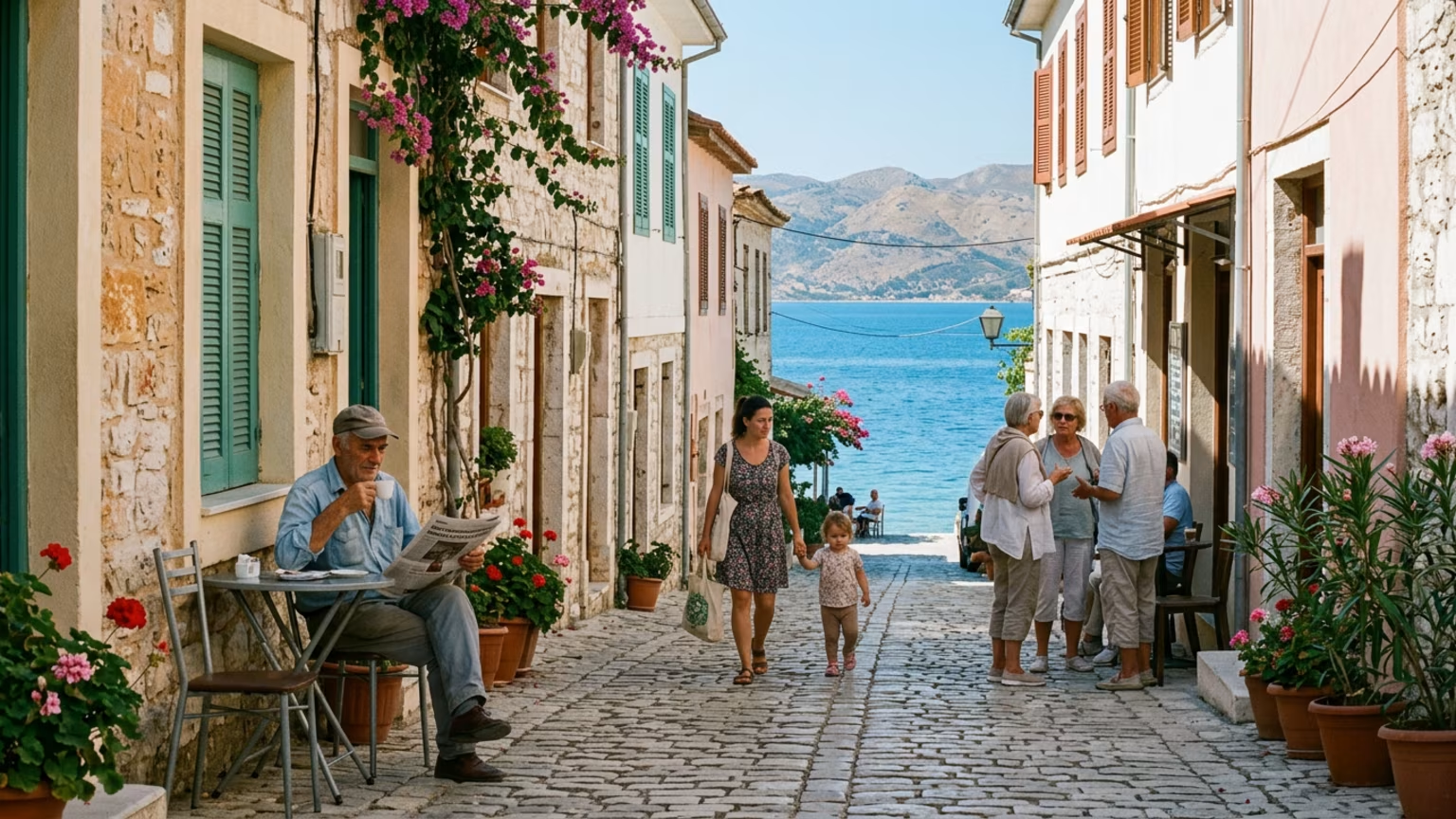
Representative image

Learn how Jet Bank’s branchless banking model impacts remote workers in Vlorë. We cover SEPA access, cross-border payments, and digital onboarding realities.





On September 11, 2026, Euractiv reported that Jet Bank is positioning itself to serve clients across the European single market without physical branches. The publication describes Jet Bank as the Western Balkans’ first fully digital bank. It operates through a wholly digital, branchless model. This development tests whether Albania’s cash-heavy economy can move quickly toward app-based financial services. For people living in Vlorë, this shift signals a potential end to long lines at local offices.
You need to know exactly who this transition affects before changing your routine. This update impacts foreign remote workers, local expats, and retirees who manage money across borders. It is highly relevant for unbanked and underbanked consumers in the region. Tourists staying for a short summer holiday can ignore this news entirely. If you have your financial base fully established back home without needing local utility payments, this change will not immediately affect your daily life. The people who stand to benefit most are those setting up a long-term base near the Lungomare promenade who need a reliable local account.
Setting up local utilities and paying rent in a new coastal city often involves heavy administrative work. A fully digital bank means you might not have to visit a physical branch near Flag Square. Jet Bank’s broader business case is tied to cross-border scalability. A digital bank could potentially serve customers in multiple countries using one single licence. This operational model depends heavily on remote identity verification to function.
For a branchless bank to succeed, onboarding must be quick, inexpensive, and reliable across borders. This requirement remains a massive operational hurdle for traditional banks. If you are balancing a work schedule in a Vlorë coworking space, avoiding branch visits saves valuable hours. Managing reliable banking is just part of the process, much like understanding local tax and visa obligations. The convenience of an app matters when you are settling into a new routine.
Local academics and European officials view this branchless transition as a significant test case. Tirana Business University academic Elvin Meka calls Jet Bank’s emergence a new reality in Albanian finance. He describes this transition as a possible leapfrogging moment for the country. Meka says branchless banking can support financial inclusion and the formalisation of economic activity. He cautions that it is not a master key to every problem.
European Parliament member Andi Cristea highlights the structural challenges of operating across European borders. Cristea argues that a digital bank should not need to become five different banks to operate in five EU member states. He says the objective should be one digital banking market rather than 27 separate national markets. Cristea identifies customer onboarding as one of the areas where the single market is "least single." This resonates with expats trying to verify an identity document from an apartment in Vlorë.
European Parliament member Aura Salla warns about the practical timeline for digital identity solutions. Salla warns that the EU’s digital identity-wallet system may not be fully functional across all member states by the end of 2026. Euractiv reports that these digital wallets are intended to exist by the end of 2026. Banks would not be required to accept them until the end of 2027. Salla highlights cybersecurity concerns, noting that quantum computing could challenge current cryptographic systems.
The broader European regulatory environment is changing through specific financial reforms. These changes connect with the third Payment Services Directive and the Payment Services Regulation. Euractiv reports that the reforms are intended to improve competition between established banks and newer payment firms. The goal is to allow payment firms to connect more directly to payment systems. This reduces their reliance on accessing systems through incumbent banks that might act as competitors.
These reforms do not eliminate the massive advantages held by established banks. Traditional institutions still hold strong leads in deposits, customer relationships, and physical branch networks. Salla says the earlier PSD2 framework did not fully achieve its goal of creating a level playing field. Open banking is now evolving toward a broader open-finance model. Euractiv reports that the proposed Financial Data Access framework could allow customers to share a fuller picture of their financial lives with chosen providers.
This shift could lower entry barriers for smaller financial providers across the continent. Customers might soon share data about mortgages, current accounts, and investments digitally. Cristea warns that expensive access to customer data could instead protect the largest financial institutions. For smaller digital providers, success will depend on whether new data-access rights are affordable in practice.
The country is already accustomed to high levels of online administrative interaction. Euractiv reports that more than 95 percent of public services are delivered through the e-Albania platform. Remote workers who have dealt with residency paperwork know that digital government portals are a daily reality here. Moving financial chores to a digital space aligns naturally with how the public sector already operates.
This digital foundation could make branchless banking adoption smoother for local residents. The e-Albania system shows that online identity verification and service delivery work on a national scale. Expats managing their lives in Vlorë already navigate digital systems for permits and municipal services. Transitioning to a fully digital bank account is the next logical step in building a modern local infrastructure.
The transition to digital-only finance requires more than just launching a mobile application. Euractiv identifies gaps in digital literacy, consumer trust, and cybersecurity skills as issues requiring investment in Albania’s digital-finance ecosystem. They point to a need for better data analytics and artificial intelligence skills. For a remote worker in Vlorë, these ecosystem gaps mean you should remain cautious about customer support protocols.
When an application glitches while paying for groceries, you need reliable help immediately. A branchless model removes the option of walking into an office to speak with a manager. Consumers must trust that the bank's remote support team can resolve issues across borders. Building this trust requires significant investment in secure identity and fraud controls.
The practical impact for Vlorë residents centers on how money actually moves across borders. Albania entered the Single Euro Payments Area in October 2025. It joined alongside Moldova, Montenegro, and North Macedonia. Meka notes that Albanian banking is the country’s most harmonised economic sector with EU standards. He says the sector is well positioned to absorb SEPA, supervisory convergence, and open banking. Understanding these financial structures helps you when mapping out true monthly expenses.
You must not confuse SEPA participation with EU banking passporting. Albanian banks do not yet have the passporting rights that allow EU-licensed banks to operate throughout the single market. A branchless model saves you a physical trip to a local office. It does not automatically grant a provider frictionless access to all European jurisdictions. Euractiv characterises the remaining cross-border challenge as one of trust, supervision, and anti-money-laundering alignment rather than technology alone.
The actual customer proposition for Jet Bank remains partially undefined in the current reporting. The available Euractiv coverage does not specify Jet Bank’s account types, fees, or launch date. It omits details about customer numbers, foreign-currency offerings, and direct SEPA participation. The reporting does not confirm eligibility rules for non-residents. We do not know if the bank currently offers dedicated accounts for foreign remote workers living on the coast.
The lack of confirmed eligibility rules is a significant hurdle. Euractiv does not state that Jet Bank targets digital nomads. It does not confirm non-resident onboarding or accounts for people paid by overseas clients. If you earn a salary from an employer outside the country, you must wait for the bank to publish its exact terms. Do not assume your foreign income will pass through the new digital infrastructure without friction.
This reality means expats must carefully verify every banking detail before committing to a new provider. Relying on a single digital provider without knowing its deposit-protection arrangements carries financial risk. Digital onboarding might save you a trip into town, but regulatory gaps still require careful navigation. Your daily routine might become simpler, but cross-border compliance demands attention. You can read more about planning your financial base in our guide on realistic budget breakdowns.
Residents and newcomers should take specific actions to manage this banking transition safely. Do not rush to close your home country accounts. Keep your financial setup flexible. Here are the practical actions you should take right now:
Over the next several months, we will see whether Albanian regulators can align local supervision rules tightly enough with EU standards to grant digital banks broader cross-border market access.
Setting up a fully digital banking routine saves you hours of administrative delays when moving to the coast. Vlore Circle addresses the challenge of Discovering reliable internet and coworking environments so you have a stable connection to manage those remote accounts. We organize Community Meetups: In person social events and networking to build real life connections, offering honest guidance to support your relocation. Join our facebook group
Follow Vlore Circle for fresh guides, local updates, and community notes around life in Vlorë. It is the easiest way to stay close to what we are building.

Learn how to build a sustainable remote work routine in Vlorë. We cover navigating seasonal closures, testing internet speeds, and organizing daily tasks.


Evaluate the practical challenges of relocating to Vlorë. Learn how bureaucracy, connectivity, and residency rules impact your long-term remote work plans.

A breakdown of the growing work-cation trend and how remote professionals arriving in Vlorë can manage availability windows, protect off-hours, and maintain productivity.