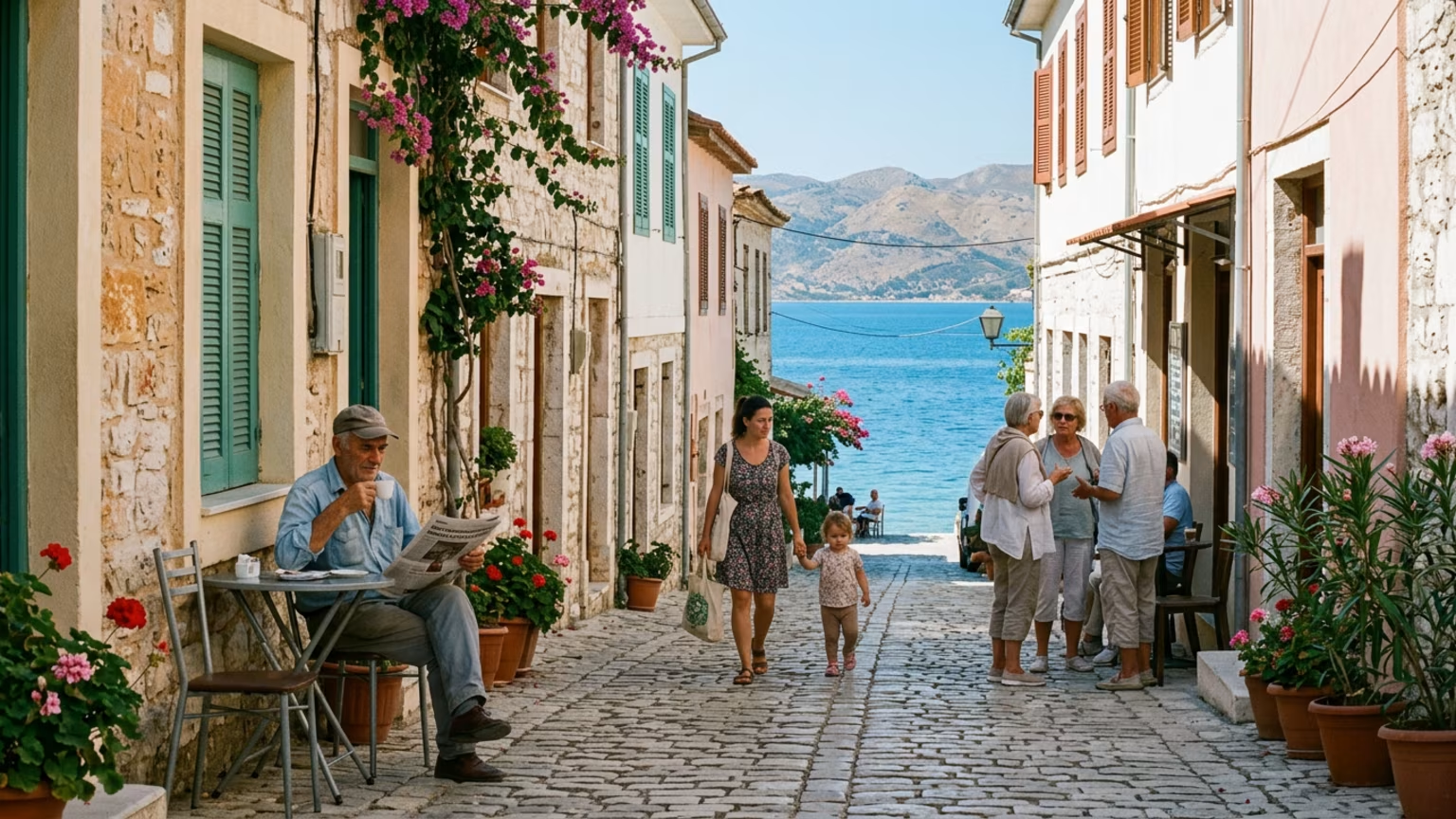
Representative image

A practical guide for remote workers evaluating Vlorë as a long-term base, covering the digital mobile worker permit, tax residency, and year-round housing.





On July 27, 2026, Albanian authorities published guidance detailing a residence route that grants up to a one-year stay for foreign nationals working through information-technology tools. This single timeline detail changes how professionals calculate their overseas plans. It replaces vague online advice with a clear legal framework for anyone seeking a base in cities like Vlorë.
This regulatory framework directly affects foreign professionals who earn their living through remote employment. If you hold a service contract with a foreign client or an employment contract with an overseas employer, this residence category applies to you. It isolates remote workers from traditional tourists and local job seekers. Retirees relying on pension income fall under entirely different administrative rules.
Short-term visitors staying for a quick summer holiday can largely ignore this specific permit process. Professionals aiming to build a continuous daily routine near the coast must understand these rules. The guidance clarifies the exact paperwork required for a sustained stay. It helps workers who rely on laptops and stable internet plan their legal footprint in the country.
If you are planning to relocate without an overseas income source, this permit will not serve your needs. The digital mobile worker route is strictly for those who bring their employment with them. It requires applicants to demonstrate financial independence through external channels. Local businesses and job seekers operate under different local employment laws.
Securing a base in Vlorë requires moving past the popular concept of a simple tourist extension. Albania manages this through the Unique Permit framework. This system includes a specific route for digital mobile workers. The category covers foreign nationals who work primarily through information-technology tools without a fixed workplace.
The application process demands thorough preparation and specific local logistics. For an eligible applicant, the published requirements include an employment contract with an overseas employer or a service contract with a foreign client. You must provide proof of sufficient income and a criminal-record certificate. These documents prove your status as a self-sufficient professional operating across borders.
The checklist mandates proof of accommodation in Albania and health insurance valid for at least one year. Meeting the accommodation requirement means securing a reliable lease before your paperwork is finalized. A quick summer viewing trip is a weak test for finding a stable home. You need an apartment that functions well during the quiet winter months.
Finding a reliable workspace is a daily necessity for maintaining your remote income. You cannot rely on seasonal cafes for sensitive client calls or heavy data uploads. Evaluating the local connectivity and infrastructure is a necessary step before signing a lease. The first permit may be issued for up to one year and is renewable.
Immigration status is only one part of the administrative equation for relocating professionals. Securing your residence permit does not automatically resolve your tax obligations. Spending more than 183 days in the country is a primary trigger for establishing local tax residency. Other domestic tests may apply depending on your personal circumstances.
Professionals must separate their legal right to stay from their fiscal responsibilities. You could hold a valid permit and still need to analyze your worldwide income exposure. Proper planning involves understanding how a prolonged stay affects your home country filings. Establishing your base requires professional financial advice to avoid unexpected liabilities.
Do not assume that working for a foreign employer grants you absolute tax immunity. The intersection of local laws and international treaties requires careful navigation. You must understand your reporting obligations well before you cross the 183-day mark. Failing to separate visa status from tax status can lead to severe financial complications.
The 183-day limit is a standard international metric that requires strict calendar management. You must track your exact entry and exit dates accurately throughout the calendar year. A simple weekend trip to a neighboring country does not reset your residency timeline completely. Keeping detailed records protects you during any future administrative audits.
Finding an apartment requires testing the market outside the peak summer season. Coastal real estate is heavily influenced by seasonal tourism and short-term rentals. This seasonal demand can make securing a stable lease difficult. Landlords often prefer lucrative daily rates in August over steady monthly payments.
You must evaluate how a building functions when the tourist crowds leave. Central cooling might be perfect for summer, but you need adequate heating for January. You should read a local neighborhood guide to find areas with open grocery stores year-round. An apartment that feels lively in July might feel completely isolated by November.
Coastal real estate markets operate on a different rhythm than inland capital cities. The transition from high summer to deep winter drastically alters the available housing stock. Many property owners lock their apartments completely from November to April to avoid maintenance costs. This practice heavily restricts the number of quality units available for long-term annual leases.
Available property and rental figures are indicative rather than official market statistics. You should treat online price estimates as rough planning guides rather than guaranteed rates. The lack of detailed month-by-month datasets means you must verify costs personally. Relying on outdated internet forums can severely skew your budget expectations.
Moving your professional life to the coast is a process of gradual testing. You should not sign a year-long lease during your first visit. Take a structured approach to evaluate the city before committing to a permanent base. Follow these practical steps to verify your options.
A successful relocation depends on verifying administrative details before your arrival. You must confirm the exact legal category that applies to your specific employment structure. Do not rely entirely on generic online advice for navigating the residency landscape. Obtain written clarification regarding current income thresholds directly from official channels.
Healthcare planning is another critical step that requires immediate attention. Your residence permit demands health insurance, but a policy document does not guarantee instant care. You must inspect local medical facilities and establish a plan for routine visits. Identify emergency fallback options well before you actually need them.
Building a routine involves looking past the scenic waterfront views. You need to verify that your chosen neighborhood supports your daily administrative needs. Ask landlords direct questions about lease renewals and utility costs during the off-season. Your ability to maintain your lifestyle relies on stable systems and predictable expenses.
Property market sources present the city as a tourism-linked growth market. They frequently point to infrastructure projects as potential future catalysts for the area. Projected developments do not equal immediate improvements to your daily life. You must base your housing decisions on current realities rather than future promises.
This construction activity brings both opportunities and challenges for residents. New developments may eventually introduce modern housing options and better amenities. In the short term, ongoing building projects can create unexpected noise during your working hours. You must carefully inspect your immediate surroundings for active construction sites before signing a lease.
As authorities continue processing these digital mobile worker applications, the one-year timeframe will shift from a new administrative detail to a familiar rhythm of life for coastal residents.
Planning a remote relocation means you personally own the daily challenge of verifying foreign housing markets. When Vlore Circle provides guidance, the guesswork disappears. We deliver practical, fluff free content for settling and living in Vlorë so you can secure a reliable lease. If you are feeling isolated and seeking meaningful social connections after your move, our community is ready. Join our facebook group
Follow Vlore Circle for fresh guides, local updates, and community notes around life in Vlorë. It is the easiest way to stay close to what we are building.

Learn how to build a sustainable remote work routine in Vlorë. We cover navigating seasonal closures, testing internet speeds, and organizing daily tasks.


Evaluate the practical challenges of relocating to Vlorë. Learn how bureaucracy, connectivity, and residency rules impact your long-term remote work plans.

A breakdown of the growing work-cation trend and how remote professionals arriving in Vlorë can manage availability windows, protect off-hours, and maintain productivity.