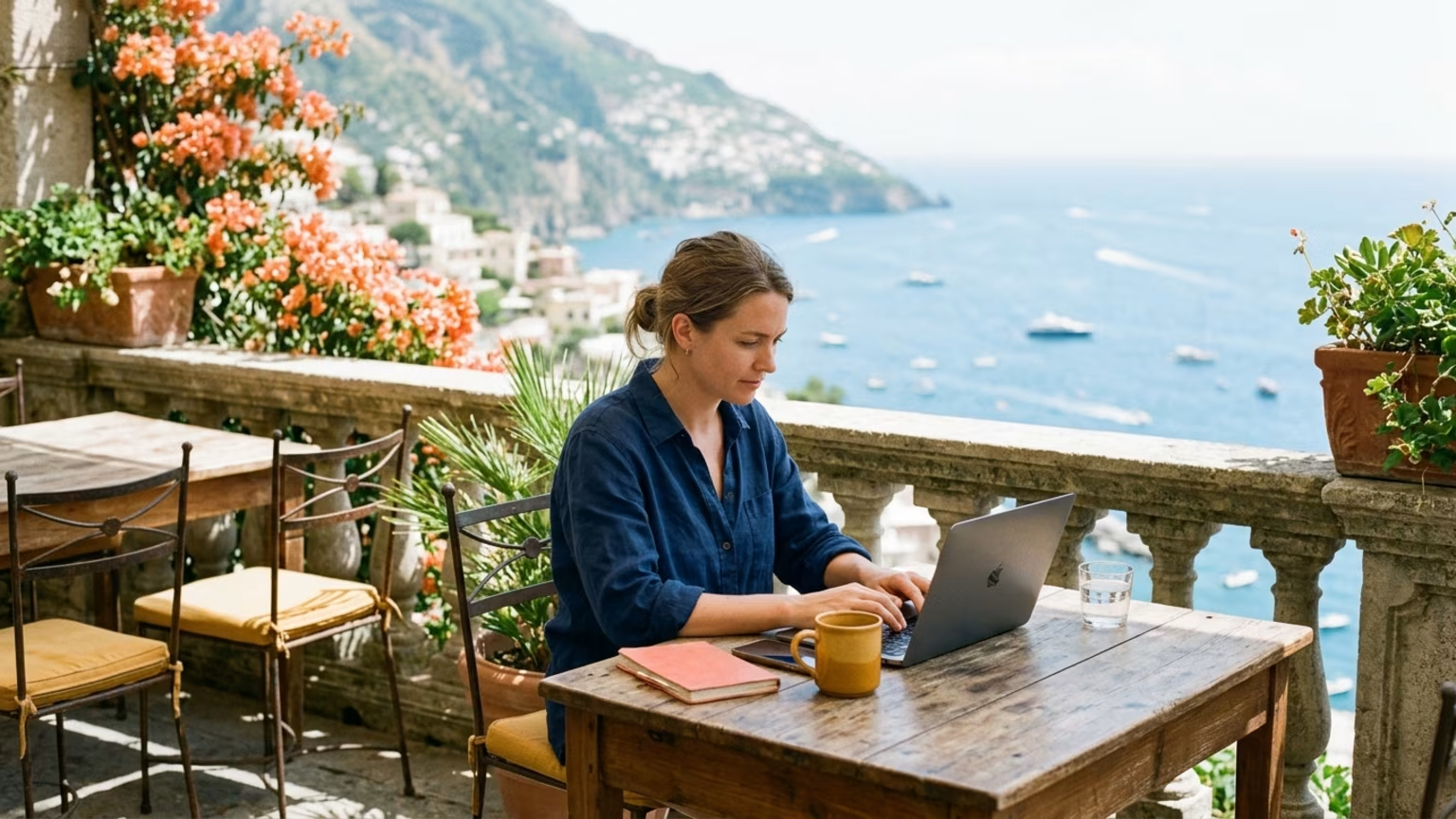
Representative image

Learn how younger remote workers are trading high U.S. housing costs for coastal living in Vlorë, and find practical steps to avoid isolation abroad.





On September 21, 2026, Fortune reported that the number of American digital nomads grew from 7.3 million in 2019 to approximately 18.5 million. According to workforce consultancy MBO Partners data cited by the publication, Gen Z and Millennials account for 75% of this group. A 2026 BMO Financial Group survey of 2,500 adults found that 83% of Gen Z respondents and 87% of Millennial respondents would relocate to a cheaper location if their jobs allowed remote work. This massive shift brings a steady stream of young professionals to coastal cities like Vlorë.
This trend directly impacts young remote workers and American expats seeking a lower cost of living abroad. Local renters and retirees with fixed pensions can largely ignore this specific demographic update. Fortune reports that renters under 40 earning at least six figures have become less confident about owning a home than they were five years ago. Americans now expect to buy their first home at age 40, compared with age 28 in the early 1990s. More than half of non-homeowners say purchasing a home feels unattainable today.
The economic appeal driving this shift is profound. Fortune reports that company-employed digital nomads have grown faster than self-employed digital nomads since 2019. The normalization of remote work during the pandemic made this possible. Salaried employees now realize they can keep their stable corporate income and relocate to an entirely different country.
Miki Esteban of Holafly described this shift as a change in how Gen Z and Millennials view living standards. She called digital nomadism a “smart economic strategy” for the generation rather than a simple travel preference. Fortune reported on Meredith and Colby Thomas, a married couple who left the United States two years prior after Meredith worked 70-hour weeks as an accountant. They traveled through 13 countries across Europe and South America. They supported themselves using savings, personal investments and a travel blog.
Meredith Thomas told Fortune that making money matters little if you work all the time and have no time to enjoy it. Her husband Colby Thomas stated they wanted to strip away the burdens of the American Dream to craft a happy life. Their former U.S. mortgage, property taxes and insurance cost nearly $4,000 per month. They eventually rented two-bedroom, two-bathroom apartments in Bolivia and Vietnam for less than $700 per month.
Esteban gave an example to Fortune where someone spending about $2,500 per month on a studio in New York could lower total living costs to below $1,200 in cheaper cities. These figures help explain why New Budget Benchmarks for Remote Workers in Albania's Coastal Cities attract so much interest from incoming expats.
Moving to a cheaper country does not guarantee a perfect life. The Thomases told Fortune that lower housing costs and international travel brought loneliness they had not fully anticipated. Language barriers made it very difficult for them to build deeper friendships with local residents. The digital-nomad hashtag on TikTok has accumulated more than 4.2 billion views, illustrating the immense scale of the lifestyle’s online visibility. Online popularity does not solve real isolation in a new city.
The Thomases found a community temporarily in Vietnam. They soon realized that other destinations marketed heavily as digital-nomad hubs did not match their online image. Fortune describes a recurring circuit where longer-term nomads rotate among the same small group of people and cities. They move between places like Tallinn in summer and Chiang Mai in winter partly to avoid feeling alone. This proves that moving constantly creates a shallow social network.
Holafly’s 2026 wellbeing research reported that 32.3% of frequent and long-stay travelers felt isolated from their usual social or emotional support network. The exact same research noted that 32.2% experienced burnout linked directly to their travel lifestyle. Only 11% of digital nomads have maintained the lifestyle for more than five years, according to MBO Partners data summarized by Fortune. Relying solely on other foreigners for your entire social life rarely produces lasting friendships.
Here in Vlorë, the practical reality requires careful planning beyond just finding a cheap apartment near the beach. A recent Albania remote-work guide describes coworking and remote-worker activity in Vlorë as seasonal. It notes stronger activity from spring through autumn, with cafés serving as informal workspaces during the quieter winter months. A separate digital-nomad guide describes Vlorë’s community as smaller than Tirana’s and identifies a local group connected to the Vlorë Hub coworking space. If you are calculating the Cost of Remote Living in Vlorë: Realistic Budget Breakdown for Digital Nomads, you must factor in the social effort required to stay happy.
Moving across the world involves complex legal steps. You cannot simply arrive and stay indefinitely. Understanding Navigating Albania's Residency Landscape: A Legal Roadmap for Moving to Vlorë helps you plan your transition smoothly. The Albania remote-work guide states that Albania has a residence-permit category for people working remotely for foreign employers or clients under Law 79/2021.
An annual permit requires clear evidence of income, proper insurance and a verified accommodation contract. Long-term renters cannot rely on informal handshake agreements if they want to apply for local residency legally. Reading about how the Albanian Government Expands Digital Nomad Tax Incentives and Simplifies Residency Rules is a mandatory step for any new arrival planning to stay past the tourist limit. Formalizing your status provides peace of mind.
Newcomers often struggle with the transition when the summer crowds leave the main Lungomare promenade. Relying solely on passing tourists for friendship leaves you completely alone when the season ends. Coastal communities in Albania are noticeably thinner and more seasonal than those in the capital city of Tirana. When the weather cools down, the informal meetups on the beach stop happening. You need a dependable local network to replace the community you left behind. Building a steady life here means participating in the local neighborhood year-round instead of treating the city like a temporary vacation.
We expect local real estate agencies in Vlorë to begin offering more standard year-long leases as salaried remote workers demand stable housing over seasonal vacation rentals.
Overcoming remote work isolation requires practical local knowledge, and Vlore Circle provides the community framework to achieve it. Vlore Circle solves the challenge of securing reliable internet and coworking environments so you can maintain steady productivity and build a local routine. Through our Community Meetups, we host in person social events and networking to build real life connections.
Follow Vlore Circle for fresh guides, local updates, and community notes around life in Vlorë. It is the easiest way to stay close to what we are building.
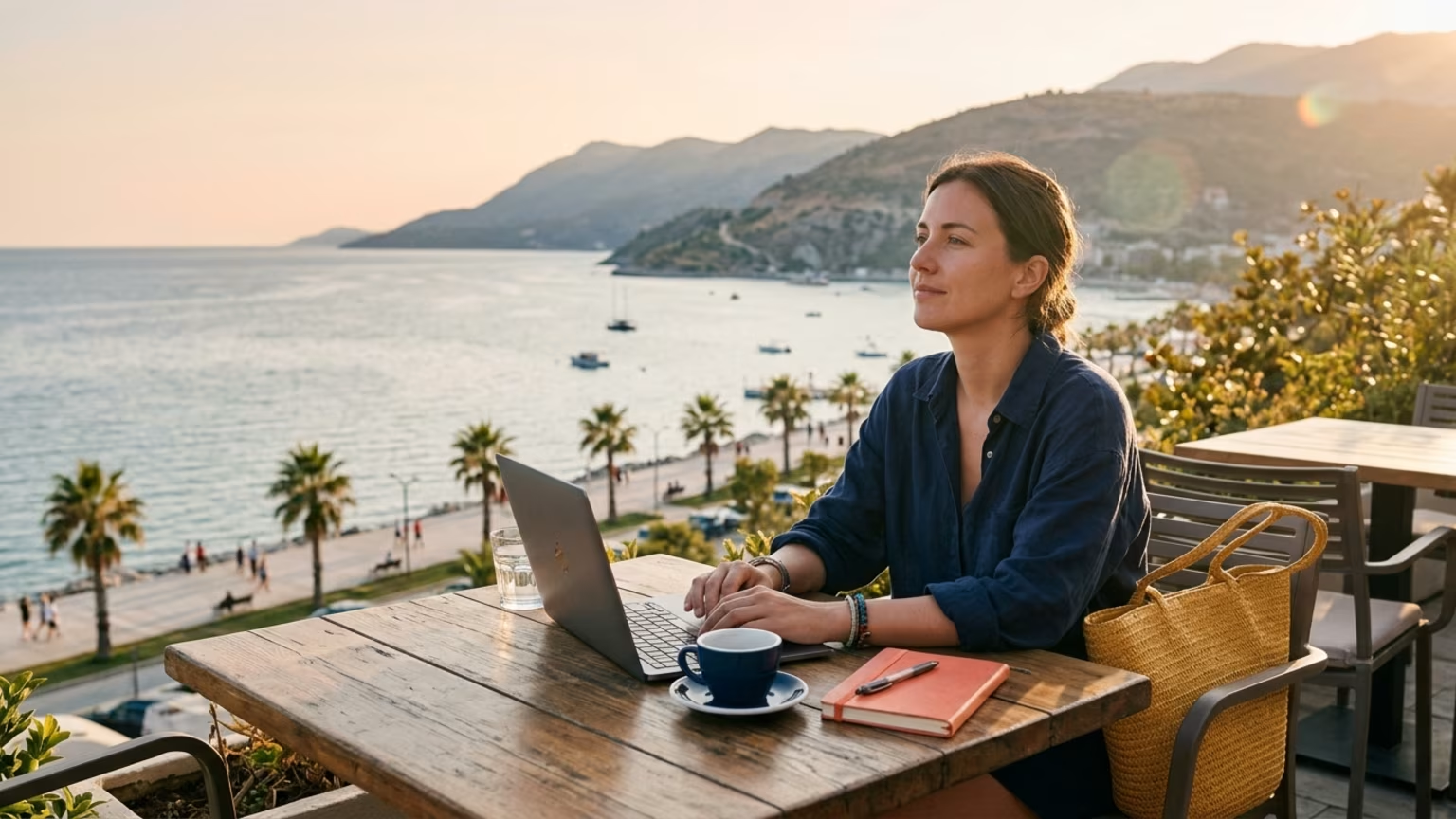
Learn how to build a sustainable remote work routine in Vlorë. We cover navigating seasonal closures, testing internet speeds, and organizing daily tasks.


Evaluate the practical challenges of relocating to Vlorë. Learn how bureaucracy, connectivity, and residency rules impact your long-term remote work plans.
A breakdown of the growing work-cation trend and how remote professionals arriving in Vlorë can manage availability windows, protect off-hours, and maintain productivity.