Representative image

A reality-based guide to moving to Vlorë. Evaluate the practical demands of winter housing, healthcare, and infrastructure before planning your coastal relocation.





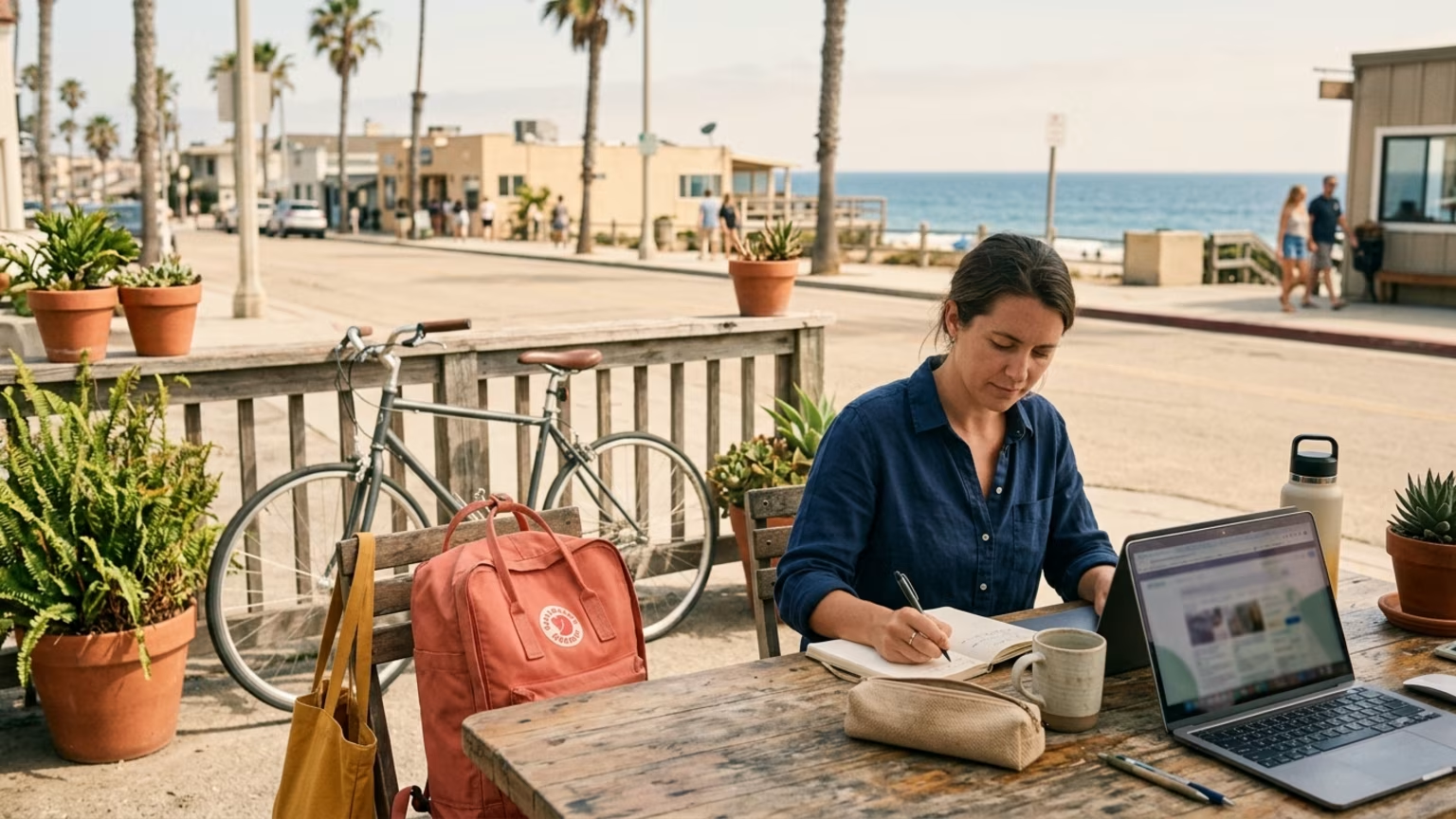
You pack up your laptop at a seafront café near the Lungomare on a sunny mid-July afternoon. The Mediterranean breeze is pleasant, the coffee is cheap, and you immediately start looking at local apartment rentals. A warm coastal holiday rarely equals long-term livability. The truth about moving to Vlorë is that a perfect summer trip tells you almost nothing about how you will handle the winter dampness, the healthcare logistics, or the housing market.
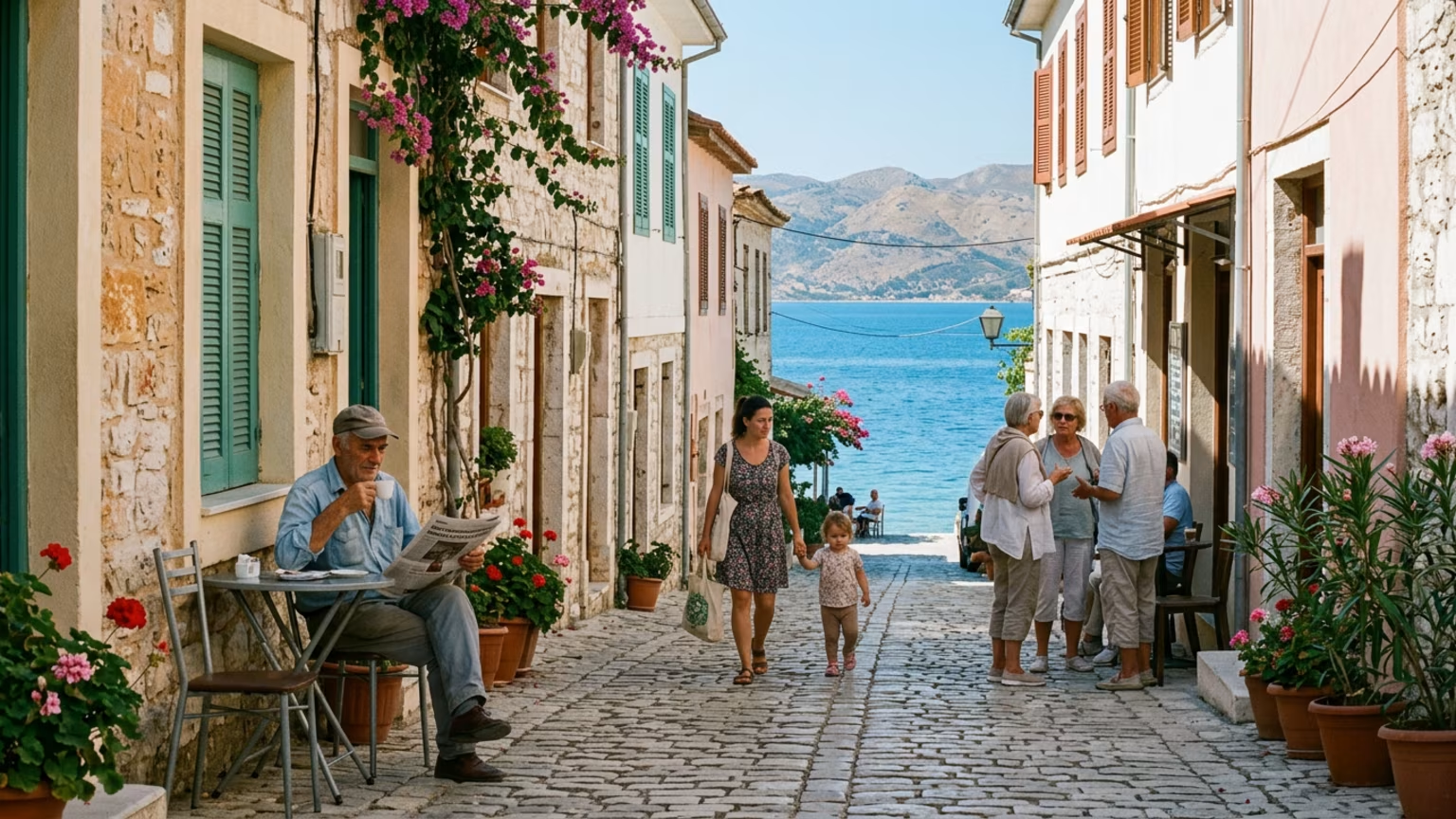
Newcomers often arrive with a vision shaped entirely by peak season convenience. The city presents itself as a permanent paradise of sunny days and endless social events. You might assume this lively atmosphere represents normal daily life in Vlorë. Many expats expect that same easy accessibility to persist all year.
The warm months bring an influx of energy to the coastal neighborhoods. National accommodation data recorded 445,846 foreign visitors and 41.3% hotel-room occupancy in June 2026. INSTAT data reported 323,426 foreign visitors in Albania’s coastal regions in June 2026, marking a 27.4% year-over-year increase. That volume of visitors creates a highly social environment filled with open restaurants and late-night events.
Platform stays reinforce this temporary mindset for visitors. Apartments listed on Airbnb, Booking.com, and similar services recorded 284,300 overnight stays nationwide in June 2026. The problem arises when short-term tourism masks the practical requirements of permanent residency. A tourist does not need to register for a local doctor, find a year-round lease, or commute through winter storms. Expecting the July atmosphere to last into January sets a dangerous trap for anyone planning a serious relocation.
The weather shifts dramatically when the seasonal tourists leave the city. EaseWeather’s Vlorë County averages show a strong seasonal contrast, featuring very dry summer months and approximately 258 millimetres of rain in November. You will need to prepare for those colder, wetter conditions. This requires mastering the climate cycles before you sign a permanent lease.
Mild winters still demand proper indoor heating and good insulation. Many coastal apartments lack adequate protection from the damp sea air. You must check a property for mold, proper ventilation, and reliable hot water during the cooler months. Renting short-term between October and March is the smartest way to test your tolerance for the winter climate.
Affordable housing is subjective and highly variable across different neighborhoods. A July 2026 Numbeo cost-of-living listing put reported one-bedroom rents at about 38,250 lek in the centre and 36,333 lek outside it. Recent listings reviewed for this guide included apartments around €300 to €450 monthly and a house at €700 monthly. A local expat-oriented guide estimates that many expats pay €400 to €700 monthly for a decent one-bedroom apartment.
The real challenge involves finding a lease that runs straight through the winter without a massive summer price hike. Many landlords prefer the high returns of short-term summer rentals. You must establish clear terms regarding utility payments, deposit handling, and long-term legal documentation before committing. Do not judge a flat solely by its summer appearance or balcony view.
Beyond the monthly rent, you should account for the full spectrum of living costs. Your budget must include utilities, transport to Tirana, private healthcare, and occasional travel. A low headline rental price does not guarantee a cheap lifestyle if the property lacks basic winter amenities. True affordability depends on finding a legally clear property that supports your daily routine.
Medical care requires significant planning for anyone moving here permanently. Exit to Albania advises residents to expect a mix of public care and out-of-pocket private diagnostics. The guide notes that residents can register for a free family doctor through the e-Albania system. The public system can be crowded, and patients often pay privately for laboratory work and X-rays.
Private clinics offer reliable alternatives for routine needs. The same expat guide cited provider-specific figures at one recommended private clinic, noting approximately 3,000 lek for a clinic visit and 2,000 lek for an X-ray. You should map out the nearest pharmacy and hospital to your chosen neighborhood. Anyone with complex medical needs must verify that local specialists and medications are consistently available.
Getting around the city and connecting to the outside world involves distinct compromises. Do not base your relocation plans on unfinished transport projects. Albanian Daily News reported that the €103.9 million Vlorë International Airport remained unfinished and cited an assessment of 70% construction progress with 57% certified. You must plan your international travel around Tirana Airport for the foreseeable future.
Port options remain limited by scale when compared to other Albanian transit hubs. RTSH reported around 17,000 passengers through the Port of Vlorë in July 2026, compared with approximately 111,000 at Durrës and 131,000 at Sarandë. Daily commuting works best for those comfortable walking, using taxis, or driving their own car. The city fits people who do not require a dense metropolitan transit system.
Remote workers face their own set of infrastructure hurdles on the coast. A beautiful seafront apartment is useless if the internet drops during every video call. Local guidance recommends testing an apartment’s internet and asking other remote workers about dependable workspaces. Keep a local SIM card with mobile data as a backup plan.
Your workspace needs to function perfectly during both summer heatwaves and winter storms. A quiet room with proper sound insulation is more valuable than a scenic view. Do not assume every cafe offers business-grade connectivity for your afternoon meetings. Building a reliable home office demands careful testing before you sign any paperwork.
Meeting people outside the busy tourist season takes deliberate effort. You cannot rely on the transient summer crowd to build a lasting support system. A sustainable off-season lifestyle requires finding repeatable, year-round activities. You should identify one local community contact and one professional network connection before you even unpack your bags.
Establishing a routine is the best way to integrate into the city. Join a language class, volunteer locally, or attend professional meetups to expand your circle. Spending all day alone in an apartment will quickly lead to isolation. A durable social life comes from blending international contacts with meaningful neighborhood relationships.
The people who succeed here share a very specific mindset. They value the relaxed Mediterranean pace over the highly structured convenience of a massive capital city. They are adaptable, patient, and willing to work around occasional service limitations. Thriving in this environment means accepting that a local cafe might close for the winter and that public transport requires a flexible schedule.
Successful newcomers prioritize building relationships with local residents from day one. They take the time to learn basic Albanian phrases and participate in neighborhood life. They do not expect their home country's exact systems to be replicated on the Albanian coast. Instead, they find comfort in the slower rhythm and the strong sense of local community.
Preparation separates the successful relocations from the stressful ones. Smart planners always test the internet connection themselves, keep an emergency fund for private healthcare, and secure their long-term housing well before the summer rush. They understand that living abroad demands self-reliance and a willingness to accept the actual conditions on the ground.
Evaluating this coastal destination requires looking past the summer holiday shine to address the practical demands of winter housing, healthcare, and infrastructure. The transition from tourist to permanent resident brings inevitable friction, but the reward of a slower, community-focused coastal life is entirely worth the effort.
The individual managing a household relocation typically spends weeks agonizing over lease terms, and confidence replaces confusion when you access clear data about local property norms. Finding long term rentals at fair local rates is straightforward when Vlore Circle provides Local Guides and Resources (flagship): Practical, fluff free content for settling and living in Vlorë.
Follow Vlore Circle for fresh guides, local updates, and community notes around life in Vlorë. It is the easiest way to stay close to what we are building.

An October weather update warns of moderate rainfall and potential urban flooding in Vlorë. Learn how to navigate local infrastructure and neighborhood risks.


Understand the legal realities of moving to Vlorë with this guide on entry visas, residence permits, and remote work authorizations for new arrivals.
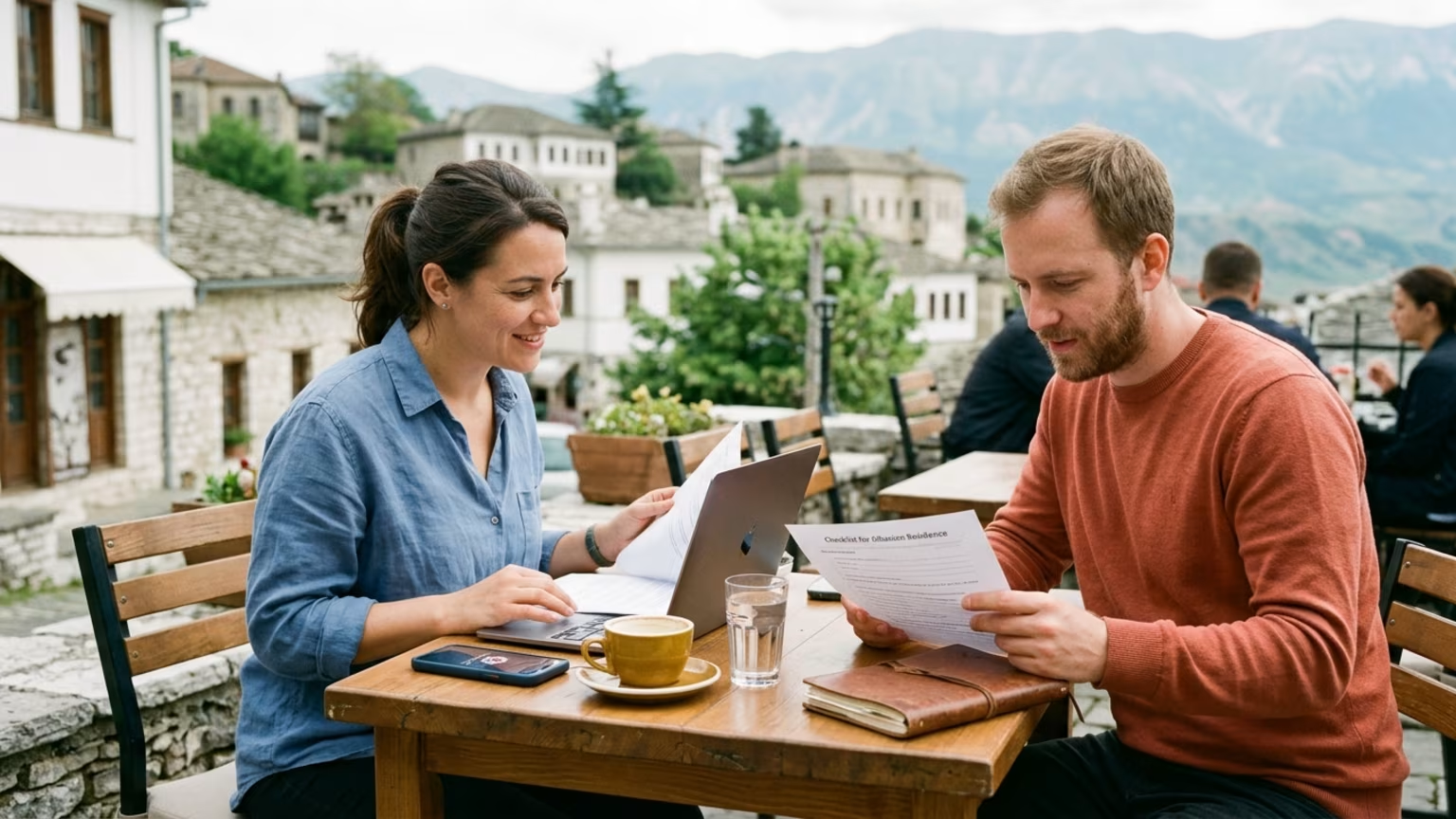
A practical guide for expats moving to Vlorë covering visa-free entry rules, remote work authorizations, and how to navigate the e-Albania permit process.