Representative image

Compare Vlorë’s Lungomare and historic center through daily routines, address-level checks and a practical winter test before choosing a home.





Choosing Vlorë’s Lungomare over its historic center changes the Albania you meet each day, not just the view from your window.
One choice puts the seafront at the center of your plans. The other gives older streets and cultural surroundings a larger place in your routine. For someone making a home rather than taking a holiday, that difference deserves more attention than the apartment photos.
Treat guidebook descriptions as orientation rather than a housing ranking. They do not establish rents or noise levels for individual streets. Internet performance, healthcare access and winter business hours need an address-level check.
The useful question is not which area wins a popularity contest. It is which setting fits the life you expect to lead. Start by matching a possible home to your daily routine, then compare the actual streets and buildings.
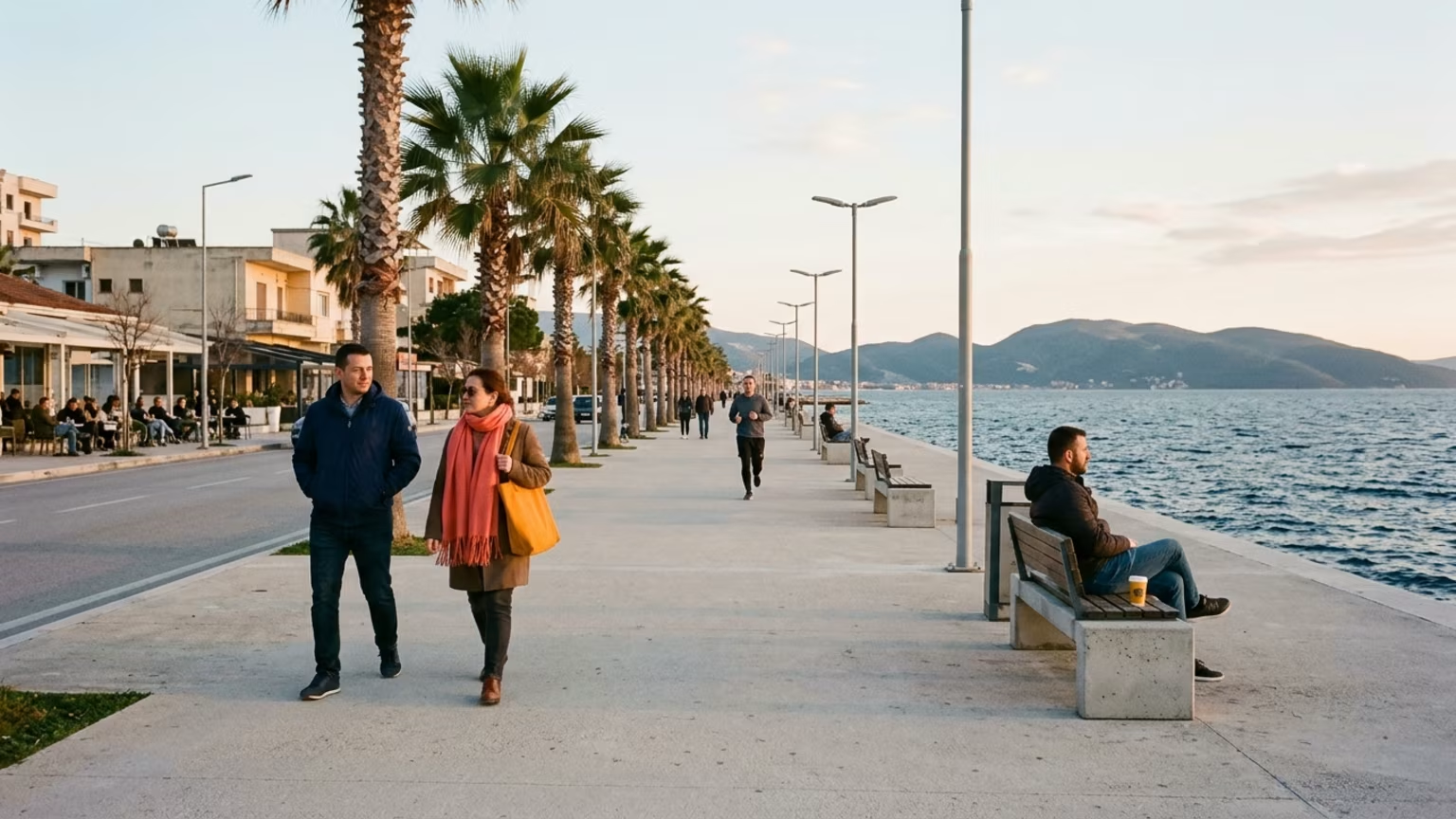
A travel guide to Vlorë describes the Lungomare as the main waterfront promenade, with people walking and stopping at cafés in the evening. That gives this option a clear identity: the waterfront can be part of an ordinary day rather than a separate outing.
For a newcomer who values a regular sea walk, that is a strong reason to start here. You are choosing access to an activity you already enjoy. The same applies if your preferred evening is a walk followed by time at a café.
The appeal is not limited to a sea view from the sofa. A home chosen for access to the promenade can support a routine built around getting outside. That is a more useful reason to choose the Lungomare than hoping the right balcony will make every other housing question disappear.
During a visit, test the parts of the day you expect to repeat:
These are checks for your shortlist, not claims that every nearby block offers the same experience. Keep your attention on the route from the front door.
For remote workers, the seafront should support the working day rather than stand in for it. Verify the connection inside the candidate property. A café nearby answers a different question from whether the apartment supports your work.
Use the same distinction when planning a workable remote routine. Choose the Lungomare for the daily coastal habit you will use, then assess the home on its own terms.
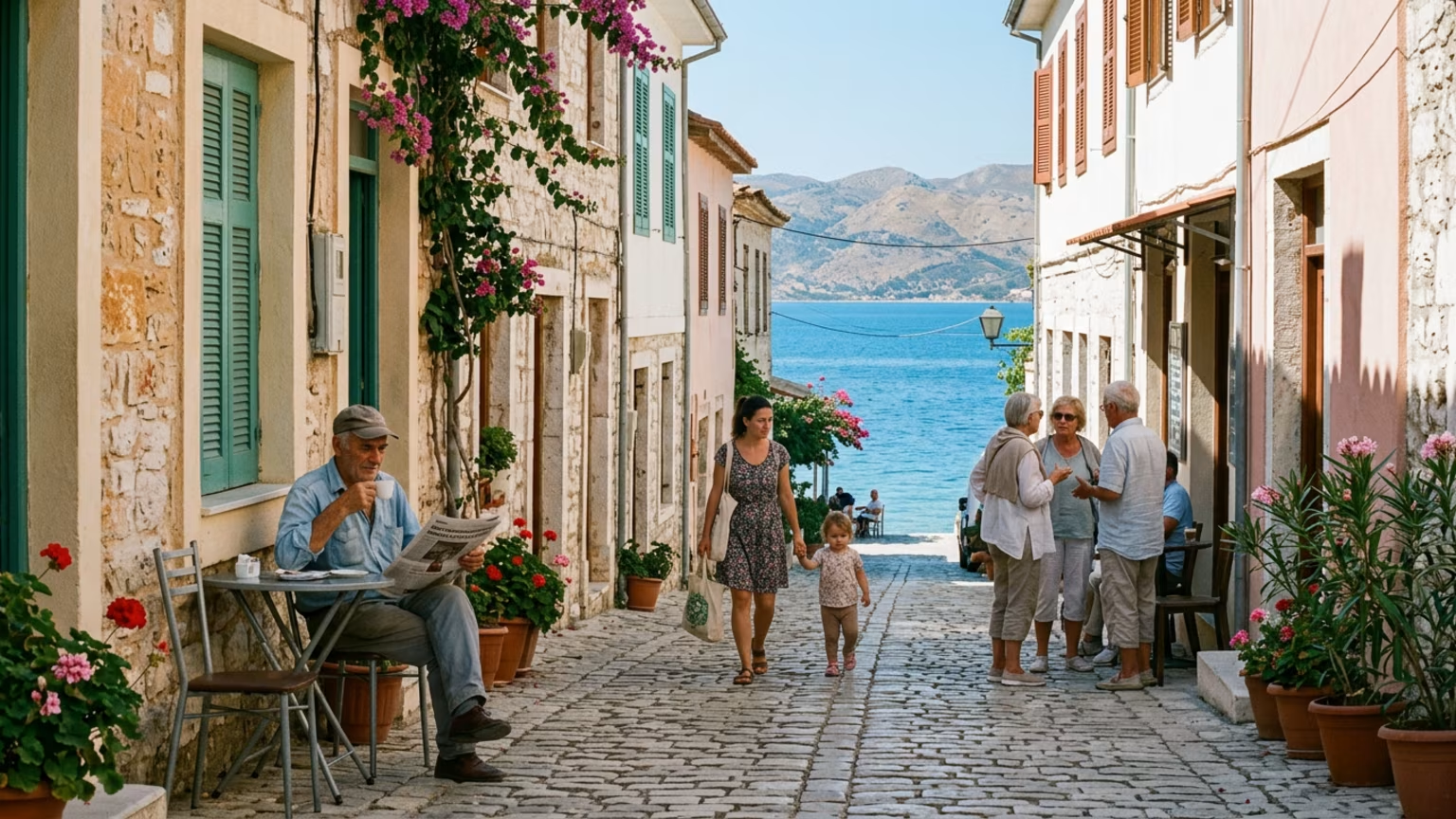
The historic center makes a different offer. The same travel guide presents traditional buildings and cultural sites as a contrast to the modern seafront. A locally focused city guide describes the historic core through narrow lanes and two-story houses.
For someone drawn to older streets, that setting may matter more than having the promenade as the default walk. The attraction is architectural and cultural. It is a positive preference, not a consolation prize for choosing a home away from the waterfront.
This is the stronger candidate if the surroundings you want to return to are old streets rather than the sea edge. You might enjoy visiting the Lungomare without wanting it to define your address. Choosing the historic center makes that distinction explicit.
The local city guide identifies both the Lungomare and Vlora Bazaar as mapped places. That is useful orientation, but a place name is not an errand plan. Locate the actual shops you expect to use and walk the routes from the property.
Apply the same practical test here as on the seafront:
Do not choose an old street simply as a way of avoiding a lively promenade. Choose it if you enjoy the setting itself. A preference built only around what you want to escape gives you less to work with than a clear idea of what you want nearby.
Nor should “historic” become shorthand for a complete residential package. The useful comparison is between two addresses with tested routines. The historic center deserves equal attention, but it should pass the same checks as a home near the Lungomare.
A separate travel guide recommends booking early for July and August and describes the Lungomare as an evening focal point. Those observations make a summer visit useful, but insufficient for choosing a year-round home.
The harder test is a rainy, quiet off-season day. Judge both settings with outdoor leisure taking a smaller role. A home still needs to support shopping, work and contact with other people when a long walk is not the plan.
For a Lungomare address, ask what remains attractive when you are not using the promenade. Trace the route to the shops and services you would still need. Confirm winter hours with any business that would be a regular part of your week.
Then make a separate judgment about the sea. If you value seeing it and walking beside it outside summer, proximity remains a meaningful benefit. If the attraction rests mainly on holiday evenings, give that benefit less weight in a long-term decision.
The blunt version is this: a waterfront setting cannot perform your errands or supply your social routine. It earns its place in the decision through use, not through the promise attached to the word “seafront.”
For a historic-center address, set aside the appeal of the lanes for a moment. Walk the routes you would need on a quiet day. Check the businesses and services that would turn the location into a workable home base.
Older surroundings may remain a strong personal draw when beach plans leave the calendar. Yet attractive streets are not a substitute for a routine that functions. Give the setting credit for what you enjoy, then judge practical access separately.
Neither choice should win through a flattering comparison between a summer evening in one area and a dull visit to the other. Compare similar kinds of days. Return during both a busy period and a quieter one before committing to a long-term base.
For the broader planning question, think through how your routine changes across seasons. The winter decision should rest on the life available from the address, not the atmosphere you remember from a visit.
Choose the Lungomare if you are a committed seafront walker or an evening-café regular. Its guide-described promenade life matches those priorities directly. Put it first when regular access to the waterfront is something you expect to use beyond a holiday.
This is the clearer fit for a newcomer who wants a coastal activity to anchor the week. The apartment still has to pass the practical checks. The promenade is the reason to shortlist the area, not permission to skip them.
Choose the historic center if older streets and cultural surroundings matter more than immediate promenade access. Put it first when you want that setting around your home and are content to treat the seafront as a separate destination.
This is the clearer fit for the architecture-minded resident who enjoys the historic core on its own terms. Do not choose it merely on an assumption of lower noise or easier errands. Choose it for a preference you can name and routes you have checked.
For remote workers and retirees, apply specific work and service needs before settling the lifestyle contest. Keep the priority clear: a suitable address first, a preferred setting second. Between two homes that meet those needs, choose the surroundings you will use on an ordinary day.
A seafront address and a historic-center home each need to work beyond the holiday season. Vlore Circle connects practical resident guidance with in-person community events. The platform serves expats, remote workers and retirees seeking honest information and meaningful friendships in Vlorë.
Follow Vlore Circle for fresh guides, local updates, and community notes around life in Vlorë. It is the easiest way to stay close to what we are building.

Test central Vlorë, Lungomare and areas farther south with a winter week of real errands, work calls and evening walks before choosing where to live.


Build a Vlorë workweek around a tested connection and backup, with room for groceries, meals, exercise and a walk on the seafront.

Plan Vlorë living costs across summer and winter with checks on rental dates, summer availability, heating and the services around your home.