Representative image

Albania doubled its startup funding to 600 million lek in 2026. This analysis details how the expanding tech ecosystem impacts digital professionals in Vlorë.





On September 18, 2026, Emerging Europe published an analysis of the growing national startup ecosystem. The report details how early-stage capital and structured mentorship are slowly reshaping local business opportunities. Albanian founders are increasingly choosing to remain in the country to build their companies. This shift matters for digital professionals hoping to find solid business infrastructure outside the capital.
Recent government initiatives back up this trend with substantial financial commitments. According to RTSH, Albania doubled its 2026 startup funding to a total of 600 million lek. This expansion supported 163 ideas across the country. The 2026 figure represents roughly twice the 81 beneficiaries supported by the program in 2025.
The 163 supported ideas reportedly include 26 entrepreneurs from the Albanian diaspora. These international founders chose to return and build their future in Albania. This diaspora involvement brings crucial international experience back to the domestic market. Returning founders often maintain valuable overseas networks that can benefit their local partners.
These state grants represent a shift toward formalizing the local technology market. The national policy is slowly moving toward a broader support infrastructure for independent businesses. The government aims to push the sector forward with these expanded financial resources. As this infrastructure grows, remote workers on the coast will gain access to better professional tools.
This funding update directly impacts digital professionals, remote workers, and expat founders living on the coast. If you rely on local technology services or collaborative workspaces, this ecosystem growth is highly relevant. Professionals seeking specialized local contractors can benefit from this expanding talent pool. Retirees and short-term vacationers can ignore this news entirely.
Coastal residents often struggle to find dedicated business networks outside of the heavy summer tourism season. The development of a formal startup sector offers a different path for year-round professional connection. Founders establishing a remote work base in Vlorë can leverage this national push for new networking possibilities. Local service providers are beginning to cater to this exact demographic of digital workers.
Local authorities point to strong public interest in these new financial programs. Albania’s Minister of Economy and Innovation, Delina Ibrahimaj, stated that the 2026 Startup Albania call received 1,179 applications. Deputy Prime Minister Albana Koçiu noted the importance of the expanded funding pool. She confirmed the decision to double the budget expanded the beneficiary list to 163 people, including diaspora members.
Another RTSH report adds that authorities have provided €22 million in startup funding since 2022. The same source notes that the proposed 2027 budget includes an additional €6 million for the sector. These multi-year financial commitments demonstrate a sustained policy focus rather than a temporary initiative. Public officials express optimism about the continued growth of the local technology space.
The high application volume indicates substantial demand for structured business support across the country. Government messaging consistently highlights this major increase in applications as a sign of ecosystem health. State communications indicate that startup funding could increase again if the sector’s growth continues. These official statements frame the ecosystem as a growing priority for national economic development.
The national startup ecosystem remains heavily centered around Tirana and its local universities. However, Vlorë is slowly developing a service layer that supports independent professionals. At least one dedicated coworking option exists near the local university. More technical services are appearing on the coast to support this growing community.
Startup Tech Consultancy advertises AI engineering, developer staffing, and digital-transformation services to businesses in Vlorë. This shows that remote workers can increasingly find specialized local contractors without commuting to the capital. Professionals mapping out true monthly expenses for digital nomads in Vlorë should view these services as practical additions to the coastal lifestyle.
Early-stage capital remains the single biggest constraint for the country. Emerging Europe notes that Albania has fewer active angel investors and venture funds than neighboring regional ecosystems. Founders are not held back by a lack of talent or ambition. Instead, limited exposure to international capital and global customers is the primary hurdle.
Emerging Europe notes that Albania holds structural advantages that make it an attractive market for new technology businesses. The country features a young, tech-literate population alongside highly competitive operational costs. The local workforce possesses strong English proficiency, particularly among people under 35. These foundational elements prove that the market has the basic ingredients necessary for a thriving digital economy.
Emerging Europe identifies a persistent two-way visibility problem in the current market. Promising Albanian companies may remain unknown outside of small local founder networks. At the same time, international investors often do not consider Albania first when looking for new opportunities. This lack of exposure keeps many promising local companies from scaling.
The ecosystem requires more than just initial grant money to reach full maturity. Emerging Europe argues that local markets mature through deal flow, follow-on funding, and visibly successful founders. When the next generation sees tangible success, they are more likely to believe building a company is possible. This cycle of visible success and reinvestment is what the national market currently lacks.
According to Emerging Europe, accelerator programs play a vital role in professionalizing the local startup scene. These programs bring structured mentorship directly to emerging founders. They introduce international operating standards that help local companies compete globally. Most crucially, these accelerators provide the initial investor access that founders need to secure early financing.
Emerging Europe points out that hackathons, coding academies, and university entrepreneurship programs are contributing to a growing pool of potential founders. This means that networking might be just as important as finding physical office space. Industry events play a crucial role in closing the national exposure gap. These gatherings matter not for keynote speeches, but for concentrating critical investor meetings into a short period.
The Metropolitan Digital Innovation Incubator offers a clear example of this growing support infrastructure. Its official description says the model links academic knowledge with entrepreneurship, technology, and markets. Participants receive direct access to the innovation ecosystem alongside practical technical support. The incubator provides individual mentoring and prototyping facilities to help founders refine their products.
Emerging Europe describes activity emerging heavily in Tirana coworking spaces and university laboratories. The most successful founders are those building products specifically for international markets. This outward focus helps them bypass the constraints of the local domestic economy. Coastal residents must adopt a similar mindset to succeed.
Founders seeking cost-effective remote living in Vlorë must balance lower overhead with the need for strong national connections. The primary analysis focuses on founders building products for international markets. Staying connected to Tirana's established network is critical for coastal operators. The local Vlorë market is simply too small to sustain high-growth technology companies without external reach.
Remote workers and founders in Vlorë should adjust their strategies to leverage this growing infrastructure. Take these specific steps to connect with the local and national ecosystem:
The government planned to launch an Albanian Innovation Fund during 2026 to help startups move beyond initial funding and pursue growth and follow-on investment.
Choosing the right coastal workspace is a critical operational decision for incoming digital professionals, and Vlore Circle takes over that process by providing clear guidance. We solve the problem of discovering reliable internet and coworking environments. Through our Community Meetups, we organize in person social events and networking to build real life connections.
Follow Vlore Circle for fresh guides, local updates, and community notes around life in Vlorë. It is the easiest way to stay close to what we are building.

Learn how to inspect an apartment in Vlorë for year-round living. Find practical tips on verifying lease dates, winter heating, utilities, and internet setup.


CNA reports IGJEUM's forecast of intense rainfall and thunderstorms for Vlora on October 10 and 11, warning of potential urban flooding tied to drainage grids.
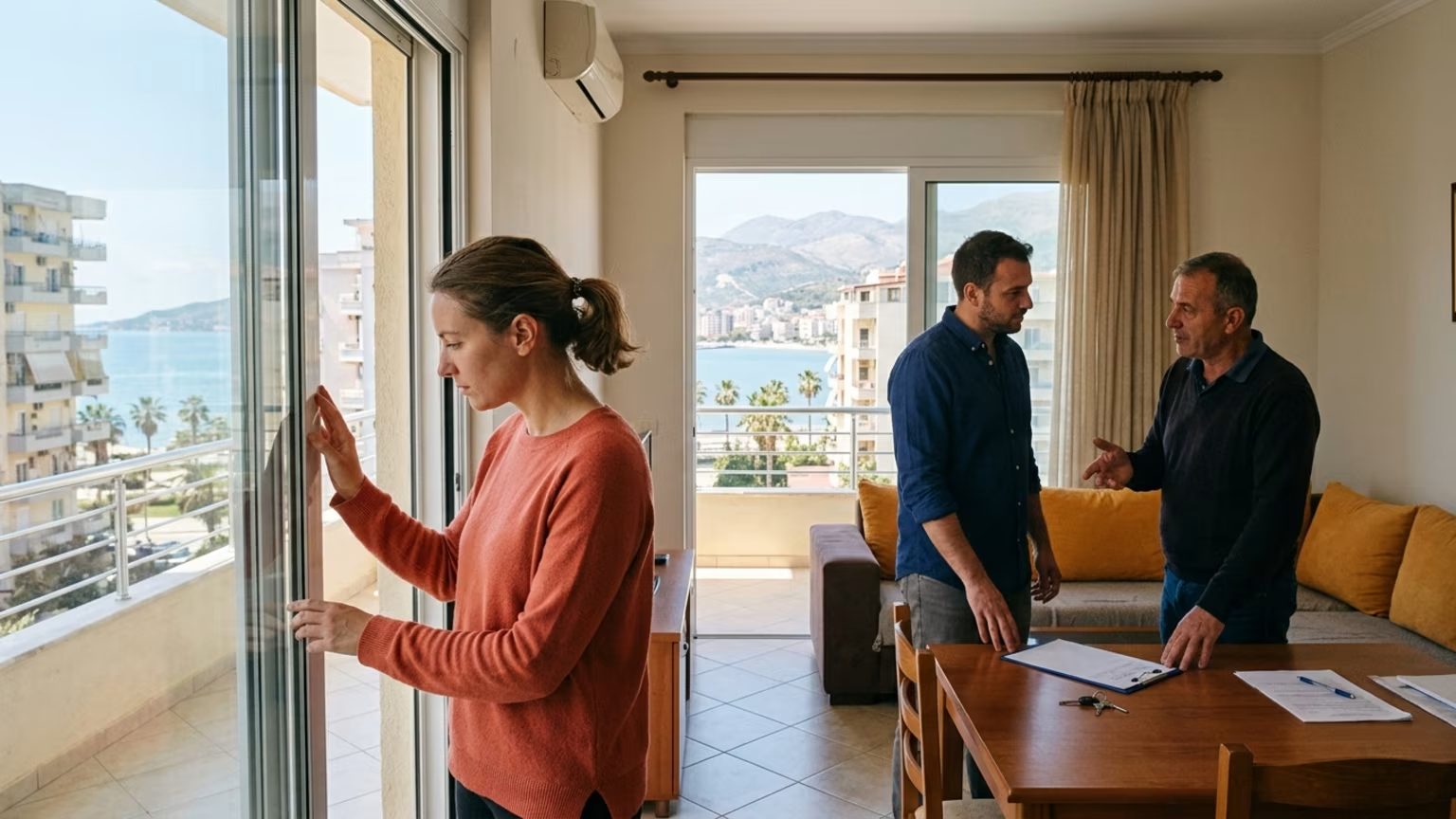
Learn how to assess a Vlorë apartment for true year-round availability. We cover what to check regarding summer leases, utility costs, and contract details.