Representative image

Vendim Kapaj is offering a free traditional flute and fyell course in Vlorë from September 2026 to July 2027. Learn the practical impacts for local residents.





On September 7, 2026, Albanian media reported that local musician Vendim Kapaj is offering a free traditional flute course in Vlorë for the third consecutive year. The program focuses heavily on the Albanian fyell and will run from September 2026 through July 2027. This schedule makes it a long-term cultural activity rather than a brief weekend workshop. For newcomers settling in the coastal city, it presents a tangible opportunity to study regional heritage. Finding structured activities often takes time for recent arrivals. This eleven-month program offers a potential weekly anchor for those building a life here.
This development matters most for young residents and long-term newcomers who want to participate in authentic local traditions. If you are a remote worker planning to stay through the winter, this course provides a recurring connection to southern Albanian music. Those extending a winter stay in Vlorë frequently look for exactly this kind of deep community involvement. Short-term visitors or tourists staying for just a few weeks can skip this news entirely. The September to July timeline requires a level of commitment that does not fit a brief holiday schedule.
The program actively attracts young people from across the southern part of the country. Participants are reported to be joining from Tepelenë, Vlorë, Kurvelesh, and several nearby areas. The geographical reach has expanded this year to include learners from the capital city of Tirana. This means attendees will likely mix with peers from vastly different Albanian regions. For an expat focused on building your Vlorë social circle, a regional class offers a unique environment.
Getting to know people from Tepelenë or Kurvelesh provides a completely different perspective than meeting locals on the main promenade. These inland southern areas have distinct musical histories that differ from coastal city life. A course that gathers students from these regions right in Vlorë creates a rich social mix. It allows newcomers to observe regional interactions without having to travel deep into the mountains.
September marks a major shift in the city as summer crowds depart and the year-round community settles into a quieter rhythm. Starting a ten-month educational program right as the autumn season begins helps newcomers avoid the typical post-summer slump. The rigorous schedule keeps participants engaged during the slower winter months. Having a fixed weekly commitment makes the transition to long-term residency much smoother.
Vendim Kapaj serves as the principal expert voice and main organizer for this initiative. He recently spoke to the Albanian Telegraphic Agency about the progress of the program. Kapaj noted that interest has noticeably increased compared with previous years. He specifically pointed out that several girls from Tirana are among the prospective participants for the current season.
His primary motivation is to preserve Albania’s traditional instruments and regional musical styles. He wants to help younger musicians carry the musical heritage of the Labëria region into the future. Kapaj described the growing enrollment numbers as highly encouraging for the local arts community. Speaking to the press, Kapaj said, "It is a pleasure to see young people wanting to learn and continue this tradition."
For residents building a new local routine, this program introduces a structured musical education spanning most of the year. The curriculum covers the fyell alongside several other specific traditional instruments. Students will study the cylja dyjare, bilbili, xhamba, and pipizana. These instruments form the backbone of traditional music in the Labëria region. Learning them requires serious dedication and consistent weekly practice over many months.
The cylja dyjare, bilbili, xhamba, and pipizana are not commonly taught in standard Western music schools. These specific tools carry the historical sounds of the Labëria region and require specialized breathing techniques. Having access to a local master offering free instruction is a rare cultural asset. It gives foreign residents a direct window into the artistic foundation of southern Albania.
Understanding these instruments helps residents appreciate the live music frequently heard at local festivals. Knowing the difference between a fyell and a bilbili changes how you experience a traditional performance. It shifts a newcomer from being a passive listener to an informed community member. This deepens the overall experience of living in the region.
The international profile of the Albanian fyell has recently grown quite significantly. Kapaj performed as a fyell soloist on the soundtrack of Christopher Nolan’s film The Odyssey. According to the available reports, the film's music was composed by Ludwig Göransson. This major cinematic production introduced the distinct sound of the Albanian fyell to massive international audiences.
Kapaj believes this high-profile film exposure directly helped increase local interest in his course. Seeing a regional instrument featured on a global stage often inspires younger generations to learn it. For foreign residents, this connection adds a fascinating layer to the local cultural landscape. You are learning an instrument that recently featured in a major Hollywood production.
The cultural value is clear, but the operational reality on the ground requires some patience. Public announcements lack several practical details that international residents typically need before committing to a weekly schedule. The exact weekly timetable, individual lesson length, and physical venue remain completely unconfirmed. Prospective students must seek out this critical information directly from the organizer.
The course is heavily advertised as free, but this applies strictly to the tuition itself. It is not publicly verified whether students must buy their own instruments or if they are provided. Costs for transport, instrument accessories, or private practice spaces remain unknown at this time. Beginners need to budget for these potential hidden expenses before officially joining the class.
If the course does not supply the instruments, finding a proper fyell locally might become your first real challenge. Traditional instruments are rarely sold in standard electronic or modern music shops along the main boulevard. You will likely need to ask the instructor for recommendations on local craftspeople who carve them. Navigating this purchase process is a cultural lesson in itself.
Furthermore, the program is primarily described as a youth-oriented traditional-music course. There is no formal confirmation regarding an official age limit or whether adult expats are eligible. The language of instruction is almost certainly Albanian, which poses a barrier for complete beginners. Anyone interested in practical residency and settling in should prepare to ask these specific questions locally.
Attending local classes often requires adjusting to a different style of communication. Schedules might shift based on local holidays, weather, or the instructor's professional commitments. Newcomers should approach the course with flexibility and a willingness to adapt to local norms. Understanding Albanian hospitality and cultural etiquette goes a long way in these community settings.
Since public details are currently limited, interested residents must gather specific information before planning their week. Do not assume the course operates like a commercial language school with standardized intake processes. Take these specific actions to determine if the program fits your situation:
We will monitor whether local cultural organizers announce a permanent public venue and clear weekly timetables for the 2026 to 2027 season.
Practicing your new instrument with local neighbors is the next step after you enroll in a traditional music course. Vlore Circle tackles the problem of feeling isolated and seeking meaningful social connections by offering Local Guides and Resources (flagship): Practical, fluff free content for settling and living in Vlorë. Building genuine friendships becomes much easier when you understand exactly how the city's community initiatives operate. Join our facebook group
Follow Vlore Circle for fresh guides, local updates, and community notes around life in Vlorë. It is the easiest way to stay close to what we are building.

Learn how to inspect an apartment in Vlorë for year-round living. Find practical tips on verifying lease dates, winter heating, utilities, and internet setup.


CNA reports IGJEUM's forecast of intense rainfall and thunderstorms for Vlora on October 10 and 11, warning of potential urban flooding tied to drainage grids.
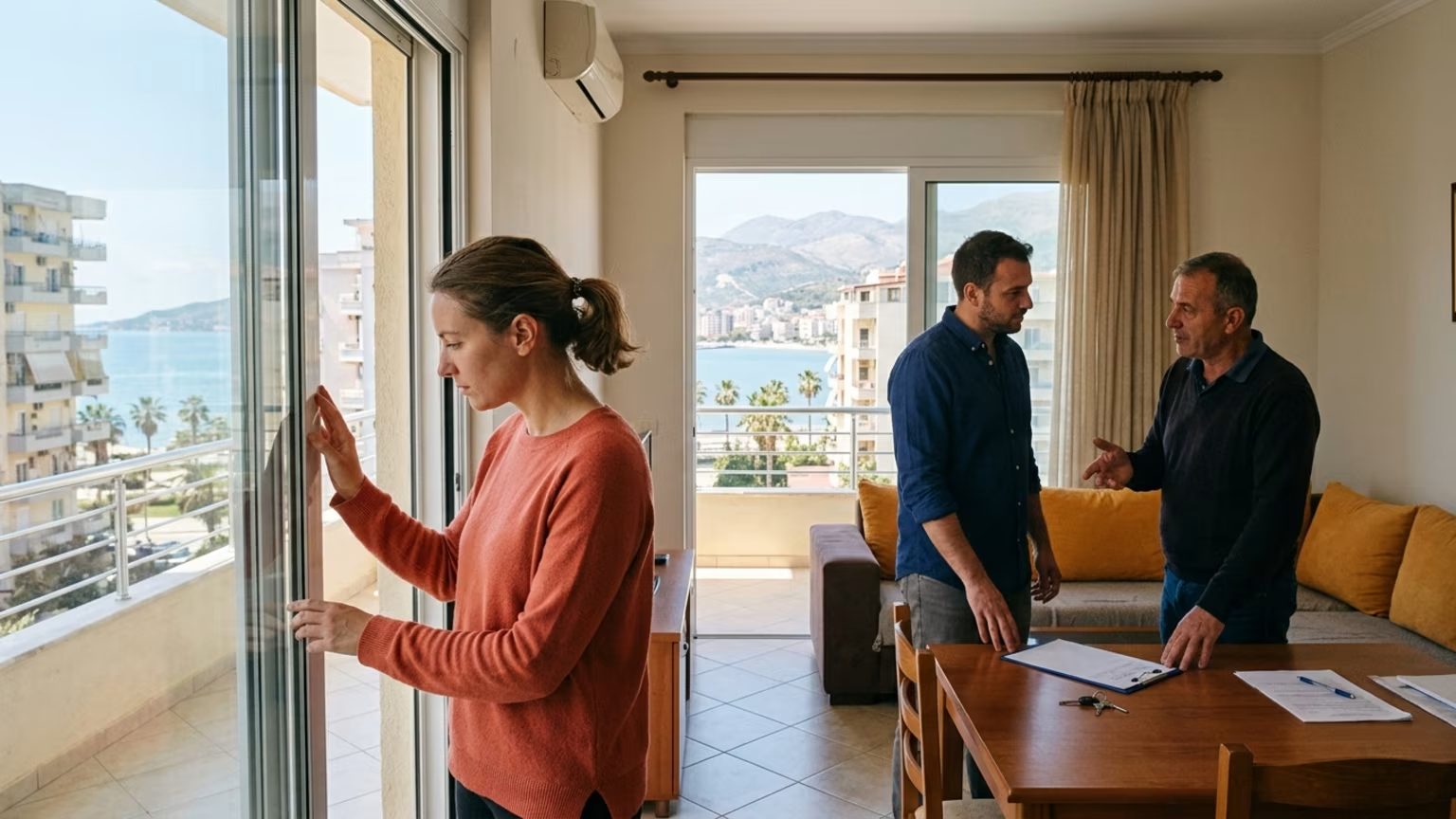
Learn how to assess a Vlorë apartment for true year-round availability. We cover what to check regarding summer leases, utility costs, and contract details.