Representative image

Navigate Vlorë’s local markets and seasonal produce. Learn how to source fresh food, ask the right questions, and transition from supermarket dependency.





Morning sunlight hits the cracked pavement near the 5 Vjecari neighborhood. Wooden crates overflow with bruised tomatoes and dusty potatoes. An older woman carefully weighs a plastic bag of wild greens. You hand over a crumpled banknote and walk away with your weekly supplies.
You have probably heard that moving to the Albanian coast means dirt-cheap produce. Many newcomers believe they will buy organic vegetables directly from farmers for pennies. That outdated idea sets false expectations for daily life. The truth is that seasonal domestic production coexists with shifting economic realities.
Shopping locally means managing complex variables rather than simply paying less. Newcomers often arrive from countries where farmers' markets act as premium weekend experiences. They expect Vlorë to offer that same authentic experience at a fraction of the cost. Shoppers assume that every stallholder grew the food themselves in a nearby village.
They imagine that bypassing corporate grocery stores guarantees massive financial savings on every purchase. People often misjudge informal stalls based on supermarket aesthetics. They expect perfectly shiny apples and uniform carrots. When they encounter misshapen vegetables or dirt-covered potatoes they falsely assume the quality is poor.
Buying seasonal items does not automatically translate to spending less money. Transport costs and weather conditions constantly alter the final price tag on produce. Some vendors sell imported goods right next to items grown on their own land. Assuming that every local market purchase is a bargain leaves newcomers confused when prices fluctuate.
Older travel blogs frequently exaggerated the savings found in Albanian open-air stalls. A local travel guide named Things to Do in Albania noted that the 5 Vjecari weekend market offered better deals than seafront mini-markets. Visitors read these isolated observations and assumed every market stall provided massive discounts. They expected all produce to come directly from local farmers at wholesale rates.
This created a lasting narrative of effortless agricultural abundance for expatriates. Tourists spending only a few days in the city shared stories of buying cheap fruit near the beach. These anecdotes ignored the changing seasons and the actual cost of daily living over several months. Seafront convenience stores cater to short-term visitors with inflated pricing structures.
Comparing a neighborhood market to a tourist shop heavily skewed the perceived savings. Short-term visitors engage in entirely different purchasing habits than long-term residents. A tourist might buy a single peach for a beach snack. A resident buys five kilograms of tomatoes to make sauce for the month.
Applying tourist pricing assumptions to resident grocery runs creates immediate budget shocks. Word of mouth among remote workers further amplified this misunderstanding. People shared stories of incredibly cheap tomatoes during the peak summer harvest. They failed to mention how prices change during the winter months. This selective memory painted an unrealistic picture of Vlorë’s local commerce ecosystem.
Albania relies heavily on its agricultural sector for economic stability. The European Commission reports that agriculture generates approximately 23% of the national GDP. The same report notes the sector employs about 43% of the workforce. The country utilizes roughly 1.18 million hectares of agricultural area.
That figure represents 40.5% of Albania’s total land area. The European Commission identifies agriculture as a critical part of the rural employment base. Albanian agriculture is heavily dominated by small-scale production. Farmers face significant structural challenges in bringing their goods to urban buyers.
Poor rural infrastructure often limits how much produce a single farmer can transport. They rely on older vehicles or informal networks to reach the city center. This fragmentation means supply chains are often informal and highly localized. Vlorë sits squarely in the Mediterranean agricultural belt.
The region benefits from mild winters and long summer growing seasons. Historical INSTAT figures cited by local reporting show Albania produced 99,075 tonnes of olives back in 2016. That marked a 3.2% increase over 2015. Vlorë remains an important region for olive cultivation.
The coastal climate supports extensive olive groves along the surrounding hillsides. High regional production does not guarantee that every olive oil bottle at the market comes from a nearby grove. Unlabeled bottles might contain oil pressed in entirely different regions. Market policies across the country are facing modern pressures.
A 36-month food-policy project in Tirana involves the Metropolitan City of Bari, CIHEAM Bari and the World Farmers Markets Coalition. This €1.63 million initiative aims to strengthen short food-supply chains. The project targets supporting 100 local producers and reinforcing five agricultural cooperatives. These cooperatives help small farmers pool their resources for better market access.
The coalition describes Albanian farmers’ markets as crucial for building trust between producers and consumers. Shoppers want to know exactly who grew their food and how it was treated. The project aims to establish a food-waste hub and assist at least 1,000 vulnerable citizens. Planners want to reduce the amount of unsold food thrown away each evening.
These initiatives signal a growing institutional interest in modernizing agricultural sales. The World Farmers Markets Coalition notes a tension between authenticity and modernization. Markets must adapt to regulations and continue to support local farmers. Better regulations protect the buyer and preserve the farming traditions.
Recent inflation data destroys the myth of guaranteed local bargains. Vox News Albania cited official INSTAT data for June 2026 showing an 8.5% year-on-year price increase for vegetables, greens and legumes. Average food inflation sat at 3% during that same period. Fresh and dried fruit prices fell 2.8% year-on-year.
Seasonal supply can actually coincide with rising vegetable costs. Shoppers cannot assume that local produce is always cheaper than supermarket alternatives. Wholesale pricing and general inflation influence the final price you pay at the stall. Buying in-season tomatoes might cost less in August than in December.
Yet the overall vegetable category still saw significant price hikes compared to the previous year. Transport fuel, manual labor and weather disruptions all dictate the daily asking price. Living on the coast means competing with hotel restaurants for the best morning produce. This commercial demand naturally pushes retail prices upward.
Adapting to Vlorë’s food ecosystem requires changing how you plan your weekly meals. You need to abandon the expectation of perfectly uniform produce available year-round. Learning to navigate these local systems connects you more deeply with the community. You must adopt practical habits to protect your grocery budget.
Start your routine by visiting the weekend market in the 5 Vjecari neighborhood. You will find vendors selling wild greens, sheep’s cheese and seasonal fruit. Local guides claim these sellers travel from the Vjosa Valley to sell their goods. Use your first visit to observe which stalls attract the most residents.
Older residents often have established routines with specific farmers. Watching where they shop provides excellent clues about produce quality. Return to those vendors weekly to build reliable relationships. Treat your initial market trips as reconnaissance rather than full grocery runs.
Buy small amounts of produce to test the quality from different sellers. Finding a trustworthy seller takes time and repeated interactions. Pay close attention to how the vendors handle their products. Notice if they keep sensitive items out of the direct coastal sun.
Stalls with consistently clean displays usually indicate a higher level of professional care. The World Farmers Markets Coalition explicitly links farmers' markets with trust between producers and consumers. Returning to the same stall makes it easier to ask about freshness and preparation. Relationship-based shopping transforms a simple transaction into a meaningful social connection.
Organize your meals around what is visibly abundant at the stalls. Summer months bring an overload of tomatoes, peppers and cucumbers. Winter markets shift heavily toward root vegetables and robust greens. Buy fragile produce in smaller quantities and ask the vendor how long it will keep.
Choose preservation-friendly foods like olives and fruit for jam when they are available. This flexibility helps you master the rhythm of life in Vlorë. Compare prices across several stalls before making your final purchases. Remember that the June 2026 data showed vegetable prices rising even during domestic production periods.
You cannot rely on a single vendor for the best deals every week. Staying observant helps you adapt to the shifting agricultural supply.
Never assume all items at the market are locally grown. Ask the seller where the food comes from and when it was picked. Clarify if the olive oil is from the current harvest year. Ask if the cheese is made from sheep’s milk or cow’s milk.
Understanding the origin of your food is a practical step for newcomers. This questioning prevents you from overpaying for imported goods masquerading as local items. It helps you identify true regional specialties. Olive products are highly relevant in Vlorë, but you still need to verify their specific origins.
Learn the pricing units before you attempt to negotiate. Sellers might quote prices by the kilogram, bunch, jar or single piece. Plastic bags filled with wild greens are often priced per bundle. Ask them to weigh the goods to confirm the exact cost.
Do not treat aggressive haggling as a cultural requirement. Reserve polite negotiations for bulk purchases or larger quantities of staple items. There is no documented local rule governing exact discount percentages. Pushing too hard for a lower price can damage a budding relationship with a vendor.
Keep a modern supermarket in your weekly rotation as a backup plan. Markets offer fresh produce and direct vendor relationships. Supermarkets provide predictable hours and clearly labeled packaged goods. Mixing both options offers a realistic transition for smart buying in Vlorë.
Supermarkets excel at providing household supplies and emergency staples. They offer refrigeration for sensitive items and imported goods that markets lack. This hybrid approach prevents frustration when seasonal stalls run out of your favorite items. A balanced strategy makes daily life much easier to manage.
Relying purely on neighborhood stalls requires a major shift in how you plan meals. Will you adapt your cooking to match the unpredictable availability of local harvests? True coastal living means eating what the land provides that exact week. Adjusting your grocery strategy saves time and grounds you in the local community.
Stay curious about your ingredients, ask the right questions and let the market dictate your next dinner. The team at vlore circle is here to help you navigate every practical step.
Follow Vlore Circle for fresh guides, local updates, and community notes around life in Vlorë. It is the easiest way to stay close to what we are building.
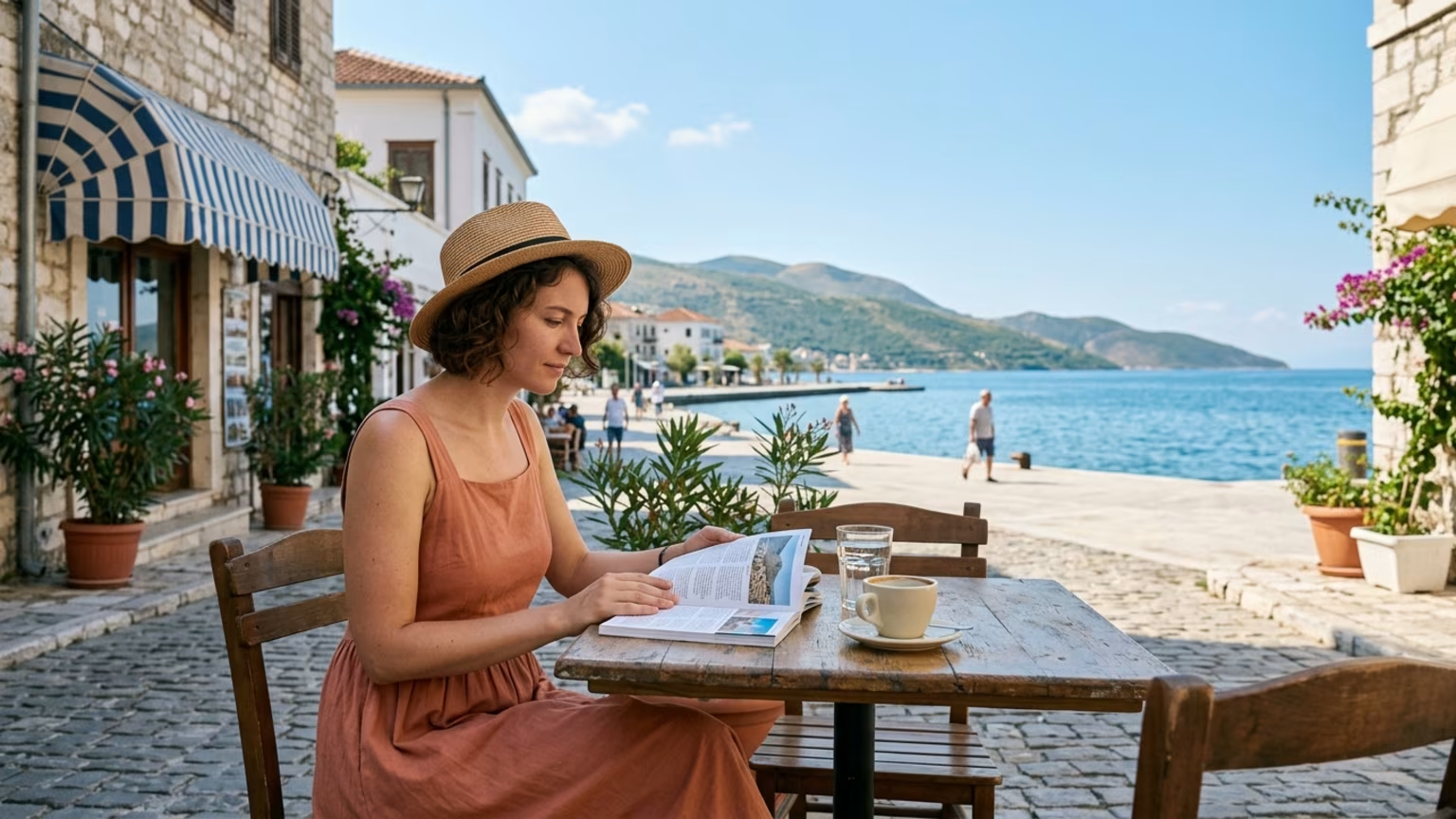
An August 2026 guide rates Vlorë as a moderate-crowd, mid-priced coastal base compared to the busy southern hotspots of Ksamil and Saranda.

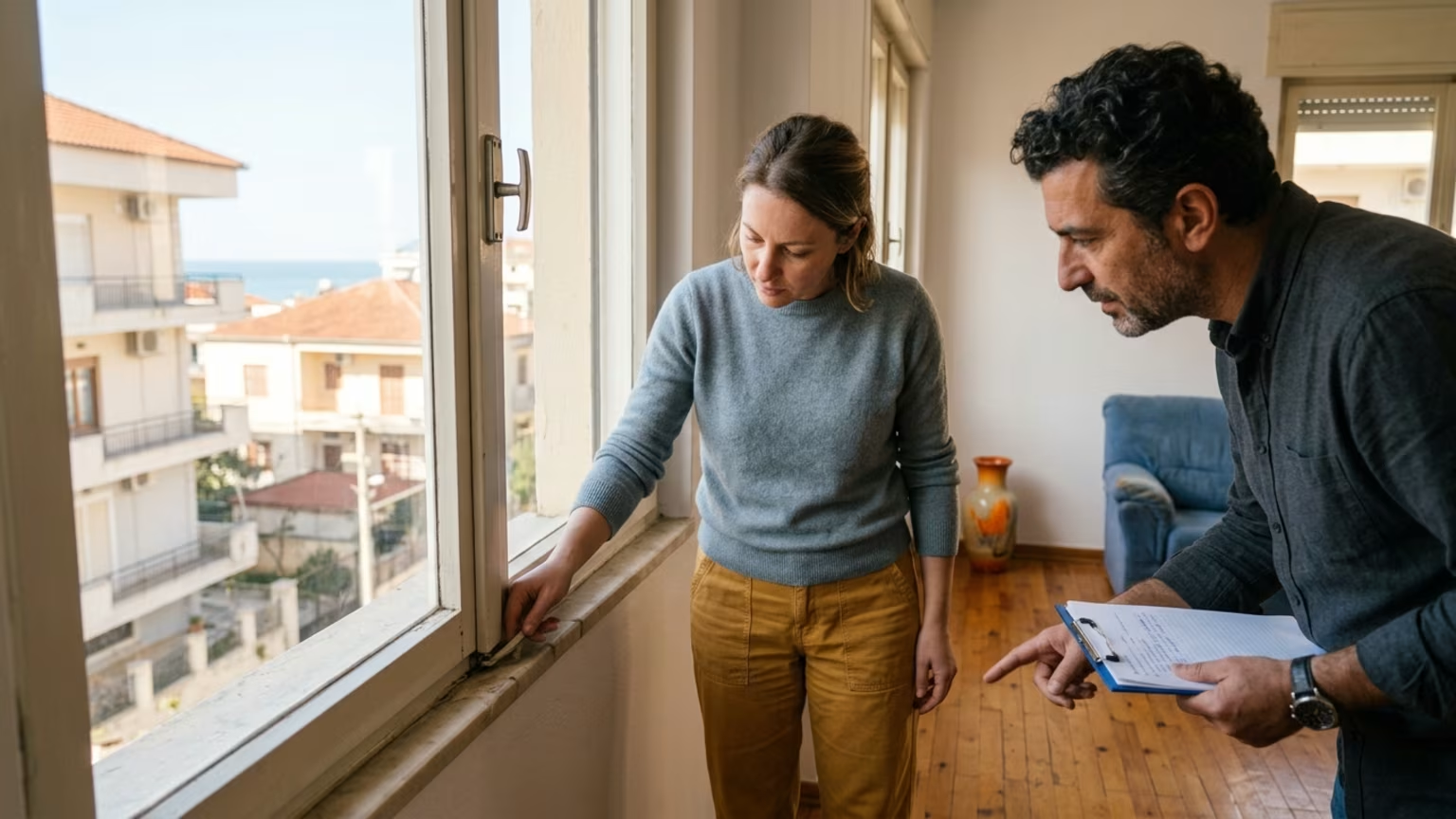
Learn how to choose a Vlorë rental that works all year. Find out what to check for winter heating, dampness, and internet before signing a long-term lease.
Learn how life in Vlore shifts across four seasons. Read practical insights for renting, remote work, and adapting your daily routine to the Albanian coast.