Representative image

Check a Vlorë rental's internet, workspace and fallback options before committing, with practical host questions and clear limits on coverage claims.





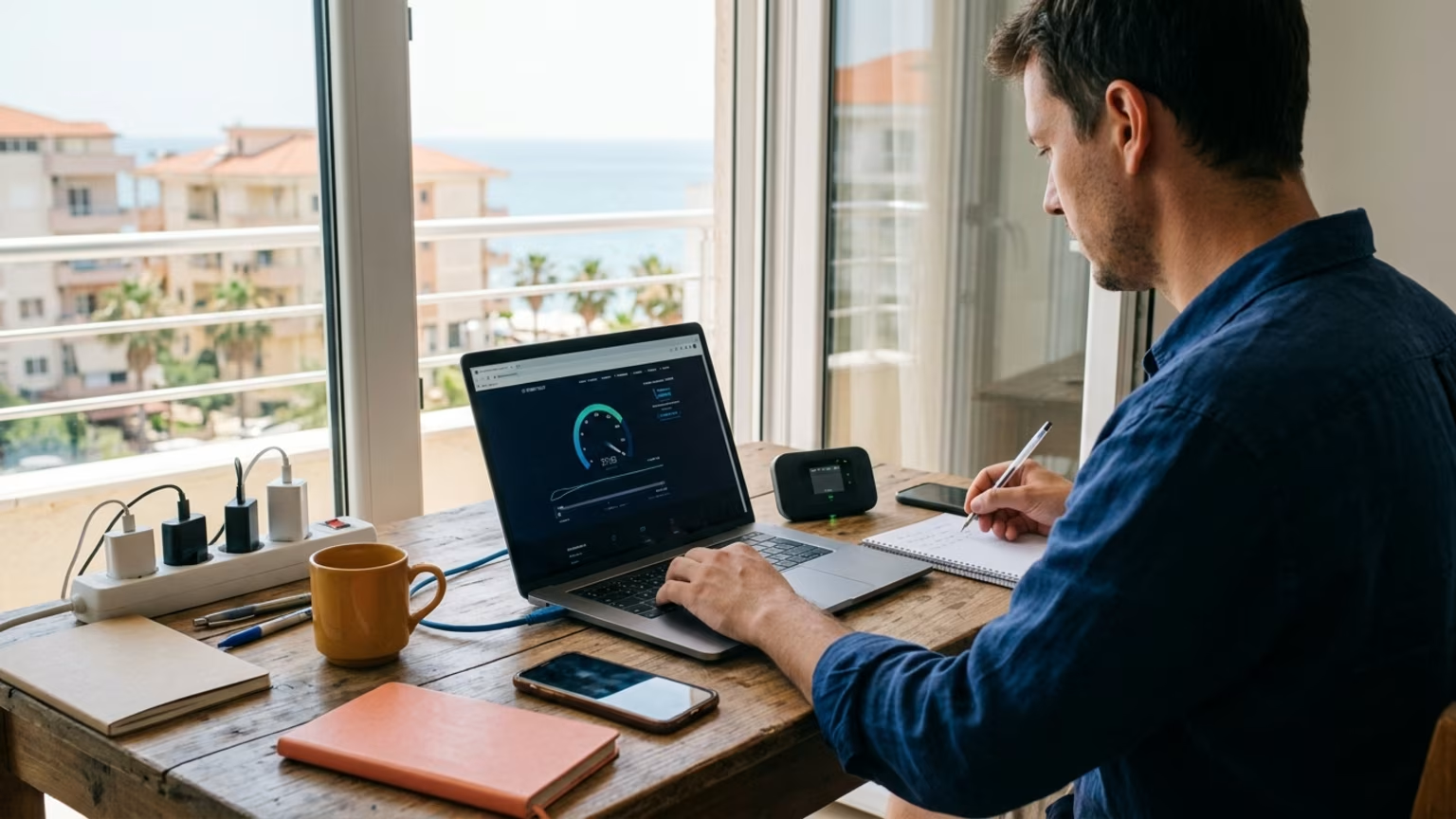
Can you trust the Wi-Fi in a Vlorë rental enough to make it your work base? Start with the apartment itself: what connection is installed, where you will work and what the host can show from that spot. Then check the quiet-call conditions and identify a fallback. A listing's internet claim is the beginning of that conversation.
At Vlore Circle, our view is that a home office belongs inside the housing decision rather than on a shopping list after arrival. Digitalnomads.world's remote-work guide supports a practical approach: ask about the installed internet and request a live test from the desk. It recommends mobile data or coworking as a backup. Those checks give the search a clearer purpose than simply finding a flat advertised with Wi-Fi.
Judge it apartment by apartment rather than giving the whole city a yes or no. For context, CNA reported in November 2026 that AKEP put mobile-signal coverage at 97% of Albania's territory in 2025. CNA said the figure came from operators' reports and had not been fully verified by the regulator. That is national coverage information rather than evidence of reception inside your intended rental.
Keep three kinds of information separate: national coverage claims, advertised property speeds and results shown at the actual desk. Neither of the first two establishes how the apartment will perform. A live test provides property-specific evidence at that moment rather than a promise of uninterrupted service. For a Vlorë housing decision, give the evidence from the work area more weight than the broad claim.
Start with a direct conversation about the exact apartment. Digitalnomads.world recommends checking the installed connection and requesting a live internet test from the workspace. Its guidance covers the work area and quiet-call conditions too. That keeps the discussion focused on the place where your working day would actually happen.
Useful questions for the host are:
Treat these as separate questions. An answer about internet does not answer the workspace question. A desk does not settle the question of quiet calls. Keeping them separate makes it easier to see which part of the proposed setup still needs attention.
Before booking, the host's live test is the property-specific check supported by the guide. On arrival, assess the apartment and intended work area directly. Keep the focus on the same points rather than adding a long technical checklist with arbitrary pass marks. The purpose is to assess the space you would use for work.
For a closer look at that part of the rental decision, use our guide to checking the connection inside a prospective apartment. Keep its place in the wider decision clear: internet is one part of a usable rental rather than a substitute for reviewing the home itself.
Think in completed checks rather than a fixed number of days. The task includes a conversation with the host and an assessment of the actual work area. Treating it as a quick glance at the booking description leaves those tasks unfinished. The honest approach is to make room for verification before calling the setup settled.
The awkward part is not naming the questions. It is reaching a clear answer to each one. If the host explains the connection but has not shown a desk test, that part remains open. If the work area looks suitable but the quiet-call conditions are unclear, keep that as a separate unresolved point.
Season deserves its own place in the conversation. Digitalnomads.world advises more careful seasonal checks for coastal towns such as Vlorë. Ask the host about the setup for the period you plan to stay rather than treating the rental as detached from the season. This is a reason to check carefully, not a reason to assume a particular month will fail.
For a longer stay, connect the work checks with the terms and conditions of a year-round rental. The useful milestone is a clear picture of both the home and the proposed work base. A quick booking is not the same milestone.
A specific speed claim is useful material for the host conversation. One Vlorë rental listing on Flatio advertises Wi-Fi with 500 Mbps download and 300 Mbps upload. Ask what installed service sits behind the claim and request the live workspace test recommended by the remote-work guide. Keep the advertised figures attached to that property rather than turning them into a target for every rental.
For a mobile-data-only plan, change the question from “Does Albania have coverage?” to “Does this option work for the place I intend to work?” The national coverage figure belongs in the background. The apartment and work area remain the focus of the housing decision.
Digitalnomads.world presents mobile data as a possible fallback alongside coworking. If mobile data is intended to be the main connection, treat that as a deliberate work-base choice rather than quietly promoting an unexamined backup. Assess the apartment and workspace on that basis.
The same principle applies to lighter work needs. The aim is not to match another renter's advertised speed. It is to assess the connection and setting against the work you expect to do there, without inventing a universal minimum that settles every case.
The useful workaround is to separate the home from the fallback work base. Digitalnomads.world recommends keeping mobile data or coworking available as alternatives. That gives you a concrete question to resolve alongside the rental search: what would the alternative actually be?
Keep the fallback specific. “There will be somewhere nearby” is not an identified option. A mobile-data plan and a coworking option are different arrangements, so assess each against the same basic work needs discussed above. The relevant checks are the connection and workspace, with attention to quiet-call conditions.
This is practical host-side thinking rather than a secret local trick. Keep the conversation about the exact flat and the work area you would use. Ask for something the host can show rather than a broad reassurance about Vlorë. That approach keeps both sides focused on the property rather than debating the city's reputation.
Our guide to weighing home against a separate work base can help frame that choice. A fallback has a defined role: it supports the work plan when the apartment is not the chosen place to work. It should not become a reason to leave the apartment's own setup unexamined.
Our verdict: internet uncertainty should be a property-selection filter rather than an automatic reason to rule out Vlorë. The strongest approach joins the checks together. Ask what is installed and request a live test from the desk. Assess the workspace and quiet-call conditions, then identify a fallback.
For most people making this decision, the dealbreaker should be an unresolved work setup rather than the city's name. If dependable online work is central to the stay, give the desk and connection the same attention as the rest of the apartment. That is a more useful basis for committing than either optimism or a broad warning about coastal internet.
A Vlorë home-office decision has a concrete target: a checked work area and an identified fallback rather than an untested Wi-Fi claim. Vlore Circle pairs practical settling-in guides with community meetups for expats, remote workers and locals seeking face-to-face connections in the city.
Follow Vlore Circle for fresh guides, local updates, and community notes around life in Vlorë. It is the easiest way to stay close to what we are building.

Choose a home, café, or shared workspace in Vlorë by task. Check Wi-Fi, outlets, noise, call privacy, hours, and a backup before you rely on a spot.

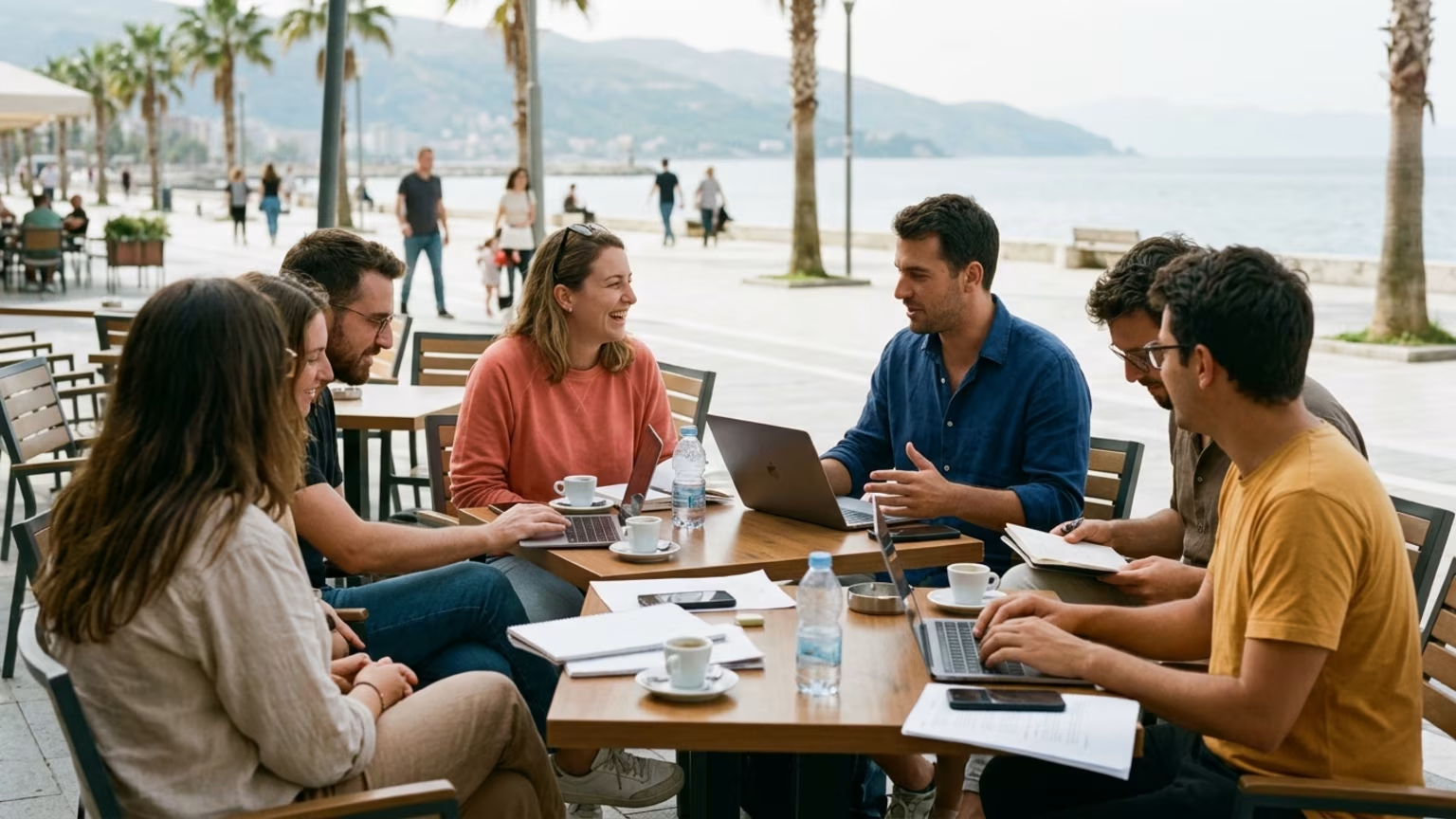
Build a social week in Vlorë with shared work, local activities and clear work boundaries, without expecting coastal life to create connection for you.
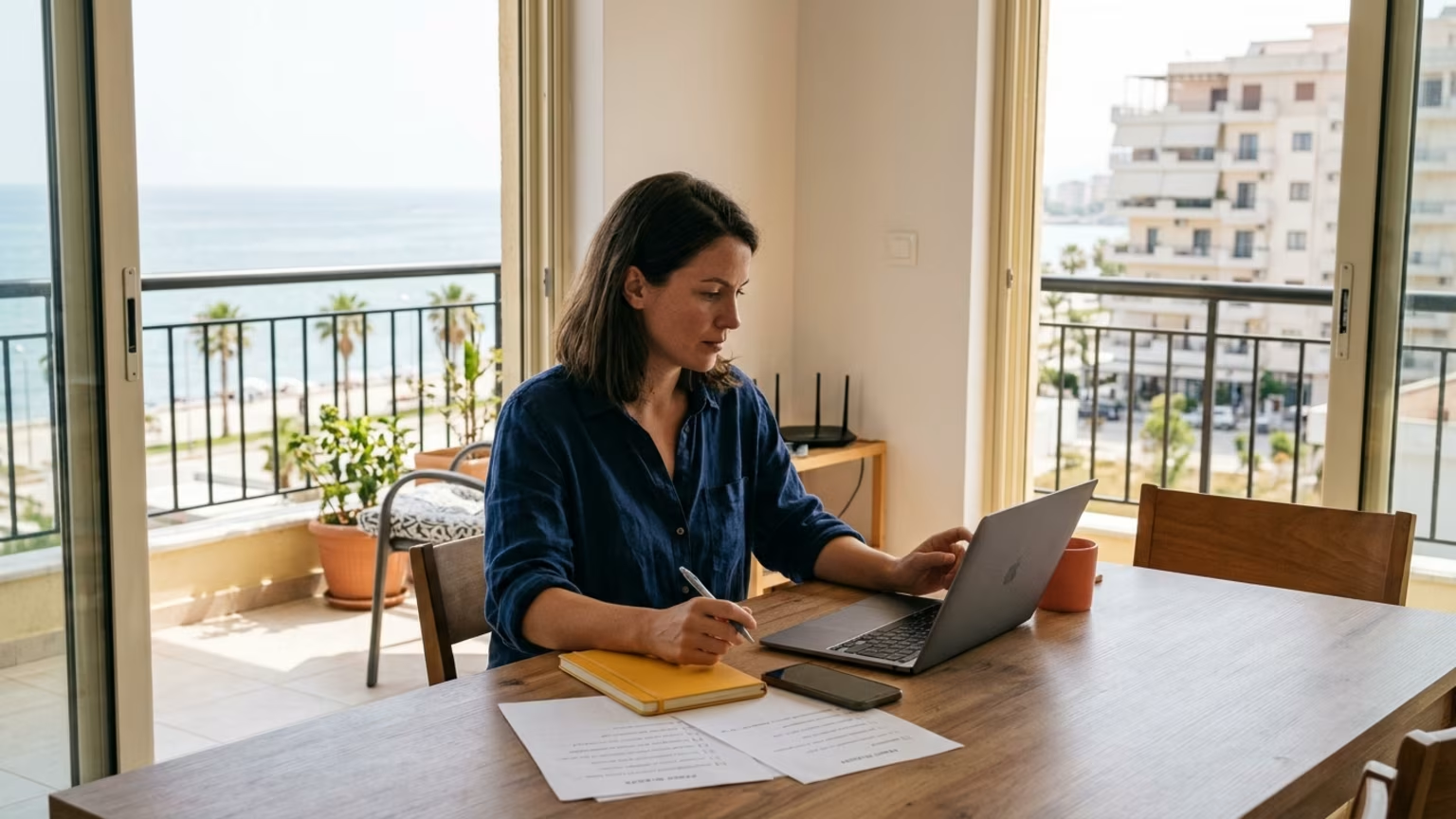
Assess a Vlorë rental for remote work with questions about desk-level internet, noise, seating, room controls, backup options and rental terms.