Representative image

Test everyday routes from a prospective Vlorë home, assess walking conditions and confirm transport before planning a car-light week.





Can you get through an ordinary week in Vlorë without relying on a car, or will every errand turn into a transport problem? The useful answer starts at the front door of a possible home, not at a pin for the city centre. A walk along the Lungomare does not settle how you will reach a pharmacy or an appointment.
Vlore Circle builds its local guidance around resident life rather than short visits. For transport, that means checking the journeys you will repeat: food shopping, healthcare and work or social plans. Start with a real address and judge whether its routes fit the week you expect to live.
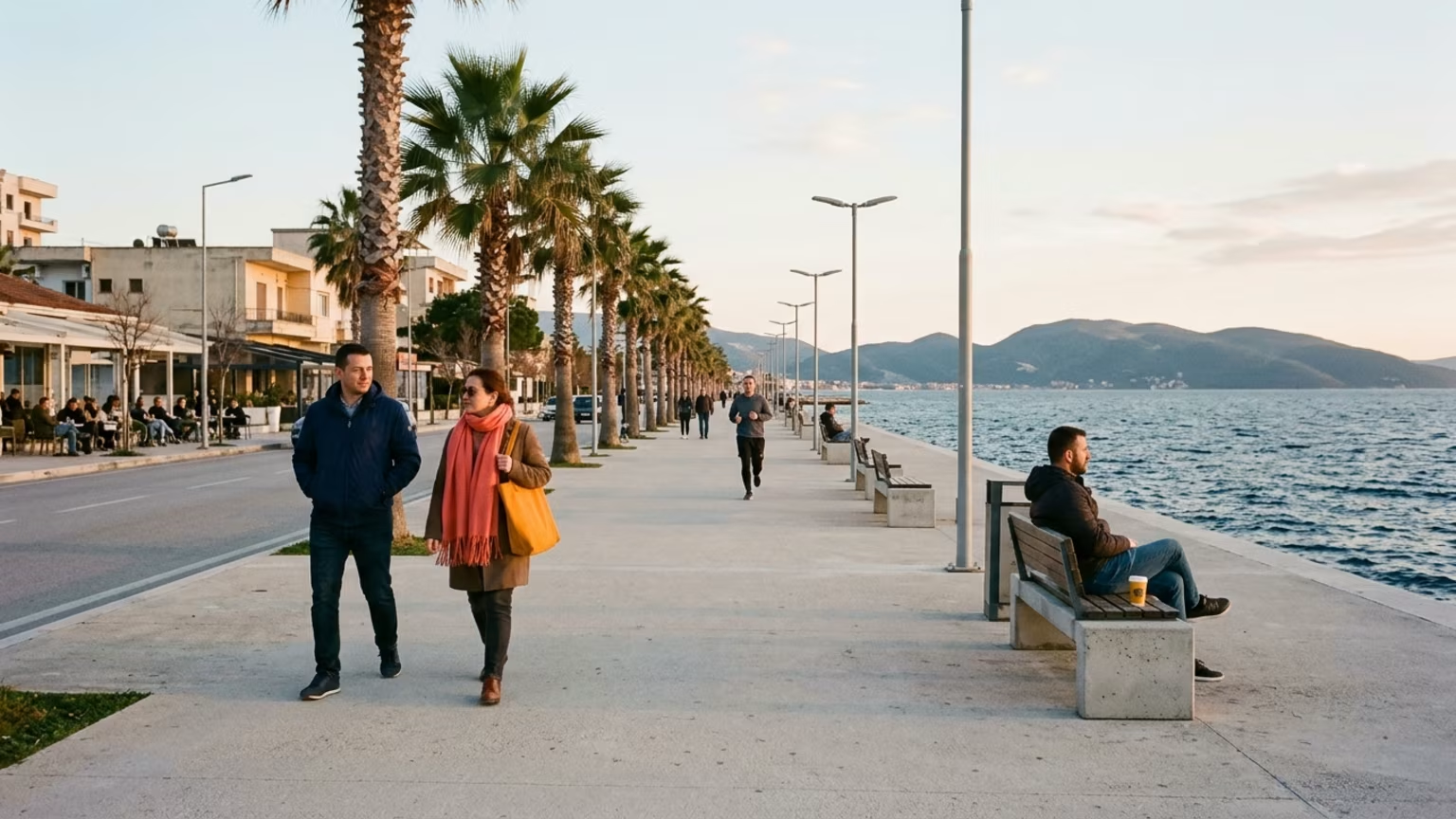
A car-light routine is worth testing around Vlorë’s centre and Lungomare, but the exact address needs checking before you commit to a home. A published walking guide describes the central area around Flag Square and Rruga Justin Godart as compact and walkable. It places Bulevardi Ismail Qemali within that central cluster and describes the Lungomare as a pedestrian waterfront area with benches and places to eat.
Those descriptions are starting points, not proof that a particular rental has convenient everyday services. Nearby grocery shops, pharmacies and clinics still need checking at the exact address. Current opening hours and local bus details need separate confirmation for the trips you expect to make. Keep the distinction clear: a pleasant leisure walk and a workable errands route answer different questions.
Use the exact entrance to the property as your starting point. Then build a short list of actual destinations rather than searching for a broad label such as “central” or “near the beach.” Keep the fit between your home and weekly routine at the centre of the housing decision.
Gjirafa Travel’s guide to autumn walks highlights the Lungomare and historic quarter. Those are useful places to include in a walking test, not substitutes for checking the route to your groceries.
For remote workers, treat the working setup you choose as part of this exercise. A café or coworking destination belongs on the same map as the pharmacy and food shop.
Give the task enough attention to complete the journeys that matter, not just a quick look around the rental. The test is finished when you have checked the recurring routes and confirmed the transport details for trips that need it. A short sightseeing walk is not the same task.
The walking guide cited above estimates the centre-to-Kuzum Baba walk at 20-30 minutes and notes steep, uneven sections. It reports uneven pavement and trip hazards on some Vlorë routes. That makes Kuzum Baba a useful reminder: a destination can look close on a map yet involve a demanding walk.
Use any published walking time as a description of that route, not a promise about your pace. On your own test, pay attention to the parts that change the effort: the climb, the surface and the crossings. Judge whether you would willingly repeat the journey during an ordinary week.
The honest answer is that this takes more work than comparing map distances. Some addresses may fall out of contention after a route check. That is a useful outcome before a housing commitment, not a reason to skip the test.
Make the route test stricter around your own needs. A description such as “pedestrian promenade” does not establish that the complete journey from a rental entrance works for a wheelchair or walking aid. Inspect the full route rather than accepting a neighbourhood label as an accessibility assessment.
For a fixed appointment, start with the exact destination and work back toward the prospective home. Check the walking sections and any transport connection needed to reach it. Give your plan for medical care the same attention as the home itself.
Keep a transport option available in your plan for journeys that do not pass the walking test. Confirm that option for the particular trip rather than assuming a general bus listing covers it. Check the return journey too.
Car-light does not have to mean making every journey on foot. The useful boundary is whether the trips you need can be planned in a way that works for you. Do not force a steep or awkward route into the walking column just to make a rental appear suitable.
Ask a narrow question about a real journey, then check the answer close to departure. “Which service gets me from this stop to this destination on this day?” is more useful than “Are the buses good?” Follow up on the operator and stop, then confirm the service time.
A regional travel guide cautions that coastal bus services beyond Vlorë can be less frequent outside summer and recommends checking locally. Keep that warning attached to those coastal journeys. Do not turn regional bus information into a promise about a local connection across the city.
For Vlore Circle, useful insider guidance is specific enough to check. Ask when someone last made the journey and whether they mean the same destination. Treat a neighbour’s experience as a lead for verification rather than a timetable.
The same approach works for social plans. Put the meeting place on your route list and check how the journey fits the rest of your day. Make building regular social contact part of the mobility decision rather than leaving it until after the move.
The practical workaround is not a secret route. It is replacing a vague answer with a destination and a service you have checked. Keep those details together so the plan is usable when the trip matters.
Our verdict: getting around should be a housing filter for most newcomers, not an automatic reason to rule out Vlorë. The centre and Lungomare offer starting points for testing a car-light routine. The decision still rests on the route between a particular front door and the places that shape your week.
Walk the recurring errands. Inspect the difficult sections. Confirm transport for the journeys that need it and judge the complete pattern rather than the best-looking stretch.
If a home passes those checks, car-light living becomes a plan grounded in actual routes. If a required journey remains unworkable, reject that address rather than counting on a map label to solve it later. The right test is whether you can live your ordinary week there.
A car-light week becomes a practical housing test when each regular errand has a checked route from the prospective home. Vlore Circle’s resources cover settling and living in Vlorë for expats, remote workers and retirees who need clear local guidance.
Follow Vlore Circle for fresh guides, local updates, and community notes around life in Vlorë. It is the easiest way to stay close to what we are building.

Plan a Vlorë monthly budget for one adult, a couple or a family, with clear allowances and checks for rent, summer terms, utilities and health cover.


Vet a long-term Vlorë rental with practical checks for damp, heating, water, internet, utility charges and written lease terms before signing.

Check a Vlorë rental's internet, desk, call conditions, mobile backup and seasonal lease terms before relying on it for remote work.