Representative image

Moving to Vlore requires a practical banking strategy that balances local Albanian accounts, international transfers, and cash for everyday beach and cafe spending.





The easiest money setup in Vlorë is not the most modern one. Most newcomers do best with one Albanian bank account for local life, one fintech account for international transfers, and enough lek in cash for cafés, beach areas, taxis, and small bills.
For most expats, Raiffeisen, Credins, BKT, OTP, and Intesa are the banks to compare first. Choose based on English support, branch access in Vlorë, card reliability, mobile banking, and how often you move money between EUR, USD, GBP, and Albanian lek.
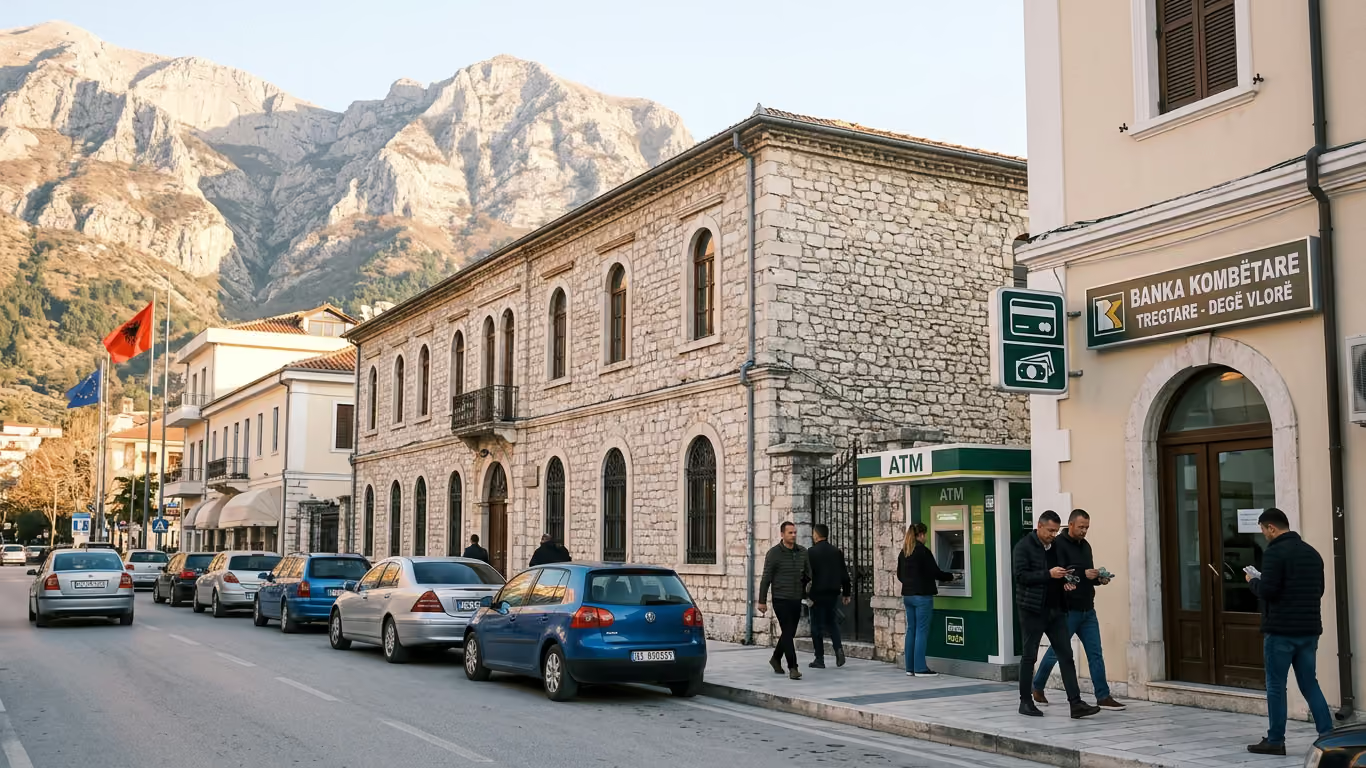
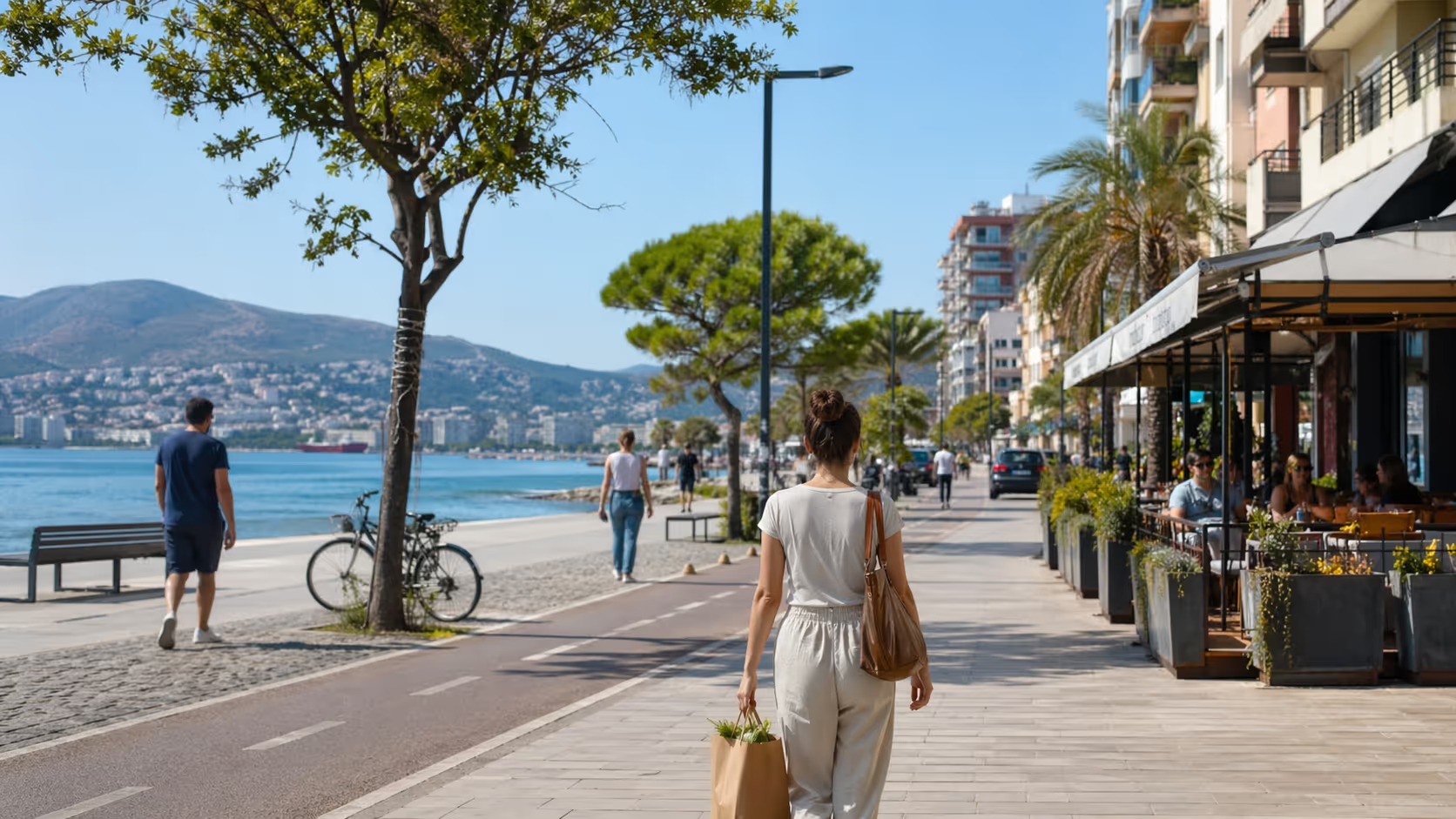
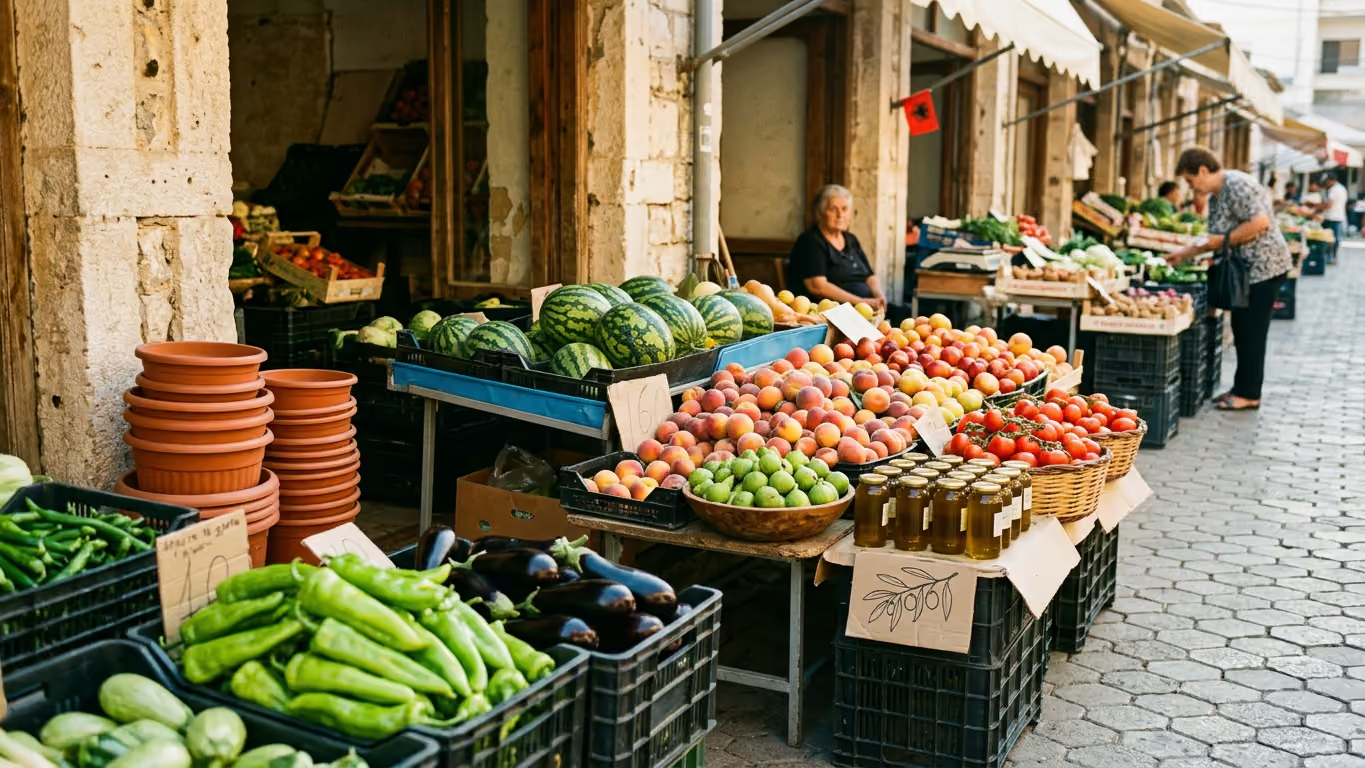
Vlorë is a coastal city with a split money rhythm. On the Lungomare, in supermarkets, and in many newer restaurants, card payments are normal. In older parts of town, small markets, local bakeries, beach kiosks, and apartment rentals often still run on cash.
That mix matters when you first arrive. You might pay a long-term rental deposit in euros, buy groceries in lek, receive income from abroad, and need an ATM late on a Sunday near the promenade. A good banking setup keeps those small daily problems from becoming weekly stress.
Before opening an account, decide what your money life looks like. A retiree with a pension paid in euros has different needs from a freelancer paid in USD. A remote worker who travels each month needs different card features from a family renting long term near Uji i Ftohtë.
Start with four questions.
What currency do you earn in?
What currency do you spend in?
How often do you transfer money abroad?
How much cash do you need each week?
The local currency is the Albanian lek, shown as ALL. Exchange rates move, so check live rates before making large transfers. Many expats think in euros at first, but daily spending in Vlorë is mostly priced in lek.
Rent is the exception. Many landlords quote long-term apartments in euros, mainly near the Lungomare, Uji i Ftohtë, and newer apartment blocks facing the bay. Some accept lek at the day’s rate, but many prefer euros for rent and deposits.
This is why a single-currency account can cost you money. If you receive euros and spend in lek, you will convert often. If you receive USD and pay rent in euros, you may face two conversions. Those small losses can add up across rent, groceries, utilities, and ATM withdrawals.
A multi-currency setup is often the cleanest answer. That may mean an Albanian bank account with EUR and ALL balances, plus a fintech account such as Wise for lower-cost transfers. Some expats use their home bank too, but only for savings or tax-linked payments.
Expatra’s Albania guide notes that foreign residents can often open local accounts with documents such as a passport and proof of address. Banking guides focused on Albania list Raiffeisen, Credins, BKT, and Intesa among common choices for expats. OTP has confirmed expansion work in Vlorë through its own branch announcements.
For Vlorë, branch access still matters. A polished app is useful, but you may need to visit a desk to activate a card, confirm a transfer, update a phone number, or ask about a blocked payment. Choose a bank that you can reach without turning one small task into a half-day project.
If you live near the city center, the branch choice is easier. If you live farther along the coast toward Radhimë, Orikum, or quieter beach areas, plan around ATM access and transport. Do not assume every beach zone has a reliable cash point.
A simple setup for most newcomers looks like this:
Do not make the setup too complex at the start. Your first goal is to pay rent, withdraw lek, receive money, and avoid bad exchange rates. You can refine the rest after one or two months in Vlorë.
Opening a bank account in Albania is usually not hard, but it can feel slow if you arrive with the wrong documents. Expect paperwork, branch visits, and questions about your income. This is normal, not a personal red flag.
Most banks will ask for your passport. They may ask for proof of address in Albania, such as a rental contract. They may ask about income source, tax status, employment, pension, or remote work.
You may hear about NIPT, which stands for Numri Identifikues i Personit të Tatueshëm. It is the Albanian tax identification number. Some account types or tax-linked activities may need it, so ask your bank and local tax office early.
For a long-term stay, do not leave tax registration questions until later. Newcomers often focus on apartments and beach life during the first week. Then they learn that a missing tax number, rental proof, or local phone number can slow down the account opening process.
A practical first-week order works best.
In Vlorë, go early if you can. Midday can be slow during summer, and branch queues can grow around salary dates. If you need English support, ask at the entrance before taking a ticket or waiting.
Raiffeisen is often chosen by expats for international familiarity, English support, and card access. Its own website lists products for individual customers and digital banking services. For newcomers, the value is not just the brand name. It is the chance to handle common tasks with staff used to foreign clients.
Credins and BKT are strong options for people who want local reach and online banking. Many residents use them for everyday payments. They can be good choices if you plan to live in Albania long term and want a bank that feels rooted in local life.
OTP has branch presence in Vlorë, and its official site announced customer service improvements through branches in Fier and Vlorë. That matters for residents who want in-person support rather than a purely digital relationship.
Intesa Sanpaolo is another bank expats often compare. It may suit those who value international banking ties and card services. As with every bank, ask about exact fees before opening.
Do not choose a bank based on one person’s strong opinion. A retiree near the promenade may love a bank with friendly branch staff. A remote worker in Uji i Ftohtë may care more about app stability and transfer fees. A family in the city center may need easy bill payments and cash withdrawals near home.
Bring patience to the appointment. Albanian bank staff may ask detailed questions about why you are in the country, how long you plan to stay, and where your money comes from. This is part of compliance work. It does not mean you are being rejected.
Ask these questions at the desk:
Write down the answers. Fees can vary by package and account type. Do not rely on a friend’s price from last year.
If you are not yet a resident, ask directly whether non-resident account opening is possible. Some banks may allow it with passport and address proof. Others may ask for extra documents. Policies can shift, so treat the branch answer as the current rule for that bank.
No bank is perfect for every expat in Vlorë. The best account is the one that matches your income, language needs, branch habits, and transfer routine.
Raiffeisen is a common first stop. It is familiar to many Europeans, offers digital services, and is often mentioned in expat banking discussions. If you want English support and a bank used to foreign clients, it belongs on your shortlist.
Raiffeisen can work well for a retired couple receiving a monthly pension in euros. They might keep euros for rent near the Lungomare, then convert smaller amounts to lek for daily life. The main benefit is predictability.
Credins may appeal to people who want a local Albanian bank with a broad everyday presence. It can suit residents paying local bills, using cards in shops, and building a long-term financial routine in Albania. Ask about multi-currency options and app language before you commit.
BKT is another common name in Albania. It is often chosen by people who want broad local services and regular digital access. For remote workers, the key questions are international transfer handling, foreign card reliability, and online banking comfort.
OTP is worth checking if its branch location works for your daily route. A bank that is close to your apartment, gym, or office can save real time. This is true in summer when traffic near the seafront gets heavier.
Intesa Sanpaolo may suit expats who want an international banking feel. It can be a good comparison point if you care about card networks, account packages, and cross-border support. Ask the same fee questions you ask every other bank.
ProCredit offers online forms through its Albania direct site. Digital nomads may like the idea of starting the process online. Still, verify where and how you collect cards, sign final documents, or solve problems if you are based in Vlorë.
UBA is another local banking option to know. It may not be the first name most expats mention, but it can be useful to compare fees, card services, and branch access. The right choice can be practical rather than popular.
Here is a simple way to compare banks without getting lost in details.
Start with Raiffeisen, Intesa, and larger branches of other major banks. Ask staff whether app menus, statements, and customer service can be handled in English. Do not assume one English-speaking employee means full English support across the bank.
Ask about EUR and USD balances. Ask whether incoming payments arrive through SEPA or SWIFT. Ask what sender details are needed, and ask what happens if the sender name differs from your account name.
Ask to see the app before opening the account. Look at bill payment options, card controls, exchange features, and transfer screens. If the app feels confusing in the branch, it will feel worse when you need to pay a bill from home.
Ask about international card use, limits, emergency card blocking, and foreign ATM fees. Keep a second card from a different provider. One card is not enough for cross-border life.
Ask about ATM withdrawal limits and branch cash withdrawal rules. Some landlords still prefer cash rent in euros or lek. You need to know whether your bank can support that without repeated small withdrawals.
A real Vlorë example helps. A remote worker living near Skelë receives USD from clients. She keeps a Wise account for client payments, sends euros to her Albanian bank, then converts smaller amounts into lek. She uses her local card in supermarkets and keeps cash for taxis, produce shops, and beach cafés.
A retiree near Uji i Ftohtë may use a different pattern. Pension enters a European account, then a monthly transfer goes to an Albanian EUR balance. Rent is paid in euros. Groceries and medical visits are paid in lek using a mix of card and ATM cash.
A family living near the city center may care most about utility payments. They need a bank app that can handle electricity, water, internet, and phone bills. They may not care about advanced currency tools at all.
The lesson is simple. Choose for your weekly routine, not for a ranking list.
ATMs are easy to find in central Vlorë, but your habits still matter. Around the Lungomare, Skelë, and the city center, you can usually find bank ATMs. Farther along beach roads, access becomes less predictable.
Use your own bank’s ATM when possible. In-network withdrawals are often cheaper. Foreign cards can face fixed fees, percentage fees, poor exchange rates, or all three.
When an ATM asks whether to charge you in your home currency, decline that conversion. Choose to be charged in lek. The ATM’s own conversion rate is often worse than your card provider’s rate.
This choice is called dynamic currency conversion. It sounds helpful, but it often adds a bad markup. The screen may say it gives certainty. What it gives many users is a weaker exchange.
For daily life, keep local cash in sensible amounts. You do not need to carry a large stack of lek on the promenade. You do need enough for small sellers, taxis, beach chairs, tips, older cafés, and quick errands.
Tourist season changes ATM behavior. In July and August, cash demand rises near the beach, port area, and promenade. Some ATMs can run low on weekends or holidays. If you pay rent in cash or plan a trip down the coast, withdraw earlier.
Winter has its own issues. Rain, power cuts, and quiet streets can make errands slower. Do not wait until your last 500 lek to find an ATM at night.
Card use is common in larger supermarkets, fuel stations, newer restaurants, pharmacies, and many shops. Smaller produce shops, bakeries, and neighborhood cafés may prefer cash. Some places accept cards but dislike small card payments.
Keep both Visa and Mastercard if you can. Your Albanian bank may issue one network, and your home bank may issue another. If one terminal fails, the second card may save the errand.
Set card notifications in your app. They help you spot double charges, failed transactions, and odd exchange rates. They are useful when paying at beach restaurants during busy evenings, where staff may rush and terminals may lose signal.
Set withdrawal and spending limits that fit your life. Too low, and you may be blocked when paying rent or furniture costs. Too high, and a lost card becomes a bigger risk.
If your card is swallowed by an ATM, contact the bank at once. If it happens at your own bank’s machine during working hours, go into the branch. If it happens after hours, block the card in the app or by phone, then visit the branch the next morning.
Avoid random standalone ATMs in tourist-heavy spots when you have a bank ATM nearby. Bank ATMs are usually easier to trace if something goes wrong. They may still charge fees, but the support path is clearer.
Keep small notes. A 5,000 lek note can be hard to use for a coffee or small market purchase. Break larger notes at supermarkets or bigger stores.
For safety, withdraw during daylight in busy areas. ATMs near major streets, banks, supermarkets, and the promenade are better than quiet corners at night. Vlorë is friendly, but good habits matter everywhere.
Transfers are where many expats lose the most money. The fee you see is only one part of the cost. The exchange rate can matter more.
Bank transfers often use SWIFT for international wires. SWIFT can be reliable, but it may include sending fees, receiving fees, intermediary bank fees, and a rate markup. Transfers can take several business days.
SEPA is used for euro transfers in much of Europe. If your Albanian bank supports euro transfers with IBAN details, ask whether SEPA is available and what it costs. This can be cheaper than a standard wire.
Fintech services such as Wise can be useful for expats who receive foreign income. Wise publishes fees and exchange rates before you confirm a transfer. Its pricing pages show the cost in advance, which makes planning easier.
A common setup is to receive income into Wise, convert at a near-market rate, then send euros to your Albanian bank. Some expats then convert euros to lek locally, or withdraw lek from their Albanian account.
Do not move large sums without asking your bank about documentation. Transfers above common thresholds may trigger questions. A property purchase, business income, pension lump sum, crypto sale, or family gift may need proof of source.
If you expect a large transfer, visit the branch before sending. Ask what documents they want. Bring contracts, invoices, pension letters, sale agreements, or tax records. This saves stress if the transfer is held for review.
For monthly payments, test a small amount first. Send 50 or 100 euros, confirm arrival, check the fees, then send the full amount. This is slower at first, but it teaches you the real process.
If you pay rent to an Albanian landlord, ask what they prefer. Some want cash. Some accept bank transfers. Some quote rent in euros but accept lek. Put the payment method in the rental agreement when possible.
For families sending money home, compare three routes.
Check the final amount received, not just the sending fee. A bank may charge a modest transfer fee but use a weak exchange rate. Another service may show a small fee and use a better rate.
Remote workers should separate business and personal flows where possible. If clients pay you into one account, rent comes out of another, and taxes are tracked elsewhere, your records get messy fast. Clean records help with residency, tax questions, and future bank reviews.
US citizens need extra care. Foreign account reporting rules may apply if balances pass certain thresholds. Speak with a tax professional who understands US reporting rules. Do not rely on café advice for FATCA or FBAR issues.
UK, EU, and other expats should check home-country tax rules too. Moving to Vlorë does not erase tax duties elsewhere. Banking records can become proof of residence, income, and financial ties.
Crypto users should be careful with direct bank transfers from exchanges. Banks may ask questions, delay funds, or reject certain sources. Ask your bank before sending a large crypto-related amount into Albania.
Keep screenshots and PDFs for transfers. Save sender name, date, currency, exchange rate, bank fee, and final received amount. This habit is boring, but it helps when a transfer is delayed or a tax question appears.
Vlorë can feel affordable, yet money leaks happen through fees, exchange rates, cash mistakes, and poor planning. The city rewards people who track small costs.
Here are common banking and money costs to ask about. Prices vary by bank and account type, so treat this as a checklist rather than a fixed tariff.
| Item | What to ask | Typical risk |
|---|---|---|
| Account opening deposit | Is a first deposit required? | You arrive without enough cash |
| Monthly account fee | Is there a package fee? | Small charges stack up |
| Debit card fee | Is card issue or renewal paid? | Surprise annual fee |
| In-network ATM | Is withdrawal free? | Limit rules still apply |
| Other-bank ATM | What is the fee? | Extra charge per withdrawal |
| Foreign card ATM use | What fee appears? | 1 to 3 percent can appear |
| Currency conversion | What markup is used? | 2 to 5 percent loss can occur |
| Incoming transfer | Is there a receiving fee? | Sender fee is not the full cost |
| SWIFT transfer | What are all fees? | Intermediary fees may appear |
| SEPA euro transfer | Is it available? | Not every account supports it |
The biggest hidden cost is exchange rate spread. This is the gap between the market rate and the rate you get. A bad spread can cost more than the posted fee.
Say you transfer 1,500 euros for rent and living costs. A visible 5 euro fee looks fine. If the exchange rate is poor, you may lose far more than 5 euros during conversion.
This is why expats compare bank exchange rates with Wise or another transparent transfer tool before moving larger amounts. Do not become obsessed with tiny differences on coffee money. Pay attention to rent, deposits, income transfers, medical payments, and car purchases.
Cash planning matters too. If you withdraw small amounts from a foreign card many times, fees can stack quickly. If you withdraw too much, you carry more risk. Find a middle amount that covers several days without making you nervous.
A good weekly cash rhythm in Vlorë might look like this:
If you are new, track one full month in lek. Do not convert every coffee in your head forever. For the first month, though, write down rent, groceries, eating out, taxis, mobile, internet, beach costs, and ATM fees.
Many expats underestimate seasonal spending. Summer brings guests, beach chairs, more restaurant meals, and weekend trips. Winter brings heating, damp-weather fixes, and more indoor time. Your Vlorë budget changes with the coast’s rhythm.
Rent deposits need careful handling. If you pay in cash, get a written receipt. If you transfer, save proof. Note the currency and amount. This avoids arguments when you move out.
Utility bills can be paid through apps, offices, or local payment points, depending on the bill and bank. Ask neighbors in your building what they do. In apartment blocks near Skelë or the Lungomare, there is often a normal local routine for water, electricity, admin fees, and internet.
If you hire cleaners, handymen, movers, or small service providers, expect cash in many cases. Agree on price before work starts. Pay in lek unless another currency is clearly agreed.
The romantic idea of Vlorë is simple. Morning coffee by the sea, remote work from a sunny apartment, fresh fish at dinner, and a lower cost of living. That version exists, but it is not the whole week.
The real daily version includes bank queues, cash-only errands, app passwords, slow paperwork, landlords who prefer euros, and ATMs that run dry in August. You can still enjoy the city. You just need systems.
Living in Albania is not the same as visiting for ten days. A tourist can use a foreign card, withdraw cash, and ignore transfer fees. A resident needs rent records, utility payments, tax documents, and reliable access to money all year.
Foreign cards feel fine until they stop working. Home banks may block a transaction from Albania. A terminal may reject a card. A foreign ATM withdrawal may cost more than expected. This is why a local card is not a luxury for long stays.
Apps feel modern until you need branch help. You may still need to sign a form, update a passport number, collect a card, or answer compliance questions in person. Choose a bank you can visit without stress.
Cash feels old-fashioned until you need it. A fruit seller near your apartment may not take cards. A beach café may say the terminal is down. A taxi may expect lek. Local life still uses cash in many small moments.
The language gap is real. Many younger Albanians speak English, and many bank staff in main branches can help. Still, technical banking terms can get confusing. Bring a bilingual friend for complex tasks if needed.
The pace can feel uneven. Some tasks happen fast. Others take several visits. This is not a sign that you made a bad move. It is part of settling into a place where personal contact still matters.
The good news is that Vlorë becomes easier once you build routines. Use the same ATM. Learn your bank app. Keep receipts. Know which supermarket breaks large notes. Know which branch has the most helpful staff.
Do not compare every task to your home country. Compare your current week to your first week. If rent is paid, the card works, transfer fees are under control, and you have cash for daily life, your system is working.
Banking in Vlorë is not only about the bank name. It is about where you live and where you move during the week.
The city center is the easiest zone for branch access. If you live near central streets, you can compare banks in person, visit ATMs, and solve problems faster. This is useful during your first month.
Skelë is practical for many expats. It connects the city center with the seafront and has access to shops, cafés, services, and transport. If you live near Skelë, choose a bank or ATM route that fits your supermarket and pharmacy routine.
The Lungomare is the social face of Vlorë. It has restaurants, cafés, hotels, and heavy summer foot traffic. Card use is more common here, but tourist-season ATM pressure is higher.
Uji i Ftohtë is popular for sea views and newer apartments. It can be less convenient for everyday errands if you rely on walking. If you live there, check ATM locations before signing a long lease.
Radhimë and Orikum offer more space and quieter coastal living. They can be wonderful for people with cars. They are less convenient if you need regular branch visits in Vlorë city.
For a newcomer, living near the city center or Skelë for the first month can make financial setup easier. You can open the account, test ATMs, buy a SIM, handle documents, and learn the local payment habits before moving farther along the coast.
A simple Vlorë banking route might look like this. Visit the branch in the morning, withdraw lek at the same bank ATM, buy groceries at a supermarket that accepts cards, then test your card at a café on the Lungomare. If all works, you know your setup is ready for normal life.
Use bank locator tools on official bank sites when possible. Do not rely only on old map pins. Branches move, ATMs close, and summer hours can change.
Ask local residents too. A neighbor may know which ATM is often empty, which branch has English support, or which payment office handles a bill fastest. Local knowledge saves time.
This is where Vlore Circle can help. The community is built for residents, not short-term tourists, so the advice is grounded in daily life. If you want practical local answers from people who live here, Join the community.
A strong money setup is not only about low fees. It is about backup plans.
Keep at least two cards from different providers. One local Albanian debit card and one foreign card is a good minimum. If possible, keep them in separate places.
Do not keep all cash in your wallet. Keep daily cash with you and a small reserve at home in a safe spot. Avoid large cash holdings unless you have a clear reason.
Save your bank’s phone number before you need it. Save the card-blocking line, branch address, app support contact, and your account manager’s name if you have one. If your card is lost on a Friday night, you do not want to search old emails.
Keep digital copies of key documents. Passport, rental contract, bank account confirmation, NIPT paperwork, income proof, and residency papers should be stored securely. Keep one offline copy too.
Use strong app security. Set a unique password, activate biometric login if you trust your device, and protect your phone with a passcode. Your phone is now part of your bank.
Be careful on public Wi-Fi. Do not make large transfers from a café network on the promenade. Use mobile data or a trusted private connection for banking.
Watch for phishing messages. If a message claims to be from your bank and asks for codes, passwords, or card details, stop. Contact the bank through the official app or phone number.
Review your statements each month. Look for small fees, duplicate charges, and odd currency conversions. If you do this monthly, problems stay small.
For couples and families, decide who handles which tasks. One person may manage rent transfers. Another may pay utilities. Both should know how to access emergency money.
For retirees, set pension transfers with extra time. Do not plan rent payment on the exact day funds usually arrive. Leave a buffer of several days for weekends, holidays, and banking delays.
For freelancers, keep tax money separate. If all income lands in one spending account, it becomes easy to spend money that belongs to taxes. A separate balance or savings account can keep you honest.
For business owners, ask about business banking early. Personal accounts should not carry long-term business traffic without advice. Banks may question repeated client payments into personal accounts.
For high-value purchases, such as a car or property deposit, ask the bank about limits first. Do not arrive at a seller’s office assuming you can transfer a large amount instantly from your phone.
Our founder’s advice is simple. Do not try to optimize everything in week one. Set up a boring money system first, then improve it after you know your real spending.
The first 30 days should be about stability. Open one reliable local account. Get one working debit card. Test one transfer route. Learn two trusted ATMs. Keep enough cash for daily errands.
After that, review fees. Compare exchange rates. Ask whether another bank package fits better. Add a second account only if it solves a real problem.
Newcomers often make two opposite mistakes. Some delay banking for weeks and live from foreign cards. Others open too many accounts before they know their routine. Both paths create stress.
A calm 30-day plan works better.
Get a local SIM. Confirm your apartment address. Ask your landlord for a written rental agreement. List nearby banks and ATMs around your neighborhood.
Visit two banks, not five. Ask the same questions at each one. Choose the bank that gives clear answers and fits your location.
Activate online banking. Test the debit card. Make one small ATM withdrawal. Send one small international transfer.
Pay one real bill or rent payment. Track the full cost. Save receipts and transfer proof.
Review what worked. Look at fees, app comfort, branch access, and cash needs. Adjust your system for the next month.
This approach fits Vlorë life. The city is friendly, but it rewards preparation. You do not need a perfect financial system. You need one that works on a rainy Tuesday, a hot August weekend, and the day your landlord asks for rent.
Vlorë gets easier when your money system is simple, local, and tested. Build that first, then enjoy the sea with fewer banking surprises.
Follow Vlore Circle for fresh guides, local updates, and community notes around life in Vlorë. It is the easiest way to stay close to what we are building.

Be part of a growing community built around connection, local life, and a better experience of Vlorë.
join the circle