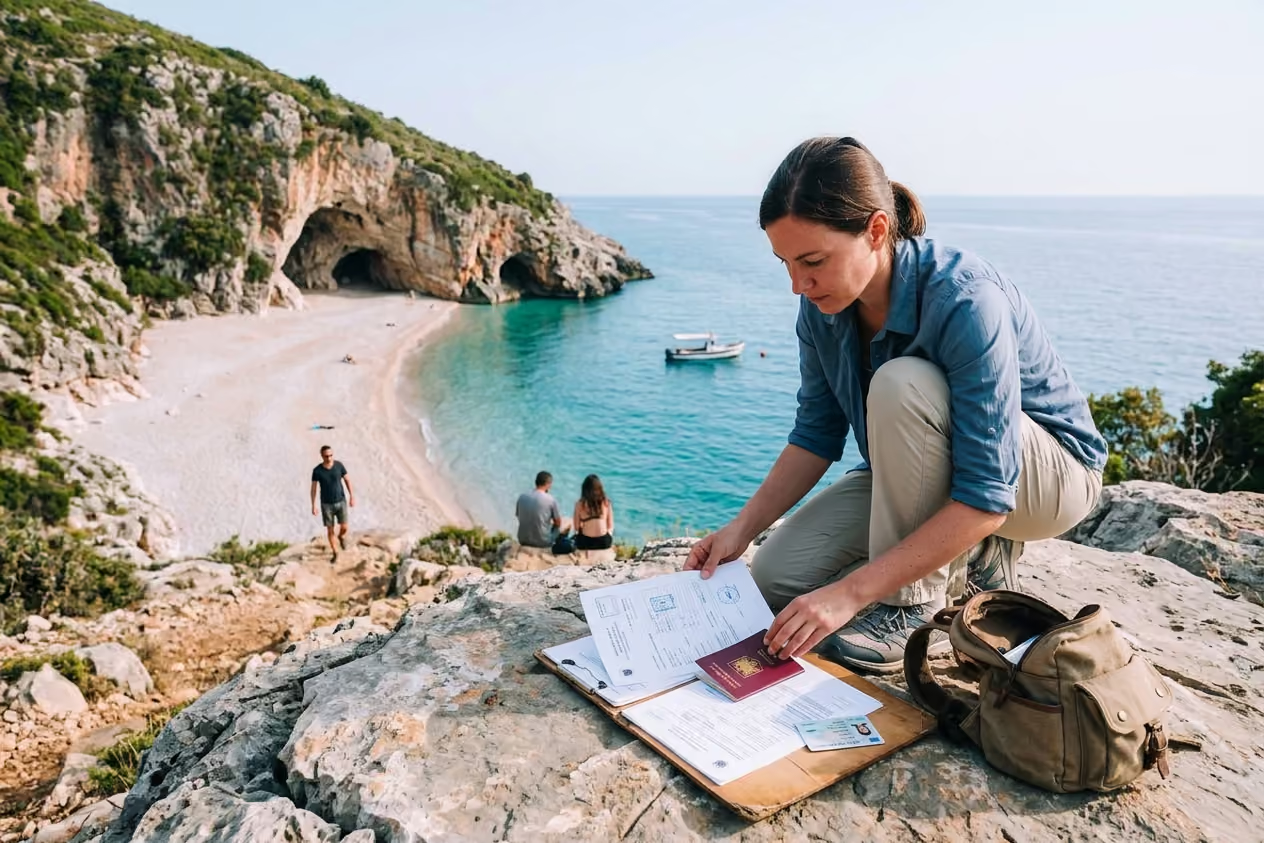
Representative image

Gain essential knowledge about navigating Vlorë's bureaucracy for visas, permits, and ID, including local office habits, common mistakes, and practical contact points.





You arrive in Vlorë with a folder full of copies, a lease near Lungomare, and a phone battery sitting at 18 percent. Someone in line outside the police office tells you the document you printed yesterday is missing one stamp.
The short answer is this: start your residence or renewal file at least 60 days before your deadline, prepare translated and notarized documents before you queue, and expect at least one in-person visit at the local Border and Migration office in Vlorë. Your residence card is your local ID, but you should carry it with your passport, since police and banks may ask for both.
Vlorë is a friendly place to live, but its paperwork culture is not casual. A rental contract, a missing apostille, or a landlord who does not answer the phone can slow your file for weeks.
This guide is built for residents, not short-term beach visitors. It covers visa routes, residence cards, renewals, fees, local office habits, common mistakes, and practical contact points around Vlorë.
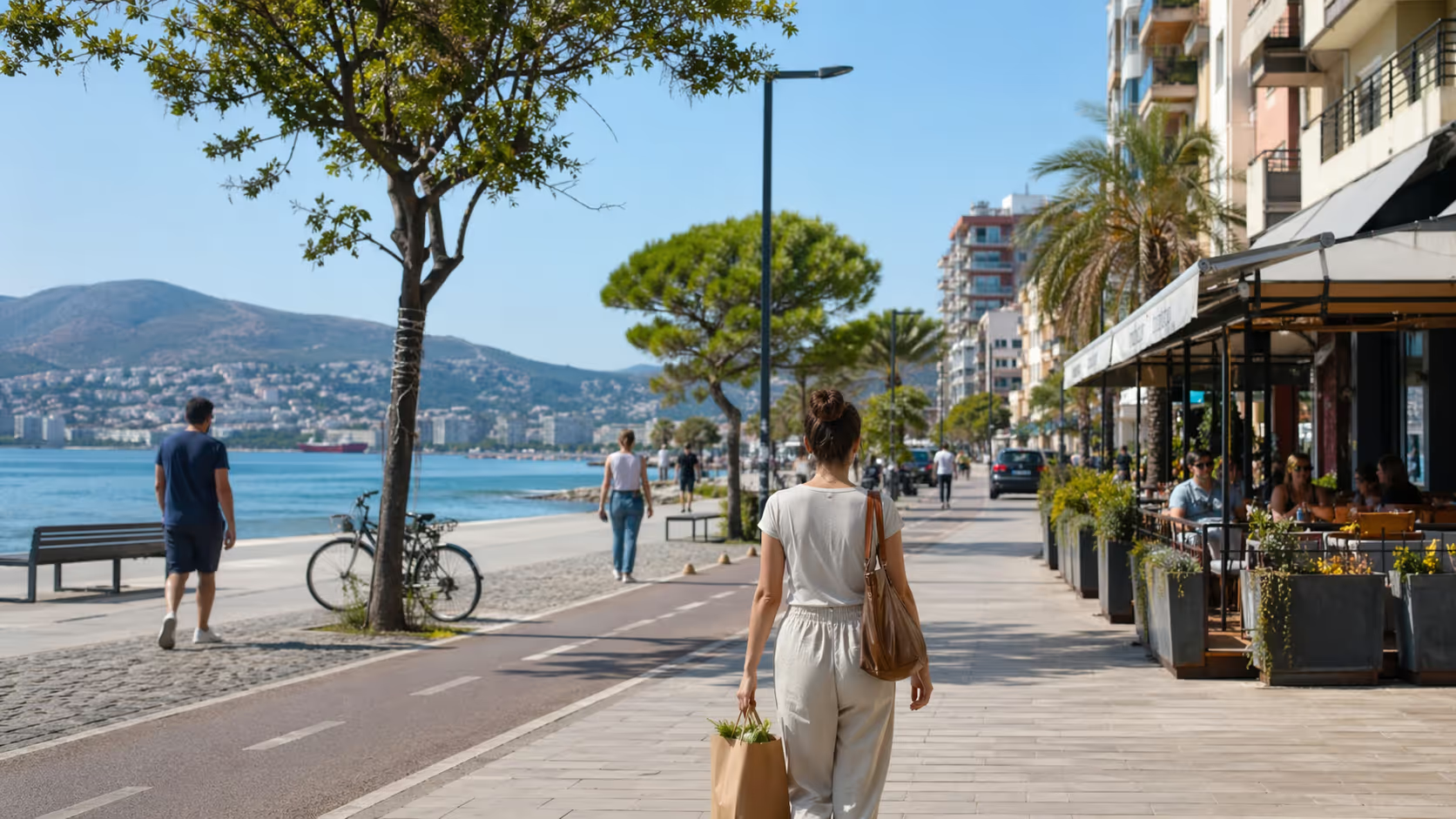
Vlorë feels relaxed when you are walking from Lungomare to Uji i Ftohtë at sunset. The mood changes when you need a residence card, a renewal stamp, or proof of local address.
The city has grown as a base for retirees, remote workers, boat owners, and long-stay visitors. Many people arrive for the sea and slower pace, then learn that legal residence still runs through formal Albanian systems.
Albania’s foreigner rules are set nationally. Law No. 79/2021 “On Foreigners” is the main framework, and Decision of the Council of Ministers No. 771/2021 gives more detail on procedures. In practice, your experience is shaped by the local police and migration desk.
That local layer matters in Vlorë. The Border and Migration officers handle files from people living in the city center, Lungomare, Uji i Ftohtë, Radhimë, Orikum, and nearby villages. During summer, staff deal with more visitors, more boat entries, and more questions from people who arrived without a clear plan.
Vlorë does not work like Tirana. Tirana has more legal offices, more translators, more clinics, and more staff used to foreigner cases. Vlorë has the basics, but fewer people handle the volume.
This is why two people can follow the same national rule and have different office experiences. One person in Tirana gets a reply in three weeks. Another person in Vlorë waits six weeks, then returns with a fresh landlord statement.
The digital system has improved. The government migration portal and the e-visa portal both support online steps. Yet local offices still ask for printed confirmations, original documents, passport copies, signed forms, and in-person checks.
That mix is the source of most stress. You may upload a document online, then still need to bring it in paper form. You may receive an SMS, then still need to confirm the collection time at the office.
Vlorë has a port, a seasonal rental market, and many informal housing deals. These three details matter for permits. Boat arrivals may face extra checks, summer landlords may avoid formal leases, and short-term apartment hosts may not want to sign a notarized address document.
A foreign resident’s file is only as strong as the weakest paper in it. A solid income statement will not fix a weak address proof. A clean passport copy will not replace health insurance.
This is not meant to scare you. It is meant to save you from the most common mistake in Vlorë, treating paperwork like an errand you can finish after coffee.
Plan it like a small project. Use a folder, make copies, save scans, and give yourself extra days.
Albania uses several entry and stay routes. Your first task is to know which lane you are in before you visit any office.
Many citizens can enter Albania without a visa for short stays. This often covers citizens of the European Union, the United States, Canada, the United Kingdom, and many other countries. The common rule is 90 days in a 180-day period, though nationality details can change.
Visa-free entry is not residence. It does not give you the right to work in Albania. It does not turn into a residence card by default.
If you plan to stay in Vlorë beyond the short-stay window, you need to check your route early. Some people need a Type D visa before entering. Others may enter visa-free, then apply for a residence permit if they meet the rules.
The official e-visa portal, e-visa.al, is the place to check visa categories and file an online visa application. The migration portal, migrimii.gov.al, is used for residence and migration procedures. Keep both sites bookmarked.
The Type C visa is for short stays. It can cover tourism, meetings, family visits, or short business activity.
It normally allows stays up to 90 days in a 180-day period. It does not allow standard employment in Albania. If your plan is to test life in Vlorë for two months, this may be enough.
Type C is not a long-term housing plan. A landlord may rent to you, but the lease does not create residence rights. You still need to leave or move into the correct long-stay process before your time is up.
The Type D visa is for people who plan a longer stay. It can be linked to work, study, family reunification, self-employment, or other approved grounds.
For many non-EU residents, Type D is the bridge toward the Unique Permit, known in Albanian as Leja e Unikë. This combines residence and work authorization in one structure.
If you are a US freelancer moving to an apartment near Skela, a Type D path may apply. If you are a student, a family member of a resident, or an employee of an Albanian company, your file will look different.
The temporary residence permit, or Leja e Qëndrimit, is the main card many long-stay foreigners hold. It is usually issued for one year at first, then renewed if the grounds remain valid.
Common categories include work, family reunification, study, self-employment, retirement, and passive income. Retirees often need proof of pension or passive income. The research baseline for passive income cases is over 9,000 euros per year, but current requirements should be checked before filing.
A temporary permit is not just a permission letter. The card acts as your local ID in daily life. Banks, mobile providers, notaries, clinics, and police may ask for it.
Permanent residence usually becomes possible after five years of temporary residence. The file is heavier than a renewal. It may require proof of integration, including Albanian language knowledge.
Do not treat permanent residence as an automatic prize after five years. Gaps, late renewals, long absences, unpaid fines, and weak documents can hurt the case.
If permanent residence is your goal, keep every approval notice, rental contract, insurance policy, and renewal receipt. Start saving clean copies from year one.
Albania does not have a simple sticker called “remote work visa” for every online worker. Many remote workers use self-employment or other long-stay grounds.
For a freelancer in Vlorë, the office may ask for contracts, bank statements, tax registration documents, insurance, and proof of stable income. The research baseline for many digital nomad style cases is around 2,500 euros per month, but the exact file depends on the legal route and officer review.
If your clients are abroad, make that clear. If your work is tied to an Albanian company, the work authorization side may change.
A vague letter saying “I work online” is weak. A signed client contract, six months of bank statements, and a short Albanian translation are much stronger.
Your documents decide how smooth your appointment feels. The officer may be polite, but they will still reject or pause a file with missing proof.
Start with a physical folder. Use plastic sleeves or labeled sections. Keep originals separate from copies.
Scan every document to your phone and cloud storage. Name files clearly. “Passport main page.pdf” is better than “IMG\_4837.”
Most residence or renewal files include a valid passport. It should have enough validity beyond your planned stay. Bring the original and multiple copies of the photo page.
You will usually need passport photos. Ask a photo shop in Vlorë for permit photos, not tourist snapshots. Shops near the city center and around Skela know this request.
You need proof of address. In Vlorë, this is often the hardest document. A signed rental contract may not be enough if the landlord has not registered the lease or will not give consent.
You may need a notarized landlord statement. If you live near Lungomare in a seasonal apartment, speak with the landlord before you pay months in advance. Ask if they will sign documents for residence.
You need health insurance. The research baseline for required coverage is 30,000 euros. Local checks can be strict, and some clinics may refuse to move forward without proof.
You need proof of financial means. This can be a pension statement, employment contract, bank statement, freelance contract, business registration, or sponsor proof.
You may need a clean criminal record. For non-EU documents, apostille and sworn Albanian translation may be required.
You may need proof of civil status. Family cases often need marriage certificates, birth certificates, custody papers, divorce records, and school enrollment proof for children.
Apostille is one of the main delay points. If your country is part of the Hague Apostille Convention, public documents often need an apostille before Albania accepts them.
Apostille comes from the issuing country, not from a translator in Vlorë. A US birth certificate needs the correct US apostille. A UK police certificate needs the correct UK handling.
After apostille, many documents need sworn translation into Albanian. Do not use a casual bilingual friend for documents that will sit in a legal file. Use a sworn translator or a local notary route accepted by the office.
Translation costs can add up. The research baseline is 50 to 100 euros per page for some foreign documents, depending on language and speed. In lek, think roughly 5,000 to 10,000 ALL per page at a simple mental exchange rate.
Keep the apostille attached to the document. If you separate pages, the office may reject it.
Address proof deserves its own warning. Many newcomers rent near Lungomare, the Old Beach area, Skela, or Uji i Ftohtë through informal channels. That may work for living, but not always for residence.
Ask three questions before signing a lease.
Will the landlord provide a signed rental contract with full property details?
Will the landlord visit a notary or sign a notarized consent if needed?
Will the landlord answer calls from the police or migration office?
If the answer is no, think twice. A beautiful balcony near the sea does not help if the address cannot support your permit.
Hotels and guesthouses are weak for long-term residence files. They may work for arrival, but not for a one-year card. A short Airbnb confirmation is usually not enough.
If the landlord is outside Albania, get a power of attorney or local representative plan early. Do not wait until the officer asks for it.
Health insurance is mandatory for many permit files. The policy should name you clearly, show coverage dates, and list coverage amount.
Some files may require a health certificate. Vlorë has clinics, but many residents use Tirana for faster specialist paperwork. A US remote worker in our community used a Tirana clinic for a certificate after losing a week waiting for a local slot.
If your permit renewal is close, use the fastest reliable option. A one-day trip to Tirana can save ten days of uncertainty.
Keep receipts and stamped forms. Officers often prefer documents that show a stamp, signature, and date.
The process changes by category, but the rhythm is similar for most residents. Prepare early, upload what is required, queue locally, pay fees, wait for processing, then collect the card in person.
Use the steps below as your base plan.
Write down three dates. Your entry date, your visa or permit expiry date, and the date 60 days before expiry.
For renewals, start 60 days before expiry. Do not wait for the final week. Post-expiry applications may be rejected, and overstay fines can begin.
If you arrived visa-free, count your 90-day window carefully. Do not assume the office will fix a late file.
Before you upload anything, decide which route fits your case. Work, self-employment, family, study, retirement, and passive income files all require different proof.
Read the official migration portal. If the wording is unclear, ask the local office or a licensed legal adviser.
Do not copy a friend’s folder. Their German pension renewal is not the same as your UK freelance application.
Collect your passport, insurance, lease, income proof, civil status documents, police certificates, and photos. Check each document for spelling errors.
Your name must match across documents. Middle names, maiden names, and passport spelling can create problems.
If your passport will expire soon, renew it first if possible. A weak passport validity period can shorten or block a residence file.
Order apostilles early. This step often happens outside Albania, so it is hard to fix from Vlorë in a hurry.
If you are already in Vlorë, ask a trusted person back home to handle it. Some residents ship documents by DHL or another tracked service.
Do not send your only original without scans. Keep digital copies before shipping anything.
Use a sworn translator accepted locally. Ask for the translation to keep the structure of the original document.
Check names and dates before paying. A typo in your birth date can waste a week.
Keep copies of both the original and translated version in the same sleeve.
Use migrimii.gov.al for migration and residence steps. Save every confirmation screen as a PDF and print it.
The portal can be slow during peak season. Summer is a bad time to leave uploads until midnight before your office visit.
If the system crashes, take screenshots. They can help show that you tried to file on time.
The local police and migration services are linked to the Vlorë police structure. Residents commonly refer to the local office area around Rruga Ferit Xhajpi.
Go early. Many residents arrive before 8 AM, and some arrive closer to 6 AM during busy weeks.
Avoid Monday if you can. Wednesday and Friday often feel calmer, based on local community patterns.
Bring water, a pen, your phone charger, and cash in lek. Dress simply and neatly. You do not need formal clothing, but you should look ready for an official appointment.
At the desk, give documents in a clean order. Do not hand over a loose pile.
Answer direct questions. If you do not understand, ask for clarification. Do not guess on legal terms.
If a document is missing, ask what exact document is needed. Write down the Albanian name of the item if possible.
Ask if you need to pay at a bank, tax point, or through a stated payment channel. Keep the receipt.
The national target is often discussed as 30 days for standard processing. Vlorë residents often report 45 to 60 days, with longer waits in complex cases.
Family reunification, background checks, boat entry questions, and document verification can push files toward 90 days. That does not always mean rejection.
Track messages from the office. Keep your Albanian phone number active. If you change numbers, tell the office.
Collection is in person. You may need fingerprint confirmation or identity check.
Check the card before you leave. Confirm your name, date of birth, nationality, permit type, and expiry date.
Ask if the card needs any extra stamp or activation step. Keep the receipt and collection paper.
Your residence card works as local ID, but carry your passport when handling banks, notaries, police checks, or travel. A copy may help, but it may not replace the original.
Make a photo of both sides of your card. Store it in a secure cloud folder.
If you lose the card, report it to police within 24 hours. The research baseline for duplicate cards is around 20 euros, with about a 15-day wait.
Fees change, and offices may quote amounts in lek. Use this section as a planning guide, not as a final invoice.
A simple mental exchange rate is 100 ALL for 1 euro. The real rate moves, so check before paying.
A Type D application is often listed around 55 euros. In lek, plan around 5,500 ALL.
A renewal fee is often around 35 euros. In lek, plan around 3,500 ALL.
Biometrics may add around 10 euros. In lek, plan around 1,000 ALL.
Express handling, when available, can add around 100 euros. In lek, plan around 10,000 ALL.
A duplicate lost card may cost around 20 euros. In lek, plan around 2,000 ALL.
These amounts match the research baseline for 2025 tariffs. Always check the current payment notice from the office or official portal.
A notarized landlord statement may cost around 20 euros. In lek, plan around 2,000 ALL.
Sworn translation can cost 50 to 100 euros per page for some documents. In lek, plan around 5,000 to 10,000 ALL per page.
A health certificate can cost around 50 euros in faster clinic routes. In lek, plan around 5,000 ALL.
Courier service for foreign documents can cost far more than expected. If you need DHL between Vlorë and your home country, budget extra.
Passport photos are cheap, but retakes waste time. Ask for the right size for residence paperwork.
A local agent or legal helper may charge around 100 euros for lighter support. Full-service immigration help can cost around 200 euros or more.
Use help when your case has risk. Risk means divorce records, family reunification, late filing, boat arrival, non-EU public documents, self-employment income, or a landlord who is not local.
Do not pay anyone who promises a guaranteed approval. A helper can organize your file, translate the office culture, and save time. They cannot erase a missing legal requirement.
Ask for a written list of services before paying. It should say whether translation, notary, insurance, and office visits are included.
The biggest hidden cost is time. A four-hour queue can wipe out a work morning. A second visit can cost a full day.
The next hidden cost is housing. If your landlord will not support your residence file, you may need to move. That means deposit stress and new notary papers.
The third hidden cost is deadline risk. A late renewal can mean fines, travel limits, or a full restart.
Overstay penalties can be serious. The research baseline lists fines from 100 to 500 euros per day in some cases, with deportation risk for severe or repeated violations. Do not test this.
Most rejected or delayed files are not dramatic. They fail on boring details.
A wrong date, weak lease, missing apostille, or expired insurance can pause everything.
Renewal files should start 60 days before expiry. A resident who waits until the final week has no room for translation delays, landlord problems, or portal crashes.
If your card expires in August, start in June. August is not a friendly month for bureaucracy in a coastal city.
Summer brings heat, visitors, staff holidays, and more foreigner questions. You want your file moving before that pressure hits.
Visa-free entry lets you enter and stay for a short period. It does not make you a resident.
A person living in an apartment near Old Beach for three months may feel settled. The state still sees a short-stay visitor.
If you want a residence card, use the correct residence process. Do not wait until day 88 to ask what to do.
Many Vlorë rentals are informal, mainly around summer. That can be fine for a two-week guest. It can be poor for a residence file.
A landlord who refuses notary contact is a red flag. A landlord who says “no problem” but will not put anything in writing is another red flag.
Before you pay a deposit, tell the landlord you need documents for Leja e Qëndrimit. Watch their reaction.
Foreign public documents often need apostille. A birth certificate without apostille may look official to you, but not to the office.
Apostille and translation are different steps. Do not confuse them.
If you are from a non-EU country, expect closer document checks. Post-Brexit UK citizens should not assume old EU habits still apply.
Digital portals help, but Vlorë offices may still ask for paper. Print confirmations, receipts, and uploaded forms.
Keep a folder with both print and digital copies. A dead phone should not stop your file.
If the portal shows a status, screenshot it. Save the date.
Many updates come by SMS or call. If you use a temporary Albanian SIM for your first month, keep it active until the card is collected.
Tell the office if your number changes. Write your number clearly on forms.
A missed call can add days. A wrong digit can add weeks.
Some days are frustrating. The line may be long, and the answer may be unclear.
Stay calm. Ask direct questions. Repeat the required document back to the officer.
Anger rarely helps in a small local office. A clear folder and polite tone help more.
The following case patterns reflect common situations shared in expat communities and local experience. They are not promises of timing, but they show how small details change outcomes.
A 65-year-old German resident lived near Lungomare and held a temporary residence permit. The card was close to expiry, so he began around 60 days early.
He uploaded passport, insurance, and pension proof through the migration portal. He printed each confirmation and put the documents in order.
He arrived at the Vlorë office on Rruga Ferit Xhajpi early in the morning. His ticket was in the middle of the queue, and the wait was around four hours.
The problem came from the landlord. The landlord was not available to appear in person. The resident used a notary route instead, with a notarized document costing around 20 euros.
The file was accepted. He collected the new card around day 35.
The lesson is clear. Retiree cases can be simple if pension proof, insurance, and address proof are clean. The address proof is often the weak point.
A 35-year-old US freelancer rented near Skela and earned around 3,000 euros per month from clients abroad. He needed a long-stay route tied to self-employment style proof.
He started with the embassy side for the long-stay visa. After entering Albania, he had a limited window to move into the Unique Permit process.
His file included freelance contracts, six months of bank statements, passport copies, and health documents. He needed a health certificate and used a Tirana clinic for speed.
The problem was translation. One bank letter and one contract were not translated on time. He missed the deadline by three days.
He paid a fine of around 150 euros and had to refile parts of the case. The delay created stress with travel plans.
The lesson is to prepare translations before arrival when possible. If you are flying from the US, ship or scan documents early. Do not assume Vlorë can solve every document in two days.
An Italian resident had lived in Vlorë for three years and wanted to bring a spouse and child. The family rented in Uji i Ftohtë and had a school plan for the child.
The sponsor filed first. The spouse and child were added through the family route.
The office asked for marriage certificate, birth certificate, apostilles, Albanian translations, and school enrollment proof. Since the sponsor had a divorce in the past, extra documents were requested.
The background check took longer than expected. The file moved toward 90 days before resolution.
The lesson is that family cases need patience. If there is divorce, custody, name change, adoption, or disputed parentage, plan for extra review.
Vlorë Port adds a special layer. A foreign resident arriving by boat may face entry questions that airport arrivals do not.
Customs and border records matter. If the entry is logged in a way that raises questions, the residence file may need extra proof.
Boat owners should keep port documents, crew lists, insurance, and entry stamps together. Do not treat the port as informal just since the city feels relaxed.
If you entered by boat and plan to stay, speak with the migration office quickly. A late permit file after a port arrival can look like irregular stay.
A resident lost a wallet near the city center market. The residence card was inside.
The correct first step was a police report within 24 hours. After that, the resident requested a duplicate card.
The expected fee was around 20 euros, and the wait was around 15 days. During that time, the resident carried the police report and passport for ID checks.
The lesson is simple. Do not wait to report a lost card. A missing card can become a bigger issue if you need a bank visit, notary appointment, or travel.
You do not need to know every ministry in Albania. You need to know which doors matter for your file.
Keep a small contact sheet in your folder. Print it, and save it on your phone.
Use e-visa.al for visa applications and visa category checks. This is the official portal for Albanian e-visa procedures.
Use migrimii.gov.al for migration and residence procedures. This is the main reference point for residence steps.
Use qbz.gov.al for legal texts. Law No. 79/2021 and DCM No. 771/2021 are available through Albania’s official publication center.
Use asp.gov.al for State Police information. Local office details can change, so verify before visiting.
Residents commonly handle migration steps through the local police and Border and Migration structure in Vlorë. The office area often referenced by residents is around Rruga Ferit Xhajpi.
Arrive early. Bring printed documents. Ask at the desk where foreigner permits are handled if signage is unclear.
If you live in Orikum, Radhimë, Uji i Ftohtë, Skela, or near the Old Beach, you may still be directed to the Vlorë city office. Do not assume a village or neighborhood office can process foreigner residence.
The research pack lists Vlorë Police contact by phone as +355 69 20 12345 and email as prefvlope@policia.gov.al, with replies often taking around one week. Confirm contact details through the State Police site before relying on them.
When emailing, use a clear subject. Write your name, nationality, passport number, permit type, expiry date, and phone number.
Keep the email short. Attach only key documents unless asked for more.
You can find notaries around the city center, Skela, and near main administrative streets. Ask if they have handled foreigner residence address statements before.
For translators, ask for sworn translation into Albanian. Confirm the price per page, timing, and whether notarization is included.
Do not choose only by lowest price. A bad translation can cost more in delays.
Vlorë has clinics for basic documents, but some residents use Tirana for faster or more specialized certificates. This is common for tight deadlines.
For insurance, use a policy that clearly states your name, dates, and coverage amount. The research baseline is 30,000 euros coverage.
Print the insurance certificate. Keep the full policy PDF on your phone.
Some fees may require payment through a bank or stated payment channel. Ask the officer for the exact instruction.
Do not leave the office without knowing where and how to pay. A receipt is part of your file.
Keep the original receipt in your folder. Make a photo copy right away.
The romantic version of Vlorë is easy to understand. Sea views, grilled fish in Radhimë, evening walks on Lungomare, and a lower cost of living make the city feel like a soft landing.
Daily life has another side. It includes queues, stamps, photocopies, slow replies, and office visits that do not fit neatly into your work calendar.
This contrast is normal for many residents. Albania is modernizing its systems, and digital tools are growing. At the same time, local enforcement can vary by office, staff, season, and document type.
The European Commission tracks Albania’s progress toward EU alignment, including justice, security, and administrative standards. Legal frameworks may look EU-aligned on paper, but local offices still carry old habits.
Transparency International’s 2024 Corruption Perceptions Index gives Albania a score of 37 out of 100. That does not mean every office visit is corrupt. It means trust in public systems is still a real issue.
Do not offer bribes. Do not hint at cash. Do not use a fixer who promises special treatment.
Use proper legal help if needed. There is a difference between a professional who organizes documents and someone who claims they can bypass the system.
World Bank Doing Business data has long shown that administrative procedures in Albania can take more time than residents expect. Even though that project has been archived, the old data still matches what many residents feel on the ground. Procedures may be legal, but they can be slow.
The best mindset is calm persistence. You will not win by being passive. You will not win by shouting.
You win by preparing better than the system expects. You bring copies, receipts, translations, and a clean timeline.
Expect one surprise. Maybe the landlord needs another paper. Maybe the portal is down. Maybe the officer asks for a fresh insurance certificate.
Build margin into your calendar. Do not book international travel right after a renewal deadline. Do not schedule a bank mortgage appointment before your card is in hand.
If you work online, tell clients you may be offline for a morning during permit week. If you are retired, avoid putting medical appointments on the same day as office visits.
Vlorë rewards people who build local relationships. A good landlord, a good notary, a helpful translator, and a friend who speaks Albanian can save you many hours.
This is why community matters here. You need more than a checklist. You need people who can tell you which office door moved, which translator is responsive, and which week to avoid.
Our founder’s rule is simple: never hand the office the only copy of anything you cannot replace in one week.
Bring originals for review, but submit copies when accepted. Keep a second full set at home. Keep a third set scanned.
Our community members have one more strong habit. They do a “folder rehearsal” the night before visiting the office.
Lay every document on a table. Put them in the order the officer is likely to ask for them. Passport, permit, insurance, address, income, translations, receipts, photos.
Then make a one-page cover list in simple Albanian or English. It does not need to be fancy. It just helps you stay calm when the line behind you is moving.
If you do not speak Albanian, bring a friend or hire a local helper for the first visit. The goal is not to look helpless. The goal is to avoid misunderstanding a request.
For residents in Lungomare and Uji i Ftohtë, we suggest confirming landlord documents before peak summer. Many owners travel, manage several flats, or shift attention to tourists.
For residents in Skela and the city center, notaries and copy shops are easier to reach. Use that advantage. Print extra copies before you head to the office.
For residents in Radhimë and Orikum, plan travel time into Vlorë. A missing copy can turn into a half-day problem if you need to go home and return.
Join the community if you want current local feedback before your appointment. Vlore Circle is built for residents who need practical help, not tourist fluff.
We cannot replace official advice, and we cannot guarantee approvals. We can help you ask better questions, avoid common traps, and find people who have handled the same process.
Revisit this guide 90 days before your current card expires. That gives you one month to check rules, then 60 days to prepare and file.
Revisit it before signing a long-term lease in Vlorë. Your apartment is part of your immigration file, not just your home.
Revisit it before changing jobs, changing income source, getting married, separating, having a child, or moving from Vlorë city to Orikum, Radhimë, or another address. Each change can affect your next renewal.
Revisit it before leaving Albania for a long trip. Long absences can matter for renewal and permanent residence plans.
Rules change, office practice changes, and local staffing changes. The safest residents are the ones who check early, keep clean records, and ask local questions before deadlines turn into problems.
Living in Vlorë can be calm and rewarding, but your paperwork needs discipline. Treat your permit folder like part of your home setup, and the city becomes much easier to live in.
Follow Vlore Circle for fresh guides, local updates, and community notes around life in Vlorë. It is the easiest way to stay close to what we are building.

Be part of a growing community built around connection, local life, and a better experience of Vlorë.
join the circle