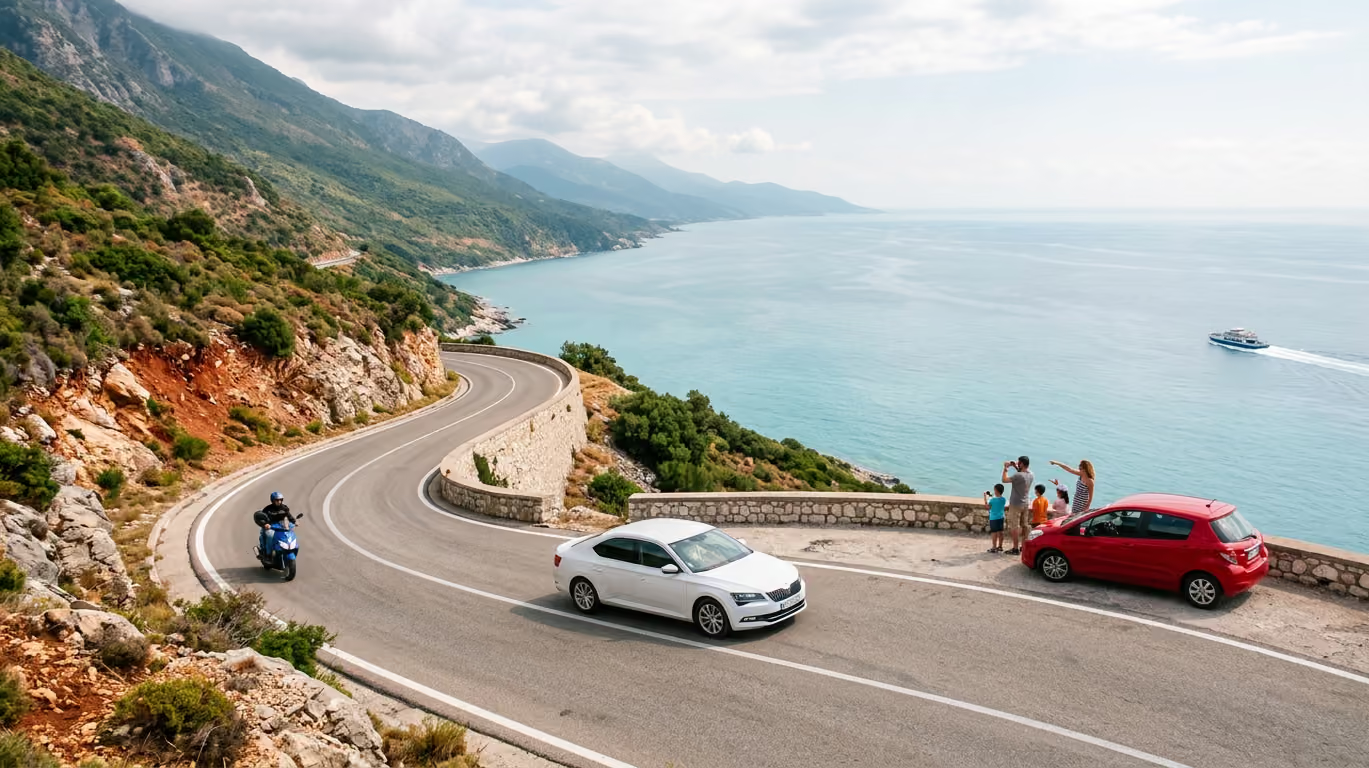
Representative image

Master driving in Vlore with our guide to Albanian road rules, parking, and car rentals. Navigate the coastal highway and Llogara Pass safely and legally.





Driving in Vlorë requires a strict balance of situational awareness and technical knowledge. It is not an unruled free for all on the roads. You must balance following the official Albanian Road Code with understanding unspoken local habits. We will cover exact speed limits, parking strategies, and vehicle rental tips below.
To drive safely in Vlorë, rent a reliable sedan, stick strictly to posted speed limits, and plan parking well ahead. You must yield to cars entering roundabouts and carry mandatory safety gear in your trunk.
The Vlorë region serves as the primary gateway to the southern Albanian coast. Our coastal highway connects northern cities to popular southern beach towns. Summer traffic swells dramatically along the main beachfront promenades. Understanding local driving norms prevents costly fines and frustrating delays during your trip.
The Albanian Road Code dictates traffic laws across the entire country. The rules apply equally to tourists and local residents without exception. Police maintain strict enforcement for drinking and driving offenses. You must use hands-free devices if you need to take a phone call.
Speed limits vary strictly by the zone you enter. City streets and urban zones enforce a limit of 40 to 50 kilometers per hour. Rural roads allow speeds of 80 to 90 kilometers per hour. Highways permit up to 110 kilometers per hour.
Police use speed cameras heavily near Vlorë and along the coastal routes. A sudden speed drop near a small village usually signals a camera zone. Fines hit fast if you ignore these transitions. Research from tourist driving guides notes a frequent 100-euro fine for doing 65 in a 50 zone.
You must carry specific mandatory equipment in your car at all times. This includes a warning triangle, reflective vests for every passenger, and a first aid kit. Drivers bringing cars from left-hand drive countries must install headlight adjusters. You must wear your seatbelt in both front and back seats.
Night driving carries specific rules regarding your vehicle lights. You must keep your headlights on when driving outside city limits during the day. Failing to use daytime running lights on intercity roads is a common tourist mistake. You must switch to low beams when passing other cars at night.
Child safety rules match standard European regulations. Children under 12 years old must ride in an appropriate child seat. You cannot place a rear-facing child seat in the front without disabling the airbag. Police will issue heavy fines if they see a child sitting without proper restraints.
Alcohol limits are incredibly strict in Albania compared to other nations. The legal blood alcohol limit is virtually zero. You should not consume any alcohol if you plan to drive in Vlorë. Officers conduct random breathalyzer tests at checkpoints along the beach roads.
You must always carry your original documents when driving. Keep your driver's license, vehicle registration, and insurance papers in the glovebox. Rental car drivers must keep their rental agreement ready for inspection. Police will ask for all these documents immediately upon pulling you over.
Albania follows the Vienna Convention for all its road signage. If you drive in Europe, the red and white warning signs will look highly familiar. Priority triangles and circular prohibition signs use standard international formats. You will see warning signs for uneven roads, steep descents, and sharp curves.
Prohibition signs dictate what you cannot do on specific stretches. You will often see signs banning overtaking on the winding parts of the Llogara Pass. Signs banning horn use between 10 PM and 6 AM appear in urban centers. Ignoring these can attract immediate police attention.
Mandatory signs force specific actions from drivers on the road. Blue circular signs often indicate mandatory directions or speed minimums. You will see signs demanding daytime headlight use on major intercity routes. Failure to follow mandatory blue signs gives police an easy reason to stop you.
Priority signs tell you who has the right of way at intersections. The yellow diamond sign means you have priority on that road. The inverted triangle means you must yield to crossing traffic. Stop signs are legally binding even if local drivers occasionally roll through them.
Vlorë road conditions change rapidly near beach areas and construction zones. You might find a paved section suddenly giving way to gravel. The warning signs for these changes sometimes appear very late. Drive cautiously when leaving the main highway to reach secluded beach coves.
Speed limit signs require careful attention as you enter new towns. You will see a sign with the town name marking the start of urban limits. The speed limit immediately drops to 40 or 50 kilometers per hour at this sign. You must slow down before you pass the sign to avoid camera tickets.
Electronic road signs appear on newer sections of the coastal highway. These boards display real time warnings about accidents, heavy rain, or strong winds. They usually display messages in both Albanian and English. Pay attention to these boards during winter storms or heavy summer rain.
Brown signs point the way to tourist attractions and historical sites. You will follow these brown signs to reach places like Kaninë Castle or Zvërnec Monastery. The roads leading to these sites often become narrow and difficult to navigate. Always check a digital map before blindly following a brown tourist sign.
Traffic police set up frequent checkpoints along the coastal routes. They often station themselves just outside Vlorë or before major intersections. If a police officer waves a red baton, you must pull over immediately. Pull to the side of the road safely and turn off your engine.
Officers expect respectful behavior and compliance during these traffic stops. Do not attempt to argue or negotiate the fine amount under any circumstances. Keep your hands visible and wait for the officer to approach your window. Hand over your international license, car registration, and rental insurance paperwork when asked.
Fines operate on a tiered system based on the severity of the offense. Minor infractions like a broken taillight might cost 10 to 40 euros. Serious offenses carry steep financial penalties and possible license suspensions. Local traffic resources report that driving without a license costs up to 1000 euros.
Financial penalties for speeding scale with how fast you were going. Speeding over 20 kilometers per hour costs 2500 to 10000 Lek. This roughly equals 25 to 100 euros depending on the exchange rate. Extreme speeding can result in a three-month driving ban in Albania.
Missing safety equipment brings completely avoidable financial penalties. Missing a child car seat results in a fine of 5000 to 15000 Lek. Driving a car with missing license plates costs up to 20000 Lek. These fines often come with temporary vehicle impoundment until you fix the issue.
Driving under the influence ruins vacations instantly. A DUI charge carries fines up to 10000 Lek and a six-month driving ban. The police show absolutely zero tolerance for tourists driving drunk near the beach clubs. You will likely spend the night in a local police station.
You can usually pay traffic fines at any local bank or post office. The police officer will hand you a ticket with a specific payment code. Paying the fine within the first few days often grants a small discount. Do not try to hand cash directly to the police officer.
Rental agencies handle camera fines differently than physical police stops. If a speed camera catches you, the ticket goes to the rental company. The company will charge your credit card for the fine plus an administrative fee. This charge might appear weeks after you return home from your trip.
Parking in Vlorë tests the patience of even the most experienced drivers. The city divides into free spots, paid street zones, and private garages. Finding an empty spot during July or August is nearly impossible by midday. You must plan your parking strategy before you start your engine.
Free parking exists on unmarked side streets according to the 1968 Vienna rules. You can park anywhere that is not explicitly marked with prohibition signs. The reality is that local residents claim these free spots very early. Do not block residential driveways when hunting for a free street space.
Paid street parking requires you to check local signage for tariffs. Vlorë does not use traditional parking meters on the sidewalks. You will usually pay an attendant wearing a bright vest or use a local app. Display your paper ticket clearly on the dashboard to avoid getting towed.
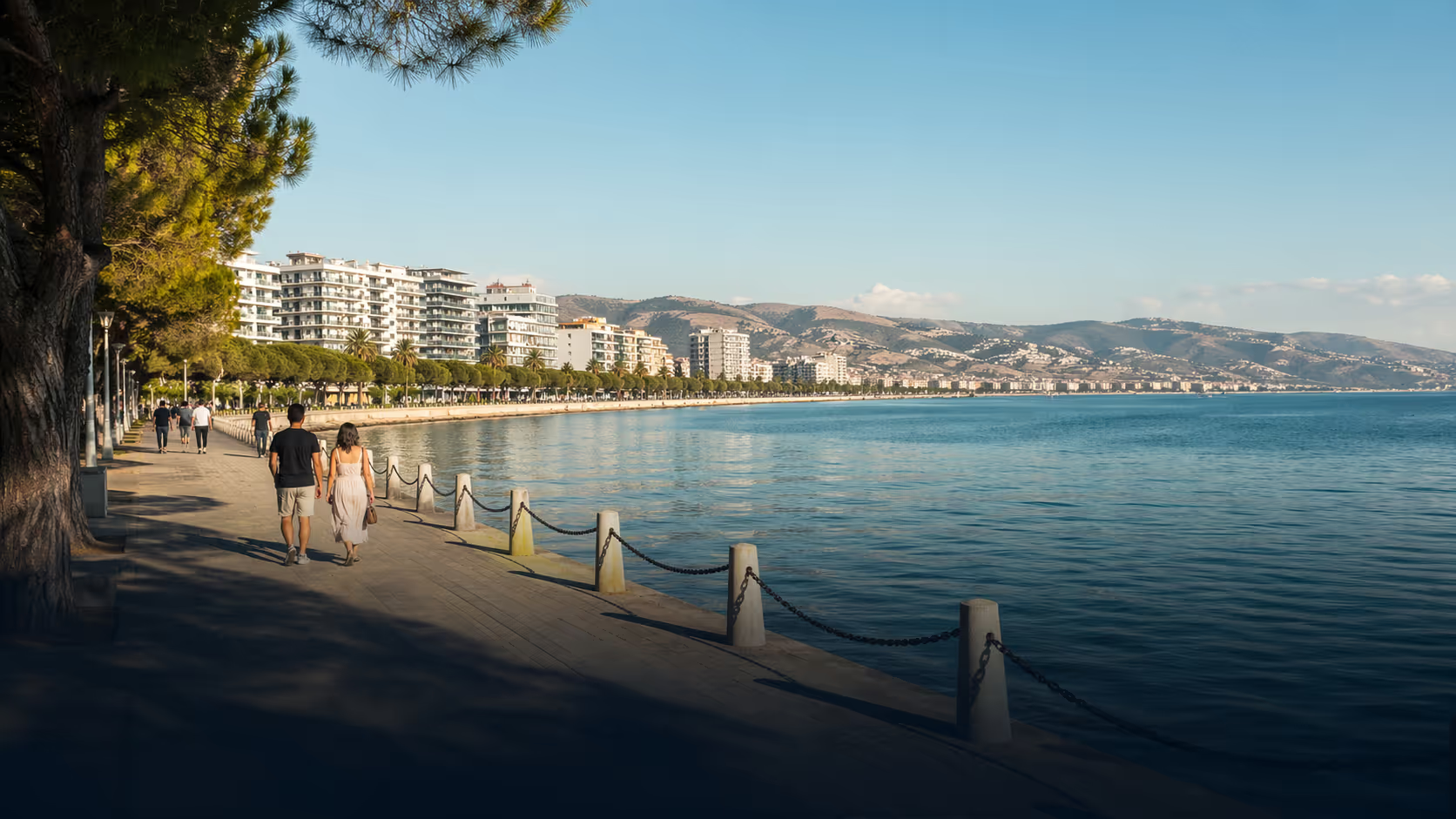
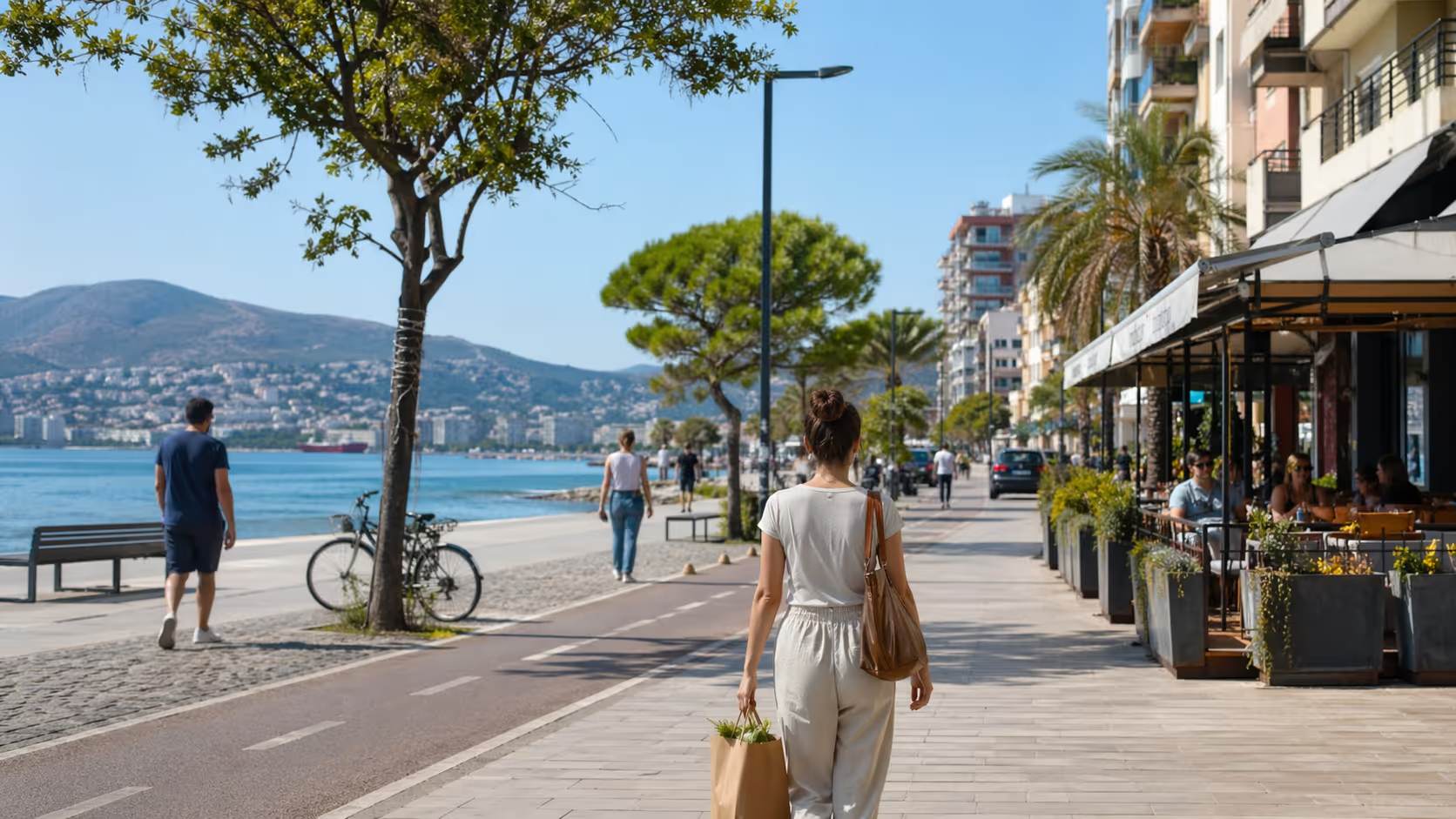
The Lungomare promenade is the busiest area in Vlorë for parking. Parking here is highly competitive during the evening hours when locals stroll the beach. Cars circle the promenade for hours waiting for a single spot to open. We suggest avoiding the Lungomare entirely if you just need to park quickly.
The neighborhood around the Muradie Mosque offers a more reliable parking experience. You can park in the old town center where spots turn over faster. You can then walk down the main boulevard toward the beach areas. This area gives you access to great cafes while keeping your car safe.
Private garages offer the best peace of mind for summer visitors. Many beachfront hotels include secure underground parking for their guests. You should confirm parking availability before booking any accommodation near the water. Expect to pay premium daily rates for private garage access during peak season.
Towing trucks operate aggressively in Vlorë during the summer months. They will remove your car if you park on crosswalks, bus stops, or blind corners. Retrieving a towed car ruins an entire day and costs a significant fee. Always choose a paid lot over a risky illegal street spot.
Early morning arrival is the best tactic for visiting popular beaches. If you want a parking spot near Radhime, you must arrive before 9 AM. The small dirt lots fill up completely by mid-morning. Late arrivals must park far away and walk along the dangerous highway shoulder.
Renting a car requires careful planning and the right documentation. You need a valid driver's license from your home country to start. Many agencies require an International Driving Permit for non-European drivers. You must provide a credit card in the driver's name for the security deposit.
Follow this specific process to secure your rental car safely. First, book your car online at least two months before a summer trip. Second, compare prices from local agencies and international chains at Tirana Airport. Third, verify that the quote includes mandatory third-party liability insurance. Finally, inspect the vehicle thoroughly before signing.
Choosing the right vehicle depends entirely on your planned itinerary. A standard sedan works perfectly for driving around Vlorë and the coastal highway. Sedans offer better fuel economy and easily navigate tight city streets. You do not need a massive truck just to visit the main beaches.
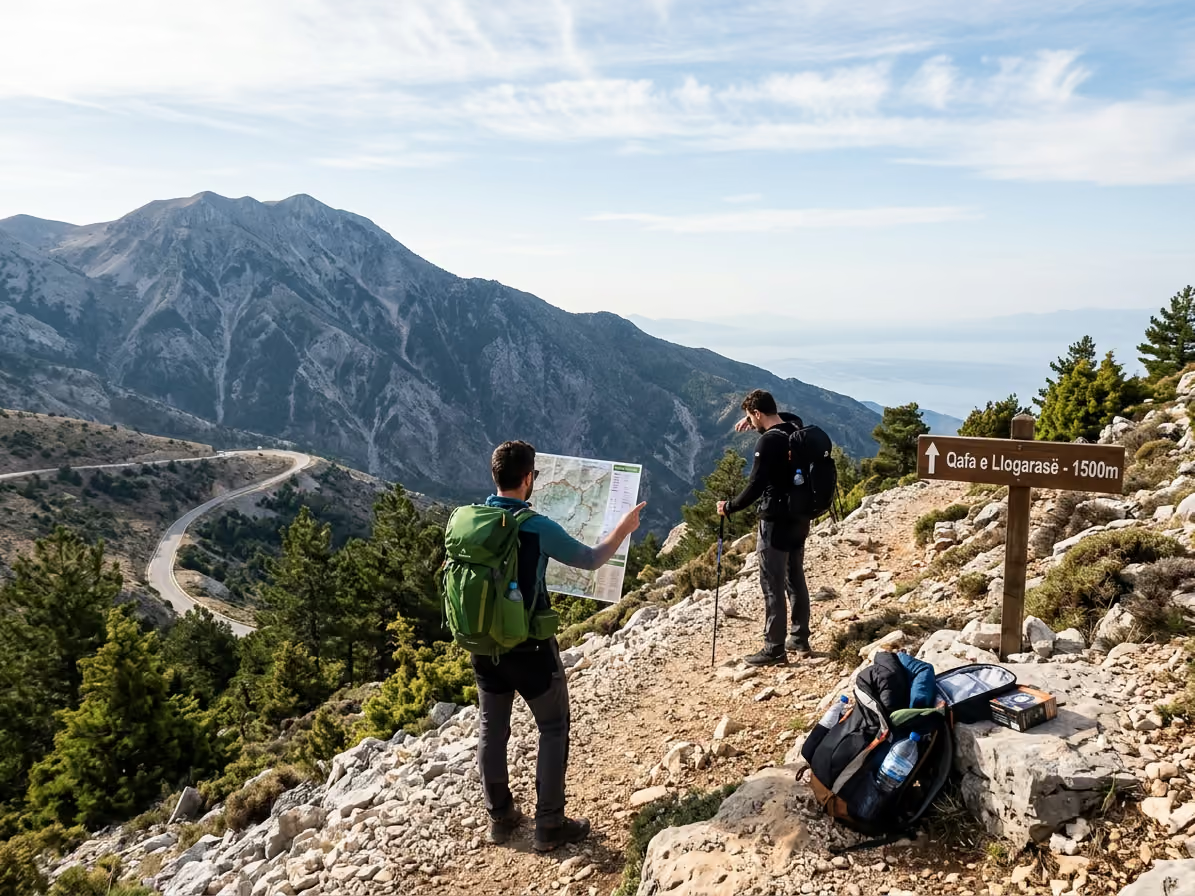
If you plan to drive the Llogara Pass, consider upgrading your vehicle. Travel industry experts suggest a 4x4 if you want to handle mountain potholes safely. The roads leading to hidden beaches south of Vlorë often lack paving. A vehicle with higher clearance prevents damage to the undercarriage.
Drivers from the United Kingdom or Australia face specific challenges. You will be renting a left-hand drive vehicle and driving on the right side. This requires a mental adjustment when shifting gears and judging road position. Request an automatic transmission if you feel nervous about shifting with your right hand.
Fuel costs add up quickly on long coastal road trips. A round trip from Vlorë to Dhermi might cost 6 to 8 euros in fuel. Gas stations are plentiful along the main roads and usually accept credit cards. Always clarify the fuel policy with your rental agency to avoid refueling fees.
Insurance options require careful consideration before you leave the lot. Basic third-party liability is legally required and usually included in the base price. Collision Damage Waiver protects you from massive bills if you scratch the car. We highly recommend buying full coverage to avoid disputes over minor paint damage.
The inspection process is your only defense against false damage claims. Take a slow video of the entire car before you drive away. Document every single scratch, dent, and windshield chip. Check the trunk to confirm the warning triangle and reflective vests are present.
Many people imagine an empty, scenic drive along the Albanian Riviera. The actual reality involves navigating tight spaces, aggressive overtakes, and erratic local habits. You will share the highway with tour buses, farm equipment, and pedestrians. Staying alert is much more practical than admiring the ocean views.
Local etiquette differs greatly from standard Western European driving habits. Drivers often stop in the middle of the road to chat with friends. You just need to wait patiently or pass safely when the oncoming lane is clear. Getting angry or shouting will not change this deeply ingrained cultural habit.
Honking serves as a complex language on Albanian roads. It is frequently used as a polite greeting or a warning, not an aggressive attack. A short double honk means a driver is passing you on a narrow road. Do not take offense when cars honk at you outside of city limits.
Roundabouts present a unique challenge for foreign drivers in Vlorë. Official rules say you must yield to cars already circulating in the roundabout. Local habit often sees entering drivers pushing their way in without yielding at all. You must drive defensively and anticipate sudden stops from other cars.
Pedestrian behavior requires constant vigilance in urban areas. Locals frequently cross the street outside of marked crosswalks. Children and families walk along the edge of the road near the beach clubs. You must maintain a slow speed and be ready to brake instantly.
Road surfaces change without warning on the coastal routes. A perfectly smooth new highway can suddenly transition into a cracked, pothole-filled road. Heavy winter rains wash out sections of the shoulder near the cliffs. Keep your eyes on the asphalt directly in front of you.
Animals pose a serious hazard on rural roads outside Vlorë. You will frequently encounter flocks of sheep or herds of cows crossing the highway. You must stop completely and let the shepherd clear the road. Honking at the animals will only startle them and cause further delays.
Night driving introduces significant risks outside the main city center. Street lighting is poor on rural roads leading to secluded beaches. Potholes are incredibly hard to spot until you hit them. Try to complete your driving during daylight hours whenever possible to stay safe.
Having the right contacts saves time and stress during a roadside emergency. The general emergency dispatch number in Albania is 112. You can reach the traffic police directly by dialing 129 from any local phone. Medical emergencies require a direct call to 127 for an ambulance.
Keep your rental agency's emergency roadside assistance number saved on your phone. Most major companies provide 24-hour support for breakdowns or flat tires. Call them before you try to fix anything yourself to avoid voiding your rental contract. They will usually send an approved mechanic to your location.
Local mechanics in Vlorë are highly skilled and resourceful. They can fix almost any mechanical issue quickly. The challenge is that many older mechanics do not speak fluent English. Relying on your rental provider ensures a smoother repair process and accurate translation.
Tow trucks are available, but the police usually arrange them after accidents. If you simply break down, your rental company will dispatch their preferred towing service. Do not accept a tow from a random passing truck without calling your agency first. You might end up paying a massive out-of-pocket fee.
If you get into an accident, do not move the vehicles immediately. You must wait for the traffic police to arrive and document the scene. The police report is strictly required for any insurance claims. Take photos of the damage and the other driver's license plates while you wait.
Join the community of expats and locals in Vlorë for real-time advice. Vlore Circle members regularly share updates on road closures and mechanic recommendations. Connecting with people living here provides practical support you cannot find in standard guidebooks. You can ask for reliable local services in our active group chats.
Medical clinics in Vlorë can handle minor traffic injuries easily. The main regional hospital is located near the city center. For serious trauma, patients are often transported to the capital city of Tirana. Always carry travel health insurance that covers emergency medical evacuation.
Keep a physical list of emergency numbers in your glovebox. Phones die, and cellular service drops in the deep mountain passes. Having a written copy ensures you can ask a passing local to make the call for you. Preparation is your best tool for staying safe on the road.
Tourists routinely underestimate the strictness of the traffic police in Albania. Many visitors assume local rules are merely suggestions meant for locals. They speed past villages on the highway and receive immediate fines. The police treat foreign drivers exactly the same as local residents.
Another common trap involves misreading the parking situation in summer. Visitors drive right up to the beach clubs expecting to find empty spots. They end up blocking local driveways and face angry residents or towing trucks. Park on the city outskirts and take a quick taxi to the beach.
Foreign drivers frequently misinterpret the right of way at uncontrolled intersections. If there are no signs, the vehicle approaching from the right has priority. Tourists often assume the larger road automatically has the right of way. This assumption leads to dangerous side-impact collisions in residential neighborhoods.
Never assume a roundabout has consistent yielding rules. I have seen countless near-misses at the main Vlorë entrance roundabout. Always slow down, make eye contact, and prepare to brake. Defensive driving will save your rental deposit and keep your trip stress-free.
Overtaking on the right is strictly prohibited and highly dangerous. You must only overtake on the left side of the road. Passing on blind curves along the coastal cliffs is a terrible idea. Be patient behind slow trucks until you reach a straight, clear passing zone.
Mountain driving requires specific techniques that tourists often ignore. When driving down the steep Llogara Pass, you must use engine braking. Relying only on your foot brake will overheat the pads and cause brake failure. Shift into a lower gear and let the engine control your descent speed.
Ignoring headlight rules is an easy way to get a ticket. Tourists forget to turn their lights on when leaving the city limits. The police actively look for rental cars driving without daytime running lights. Make it a habit to turn your lights on every time you start the engine.
Arguing with police officers never ends well for a tourist. If you get pulled over, accept the ticket calmly. Raising your voice or demanding to speak to a supervisor will only escalate the situation. Pay the fine at the post office and move on with your vacation.
No, turning right on a red light is strictly illegal in Albania. You must wait for the green light before making any turns at intersections. Traffic cameras monitor major intersections in Vlorë and will automatically fine you for running a red light.
The roads around Vlorë and the coastal highway are currently toll-free. You do not need to worry about toll booths or electronic passes in the south. The only major toll road in Albania is the A1 highway located far in the north.
Foreign parking apps usually do not work in Albanian cities. Look for local signage instructing you to text a code or pay an attendant. If you do not see a sign, look for an attendant wearing a branded vest walking the street.
Yes, but the roads to secluded beaches often turn into rough gravel. Drive slowly, check your spare tire, and avoid these roads after heavy rain. A standard sedan can make the trip if you drive with extreme caution.
Follow Vlore Circle for fresh guides, local updates, and community notes around life in Vlorë. It is the easiest way to stay close to what we are building.

Be part of a growing community built around connection, local life, and a better experience of Vlorë.
join the circle