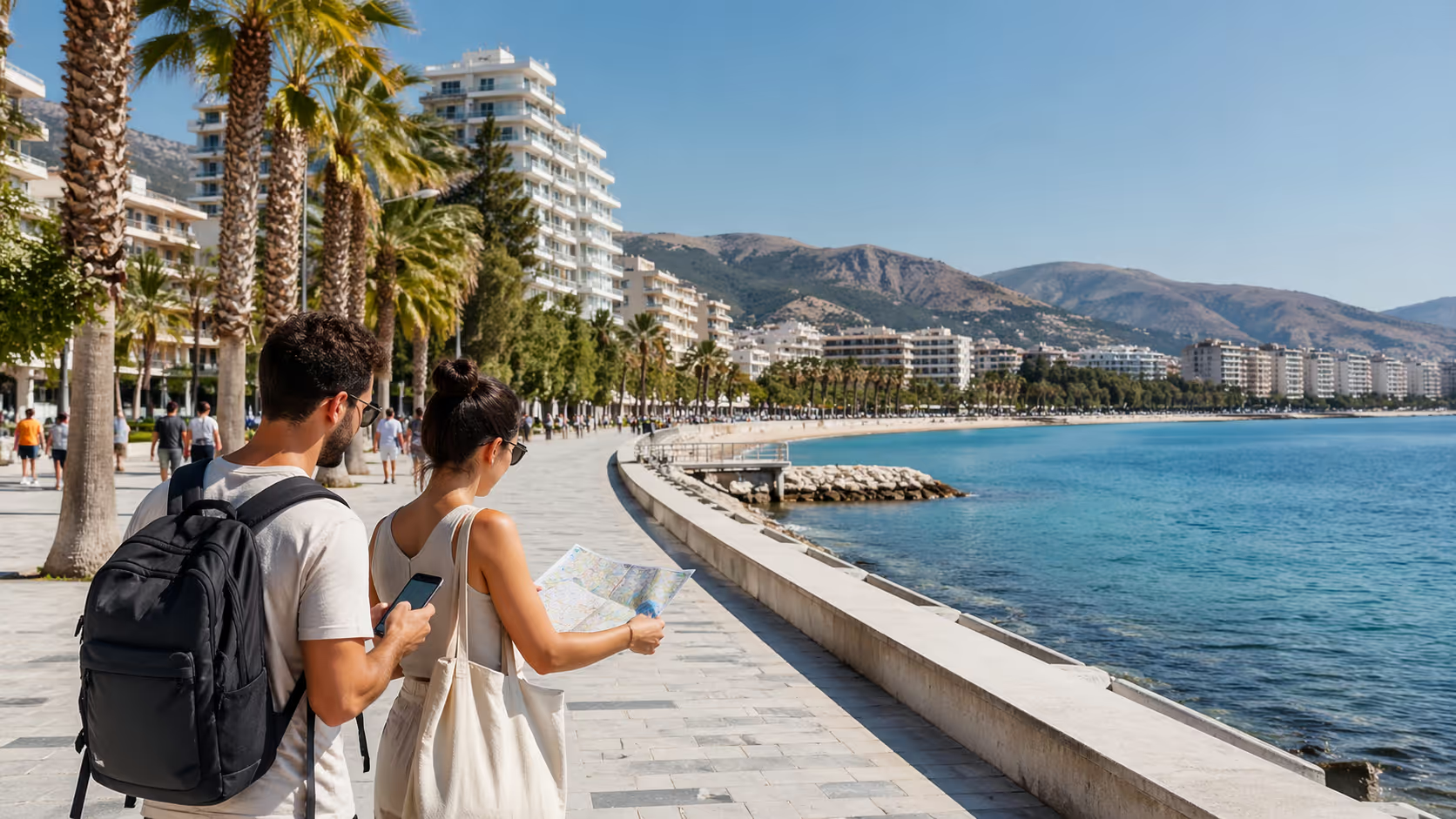
Representative image

Medical care in Vlorë seems limited to simple beach clinics, but the coastal city provides dependable public hospitals, private practices, and emergency support.





If you searched for healthcare in Vlorë, you are likely trying to answer one plain question. Where do you go when you feel ill, need a doctor, need medicine, or face an emergency in a city where the system may feel unfamiliar?
The short answer is this: use local clinics and pharmacies for simple issues, Vlora Regional Hospital for urgent or more serious care, and Tirana or Durrës for advanced treatment. For emergencies, call 112 first, then ask for ambulance support through 127 if needed.
Healthcare in Vlorë matters in a very practical way. The city is no longer just a summer beach stop. Many foreigners now stay through winter in Skela, near the Lungomare, in Uji i Ftohtë, or in apartments around Transballkanike.
That shift changes what people need. A tourist may only need sunscreen, stomach medicine, or a quick clinic visit. A resident needs a plan for blood pressure checks, dental work, children’s care, pregnancy care, chronic medicine, scans, injuries, and late-night emergencies.
Albania’s public healthcare system is built in three levels. The UK Government country note on Albania describes a system with primary care, secondary care, and tertiary care. Vlorë fits this model as a regional city, not as a national medical hub.
Primary care means the first stop. This includes health centers, basic clinics, hygiene centers, maternity and pediatric clinics, local emergency rooms, and rural hospitals. In Vlorë, this is where you go for common illness, first checks, routine referrals, and basic triage.
Secondary care means hospital-level care. Vlora Regional Hospital is the main public facility for this in the city. Research published on Albania’s emergency medical system describes Vlorë as a second-level emergency provider with hospital departments, diagnostics, and emergency care.
Tertiary care means advanced treatment. This is usually in Tirana or Durrës. Serious cardiac care, neurosurgery, complex cancer care, and advanced intensive care may require transfer out of Vlorë.
This is the first thing expats should accept. Vlorë can handle many normal health needs. It is not the place to rely on for every advanced procedure.
The city works best when you use it in layers. Use a nearby pharmacy in Skela or near the Lungomare for basic medicine. Use a local clinic for routine visits. Use Vlora Regional Hospital for urgent care. Use Tirana or Durrës for complex tests, specialist opinions, and higher-end private care.
This layered plan saves time. It also lowers stress when something happens at night, on a Sunday, or during August traffic along the coast road.
There is a cultural side too. Many locals ask their pharmacist before seeing a doctor. Pharmacies are part of daily life in Albania. In Vlorë, people often stop at a pharmacy on the way home from the beach, after work near Skela, or near the city center after a family visit.
Doctors are respected, but people may not use appointments in the same structured way that some foreigners expect. A clinic visit may feel informal. A hospital visit may require patience, local help, and several questions at reception.
For newcomers, the goal is not to judge the system. The goal is to learn how it works and build a small safety net before you need it.
Vlorë’s healthcare map starts with primary care. These are the places for low-complexity problems. Think sore throat, mild fever, rash, simple stomach issues, prescription renewal, basic blood pressure checks, and referrals.
Public primary care centers can help with first triage. They can send you to the regional hospital when a case is too complex. They may not have much English support, so bring a local friend or use a translation app.
Private clinics in Vlorë may be easier for expats for simple visits. They are often faster. Staff may be more used to foreign patients, especially in areas that serve the Lungomare, Uji i Ftohtë, and central neighborhoods.
The research base does not give a verified full list of private clinics in Vlorë. That matters. You should avoid trusting random Facebook comments as your only source.
A better plan is to keep a short personal list. Save one nearby clinic, one trusted pharmacy, Vlora Regional Hospital, 112, 127, and one private hospital option in Tirana or Durrës. If you have children, add one pediatric contact.
Vlora Regional Hospital is the core public hospital for the city. It is the place most residents think of for emergencies, inpatient care, childbirth support, basic surgery, imaging, and hospital labs. The emergency medical system research lists regional hospitals like Vlorë as second-level providers.
A regional hospital normally has multiple departments. These can include internal medicine, pediatrics, surgery, obstetrics and gynecology, anesthesia, intensive care, radiology, laboratories, and hospital pharmacy services. Exact availability may shift by staffing, time, and equipment.
For an expat, that means the hospital is useful but not unlimited. A broken arm, car accident injury, severe dehydration, chest pain, serious infection, or pregnancy concern may start there. A brain surgery need, complex heart procedure, or advanced cancer plan may not stay there.
Cancer care is a clear example. The UK Government country note says primary health care centers and specialty polyclinics in Vlorë can offer initial oncology diagnostics and ambulatory treatment. More advanced cancer care is limited outside larger centers.
This does not mean Vlorë is unsafe. It means you need to know when to move up the chain. A first scan or test may happen in Vlorë. A second opinion or advanced biopsy may take you to Tirana.
Durrës can be a practical middle point for some private care. Tirana has the widest range of private hospitals and specialists. American Hospital and Hygeia are two names that often come up for foreigners seeking private care, based on Albania Travel Guide and other expat sources.
The main private hospital numbers that appear in traveler guidance are American Hospital at +355 42 357 535 and Hygeia Hospital Tirana at +355 42 390 000. Save these in your phone before you need them. Confirm details directly, since phone numbers and service hours can change.
For residents near the promenade, the fastest route is not always the one that looks shortest on a map. Summer traffic from Uji i Ftohtë toward the center can slow down. If you live above the Lungomare, learn the route to the hospital from your actual building, not from a tourist landmark.
If you live near Transballkanike, you may have easier road access for a car or taxi. If you live in Old Town streets, parking near clinics may be harder. A health plan should match your neighborhood, not just the city name.
For a routine problem, start close to home. Visit a pharmacy or clinic in your neighborhood. If symptoms are mild, ask for a basic consultation and keep receipts for insurance.
For a problem that feels urgent, call 112 or go to Vlora Regional Hospital. Chest pain, breathing trouble, major bleeding, severe allergic reaction, stroke signs, or loss of consciousness need emergency help. Do not wait for a private appointment.
For a serious diagnosis, get a second opinion in Tirana or Durrës. This is common among locals too. Vlorë can begin the process, but larger cities have more private equipment and specialist depth.
For ongoing care, build a routine. Use the same pharmacy when possible. Keep copies of lab results. Ask your insurer which clinics or hospitals they accept before booking expensive tests.
The emergency rule in Albania is simple. Call 112 first if you are unsure. Albania Travel Guide notes that 112 can route callers to police, ambulance, or fire services.
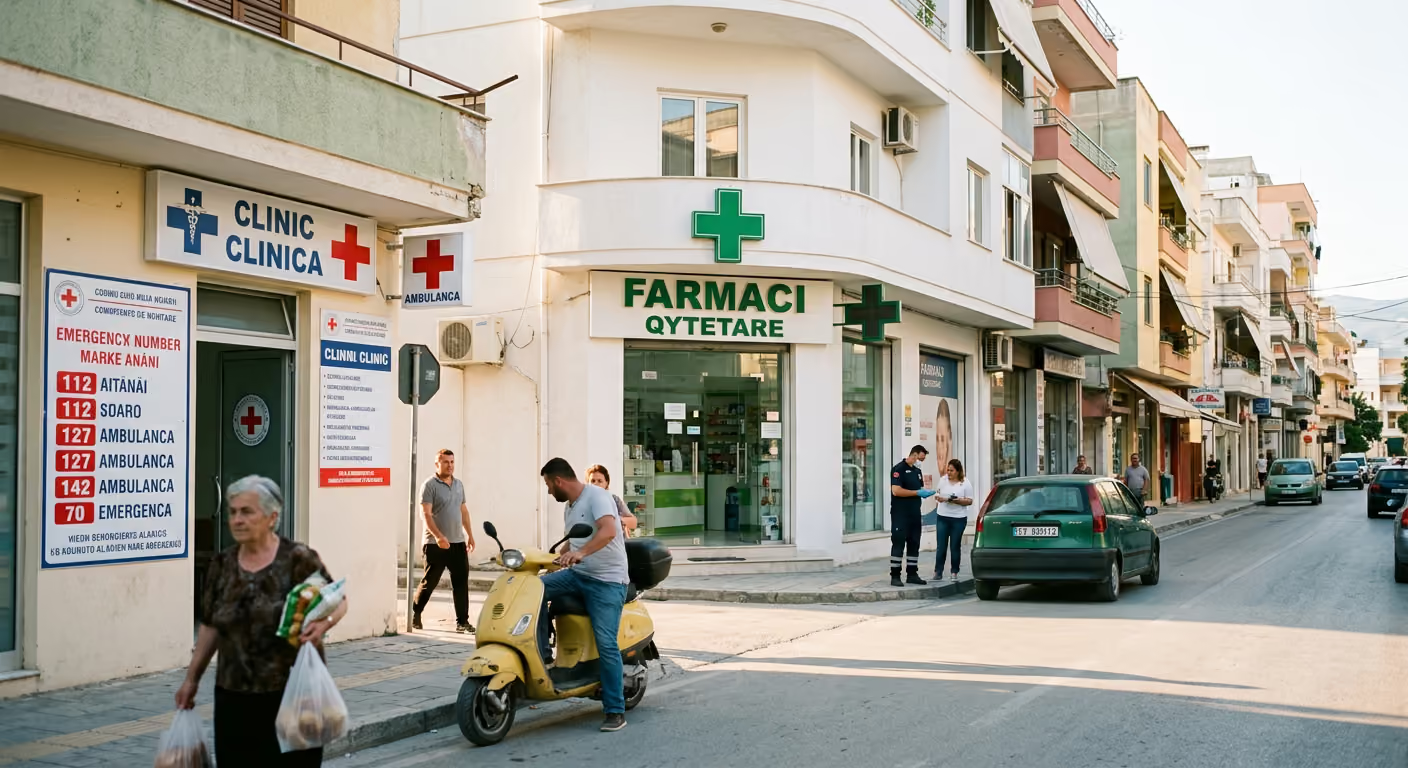
The key emergency numbers are:
For foreigners, 112 is usually the best first call. It is more likely to have English support than direct local lines. The direct ambulance number 127 may work, but language can be harder.
The national emergency system uses Centre 127 for ambulance coordination and medical transfers. Research on Albania’s emergency medical service describes Centre 127 as a national coordinator for transports, medical consultations, on-site missions, and planned transfers.
This system matters in Vlorë. If a case is too serious for local care, transfer may be arranged by ambulance or other coordinated services. Critical patients may be sent to Tirana or Durrës.
Do not assume every ambulance ride means full care is free. Emergency transport and public response are not the same as full treatment coverage for foreigners. Your insurance matters.
If you call for an ambulance, speak slowly. Say your city first, then your neighborhood, then the nearest landmark. For example, “Vlorë, Lungomare, near Hotel Bologna,” or “Vlorë, Skela, near the main roundabout.”
If you do not know the street name, use a landmark. The person taking the call may understand a known hotel, beach section, school, or major road faster than a foreign apartment listing. Send your live location to a local friend too.
If you are with an injured person, keep the phone open. Follow instructions. Do not move someone with a suspected neck or spine injury unless there is immediate danger.
For a car accident on the coastal road, call 112. Ask for ambulance and police if there are injuries. Take photos only after people are safe.
For a fall on the promenade or beach steps, check for head injury signs. Vomiting, confusion, fainting, severe headache, or unequal pupils are warning signs. Seek emergency care.
For heat illness in July or August, move the person into shade or air conditioning. Give small sips of water if they are awake. Call emergency services if there is confusion, fainting, or very hot skin.
For allergic reaction, breathing trouble is an emergency. Call 112. If the person has an epinephrine auto-injector, use it as directed.
For chest pain, stroke signs, or severe breathing trouble, do not drive yourself. Call 112. These are not pharmacy problems.
For a child with high fever, repeated vomiting, dehydration, breathing distress, or a seizure, use emergency care. A pharmacy can help with mild symptoms, but children can worsen fast.
The basic emergency chain is local scene, ambulance, Vlora Regional Hospital, then transfer if needed. This matches Albania’s three-tier model. Primary care and emergency response feed into regional hospital care, then advanced cases move to tertiary facilities.
The emergency medical service study notes that Albania adapted during COVID-19 by using more on-site consultations and missions. This helped limit unnecessary hospital crowding. For Vlorë residents, it shows why phone triage and ambulance advice can matter.
In a lower-risk case, emergency staff may advise care at home, a clinic visit, or hospital review. In a higher-risk case, they may send an ambulance. In a severe case, transfer planning may start after hospital assessment.
Keep your medical basics ready. Make a note on your phone with allergies, current medicines, chronic conditions, blood type if known, insurance details, and emergency contact. Add the same note in Albanian if you can.
A simple Albanian line helps: “Kam nevojë për ambulancë.” It means “I need an ambulance.” Another useful line is “Nuk flas shqip.” It means “I do not speak Albanian.”
Pharmacies are often the easiest entry point into healthcare in Vlorë. You will find them around Skela, the city center, near main roads, close to the Lungomare, and in residential areas. Many have a green cross sign.
A pharmacy can help with minor illness, fever medicine, stomach problems, wound care, allergy tablets, sunscreen, rehydration salts, cough products, and simple pain relief. Pharmacists may know common brand equivalents. They may suggest a doctor when symptoms look more serious.
Expats should be careful with medicine names. The same drug may have a different brand name in Albania. Bring the generic name, dose, and a photo of the package.
If you take regular medicine, bring extra supply when moving to Vlorë. Do not wait until your final tablet to look for a local version. Some medicines may be easy to find, and others may require a doctor or a bigger pharmacy.
For chronic medicines, ask your pharmacy about availability in advance. This is useful for diabetes supplies, thyroid medicine, blood pressure medicine, inhalers, anticoagulants, and psychiatric medicine. Keep a written list with both brand and generic names.
If you need cold-chain medicine, such as some insulin or biologic treatments, ask how the pharmacy stores it. Look for sealed packaging and check expiry dates. Do not buy medicine with damaged packaging.
Quality can vary across the market. Albania Travel Guide warns that public care outside Tirana may be weaker, and expats often rely on private care. For medicine, the practical rule is to use busy pharmacies in central areas and ask direct questions.
Do not buy antibiotics casually. In some countries, antibiotics may be easier to access than foreigners expect. Use them only with medical advice.
For pain medication, ask about the active ingredient. Paracetamol, ibuprofen, and other common medicines may have local brands. Check your dose, stomach risk, kidney risk, and other medicines you take.
For stomach illness, many cases after travel or beach days improve with fluids and rest. Seek medical care for blood in stool, high fever, severe dehydration, confusion, or symptoms lasting several days. Children and older adults need faster review.
For sunburn and heat rash, pharmacies near the promenade see this often in summer. Ask for after-sun care, burn cream, and oral rehydration salts. Severe blistering, fever, or dizziness needs medical care.
For sea urchin injuries or cuts from rocks near the beach, clean the wound well. Ask a pharmacist about antiseptic and dressing. Seek medical care for deep wounds, infection, red streaks, or tetanus concerns.
For prescription refills, bring your prior prescription. If it is not in English or Albanian, bring a translation. Some doctors may ask to re-check you before writing a local prescription.
Do not assume your closest pharmacy is open late. Ask your regular pharmacy where the nearest late-hour option is. Take a photo of the answer or save the location.
If you live near the Lungomare, summer opening hours may feel generous. Winter can be different. If you stay year-round, check opening times again after September.
Families should keep a basic home kit. Include a thermometer, oral rehydration salts, paracetamol or fever medicine, bandages, antiseptic, antihistamine, and any personal medicines. Keep child doses written clearly.
Remote workers should keep migraine medicine, eye drops, and back pain supplies if these are recurring issues. Long screen days in apartments near the sea still count as real work days. Health planning should match daily life, not holiday life.
The biggest choice in Vlorë is often public care or private care. Both have a place. The wrong choice usually comes from using one system for every problem.
Public care is the backbone for emergencies and regional hospital access. Vlora Regional Hospital is the core place for urgent care and inpatient treatment in the city. Ambulance services connect to the public emergency system.
Public care may be lower cost for locals. Foreigners may not have the same coverage. You may face more waiting, less English, older equipment, and more crowded conditions.
Albania Travel Guide and Expat Exchange both warn that public healthcare outside Tirana can be below the standard many Western expats expect. That does not mean staff do not care. It means the system can be stretched.
Private care is often faster and more comfortable. It may have better communication, clearer pricing, and easier access to modern diagnostics. It may require payment upfront.
For expats, private care is often best for non-emergency specialist work. Think dermatology, cardiology checkups, gynecology, dental work, imaging, blood panels, physiotherapy, and second opinions. Vlorë has local options, but Tirana has more depth.
For emergencies, do not waste time searching for the nicest clinic. Use 112, 127, or Vlora Regional Hospital. Stabilization comes first.
For planned care, compare before booking. Ask the clinic what the consultation costs, what tests are likely, which language the doctor speaks, and whether they issue insurance documents. Ask if card payment works.
For dental care, Vlorë can be a good option for routine work. Still ask for sterilization practices, material brands, X-ray access, and written treatment plans. For implants or major work, get a second opinion.
For maternity care, start early. Ask where prenatal visits happen, where delivery would happen, and what transfer plan exists for complications. If you prefer private care, ask what happens after hours.
For pediatric care, save a pediatric contact before your child is sick. Ask local parents near your neighborhood, not only travel groups. A parent in Uji i Ftohtë may have a different practical answer than one near the city center.
For mental health, local access may be limited. Online therapy from your home country can be useful, especially if language and license rules fit. Keep crisis numbers and emergency contacts saved.
For physiotherapy and sports injuries, ask gyms, running groups, and local sports clubs for names. Vlorë has many active residents who hike, swim, and train along the promenade. Knees, backs, shoulders, and ankle sprains are common.
| Need | Better first choice in Vlorë | Why |
|---|---|---|
| Mild cold or stomach issue | Pharmacy or local clinic | Fast, close to home, low complexity |
| Routine blood tests | Private clinic or lab | Easier timing and paperwork |
| Chest pain | 112 or Vlora Regional Hospital | Time-sensitive emergency |
| Broken bone | Emergency care at hospital | Imaging and urgent treatment may be needed |
| Chronic disease check | Private clinic or regional specialist | More time for review |
| Advanced surgery | Tirana or Durrës referral | More specialist capacity |
| Cancer suspicion | Vlorë first tests, then Tirana or Durrës | Local start, advanced care elsewhere |
| Child emergency | 112 or hospital | Fast assessment matters |
This table is a guide, not a medical diagnosis tool. If a symptom feels serious, use emergency care. If symptoms change fast, call 112.
Healthcare planning in Vlorë starts with insurance. This is true for tourists, remote workers, retirees, and long-stay residents. Public care does not mean free full care for every foreigner.
Albanian citizens have access through the public system and the National Health Insurance Fund, known as FSKDSH. Foreign residents may have different rights based on legal status, work status, and contributions. Tourists should assume they need private travel medical insurance.
Albania Travel Guide and traveler emergency resources both recommend medical insurance for visitors. LoveAlbania gives the same practical advice for travelers. LawyerVlore notes that tourists may face payment and language issues during medical emergencies.
A good policy for Vlorë should cover private clinics, hospital care, ambulance-linked emergencies, medicines, diagnostics, and evacuation. Evacuation coverage matters if you need transfer to another country for advanced care. Italy and Greece are common regional reference points for higher-level care.
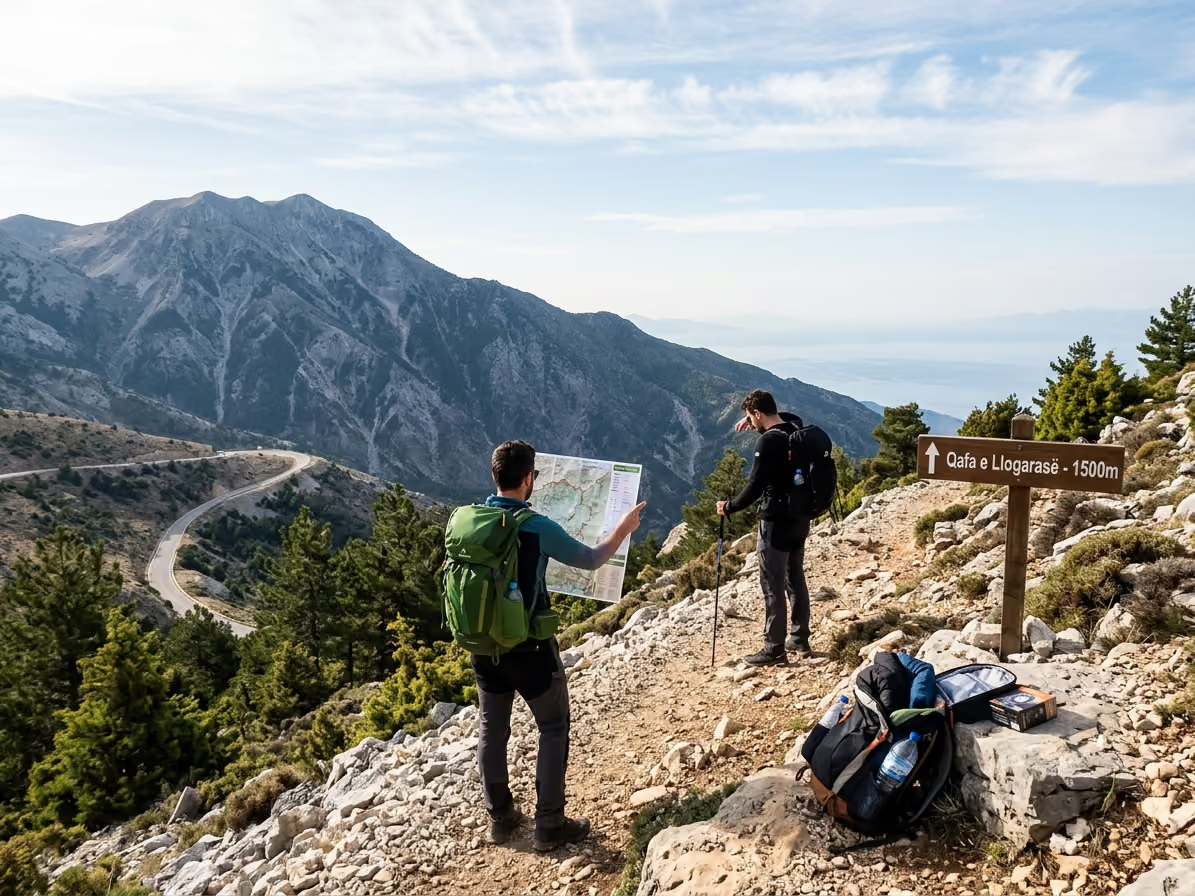
Read the policy before you need it. Check if it covers Albania by name. Check if adventure activities are excluded. Hiking in the hills above Vlorë, scooter use, boat trips, diving, and paragliding may need extra coverage.
Check pre-existing condition rules. Retirees should pay close attention here. A policy that excludes your heart condition, diabetes, or cancer history may not help when you most need it.
Remote workers should look at long-stay health insurance rather than short travel insurance. Many travel policies limit trip length. If you live in Vlorë for six months or a year, a standard holiday policy may not fit.
EU citizens should not assume their home system covers everything in Albania. Albania is not in the European Union. Bring insurance that fits Albania, not only the Schengen area.
Americans should check direct billing rules. Some clinics may ask you to pay first, then claim back. Keep receipts, test results, referral letters, prescriptions, and discharge papers.
British residents should not expect NHS-style access. Albania has its own system. The UK Government country note is useful for understanding structure, but it is not a promise of free care.
Ask your insurer these questions before arrival:
Keep a digital folder. Store your passport copy, residency card if you have one, insurance certificate, policy number, emergency assistance number, and medication list. Share access with a trusted person.
If you join Vlore Circle events or meetups, ask other long-term residents which insurers handled claims well for Albania. Real claim stories matter. Join the community if you want local names, current tips, and grounded advice from people living here year-round.
Exact prices change by clinic, test, and season. Vlorë does not have one fixed foreigner price list. Ask before you sit down for private care.
Use Albanian lek for daily planning. Many clinics and pharmacies quote in lek. Some private hospitals may mention euros for larger packages, but payment rules vary.
For basic pharmacy items, expect small daily purchases to be manageable. Pain relief, cold medicine, dressings, and rehydration salts are usually not a major expense. Branded imported medicine may cost more.
Private clinic consultations may require payment on the day. Ask if the price includes only the doctor visit or if tests are separate. Bloodwork, ultrasound, X-ray, and specialist review may each add cost.
Public hospital care may feel cheaper at first, but foreigners can still face fees and paperwork. Do not rely on assumptions. Ask at registration, ask for receipts, and ask what documents your insurer needs.
For a private visit, bring:
For a public hospital visit, bring the same items. Add patience. Bring water, phone charger, and a local contact if possible.
If you need a formal insurance claim, ask for stamped documents. Some insurers reject informal notes. You may need a diagnosis, doctor name, clinic details, payment receipt, prescription, and proof of treatment.
Take photos of every paper before leaving the clinic. Paper slips can get lost in a taxi, pharmacy bag, or beach tote. Save them in a folder named by date.
For lab work, ask when results will be ready and how you receive them. Some clinics send results by email or WhatsApp. Others require pickup.
For prescriptions, check if the pharmacy keeps the prescription or returns it. If you need it for insurance, take a photo first.
For follow-up care, book before leaving. If you need repeat blood pressure checks, wound review, or scan reading, ask for the next step in clear words. Do not rely on vague verbal advice.
One trap is assuming the first visit includes tests. It may not. Ask what is included.
Another trap is using an insurance card that the clinic does not accept. Ask if they bill directly or if you pay and claim.
A third trap is forgetting translation. A wrong dose or missed instruction can cost more than a paid translator or local helper.
A fourth trap is waiting too long for care to save money. A small infection can turn into a hospital visit. A minor dental issue can become an emergency.
A fifth trap is skipping evacuation cover. Advanced care outside Vlorë can become costly fast. Insurance is boring until it is needed.
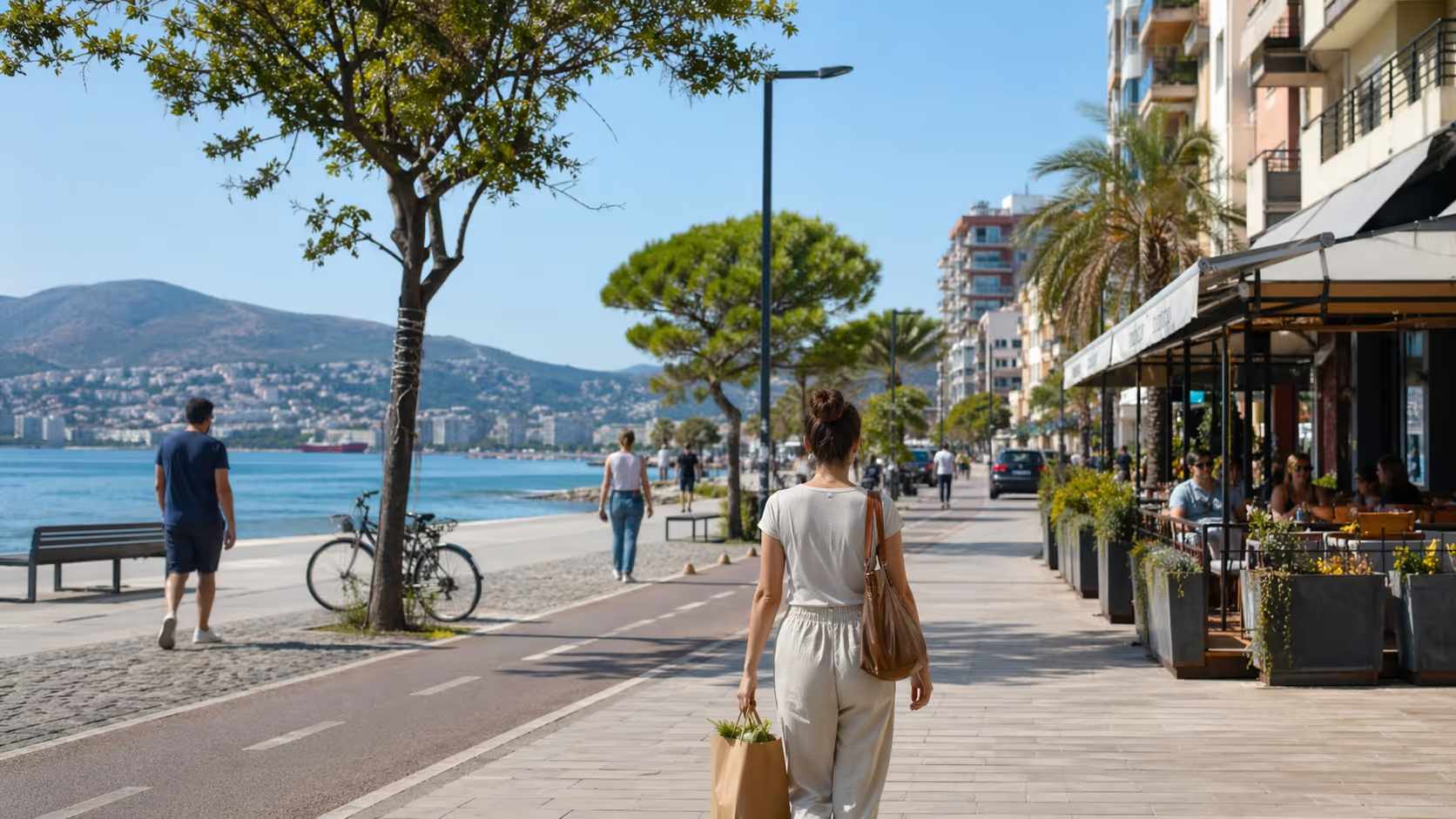
The romantic idea of living in Vlorë is easy to understand. Morning coffee near the Lungomare, clear water at Uji i Ftohtë, sunset walks, fresh fish, and a slower pace. It is a real part of life here.
The health reality is less polished. You may wait longer than expected. You may need to ask the same question twice. You may have to move from a pharmacy to a clinic, then to the hospital, then to Tirana for a final answer.
This is the trade-off of living outside a bigger capital. Vlorë gives access to the sea and a strong local rhythm. Tirana gives broader medical choice.
Public buildings may feel worn. Signs may not be clear for foreigners. English may vanish once you leave the emergency call line or a private clinic.
You may find excellent individual doctors and pharmacists. You may also find uneven systems around them. The person can be better than the process.
Locals know how to work around this. They ask family, neighbors, pharmacists, and trusted doctors. Expats need to build that same web, but with better records and insurance.
The biggest mistake is waiting until you are sick to learn the system. The second biggest mistake is assuming private care removes all problems. Private care can still have delays, limited specialist availability, and referral needs.
The third mistake is refusing public emergency care out of fear. If you have a true emergency, use the public emergency system. You can move to private care later when safe.
The fourth mistake is thinking Vlorë is medically isolated. It is not. It is connected to national emergency systems, regional hospital care, and referral routes. The connection just needs planning.
The fifth mistake is treating every symptom through a pharmacy. Albanian pharmacists can be helpful, but they are not a substitute for urgent diagnosis. Persistent pain, bleeding, fever, breathing issues, and neurological symptoms need medical care.
There are access issues for vulnerable groups too. A 2024 study from the Journal of Nursing, Social Studies, Public Health and Rehabilitation discusses health access challenges for vulnerable people in Albania. For expats, vulnerability can come from language, legal status, age, disability, low income, or lack of local support.
This is where community matters. A neighbor who knows the road to the hospital helps. A friend who speaks Albanian helps. A community group that can tell you which pharmacy is open on a rainy Tuesday night helps.
Living abroad is not only about paperwork and views. It is about having someone to call when the plan breaks. That is one reason Vlore Circle exists.
Healthcare access in Vlorë changes by neighborhood. A person living near Skela has different daily options than someone in Uji i Ftohtë or farther up the coast. Your health plan should start from your apartment door.
Skela is practical for many residents. It has shops, cafes, pharmacies, taxis, and road access. If you are new to Vlorë and want easier daily services, Skela is often a sensible base.
The Lungomare is popular with expats and remote workers. Pharmacies and clinics may be within a short walk, depending on your exact building. Summer traffic can slow road movement, so do not assume fast car access during peak evenings.
Uji i Ftohtë is attractive for sea views and quieter living outside the center. It can be lovely for daily walks and swimming. For healthcare, you need to plan transport, especially at night or in winter rain.
The city center gives better access to administrative services, older local clinics, and transport routes. It may be less relaxed than the promenade. For retirees without a car, central living can make medical errands easier.
Old Town areas can be charming, but parking and access can be awkward. If you have mobility issues, test the walk to the nearest pharmacy and taxi point. Cobblestones and hills matter when you are unwell.
Transballkanike can work well for drivers. Road links are useful if you need to reach clinics, the hospital area, or leave the city toward Fier or Tirana. It may feel less beach-focused, but daily access can be strong.
For families, choose housing near a pharmacy, grocery store, and taxi route. A sea view is less helpful at 2 a.m. with a feverish child. Ask landlords what is open in winter, not only August.
For retirees, check elevator reliability. Many Vlorë apartments have lifts, but power cuts or maintenance issues can happen. If stairs are a problem, do not rent on a high floor without testing the building.
For remote workers, check internet and medical access together. A great apartment with weak road access can become stressful during illness. Good living in Vlorë is practical before it is beautiful.
Walk to the nearest pharmacy. Time it from your front door. Do it during the day and again after dark.
Save the nearest clinic location. Ask if they accept walk-ins. Ask what languages staff speak.
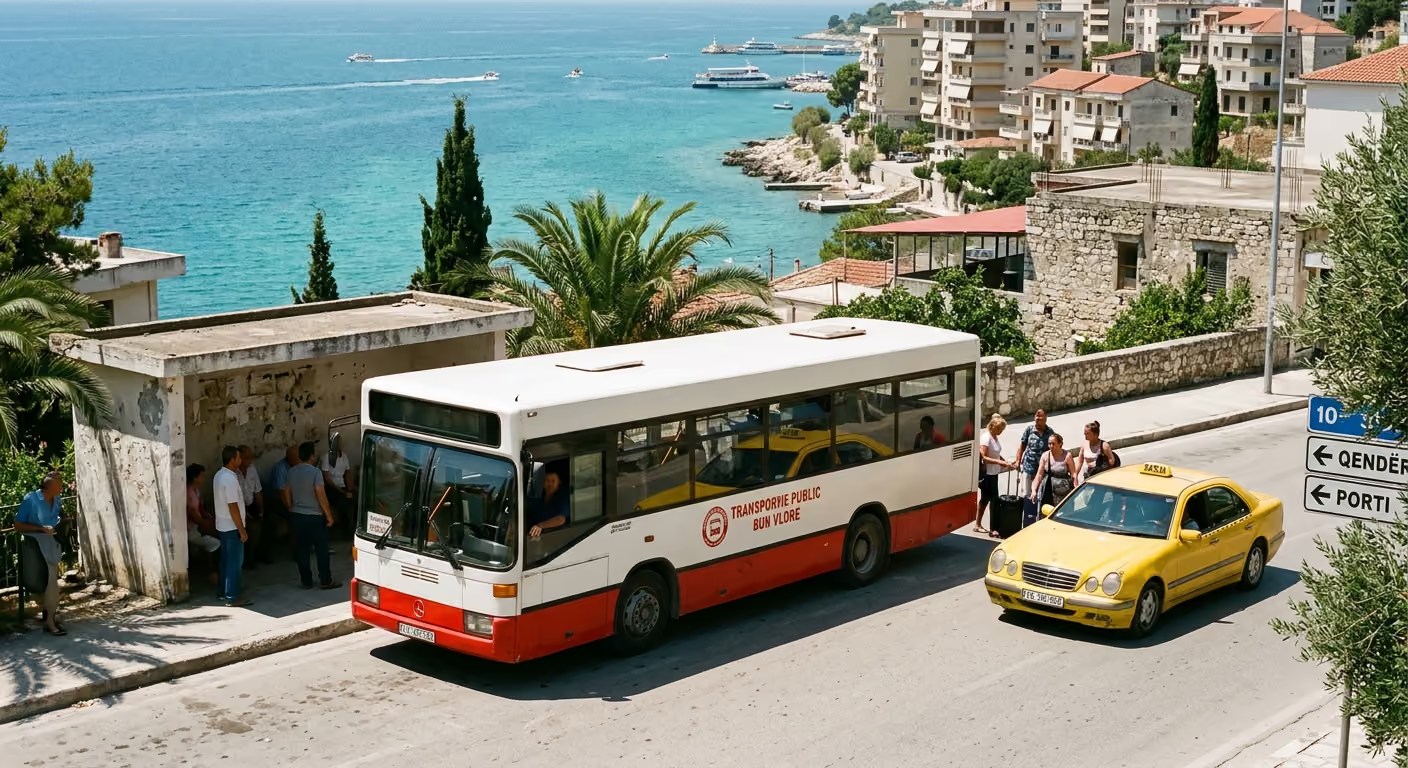
Test taxi pickup. Some buildings are easy to find, and others confuse drivers. Save a landmark that works.
Know the fastest route to Vlora Regional Hospital. Check it on a weekday morning and a summer evening. Traffic changes the answer.
Ask one local person what they do in an emergency. Ask one expat the same question. Compare both answers.
The best health advice from our community is simple. Set up your healthcare plan during your first calm week in Vlorë, not during your first fever.
A founder-style tip from Vlore Circle is to make a “health card” on your phone. Put your address in Vlorë, blood type if known, allergies, medicines, insurance number, emergency contact, and preferred hospital. Add one Albanian line that says you need medical help and do not speak Albanian.
Print one copy too. Keep it near your passport or inside your wallet. Phones die, screens break, and panic makes passwords hard.
Ask your pharmacist one quiet question before you need urgent help. “Where should I go if I need a doctor at night?” This often gives better local information than searching in a panic.
If you live alone, tell one trusted person when you are seriously ill. This can be a neighbor, friend, landlord, or community contact. Isolation makes every health problem harder.
If you have a chronic condition, introduce yourself to a doctor before a crisis. Bring your records. Ask where to go if symptoms flare.
If you need advanced care, do not take it personally when locals suggest Tirana. They are not dismissing Vlorë. They are telling you how the system works.
Keep a taxi fund in cash. A power cut, card issue, or phone data problem can turn a simple clinic trip into a mess. Cash still solves problems in everyday Albania.
Use the community, but protect your privacy. Ask for clinic names and process tips. Do not post sensitive diagnosis details in public groups if you can avoid it.
Join the community if you want practical, resident-focused updates on life in Vlorë. Healthcare is one of those topics where local experience saves time, money, and stress.
Do these small tasks before you need care. They take one afternoon, and they can make a hard day much easier.
Healthcare in Vlorë is workable when you understand the layers. Use pharmacies for simple needs, clinics for routine care, the regional hospital for urgent cases, and Tirana or Durrës for advanced treatment. Build your plan now, and the city becomes much easier to live in year-round.
Follow Vlore Circle for fresh guides, local updates, and community notes around life in Vlorë. It is the easiest way to stay close to what we are building.

Be part of a growing community built around connection, local life, and a better experience of Vlorë.
join the circle