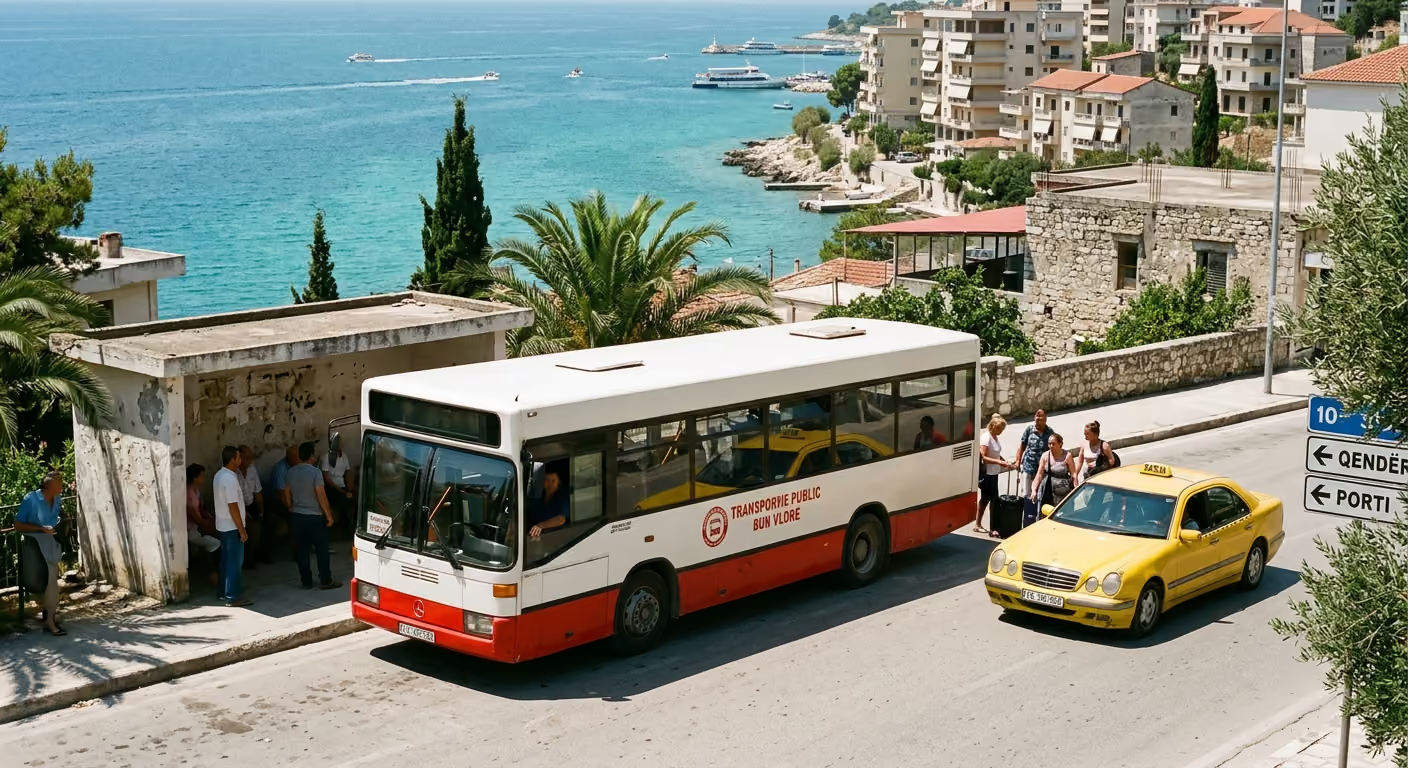
Representative image

How Vlorë public transport works in 2026, including city buses, station changes, intercity travel, airport connections and practical tips.





Looking for today's bus times? Use the dedicated Vlorë Bus Schedule 2026 for current city routes, intercity departures, airport buses, stations and fares. This page explains how Vlorë's wider public-transport system works and why some older departure information is no longer reliable.
Updated 25 September 2026: Vlorë's bus-stop infrastructure and some departure arrangements changed during 2026. This guide replaces older Vlorë Circle transport information. For intercity travel, always check the official eTransport platform or your operator again on the day of travel.
Quick answer: Vlorë now has renovated urban bus stops, a more organised city-bus network, and several different departure points for intercity, airport and international buses. There is not one single station that every bus uses. The safest way to travel is to identify whether you need an urban bus, suburban bus, intercity coach, airport bus or international service before heading to a stop.
The change is real. Bashkia Vlorë opened a public procurement procedure on 1 April 2026 for the rehabilitation of urban bus stations, with a planned six-week works period. The project covered structural work, shelter elements, lighting, paving and other upgrades to urban stops.
A separate climate-mobility project then became visible during the summer. On 12 August 2026, Changing Transport reported that four bus stops on Bulevardi Ismail Qemali were being renovated using the new Urban Oasis design. The shelters add more shade, side protection from wind and rain, easier access and green-wall elements. At that point, the Municipality had committed to four more stops. A later Changing Transport update said another eight stops beyond the first four were being renovated.
That means older descriptions of Vlorë having almost no proper bus stops are no longer accurate. Some older stops still exist, and not every route has the same level of infrastructure, but the city has been actively rebuilding the network during 2026.
No. This is the most important point for visitors.
Urban buses, suburban buses, intercity buses, airport coaches and international buses can use different stops. Older guides often send everyone to the Independence Monument or Muradie area. That information should not be treated as a universal departure point in 2026.
For many domestic intercity services, Rruga Demokracia remains an important departure point. Current booking data for Interbuz services to Tirana lists Rruga Demokracia as the Vlorë departure point. Some southbound services sold online also list Rruga Demokracia.
Other current transport listings use different locations. Visit Vlora lists a Vlorë Bus Station on Rruga Murat Toptani, and some international operators use stops around Rruga Gjergj Kastrioti. This is why typing only “Vlore bus station” into a map can send you to the wrong place for your operator.
There is another reason for the confusion. In February 2026, local authorities and bus drivers agreed on an organised temporary station for intercity and international buses while Vlorë waits for a full permanent terminal. Public reporting said the temporary area would receive waiting shelters, road signs and portable toilets. We have not found reliable public evidence that a single permanent terminal has since replaced every other departure point.
Urban buses are operated by Urban Trans Vlora. Current local transport listings show a standard fare of 40 ALL per ride.
The current public route listing includes four urban lines:
There is one problem with publishing a minute-by-minute city timetable as if it were fully confirmed: the best public machine-readable timetable we found was last updated by Bashkia Vlorë on 28 May 2026. That feed currently exposes the Çole–Spital line, but it predates part of the summer bus-stop work. For that reason, we do not want to label every old online time as a confirmed September timetable.
The latest municipal GTFS feed available online lists the Çole–Spital route running every day. It has 12 stops and travels via Rruga Mis Durhan, Rruga Enver Jaho, Rruga Zaho Koka, Bulevardi Ismail Qemali, Rruga Perlat Rexhepi and Rruga Ali Demi.
The published feed shows departures from Stacioni Çole beginning shortly after 06:20, with the final listed departures shortly after 20:20. The final listed arrival at the hospital roundabout is around 21:00. Treat these times as the latest published digital timetable, not a promise that every bus will arrive to the minute.
The 12 published stops are:
If a timetable is displayed at a newly renovated stop and it differs from the May digital feed, use the newer local information.
Tirana is one of the busiest routes from Vlorë. Current September 2026 booking data shows frequent daily service, with Gjirafa listing around 21 departures per day, an earliest departure around 04:30 and a latest departure around 16:00. Another current booking source lists an Interbuz service from Rruga Demokracia at 04:00, followed by a 04:30 service.
That small difference between live booking platforms is exactly why we recommend checking eTransport or the operator on the day you travel. Do not build an airport connection around a single time copied from an old blog post.
Direct airport buses are much easier to verify. Current Vlorë transport listings show Hermes Travel operating direct services to Rinas Airport for about 1,200 ALL, with a journey time of roughly 2.5 hours.
The current published departures from Vlorë are:
01:30, 03:30, 05:00, 06:00, 07:00, 08:00, 09:00, 10:00, 11:00, 12:00, 13:00, 14:00, 15:00, 16:00, 17:00, 19:00 and 21:00.
Hermes services shown on current booking platforms use Rruga Demokracia for at least some airport departures. Confirm the exact pickup point when you book, especially for the very early services.
Southbound travel is more fragmented than the Tirana route. Current September timetable services show several Vlorë–Sarandë departures during the day, but different platforms do not display exactly the same set of buses. Current listings include departures around 07:00, 10:00, 11:30 and 14:30, with some operators showing other times as well.
Some buses follow the coast through Dhërmi and Himarë; others use a different route. If your destination is Dhërmi or Himarë, ask whether the specific bus stops there before boarding. “Sarandë” on the windscreen does not automatically mean it will take the coastal route you expect.
For these routes, use the official eTransport search first, then confirm at the departure point or with the operator. Seasonal demand can change the practical timetable.
Current local listings show suburban coastal services from Vlorë to nearby destinations. Radhimë is listed at roughly three trips per day, and Orikum at roughly seven trips per day. These are useful for beach and local coastal travel, but the listings themselves warn that schedules can vary.
For a same-day return, ask about the final bus back to Vlorë before leaving the city. This matters more outside the peak summer season.
For intercity buses, the best starting point is eTransport. DPSHTRR promoted the platform at the Port of Vlorë in July 2026 and states that it provides intercity routes, schedules and operator information.
For urban buses, public data is still less complete. Bashkia Vlorë publishes the Urban Transport Vlore GTFS feed, but the latest public version we found is dated 28 May 2026. BusMaps can display that timetable in a friendlier format.
For airport and suburban routes, current local listings can be useful, but check the operator again before a time-sensitive trip.
Vlorë changed quickly in 2026. The Municipality tendered bus-stop rehabilitation in April, new Urban Oasis stops were being installed during the summer, and intercity buses were operating under a temporary-station arrangement while the city worked toward a better terminal solution.
This is why Vlorë Circle has retired its older “one terminal, informal stops and no timetable” description as current advice. For current times and departures, we maintain the dedicated Vlorë Bus Schedule as the timetable reference, while this guide covers the wider transport system.
Last checked: 25 September 2026.
Follow Vlore Circle for fresh guides, local updates, and community notes around life in Vlorë. It is the easiest way to stay close to what we are building.

Be part of a growing community built around connection, local life, and a better experience of Vlorë.
join the circle