Representative image

Seamless collaboration across European and American time zones becomes effortless when remote professionals in Vlore apply structured asynchronous work handoffs each business day.





Vlorë is not too far from the United States for remote work. Its CET and CEST position can turn the gap into a work advantage, if you use async handoffs, written updates, and short overlap windows with care.
The mistake is treating Vlorë like a beach base where work happens around the margins. The stronger move is to design your day around the clock, then let Europe, the US East Coast, and the US West Coast work in sequence.
Vlorë runs on Albania time, which follows Central European Time in winter and Central European Summer Time in summer. Timeanddate lists Albania on UTC+1 during standard time and UTC+2 during daylight saving time. That puts Vlorë in the same daily rhythm as much of continental Europe.
For EU clients, this is simple. A remote worker near Skelë can take a 9 AM call with Berlin, Rome, Paris, Vienna, or Madrid without changing a normal workday. You can work the European morning, take lunch near the Lungomare, then use the afternoon for deep work before the US day starts in full.
For US clients, the gap is not a wall. Vlorë is usually several hours ahead of the US East Coast and more hours ahead of the West Coast. That means your afternoon in Vlorë can become the client’s early morning on the East Coast. Your late afternoon can still touch the West Coast before their day fills up.
This is where async work matters. A bad setup makes the gap painful. A good setup lets you finish work in Vlorë before a New York client starts their main work block.
The best Vlorë use case is not constant live meetings. It is a relay. You do your part from Vlorë, leave a clear handoff, then the US team picks it up during their day.
Harvard Business School Working Knowledge reported that synchronous communication drops by 11 percent for each hour of time separation. That does not mean work stops. It means teams shift toward written updates, shared docs, task boards, and recorded notes.
This matters for remote workers in Vlorë since the city gives you two different work modes in one day. Morning is good for Europe. Afternoon is good for US prep, writing, coding, design, admin, or review.
For a founder living near Uji i Ftohtë, that can mean EU sales calls from 9 AM to noon. After lunch, they can write proposals, review tickets, and send recorded updates to US partners. By the time California opens Slack, the key work is waiting.
For a virtual assistant in the city center, the day may look different. They can prepare inbox summaries, calendar changes, travel notes, and draft replies before a US executive wakes up. The assistant does not need to be online at 9 PM Vlorë time every night.
For a developer near the Old Town, the time gap can protect the build window. The US product manager leaves comments at night Vlorë time. The developer starts the next morning with a clean queue, then sends a pull request before the US team returns.
This is the core advantage. Vlorë is close enough to Europe for live work. It is far enough from America to create quiet output time.
Async work does not mean ignoring people. It means the default path for work is written, recorded, and trackable. Meetings become the exception, not the habit.
The operating system starts with one rule. If a teammate is not awake, they should still understand the work. They should know the goal, owner, status, next step, deadline, and blocker.
A strong async message answers five questions. What changed? What decision is needed? What did you do? What do you need from others? When does the next person need to act?
This is much better than a message that says, “Can we talk?” That line kills async work across time zones. A US teammate sees it hours later, then schedules a call, then the issue loses a day.
A better version is clear. “The landing page draft is in Google Docs. I changed the pricing section and left two questions. Please choose option A or B before 3 PM New York time. If I do not hear back, I will publish option A tomorrow morning Vlorë time.”
That message gives the other person a path. It lowers stress. It removes the need for a live call.
Async-first teams need written norms. Put them in a shared page. This can live in Notion, Google Docs, Confluence, Basecamp, or another shared space.
Your team norms should cover response time. For example, Slack is checked twice per day. Email gets a reply within one business day. Project board comments get the fastest answer. Phone calls are for true emergencies only.
You should define what “urgent” means. Many teams use the word for anything that feels annoying. In async work, urgent should mean money, security, client trust, legal risk, or a blocked launch.
GitLab’s public handbook is one well-known example of writing work down at scale. The company uses a handbook-first culture, which means teams look for a documented answer before asking a person. A smaller Vlorë-based team can copy the spirit without copying the size.
Basecamp has long argued for fewer meetings and clearer written work. Their approach fits Vlorë well since the city rewards people who protect focus time. You do not move to Vlorë for a better life, then spend the whole afternoon in random calls.
The async-first operating system needs one more thing. Every task needs a single owner. Shared ownership sounds polite, but it often means nobody moves the work.
Use plain language on boards. “Mira owns the client brief.” “Arben owns the bug fix.” “Sarah owns approval.” If three names sit on one task, split it.
This system is extra useful in Vlorë since many remote workers have clients across two or three markets. One person may have a German client, a UK accountant, and a US sales team. Without a clear system, the day becomes a pile of pings.
With a clear system, the day becomes blocks. Morning for Europe. Midday for admin. Afternoon for US handoffs. Evening for life outside the laptop.
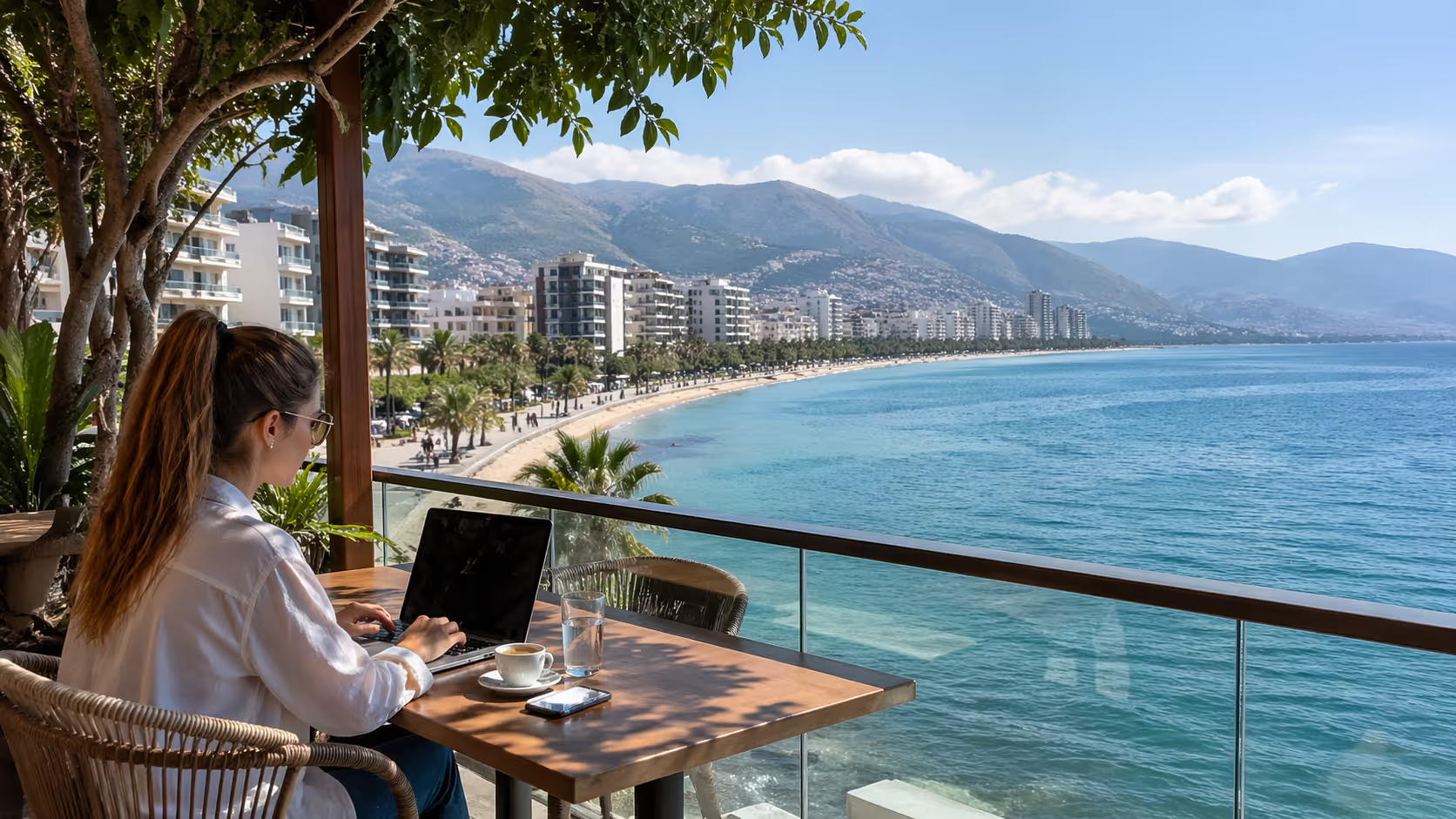
The romantic idea is simple. Work from a balcony near the Adriatic, swim at lunch, then send invoices from a café on the Lungomare. The daily reality is less glossy. Calls can slip into dinner, internet can vary by building, and summer noise can make focus harder near the beach road.
A strong async framework protects you from that chaos. It gives you a workday that fits the city, not just the client clock.
Here is a practical schedule for someone in Vlorë who serves EU and US clients.
This schedule is not perfect for every role. Customer support, sales, executive assistance, and product work each need their own version. The logic stays the same.
You protect local mornings for Europe. You protect afternoons for output and US preparation. You keep live US calls in a narrow band.
Zapier has written about the value of quiet time in remote work. When colleagues are offline, interruptions drop. That quiet can become a powerful work block for people living away from headquarters.
Buffer has shared similar lessons from remote workers in “quiet” time zones. The point is not isolation. The point is using silence for hard work, then sharing results in a way others can use.
In Vlorë, quiet time can feel strange at first. At 2 PM local time, the city is active, cafés are open, and your US client may still be waking up. That gap can tempt you into slow admin or social scrolling.
Treat that block like office gold. Put your phone away. Turn off Slack alerts. Work from a reliable table, not from a noisy beach chair.
A useful rule is to save your best brain for the block with the fewest pings. If your US team does not need you live until 4 PM, do not waste 1 PM to 3 PM. Use it for the work that needs clear thinking.
Follow-the-sun work sounds fancy, but the basic idea is simple. One person finishes their part, then leaves the work ready for the next person in another time zone. The work moves forward without everyone sitting in the same call.
This fits Vlorë well. You can finish a brief at 4 PM local time, then a US teammate reviews it during their morning. Their comments wait for you the next day.
The handoff is the core skill. A weak handoff creates delay. A strong handoff saves a full day.
Use a standard handoff template. Keep it short enough that people use it every day.
A good template has these fields:
Task name
Current status
What changed today
Links to files or tickets
Open questions
Blocked items
Decision needed
Deadline
Next owner
For example, a Vlorë marketer working for a US client may write this at 5 PM local time.
“Task: April email campaign. Status: Draft ready for review. Changed today: wrote subject lines, edited intro, added product links. Files: Google Doc and Mailchimp preview are linked in Asana. Open question: choose subject line 1 or 3. Blocker: waiting for final discount code. Decision needed by 11 AM Eastern. Next owner: Rachel.”
That handoff saves a meeting. Rachel can make the decision during her US morning. The Vlorë worker can wake up to a clear answer.
Software teams can use the same structure. A developer near Trans-Balkan Road can close their day with a GitHub pull request, test notes, screenshots, and one clear request for review. The US product manager does not need to ask, “What am I looking at?”
Designers can do it with Figma comments. Virtual assistants can do it with inbox labels. Support teams can do it with ticket notes.
Outsourcing guides often call this a relay model. CodersLink describes time-shifted development as a way to extend the workday across regions. DaVinci Virtual writes about multi-zone teams that can give customers the feeling of wider coverage.
The key phrase is “feeling of wider coverage.” Nobody in Vlorë should pretend to be online all night. The system creates wider coverage through handoffs, not through burnout.
Use recorded updates when text is too thin. Loom or a similar tool can help when you need to show a dashboard, design screen, spreadsheet, or bug. Keep the video short.
A useful video update is two to five minutes. Start with the result. Then show the file. End with the decision you need.
Do not record a 17 minute ramble from a café with loud music near the promenade. That is just a meeting in disguise. Your teammate should be able to understand the update fast.
For async baton-passing, one rule matters more than tools. The next person should never need to guess. If they need to guess, your handoff failed.
Good handoffs can feel boring. That is the point. Boring systems keep work moving when time zones differ.
The tool stack for Vlorë remote work should do three jobs. It should store the truth, show the status, and reduce live interruptions. If a tool does not do one of those jobs, it may be noise.
Start with a task board. Trello, Asana, ClickUp, Jira, Linear, or Notion can work. The brand matters less than the habit.
Every task should have an owner, deadline, status, and next action. Avoid boards full of vague cards like “website” or “client stuff.” Use task titles that say what has to happen.
A clear task title is “Review homepage copy by Friday 10 AM Eastern.” A weak task title is “Copy updates.” The first one helps a person in Vlorë and a person in New York stay aligned.
Next, use shared documents. Google Docs, Notion pages, or Dropbox Paper work well for briefs, notes, SOPs, and decisions. Docs beat chat for anything that needs a record.
Slack or Microsoft Teams should be used with restraint. Channels are useful for updates. They are terrible when every decision gets buried in a fast thread.
Create async channels with clear names. Try “daily-updates,” “client-handoffs,” “blocked,” and “decisions-needed.” Pin the rules at the top.
Use Slack status with time zones. A Vlorë worker can set “Deep work until 16:00 Albania time” or “Back online 09:00 CET.” This lowers accidental pressure.
Use calendar tools carefully. Google Calendar, Outlook, Calendly, SavvyCal, and World Time Buddy can help avoid time mistakes. Time zone errors are one of the fastest ways to look unprofessional.
Daylight saving changes deserve extra attention. Albania and the US do not always change clocks on the same date. For a few weeks each year, the usual overlap can shift.
World Time Buddy or a similar converter is worth using before any recurring US meeting. Check the meeting from both sides. If your 4 PM Vlorë call becomes too early for California, change it before resentment builds.
Use recorded video for context. Loom is useful for walkthroughs. Screen recordings work well for bug reports, design review, analytics, and training.
Use decision logs. A decision log can be a simple table with date, decision, owner, reason, and link. This helps async teams avoid repeating the same argument.
Use file naming rules. In mixed EU and US teams, files can multiply fast. Use names like “ClientName\_Project\_Draft\_Date” or “Q2\_Report\_Final\_2025-04-12.”
Use one source of truth. If the task board says one thing and Slack says another, people will choose the answer they prefer. That creates rework.
The best tool stack for a Vlorë worker is often simple. Task board, shared docs, chat, video recorder, calendar, file storage, password manager. That is enough for most solo remote workers and small teams.
Do not chase every new app. A clear process in basic tools beats a messy process in expensive tools.
The biggest trap is thinking async means “reply whenever.” That is not async work. That is slow work with no standards.
Async work still needs deadlines. It still needs accountability. It still needs a clear rule for what happens next.
The second trap is hiding bad communication behind time zones. “I was offline” is not a full answer if you left no status, no file, and no next step. Time zones only work in your favor when your update is strong.
The third trap is stretching the day from both ends. A person in Vlorë takes EU calls in the morning, US calls in the evening, then tries to do deep work between them. After a few weeks, the sea view does not help.
Harvard Business School Working Knowledge points out that workers in collaborative roles may extend hours to regain overlap. That can help in the short term. Over time, it can cut into sleep, family time, and the reason many people moved abroad.
Set a hard rule for late calls. For example, no calls after 6 PM Vlorë time more than twice per week. Or keep late calls for launches, renewals, and true decisions.
The fourth trap is using chat like a meeting room. Endless Slack threads create fake activity. They look productive but often produce no decision.
Move decisions out of chat. Put the decision in a doc, ticket, or board. Link back to it from Slack.
The fifth trap is poor housing choice. This is local and practical. An apartment near the Lungomare may look perfect, but summer noise can make calls hard. A flat in Uji i Ftohtë may have a great view, but you still need to test the router and mobile signal.
Ask the landlord for the internet provider name before you sign. Ask for a speed test from inside the apartment. Test the space at the time you will take calls.
The sixth trap is relying on one connection. Remote workers in Vlorë should have a mobile data backup. A hotspot can save a client call, a product demo, or a live interview.
The seventh trap is assuming US clients understand Albania time. Many will not. Do the conversion for them.
Write times with both zones. “Meeting: 16:00 Vlorë, 10:00 New York.” For West Coast clients, add their zone too. “16:00 Vlorë, 07:00 Los Angeles.”
The eighth trap is treating every US client the same. New York and Los Angeles are very different from Vlorë. A call that works for Boston may be painful for San Francisco.
Build separate rules for East Coast and West Coast. East Coast can fit late Vlorë afternoon. West Coast often needs async work first, then rare live calls.
The ninth trap is failing to define emergencies. A US client may send a message at 1 AM Albania time. That does not make it urgent.
Agree on emergency channels. For example, phone call for site down, Slack for same-day issue, task board for normal work. This protects both sides.
The final trap is social isolation. Async work creates focus, but it can make life feel quiet. If your clients are overseas and your team is online, you need local human contact too.
This is where Vlorë Circle matters. A remote work system should help you live better in Vlorë, not just bill hours from Vlorë. Join the community if you want real local context, meetups, and people who understand the same work rhythm.
Not every remote worker in Vlorë needs the same async setup. A founder, developer, virtual assistant, designer, and support lead each need a different rhythm. The time zone advantage stays the same, but the daily method changes.
Virtual assistants can gain a lot from Vlorë’s clock. A US executive can wake up to a clean inbox, updated calendar, prepared notes, and drafted replies. Worxbee gives similar examples of assistants working outside the client’s time zone, where prep work is ready before the client starts.
The VA should use templates for every repeated task. Inbox summary. Calendar review. Travel update. Meeting prep. Expense check.
A strong VA handoff might say, “I cleared all non-urgent emails. Three need your decision. I drafted replies for two. Your 2 PM call has a briefing doc attached.”
The assistant should not be on call all night. The better promise is morning readiness for the client. That is more sustainable from Vlorë.
Developers can use Vlorë mornings for code review with Europe. They can use afternoons for build work and US handoffs. Pull requests need context, test notes, and screenshots where useful.
The developer should make the ticket easy to review. Link the branch. Explain the tradeoff. Name the files changed. State what still needs testing.
This reduces the risk of a US product manager waking up to a mystery. It turns the gap into forward motion.
Designers need fewer calls than many teams think. The key is to share the design state and the decision needed. Figma comments, short Loom videos, and written design notes work well.
A designer in Vlorë can send three options before the US day starts. The client can review during their morning. The designer can pick up feedback the next day.
The main rule is to avoid vague feedback loops. “What do you think?” is too open. Ask better questions.
Try “Choose layout A or B.” Or “Approve the mobile header.” Or “Comment only on the checkout section today.”
Support teams can use Vlorë for EU daytime coverage and early US coverage. DaVinci Virtual writes about multi-zone teams giving customers wider availability. Vlorë can fit that pattern without pushing one person into a night shift.
The support handoff should list open tickets, priority cases, promised replies, refund risk, and any angry customer. The next person should know what needs care first.
This works well for companies that serve Europe and the Americas. Vlorë can cover a strong middle segment of the day.
Founders often create their own chaos. They take every meeting, reply to every ping, and call it growth. Vlorë’s time zone can help only if the founder sets rules.
A solo consultant can keep two call days for clients. They can keep three deep work days for delivery. They can send written updates every Friday morning Vlorë time.
This creates trust without constant meetings. Clients see progress. The consultant protects energy.
Async work is not only a software setup. It is a local routine. Where you live in Vlorë can shape your workday.
Skelë is practical for many remote workers. You are close to the port area, shops, cafés, and the start of the promenade. It can work well if you want easy errands between calls.
The Lungomare area is attractive, but it changes by season. In winter and shoulder months, it can be calm enough for focused work. In peak summer, noise, traffic, and evening crowds can make it harder to work late.
Uji i Ftohtë suits people who want sea views and a quieter base. Check the building, not just the view. Internet quality, elevator reliability, desk space, and noise from nearby bars matter more than balcony photos.
The Old Town area can work for people who like being near cafés and local streets. It may suit writers, consultants, and solo workers. Ask about insulation and street noise before signing.
The city center is useful for admin, shopping, and transport. It is less romantic than the beach road, but often more practical for a normal workweek. If you need banks, phone shops, printing, and daily errands, this area can save time.
Radhimë is beautiful for breaks, but it is not the easiest default base for a packed EU-US calendar. It can be better for weekends, retreats, or a lighter workload. If you need daily calls, Vlorë city gives more backup options.
A good async home office in Vlorë has a real desk, a chair you can use for hours, power outlets near the desk, stable Wi-Fi, and a quiet call wall. The view is a bonus. The router is the real asset.
Ask for a speed test before renting. Ask where the router is placed. Ask if the building has had power or water issues.
Do a test call from the apartment if possible. Stand where the desk will be. Turn on video. Check sound.
Think about your walking loop too. A good remote workday needs breaks. From Skelë, a promenade walk can reset your head after EU calls. From the city center, a short café stop can mark the shift into deep work.
Your neighborhood should support your time blocks. If your US calls run late, pick a building where evening noise will not ruin them. If your best work is early, pick a place where mornings are calm.
The right neighborhood will not fix a bad async system. It will make a good system easier to follow.
Async-first does not mean no live conversation. Some moments deserve a call. The mistake is using calls for everything.
Use live meetings for high-trust or high-risk issues. Hiring, pricing, conflict, legal review, major product decisions, and complex client feedback may need real-time discussion. Routine status does not.
For Vlorë to US East Coast, a late afternoon window can work well. A 3 PM or 4 PM Vlorë call often lands in the US morning. This can be a good slot for a short decision meeting.
For Vlorë to US West Coast, be stricter. A normal West Coast morning can land late in Vlorë. Do not let California set your dinner calendar every day.
Use a meeting budget. For example, each client gets one standing call per week and one emergency call when needed. Everything else goes through the board or doc.
Use a meeting brief. No agenda, no call. This sounds strict, but it saves everyone’s energy.
The brief should include the decision needed, background links, options, and the meeting owner. If the decision can be made in a comment, cancel the meeting.
Keep calls short. A 25 minute call is often enough. A 50 minute calendar default can waste half a Vlorë afternoon.
End every call with written notes. The person who owns the meeting writes the decision, next action, owner, and deadline. Put it where the team works, not only in chat.
Record calls when needed, but do not use recordings as an excuse for poor notes. Nobody wants to watch a full hour just to find one decision. Add a short written recap.
Set office hours for each market. EU office hours can be Vlorë morning. US office hours can be one or two late afternoon blocks per week.
This gives clients confidence. It lets them know when they can reach you. It keeps the rest of your week clean.
One useful phrase is, “I can handle that async today, or we can use the Thursday overlap slot.” This trains clients to choose the right path.
If you lead a team in Vlorë, model the behavior. Do not send late-night messages and call it flexibility. Schedule messages for the recipient’s workday.
Respect local life too. People move to Vlorë for a lower-pressure daily rhythm, the sea, family time, and a more human pace. Async work should protect that, not eat it.
Async work can make you efficient, but it can make you invisible. A person can work from an apartment near the Lungomare for weeks and start to feel like a ghost in their own city.
This is the part many productivity guides skip. Your system needs people. Not just usernames in Slack.
Build a local routine that puts you in contact with Vlorë. Go to the same café near Skelë once or twice per week. Learn the names of the staff. Use a lunch break for an actual walk, not another screen.
Join meetups when you can. Remote workers, retirees, locals, and long-stay guests often face the same practical issues. Housing, doctors, internet, translations, and bank admin become easier when people share real experience.
The host tip from our community is simple: protect your afternoon block, then leave the house after you close it. Do not let async work turn every evening into “just one more reply.” Send the handoff, close the laptop, and step onto the promenade or meet someone in town.
This is where Vlorë Circle’s year-round focus matters. The city feels different in July than it does in February. A work routine that survives both seasons needs local input, not just remote work theory.
Summer may bring more noise near the beach area. Winter may bring quieter streets and fewer casual social chances. Your async system should adjust.
In summer, you may shift deep work earlier and avoid calls from noisy apartments near the promenade. In winter, you may use the calm season for bigger projects, better writing, and systems work.
Connection is not a bonus. It is part of staying well abroad. If your work is async, your social life needs intention.
This does not mean filling your week with events. One good meetup, one regular café, and one local contact who can answer practical questions may change your whole experience.
Join the community if you want that kind of grounded support in Vlorë. The goal is not just to work from Albania. The goal is to live here with less guesswork.
Vlorë’s time zone is not a problem to work around. With the right async framework, it becomes one of the city’s strongest remote work advantages.
Follow Vlore Circle for fresh guides, local updates, and community notes around life in Vlorë. It is the easiest way to stay close to what we are building.
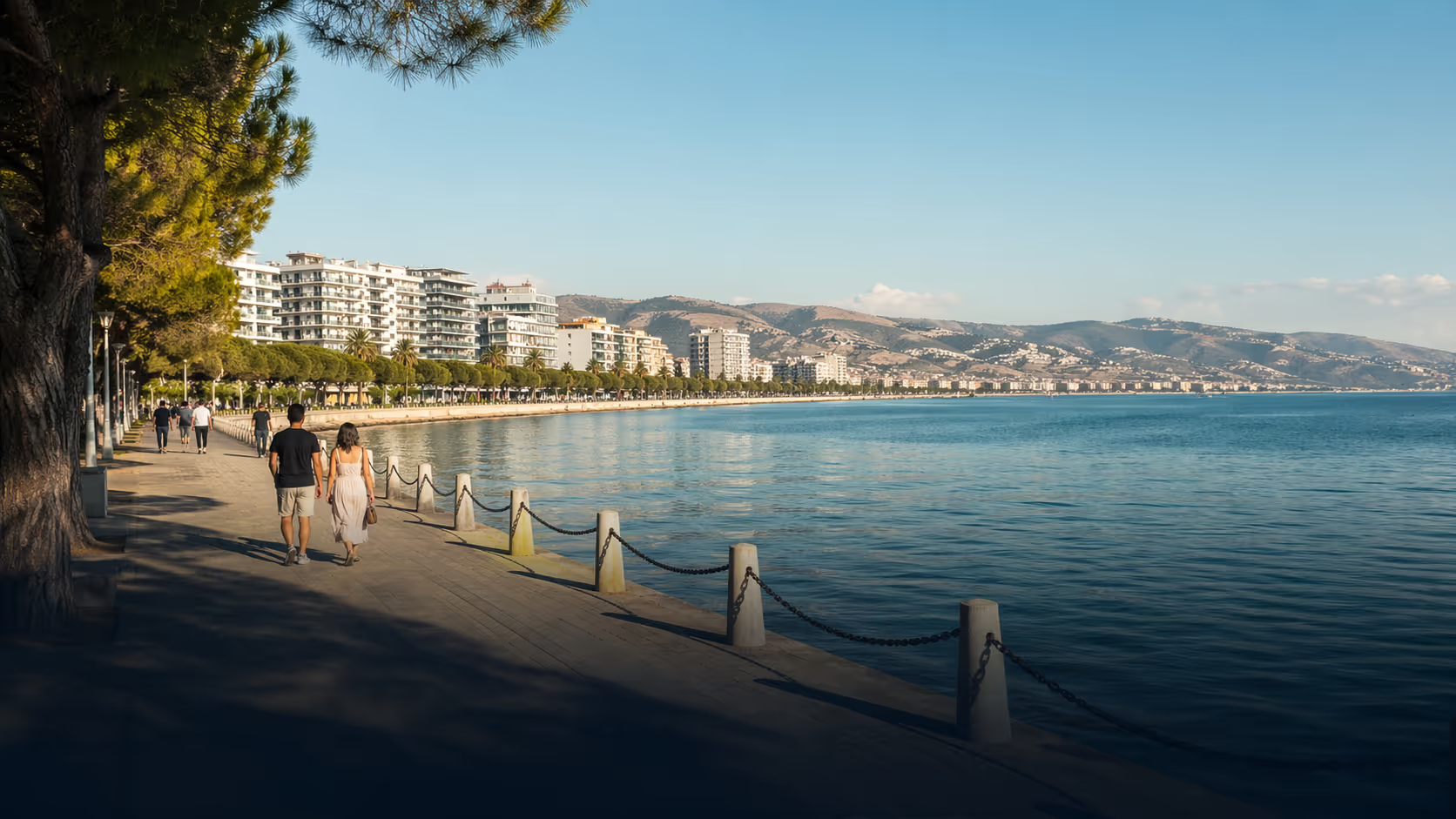



Be part of a growing community built around connection, local life, and a better experience of Vlorë.
join the circle