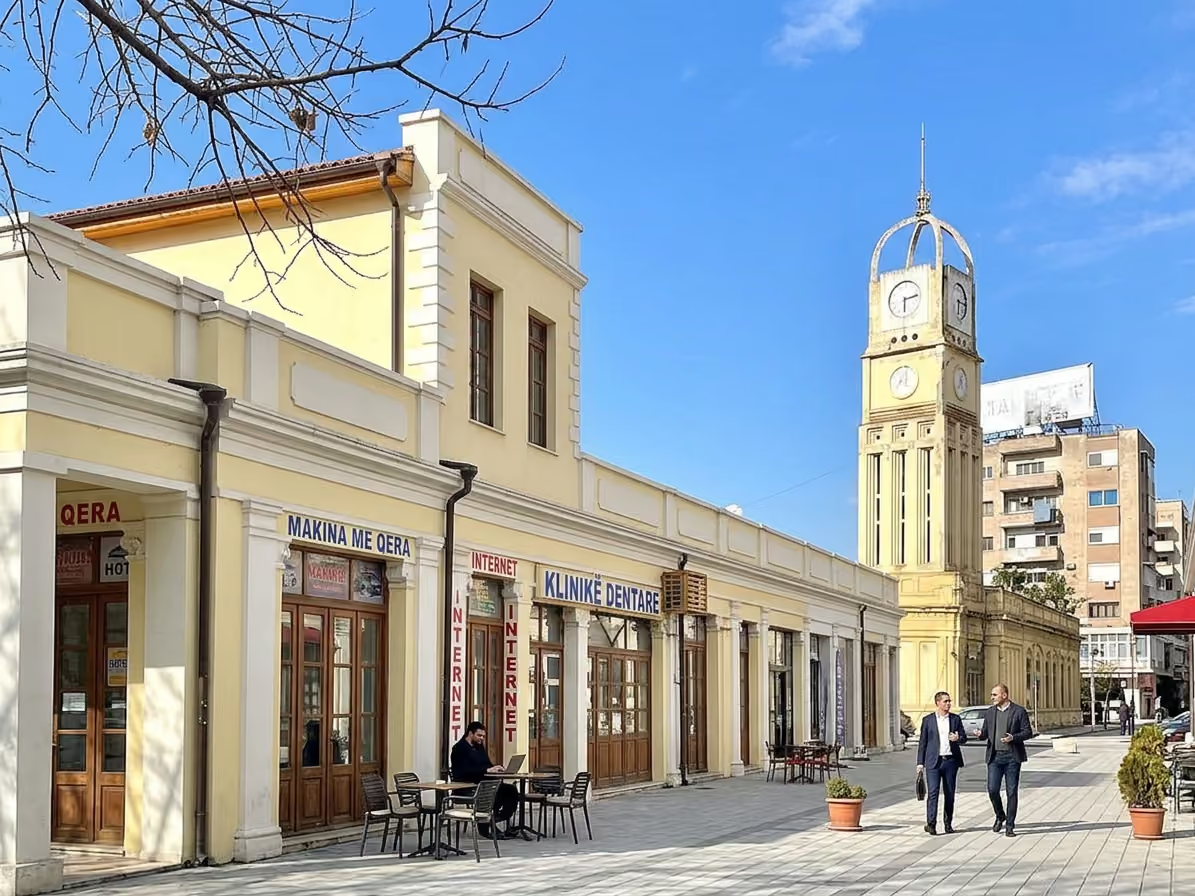
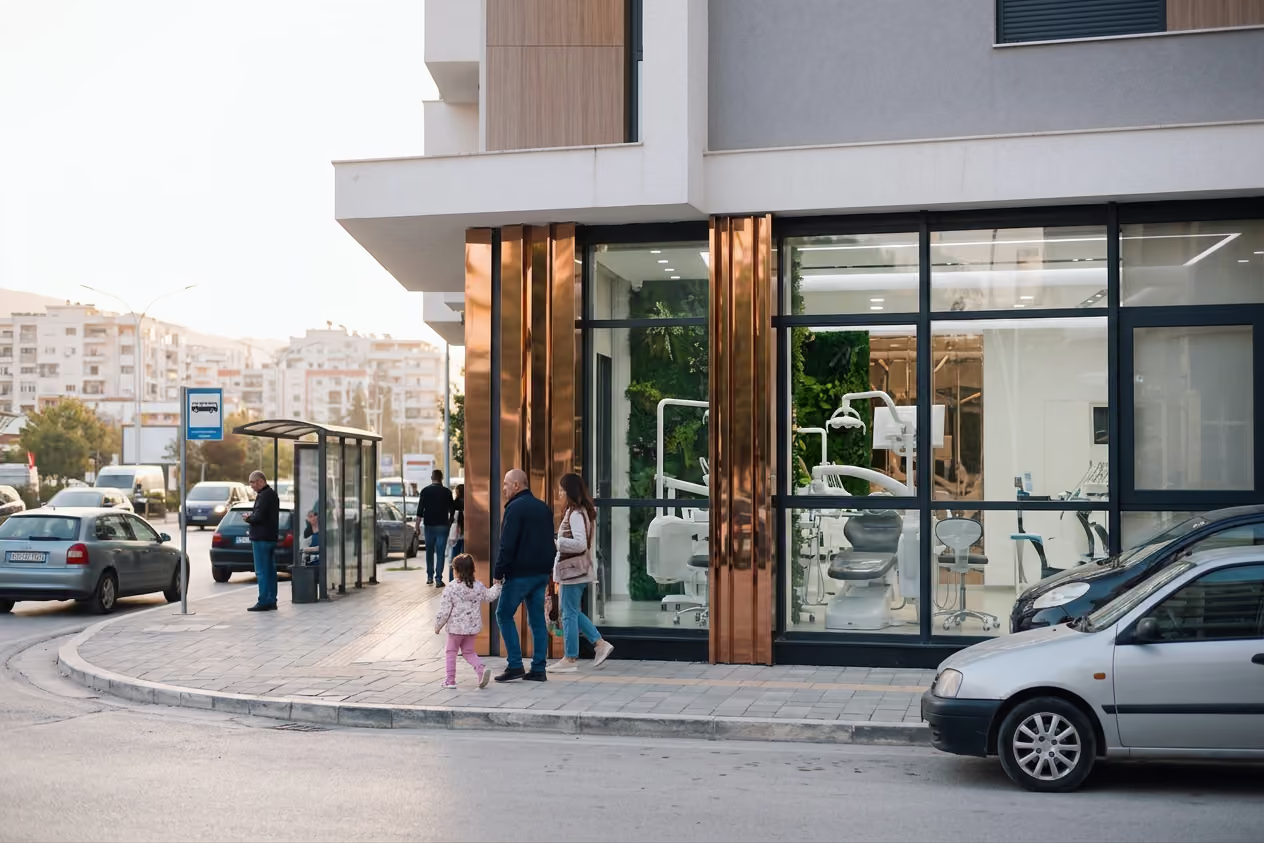
Representative image

Central European Time gives Vlorë founders the exact working hours needed to run distributed international teams, handle recruitment, and manage daily operations.





A Vlorë-based remote team is a distributed team managed from Vlorë, with some people in Albania and others working from different countries. It is not just “hiring people online”, it is a full operating system for recruitment, contracts, tools, Slack rules, onboarding, and daily management.
For a founder sitting near Skelë, a remote agency owner working from Lungomare, or a startup team using Vlorë as a low-cost base, the real question is simple: can you build a serious team from here? Yes, but only if you treat Vlorë as your base of operations, not as a beach backdrop.
Vlorë is a practical base for remote team building for one main reason: it gives you a calm coastal city with access to European working hours. Albania uses Central European Time and Central European Summer Time, so Vlorë lines up well with clients in Italy, Germany, Austria, France, and the wider Balkans.
That time zone matters more than many founders expect. A manager in Vlorë can speak with a developer in Tirana during normal Albanian hours, review work from a designer in Lisbon before lunch, and still meet a client in New York in the late afternoon. You get enough overlap to run meetings, but enough distance to build an async culture.
Vlorë is not Tirana. You will not find the same depth of tech meetups, venture events, or corporate talent pools. What you do get is a smaller city where people remember good employers, local referrals still matter, and long-term trust can carry more weight than a polished CV.
The local rhythm shapes how teams work. In summer, Lungomare and Uji i Ftohtë fill with visitors, cafés get louder, rent rises near the beach, and internet stability can vary by building. In winter, the city is calmer, easier to work in, and better for deep focus.
This is why remote teams in Vlorë need local systems. A team member living near Old Beach may have a different daily setup from someone in Skelë or near the city center. One person may work from a quiet apartment, another may depend on a café with steady Wi-Fi near the promenade.
The cultural context matters too. Albanian business culture still values direct contact, referrals, and trust built over time. A local hire may expect a phone call or coffee before a formal contract discussion. A global hire may expect every detail in writing before a video call.
The best Vlorë-based teams respect both styles. They use clear documents, written expectations, and digital tools. They still make room for human contact, coffee chats, and informal check-ins.
This balance is where Vlorë Circle sees many newcomers either succeed or stall. The city can support serious remote work, but only if your team habits are stronger than your view from the balcony.
A Vlorë-based remote team can take several forms. The right model depends on your business, risk tolerance, hiring budget, and how much local presence you need.
This model works well for agencies, e-commerce operators, SaaS support teams, and service businesses. You keep a small local core in Vlorë or elsewhere in Albania. Then you hire global specialists for roles such as design, development, paid ads, sales, editing, or customer support.
The local core gives the business a stable base. You can meet in person at a café near Skelë, work through a hiring issue face to face, or train a junior hire in person. The global specialists give you access to skills that may be hard to find locally.
This model fits Vlorë well. The city is more comfortable for small leadership teams than for large offices. If you need ten engineers in one room every day, Tirana may suit you better. If you need a tight operating team with global reach, Vlorë can work.
In this setup, nobody needs to be based in Vlorë except the founder or manager. Your team may include a product lead in Poland, a support rep in Albania, a designer in Spain, and a developer in Georgia. Vlorë becomes your management base.
This model puts pressure on documentation. You cannot rely on the small office habit of “I told them yesterday.” You need written decisions, task tracking, meeting notes, onboarding guides, and clear Slack channels.
RightWorks describes remote recruiting as a process that should include pre-screening, async video interviews, technical testing, and remote-ready onboarding. That advice fits this model well. If your entire team is distributed, your hiring process must test remote work before the person joins.
Some founders want a middle path. They hire local staff in Vlorë or nearby cities, then bring people together once or twice a week. The team still uses Slack, project boards, and written work systems. The office or meeting spot is used for planning, training, or client calls.
This can work well near the city center or Skelë, where transport is easier and cafés are open year-round. It is less smooth if your team is spread across Radhimë, Orikum, and central Vlorë, since summer traffic along the coastal road can waste time.
The risk is unclear expectations. If you call the team remote, but expect constant in-person access, people will feel misled. If you call the team hybrid, but never plan proper in-person days, you lose the value of meeting at all.
This is common for marketing agencies, content studios, and development shops. You keep a small management team in Vlorë. Then you use contractors for delivery.
This can scale quickly, but it brings legal and management risks. Contractor classification rules differ by country. Work From Anywhere notes that remote work in Albania brings legal areas such as tax, employment law, visas, work authorization, and data protection.
A contractor network needs clean scopes of work, payment terms, security access rules, and a review process. Without those, it becomes a group chat with invoices.
Hiring for a remote team is not the same as hiring for an office. A strong office worker can fail in a remote setup. A quiet candidate with clear written habits can become your most reliable team member.
ClanX warns that traditional CVs and standard interviews do not fully show remote work ability. That is a key point for Vlorë-based teams. The person may look impressive on LinkedIn, but still struggle to manage time, write clear updates, or work without daily supervision.
Start with the work, not the title. A vague job post creates vague candidates. Before you post, write a plain role brief.
Include these details:
For example, do not write “remote marketing assistant needed.” Write “marketing assistant for a Vlorë-based e-commerce team, responsible for product uploads, email campaign drafts, weekly reporting, and customer review tracking.”
This style filters candidates early. It tells local applicants what the work really looks like. It tells global applicants that your team is organized.
Technical skill matters, but remote behavior decides daily success. A developer who writes no updates can block a team for days. A customer support hire who cannot document patterns will create repeated work for the manager.
Look for these traits:
A candidate does not need perfect English for every role. They do need clear communication for the task. A local operations assistant may use Albanian with suppliers and English with the internal team. A global product manager may need strong English writing across every channel.
Async screening saves time for a Vlorë-based manager. It works across time zones, and it shows how candidates communicate without handholding.
Ask for short written answers such as:
You can use async video for roles that need spoken communication. Keep it short. Ask two or three questions and tell candidates the expected length.
RightWorks includes async video interviews and pre-screening questionnaires in its remote recruiting guidance. Used well, these steps cut weak matches before live interviews.
Scenario tasks are stronger than generic tests. They show how a person thinks in the same conditions your team uses.
For a customer support hire, give a messy customer email and ask for a reply plus internal notes. For a project manager, give a delayed project timeline and ask for a Slack update. For a developer, give a bug report with missing context and ask for their next steps.
Keep the task fair. Do not ask for free client work. Keep it under two hours for early-stage hiring, or pay for longer tasks.
A good remote task should test:
ClanX points to scenario-based assessments, portfolio reviews, behavioral interviews, and culture checks as stronger ways to assess remote talent. This matters for Vlorë founders who may be hiring outside their own professional network.
Live interviews still matter, but they should not feel like a social performance test. Ask about real remote work behavior.
Use questions like:
For local hires, ask about workspace and commute patterns. A person living near Lungomare may have a noisy home in summer. A person living near the city center may have better access to backup cafés and services.
For global hires, ask about overlap with Vlorë time. Do not assume time zones are easy. A three-hour difference is manageable. A nine-hour difference needs stronger async systems.
We Work Remotely warns against “hiring when it hurts.” This is one of the most common mistakes for small teams in Vlorë. A founder waits until client work is late, then hires the first available person.
That usually creates a second problem. Now the manager is overloaded and training a new hire at the same time. The team gets slower before it gets faster.
Build a simple pipeline. Keep a list of strong candidates, past applicants, local referrals, and freelancers you may need later. Meet people before you need them.
In Vlorë, local referrals can matter a lot. Ask trusted people in Skelë, the city center, and Tirana-based networks for names. For global roles, use remote-first job boards and communities.
Remote hiring becomes risky when contracts come last. If your team is based in Vlorë, you need to think about Albanian rules, foreign worker rules, contractor status, taxes, and data access before scale.
This section is not legal advice. Use a licensed accountant or lawyer for your exact case. The goal here is to show the questions you need to ask before the team grows.
If you hire employees in Albania, you need proper contracts, payroll handling, social contributions, and termination rules. Albanian employment law applies to local employees. A casual verbal agreement is not a safe base for a growing business.
Work From Anywhere flags labor law compliance, tax obligations, data protection, visa status, and work authorization as key areas for remote work in Albania. Those are not side issues. They shape how you hire and what risk you carry.
For a Vlorë-based team, the practical move is simple. Speak with a local accountant before hiring your first Albanian employee. If your business is registered abroad, ask how that affects hiring inside Albania.
Contractors can be useful for flexible work. They are common in design, coding, copywriting, support, and consulting. Yet a contractor is not just an employee with no benefits.
Each country has its own rules for worker classification. If a contractor works full time for you, follows your fixed schedule, uses your tools, and has no other clients, that may create risk in some places.
Before you hire a contractor, define:
For repeat contractors, review the setup every few months. A part-time designer may become a core team member. At that point, the contract model may need to change.
Some remote workers may want to move to Vlorë after joining your team. That can be great for culture. It can create visa and work authorization questions.
Do not assume that a person can work legally from Albania just because they can enter as a visitor. Entry rules, stay length, residency, and work permissions can differ by nationality and activity.
Before inviting someone to relocate, ask:
This matters in Vlorë since people often fall in love with the city during a summer stay. A team member may say, “I can just stay near Uji i Ftohtë and work.” The business still needs a clean legal answer.
Remote teams move information through laptops, phones, home Wi-Fi, café Wi-Fi, Slack, email, and shared drives. That creates security exposure.
Use role-based access from day one. A junior support hire does not need every finance folder. A contractor does not need permanent admin access. A former employee should lose access on their final day.
HRMSJoy describes remote employee management systems that support standardized hiring, document checks, role permissions, and audit trails. Whether you use a formal HRMS or a simpler tool stack, the principle is the same: access should match the role.
Set these rules early:
Tools do not fix bad management. They do make good management easier. A remote team in Vlorë needs a simple stack that covers communication, tasks, documents, hiring, and security.
The goal is not to collect software. The goal is to reduce confusion. Every tool should have a clear purpose.
Use Slack or a similar chat tool for daily coordination. Use email for formal messages, external communication, and records that need more weight. Use Zoom or Google Meet for live calls.
RightWorks names tools such as Zoom and video assessment platforms as part of remote recruiting. IceHrm points to clear communication channels, time zone management, and remote work policies as core HR practices for global teams.
For a small Vlorë-based team, keep it simple:
Do not let Slack become the place where work disappears. Slack is for discussion. The project board is for tasks. The wiki is for decisions and process.
Choose one task system. Trello, Asana, ClickUp, Jira, Linear, Basecamp, or Notion can all work. The tool matters less than the habit.
Every task should show:
For client work, add priority and client name. For engineering work, add acceptance criteria. For operations, add repeat frequency.
A manager in Vlorë should be able to open the board from a café near the promenade and know the state of the team in ten minutes. If you need five private messages to learn what is happening, the system is weak.
Documentation is the memory of a remote team. Use Notion, Google Drive, Confluence, Slab, Coda, or another shared system. Pick one main home.
Your documentation should include:
Write documents in plain language. A new hire should understand the basics without a long call. This is extra useful in Vlorë, where local hires may join with different levels of remote work experience.
At the beginning, a spreadsheet may be enough. Once you hire across countries, a stronger HR system helps.
Track:
HRMSJoy highlights standardized hiring workflows, document verification, permission assignment, and audit trails. Those functions are useful when the team moves beyond a few people.
Security should not wait until you have a data scare. Use basic controls from the first hire.
Your minimum stack should include:
For people working from cafés near Lungomare or Skelë, remind them not to handle sensitive client data on public Wi-Fi without protection. A beautiful table by the sea is still a public work setting.
Slack can make a remote team feel close. It can also make work chaotic. A Vlorë-based team needs Slack rules that protect focus, respect time zones, and keep decisions searchable.
Start with fewer channels than you think you need. Add more only when the volume proves it.
A clean structure may look like this:
#general, company-wide updates
#announcements, key notices only
#team-operations, operations work
#team-engineering, engineering discussion
#team-support, support issues
#project-clientname, client project work
#help-blockers, urgent blocks and requests
#remote-culture, team connection
#random, informal chat
Use plain names. Avoid clever titles. A new hire should know where to post by reading the channel list.
For Vlorë teams with local and global staff, create a local channel only if it has a real use. For example, #vlore-base can cover in-person meetups, local coworking plans, power cuts, transport, or café changes. Do not put global team decisions there.
Slack should not mean instant reply all day. Set response times in writing.
Use a simple system:
Define working hours by location. If your manager is in Vlorë and your designer is in Mexico, do not expect instant replies during Albanian morning hours.
Use scheduled send when possible. This protects people from feeling watched at night.
Use threads for focused replies. Keep main channels clean. If the thread creates a decision, move the decision into the project board or documentation system.
A good Slack message includes context. A weak message says, “Can you check this?” A strong message says, “Can you review the homepage copy in the Google Doc by Thursday 14:00 Vlorë time? I need feedback on clarity, not grammar.”
Teach the team to write updates in a consistent format:
This small habit reduces meetings.
Set Do Not Disturb norms. A sample rule could be no expected replies from 18:00 to 09:00 local time. For urgent matters, define the emergency channel or phone process.
Do not use @channel for routine updates. If everything is urgent, nothing is urgent. Use it only for time-sensitive matters that affect many people.
For teams based partly in Vlorë, remember the local rhythm. Some team members may take a longer lunch break or handle family errands in the afternoon. Judge performance by output and communication, not by green status lights.
Slack is not a filing cabinet. It is a conversation space. Key decisions need a permanent home.
Use this rule: if the decision affects scope, deadline, budget, client promise, security, or hiring, it must be documented outside Slack within one working day.
The Slack thread can link to the record. That keeps the chat useful without making it the source of truth.
Onboarding is where many remote teams fail. They hire well, then leave the new person alone with a few links and a welcome message. The result is slow work, repeated questions, and early doubt.
ClanX notes that remote onboarding should cover company information, tools, role training, communication protocols, and team integration. RightWorks places pre-onboarding setup and ongoing development inside the remote recruiting process.
The best onboarding starts before the first day. By the time a person starts, their access, tools, and schedule should be ready.
Prepare:
For local hires in Vlorë, confirm their work setup. Do they have stable home internet? Do they need a backup place near Skelë or the city center? Will summer noise affect calls?
For global hires, confirm time zone, payment details, and preferred communication hours. Put those details into the HR record.
Week one should reduce uncertainty. Do not overload the new hire with ten systems and no context.
Cover:
The first task should be real but low risk. For a support hire, it may be labeling past tickets. For a developer, it may be fixing a small bug. For a marketing hire, it may be updating a content brief.
End the week with a 30-minute review. Ask what is clear, what is confusing, and what access is missing.
Week two is for integration. The new hire should meet key team members, learn core workflows, and start contributing to normal work.
Set three or four short intro calls. Keep each call focused. The goal is not social pressure, it is orientation.
Ask each colleague to cover:
For global teams, record process walkthroughs. A person in a far time zone should not miss training just because they cannot attend live.
The new hire should now own a meaningful workstream. Keep the scope realistic. Do not judge them by full-speed output too early.
Use weekly check-ins with a simple agenda:
At the end of the first month, review the role scorecard. Compare expectations with actual work. If there is a gap, write the next steps.
Use this checklist for each new remote hire:
This may feel basic. Basic systems are what let small teams scale without drama.
Remote management should not mean watching green dots. It should mean clear goals, regular feedback, and visible work.
St. Thomas University’s guidance on virtual leadership highlights clear goals, communication, and regular check-ins. Those ideas sound simple, but they are often missing in small remote teams.
A role scorecard tells each person what success looks like. It should fit on one or two pages.
Include:
For a customer support role, metrics may include first response time, ticket quality, and issue documentation. For a project manager, metrics may include on-time delivery, clean task boards, and client update quality. For a developer, metrics may include shipped work, bug quality, review habits, and documentation.
Do not rely only on numbers. Remote work needs judgment too. A person can close many tickets and still create poor customer outcomes.
Use different check-ins for different needs.
A useful rhythm:
Daily async updates should be short. Use the same format each day:
For a Vlorë manager, this is useful before morning coffee near the promenade. You can see blockers early and plan the day without calling everyone.
Remote teams need output-based management. Do not reward people for being online all day. Reward clear work, clean handoffs, client outcomes, and reliable delivery.
This is extra true in Albania, where power cuts or internet issues can happen in some buildings. A team member may lose 30 minutes, then make up the work later. If the output is strong and communication is clear, the system is working.
Still, flexibility is not chaos. People need to keep agreed overlap hours. They need to attend key meetings. They need to report blockers early.
Use written feedback for clarity. Use video for sensitive topics. Do not handle serious performance problems only through Slack.
A good feedback note includes:
For example: “The client update was sent two days late. This delayed approval for the design team. From next week, send the update every Thursday by 16:00 Vlorë time. We will review this in our next two one-on-ones.”
This is direct, fair, and easy to track.
Remote workers need connection, not forced fun. Virtual social events can help, but they should be optional and simple.
Try:
If several team members live in Vlorë, meet in person at a clear location. Choose a café near Skelë for weekday access, or a quieter place away from Lungomare in summer. Do not make every meetup late at night near the beach area. People with families or early calls may skip them.
Scaling is not just adding people. It is reducing founder dependency. A team scales when decisions, workflows, and standards survive without the founder answering every question.
Small teams often run on memory. The founder knows every client promise, every password location, and every deadline. That works until five people become fifteen.
Write down repeat work. Start with the tasks that cause the most questions.
Document:
Keep each process short. A bad SOP is a ten-page document nobody reads. A good SOP tells the person what to do next.
Do not wait until the founder is drowning to create team leads. Pick reliable people early and give them ownership.
A team lead should own:
The founder should move toward hiring, sales, strategy, finance, and culture. If the founder still assigns every task, the business has not scaled.
Each role should have the same hiring stages. This reduces bias and saves time.
A strong remote hiring flow looks like this:
Use the same scorecard for each candidate in a role. Do not hire based on who was most charming on a video call.
Vlorë time is friendly for Europe. It is harder for the Americas and parts of Asia. As your team grows, map overlap hours.
Set a team rule such as:
Rotate painful meeting times. Do not always ask the same person to join at night.
At some point, a founder living in Vlorë may need more local support. That could mean a part-time office manager, accountant, HR consultant, or local operations assistant.
Local support helps with:
A person based near the city center can handle these tasks faster than a founder trying to do them between client calls.
Poor systems are expensive. They create repeated questions, missed deadlines, client refunds, staff churn, and founder stress.
The cost is not only money. It is mental load. If your team cannot work without you for one afternoon at the beach near Uji i Ftohtë, you do not have a remote team. You have a remote dependency chain.
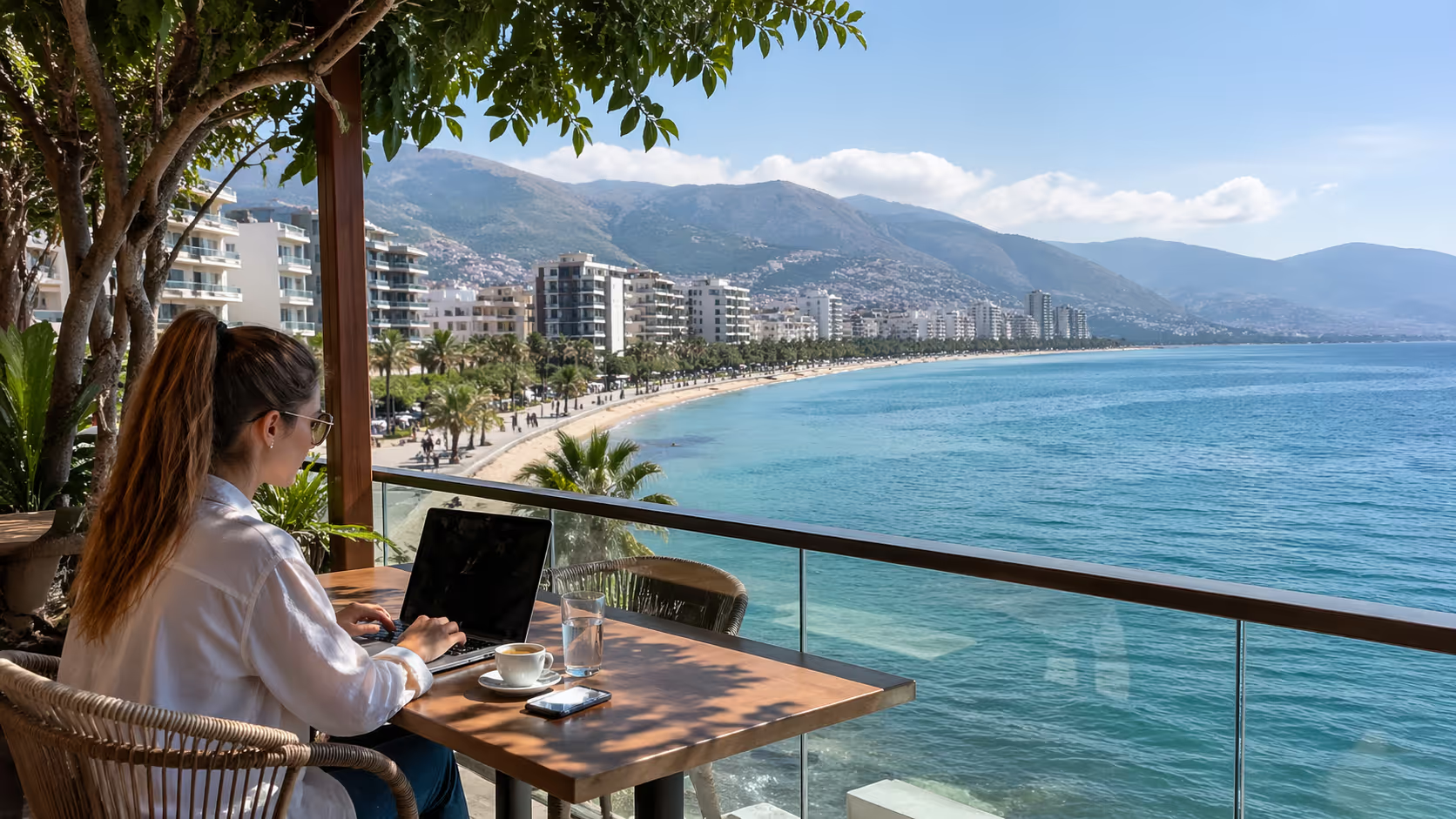
The romantic version is easy to sell. You answer Slack from a sea-view balcony, take calls after a swim, hire global talent, and run a lean business from the Albanian coast.
The real version is more mixed. Some days are exactly that. Other days, your neighbor renovates during a client call, the beach road is jammed, the café Wi-Fi drops, and a contractor in another time zone disappears for 36 hours.
Vlorë rewards people who plan. It frustrates people who rely on vibes.
Summer brings energy, visitors, noise, and higher demand near the beach. If you live or work near Lungomare, calls can be harder during peak season. If your team meets in person, parking and timing need more care.
Plan deeper work in the morning. Use quieter spaces away from the front line of the promenade. Keep backup internet ready if calls matter.
Winter in Vlorë is calmer. Rents can be more reasonable outside prime short-stay zones. Cafés are quieter. The city feels more resident-focused.
This is the best time to build systems, document processes, hire carefully, and run team retrospectives. If your business depends on focused work, winter can be your most productive season.
You can find smart, capable people in Vlorë. You may find strong operations support, customer service ability, language skills, social media help, and junior digital talent. For senior engineering, advanced product leadership, or niche B2B marketing, you may need Tirana, regional hires, or global candidates.
Do not treat this as a weakness. Treat it as a hiring design question. Build your local core around roles that benefit from local trust and daily contact. Hire globally for rare skills.
Do not assume every apartment has work-grade internet. Before signing a long-term rental near Uji i Ftohtë, Old Beach, or the city center, test the connection during the hours you work. Ask about outages. Check mobile data reception.
If you manage a team, ask new hires to test their setup too. A remote worker without stable internet is not ready for a call-heavy role.
Remote teams can feel lonely. A founder in Vlorë may have clients abroad, staff abroad, and few local peers who understand the business. That can lead to poor decisions or burnout.
This is one reason Vlore Circle exists. We are built for residents, not short-term tourists. If you are building a team here and want practical local support, Join the community.
A Vlorë-based remote team should not be built in one rushed week. Use a 90-day rollout that covers policy, tools, hiring, onboarding, and management habits.
Write your remote work policy. Keep it plain. Include working hours, communication rules, security rules, tool list, leave process, contractor terms, and meeting expectations.
Speak with an accountant or legal adviser about local hiring. If you plan to hire outside Albania, list each target country and the contract model.
Choose your tool stack. Do not change it every week. Pick Slack, one project tool, one document hub, one video tool, and one password manager.
Create your first role scorecard. Start with the role that will remove the biggest bottleneck. For many founders, this is operations, project management, customer support, or delivery.
Write a job post with clear outcomes. Add time zone expectations and tool requirements. Prepare async screening questions.
Create a scenario task. Make it close to real work, but not free client labor. Build a scoring sheet.
Set up a candidate tracker. Track stages, notes, tasks, decisions, and follow-up dates.
Start sourcing. Use remote-specific job boards for global roles. Use local referrals for Vlorë and Albania-based roles. Ask trusted contacts in Tirana too.
Review candidates against the scorecard. Do not skip the async screen. It shows how people communicate before live pressure enters.
Send the scenario task to selected candidates. Review for quality, clarity, and judgment. Then invite the strongest people to a manager interview.
In the interview, focus on remote work behavior. Ask how they handle blockers, late feedback, unclear tasks, and time zone gaps.
For finalists, run a team interview. Keep it structured. The goal is work fit, not popularity.
Send a clear offer. Include role, compensation, contract type, working hours, start date, tools, and trial period.
Collect documents. Set up payment details. Prepare tool access. Add the new hire to the onboarding checklist.
Send a welcome note with the first week plan. Tell them who they will meet and what their first task will be.
For Vlorë-based hires, share the practical expectations. If calls are part of the role, they need a quiet place. If they work from cafés, they need a backup option.
Run the 30-day onboarding plan. Keep notes on what confused the new hire. Improve the documents as you go.
Review work weekly. Give feedback early. Do not wait for the end of the trial period to raise issues.
At day 90, review the role scorecard. Decide whether to continue, adjust scope, add training, or change the seat.
Then update your hiring process. Each hire should make the system better.
Here is the advice we give founders and remote managers at Vlore Circle: do not confuse a relaxed city with a relaxed operating model. Vlorë can give you space, lower pressure, and a better daily rhythm, but your team still needs written rules, clear roles, and direct feedback.
If you are new in town, build two circles at the same time. Build your work team through strong hiring systems. Build your local support circle through real people in Vlorë.
Meet other residents. Ask which internet providers work in their building. Ask which cafés are quiet in winter and which ones become too loud in August. Ask who knows a serious accountant, a good translator, or a reliable local assistant.
A founder who knows only their laptop will miss half the value of the city. A founder who knows only the beach will lose control of the business. The sweet spot is both: solid remote systems and real local connection.
Join the community if you want to meet other people building, hiring, and working from Vlorë year-round.
Yes, for some roles. Local hiring can work well for operations, support, admin, social media, and junior digital work. For senior technical or niche roles, you may need to widen the search to Tirana, the Balkans, Europe, or global remote platforms.
Use Slack for work. WhatsApp is fine for urgent local coordination, but it becomes messy for projects, files, decisions, and search. Keep business decisions in Slack, your project tool, or your documentation system.
It can be, but the time zone needs planning. Late afternoon and evening in Vlorë can overlap with US morning hours. Use async updates, recorded videos, and clear client reporting so your day does not stretch into every night.
No. Many teams can run from apartments, cafés, and occasional meeting spaces. You need stable internet, quiet call options, a clear tool stack, and proper management habits more than you need a permanent office.
Follow Vlore Circle for fresh guides, local updates, and community notes around life in Vlorë. It is the easiest way to stay close to what we are building.





Be part of a growing community built around connection, local life, and a better experience of Vlorë.
join the circle