Representative image

Master Albanian E-Fiskalizimi rules for freelancers in Vlorë. Learn how to issue legal electronic invoices and avoid heavy fines while working remotely.





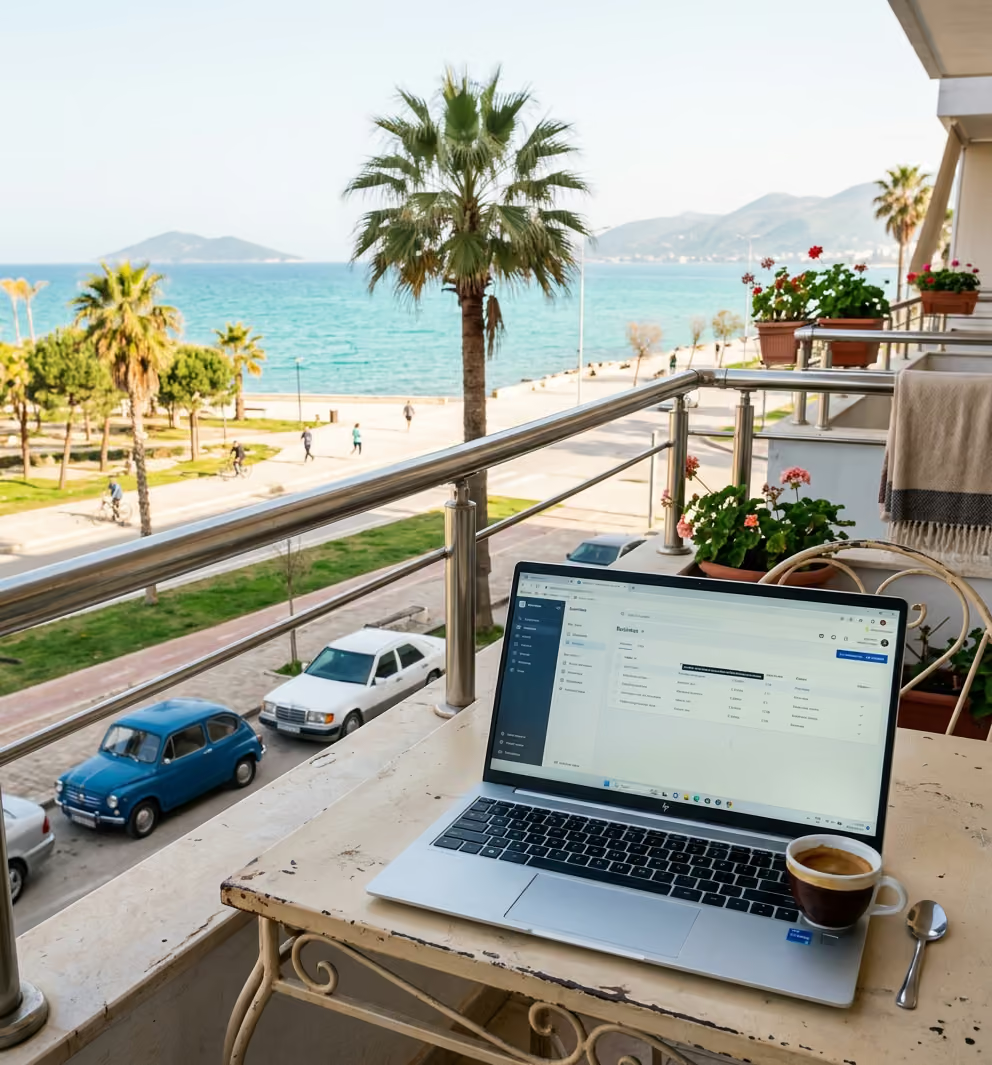
You secured a permanent international gig while working from a balcony here in Vlorë. Your new client immediately requests a formal agreement and a valid tax invoice. Understanding local rules prevents massive fines and protects your remote income. Albanian law requires all resident freelancers to issue electronic invoices through government-approved software. You must generate unique digital tracking codes for every transaction to remain legal.
Setting up a remote career in Vlorë offers a relaxed Mediterranean lifestyle. You can enjoy cheap espresso near the Lungomare all afternoon. The Albanian tax authorities operate with a much stricter attitude. Moving here means you enter a rigid fiscal environment. Proper legal compliance proves your legitimacy to the government. It secures your long-term residency options. It also stops unexpected business freezes.
The transition from a casual tourist to a valid resident alters your legal responsibilities. You join the local tax infrastructure the moment you register a business. Many newcomers assume their foreign income flies under the radar. This assumption leads to severe penalties. This guide provides the exact templates, rules, and strategies you need. You will learn to protect your earnings while satisfying Albanian regulations.
The current invoicing landscape relies entirely on a digital framework. Albania uses a mandatory electronic bookkeeping system. The government calls this system E-Fiskalizimi. Law 87/2019 governs this entire infrastructure across the country. Every business must report monetary transactions to a central authority in real time.
The Central Information System handles all data processing. The General Directorate of Taxes manages this central hub. You cannot send a simple Word document as an invoice anymore. All transactions require instant digital verification. Validated documents receive a Unique Invoice Identification Number. You will see this listed as a NIVF code. The document also gets a unique series code called an NSHP.
These codes embed directly into a scannable graphic on your final PDF. Your client sees this graphic when they open your bill. You have to use specialized software to generate these tracking numbers. Standard PDF generators fail this validation test completely. You pass your transaction data through an approved digital portal. The system instantly returns the coded approval.
The entire process happens in milliseconds. Failing to follow this digital pipeline makes your invoice completely illegal. The government will reject the financial record entirely. Penalties for missing these tracking codes reach up to 1,000,000 Albanian Lek. This equals massive financial damage for a solo freelancer.
You need a secure way to sign these digital documents. The National Agency for Information Society issues electronic certificates for this exact purpose. Locals refer to this agency as AKSHI. You request this certificate through the central e-Albania portal. You pay a small fee to download the cryptographic file. You install this file directly into your accounting software.
The software itself must meet strict technical standards. The system accepts two specific data formats for electronic billing. You can use the UN/CEFACT Cross-Industry format. You can also use the UBL 2.1 format. These sound highly complicated for a normal person. Approved software platforms handle this technical formatting for you automatically.
You must select a software provider certified by the Albanian tax office. Local accountants often recommend specific tools for Vlorë residents. Some popular platforms offer cheap monthly plans for solo workers. You link your AKSHI certificate to your chosen platform setup. The software then communicates directly with the government servers.
Your foreign clients might find the final document unusual. It contains heavy technical data and a massive graphic block. You should explain this process to them simply. Outline that your tax residency requires these specific visual elements. Most international accounting departments understand secure government billing requirements.
Generating a legal bill takes several precise actions. You cannot skip these steps without risking rejection from the tax portal. Following a strict routine protects your business standing.
This routine feels cumbersome at first. You will memorize the exact clicks within your first month. You must never send a draft document to a client. Only send the file containing the final verification codes.
You must define your working relationship clearly on paper. An independent contractor agreement protects you from scope creep and late payments. It also legally separates you from standard employment models. Albanian labor law strictly defines employee rights and benefits. You want to avoid any confusion regarding your independent status.
A strong contract outlines the exact scope of your daily work. It states what you will deliver and when you will deliver it. It defines your exact payment schedule clearly. You should state the currency of payment explicitly in the document. You must list your penalties for late client payments.
Intellectual property rights demand special attention in your contract. Albanian civil codes carry specific default rules regarding creative work. You want explicit clauses detailing when the client owns the final product. Most freelancers transfer ownership only after receiving the final payment. This rule provides massive leverage if the client stops communicating. Join the community to see exact templates other freelancers use for their contracts.
You must state which legal system governs the contract rules. Many remote workers default to their client's home country. You can also name independent arbitration for potential disputes. Clear resolution rules stop arguments before they reach expensive lawyers. You need all parties to sign the document before starting any tasks.
You will spend money to establish this compliant infrastructure. Managing your expectations helps you budget for your first year in business here. Prices fluctuate, but structural costs remain quite stable. You pay these fees in Albanian Lek or Euros.
The AKSHI digital certificate requires an annual renewal fee. This costs around 4,000 Albanian Lek per year. Your certified billing software requires a subscription payment. Basic solo plans range from 5,000 to 15,000 Lek annually. Platforms with English interfaces tend to cost slightly more.
Many remote workers hire a local accountant for monthly tax reporting. A standard bookkeeping retainer costs between 5,000 and 10,000 Lek per month. The accountant takes your digital bills and files your monthly declarations. They calculate any profit taxes owed at the end of the year. This saves you from decoding complex forms by yourself.
You might pay local bank fees to receive international wire transfers. Albanian banks often charge incoming fees on foreign currency. This fee typically ranges from 1,000 to 2,000 Lek per transfer. You should factor these banking costs into your standard client rates.
Every registered business receives a specific tax identification number. Locals call this an NIPT code. You must display this alphanumeric string on every billing document you generate. The central portal rejects any submission missing a valid NIPT. Your clients use this number to verify your legal status abroad.
Albania applies a standard value added tax rate of 20 percent. Remote workers often sell services strictly to foreign companies. These international transactions fall under special exemption rules. You do not charge this 20 percent tax to companies sitting outside the country. You must select the correct exemption category within your billing software.
You must print a very specific phrase on your final document. You should state "Place of supply outside Albania - TVSH not applicable" clearly. This proves you understand the local tax code rules. It stops auditors from questioning your zero-tax transactions. It reassures your foreign clients that they owe no extra government fees.
You still report these zero-tax transactions to the government. They count toward your annual total revenue figures. Surpassing certain revenue thresholds changes your overall business classification. Your accountant tracks these thresholds using your validated invoice records.
You imagine working smoothly from a cafe while gazing at the Ionian Sea. The actual daily reality involves intense administrative friction. The government tax portal experiences random outages during peak reporting days. You might try to send an invoice only to face a blank loading screen. You cannot fix these server errors yourself.
Local bank compliance departments will ask uncomfortable questions about incoming money. You must submit copies of your client contracts to branch managers. The bank will hold your international wire transfers until you provide physical proof of the job. You might find yourself standing in a slow line to explain your software engineering contract. Remote work concepts still confuse many traditional bank tellers.
Digital systems do not eliminate manual paperwork entirely. Some government procedures demand wet signatures and physical stamps. You will print documents and carry them across town to various offices. You will lose entire afternoons hunting for an open notary public. The contrast between your modern digital career and local bureaucracy feels jarring.
Foreign clients sometimes panic when they see the massive Albanian QR codes on bills. They send frantic emails demanding standard invoices. You have to repeatedly explain your tax residency requirements to foreign finance teams. You spend significant unbillable time managing administrative confusion.
Mistakes happen when navigating bilingual software and strict tax rules. Submitting bad data to the central portal creates immediate problems. You might misspell the foreign client's business name on the draft. The system will reject it, or it will log a permanently flawed record. Fixing an approved error requires a specific legal procedure.
You cannot simply delete a validated invoice from the government servers. The record exists permanently in the central database. You must issue a formal corrective document to fix the mistake. This corrective file references the original NIVF code directly. It cancels out the incorrect financial data officially.
Multi-currency contracts trigger frequent financial disputes. You might bill a client in US dollars through your software. Your Albanian bank receives the funds and converts them into Lek automatically. The exchange rate drops, and you lose five percent of your expected income. You must state exact currency expectations and handling rules in your signed agreements.
Worker misclassification presents a massive hidden danger. You might sign a contract that reads like full-time employment instead of freelancing. The Albanian authorities might classify you as a hidden employee. This classification triggers heavy social security and health insurance back payments. You must prove your independence by retaining control over your schedule and methods.
Holding onto your financial records protects you during sudden tax reviews. The law requires massive data retention for all digital transactions. You cannot rely on a stack of printed papers in a desk drawer. Paper printouts possess zero legal value during a digital audit. The government wants the raw computer files.
You must store the original XML data files for a minimum of five years. You must also keep the final validated PDF files. Your certified software platform usually archives these records automatically. You should still download complete backups to a private hard drive quarterly. Software companies close down, leaving users without access to old data.
You need to match your bank statements to these saved files perfectly. Auditors look for discrepancies between incoming wires and generated tracking codes. A missing digital file creates a gap that looks like tax evasion. You keep these paired documents categorized safely by month and year.
Contracts demand the same careful storage protocols. You save every signed agreement alongside the matching invoices. Email threads discussing scope changes also hold legal weight. You export these conversations as PDFs and store them safely. Clean archives turn terrifying tax audits into simple administrative reviews.
You will need real people to help explain confusing legal letters. Finding a reliable support network near your home saves you from constant anxiety. You want professionals who understand the specific needs of remote foreign workers. Many traditional firms only understand local restaurant taxes.
Look carefully near the commercial spaces around Rruga Sadik Zotaj. You will find small accounting teams familiar with modern enterprise software. You want an accountant who communicates clearly via email or secure messaging. Do not settle for someone who forces you to visit their office for every tiny question.
You should ask your accountant strictly about their experience with E-Fiskalizimi. Ask them how many remote IT workers or marketers they currently manage. Their answers will tell you if they follow international tax treaties correctly. A good firm will set up your digital certificates and software on your behalf. They act as a buffer between you and the central tax authorities.
The main local tax branch sits not far from the center of town. You will rarely visit this building if your accountant does their job properly. You might need to meet a local public notary to validate your initial business registration documents. Notary offices scatter around the main boulevards and provide fast, cheap verification stamps.
Your overseas clients want hassle-free working relationships. They do not want to become experts in Albanian tax structures. You must manage their expectations regarding your billing format quickly. A brief explanatory email saves weeks of delayed payments and confused replies.
Send a short primer alongside your first invoice. State that the large graphic and technical codes are legal requirements from your local tax office. Emphasize that these codes do not change their zero-tax status. Provide clear international bank details directly below the graphic block. Make the actual payment instructions massive and impossible to miss.
A personal tip from our network: Never wait until the end of the month to test your software setup. System outages always happen on the last day of the fiscal reporting period. Generate your draft files two days early. When the portal crashes under national traffic, you can simply try again the next morning.
Keep a standard English-language template ready for your contracts. You fill in the specific project details and send it via an electronic signature platform. Digital tracking shows exactly when your client opens and signs the document. You then save that digital log sequence alongside your final contract PDF.
The government watches closely for digital nomads treating independent setups like masked employment. You need clear markers proving you operate an autonomous business. Serving multiple clients easily proves this independence to tax authorities. Getting all your income from one foreign company raises flags.
Your contract should explicitly state your independent nature. Use phrasing that outlines your total control over your working hours. Outline your freedom to use your own equipment and software tools. Specify a clean 30-day notice period for terminating the relationship. Employees receive severance packages. Independent businesses simply end their commercial engagements.
Avoid signing client documents that mention paid vacation days or sick leave. These concepts belong strictly to labor law contracts. An independent business charges a fee for completed tasks. You factor your intended time off into your hourly or project rates. You take a vacation by simply scheduling no client deliverables for that week.
Some foreign clients insist on using their own massive corporate agreements. You must read these external documents meticulously. You cross out any clauses demanding exclusive employment rights. You add your specific Albanian legal jurisdictions to the dispute resolution section. You protect your local standing by defending these contract boundaries aggressively.
You might balance three different international gigs at the same time. Managing diverse rules requires strict personal organization. You might deal with a client in the United States, one in Germany, and one in Canada. Each contract demands varied payment timelines and specific bank routing details.
You group these varied tasks under one single tax identification number. You do not need multiple business registrations for different clients. You issue all invoices from your single approved software platform. You simply change the client details and currency markers for each new document.
You must track the overall revenue pool carefully. Albania separates small businesses from large corporations based on total annual intake. Adding up euros, dollars, and Canadian dollars requires accurate monthly conversion notes. Your accountant uses the official central bank exchange rate to calculate your true revenue tier.
You stagger your billing cycles to protect your cash flow. You bill the German client mid-month and the American client at the end of the month. This ensures you always have incoming funds to handle local expenses in Vlorë. It also spreads out the administrative burden of fighting with the tax portal.
You have the rules and the context to structure your remote business cleanly. You can apply these concepts directly to your current project load. Securing your business operations ensures a long, peaceful stay in this coastal city.
Use this specific checklist to align your setup this week:
Follow Vlore Circle for fresh guides, local updates, and community notes around life in Vlorë. It is the easiest way to stay close to what we are building.








Be part of a growing community built around connection, local life, and a better experience of Vlorë.
join the circle