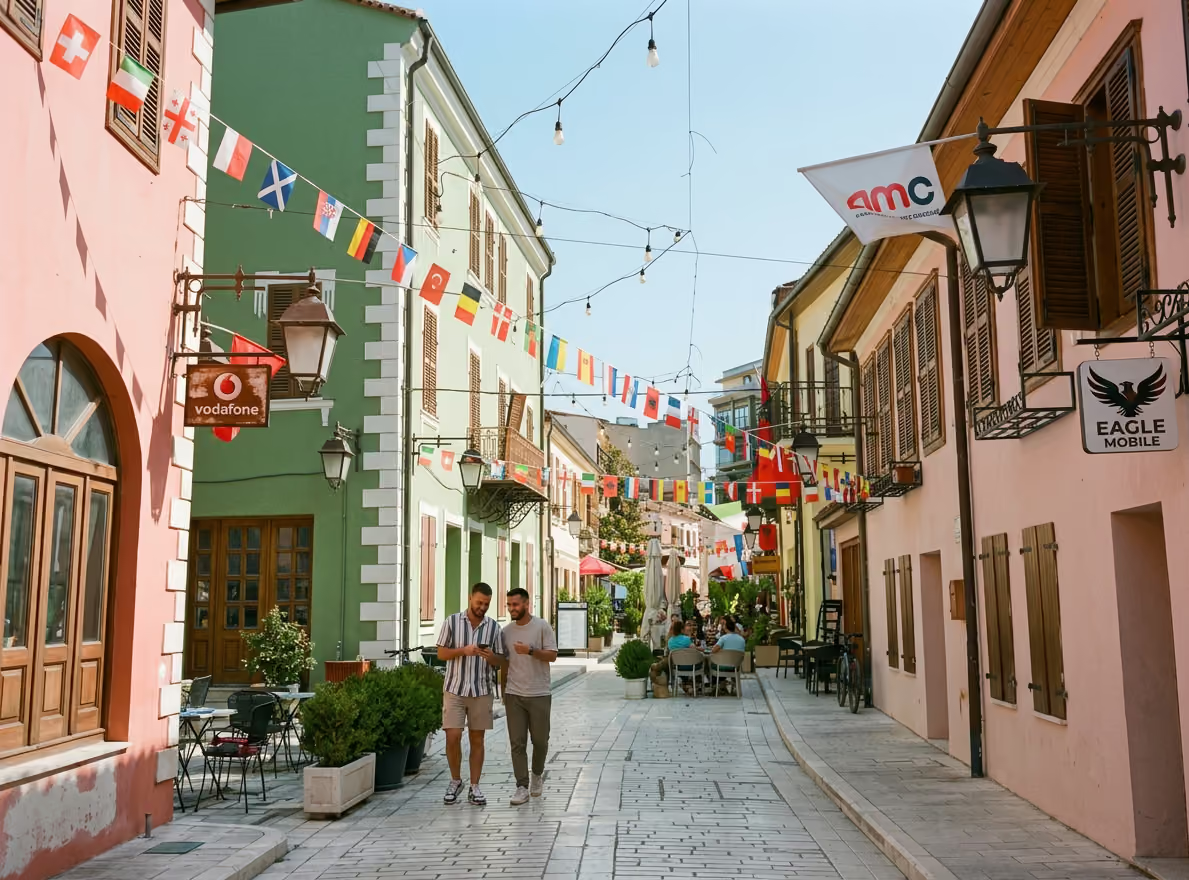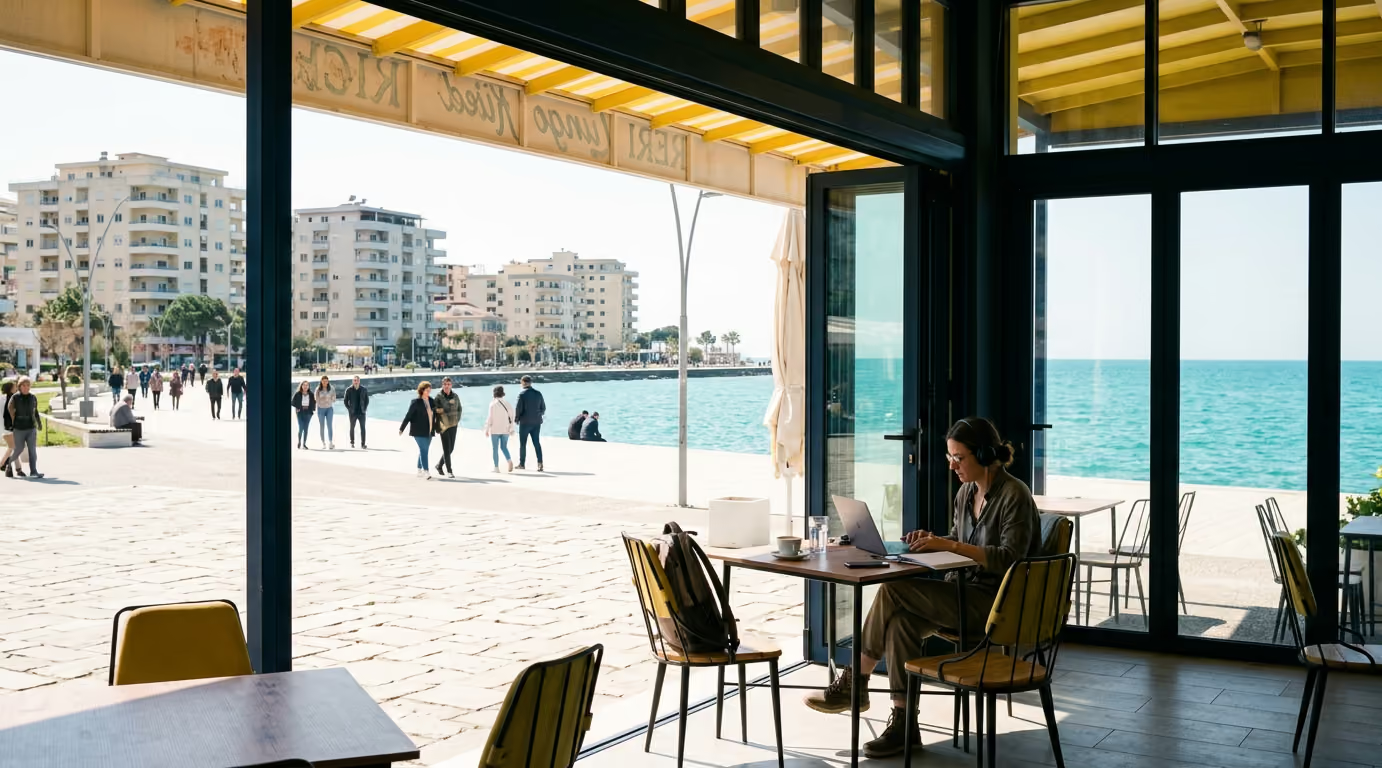
Representative image

183 days of physical presence in Albania creates a legal tax residency that requires remote workers in Vlorë to declare global income.





If you spend more than 183 days in Albania during a single calendar year, you legally become a tax resident and owe a 15% tax on your worldwide income. You can manage this liability by meticulously tracking your physical presence, avoiding long-term leases, and understanding double taxation treaties.
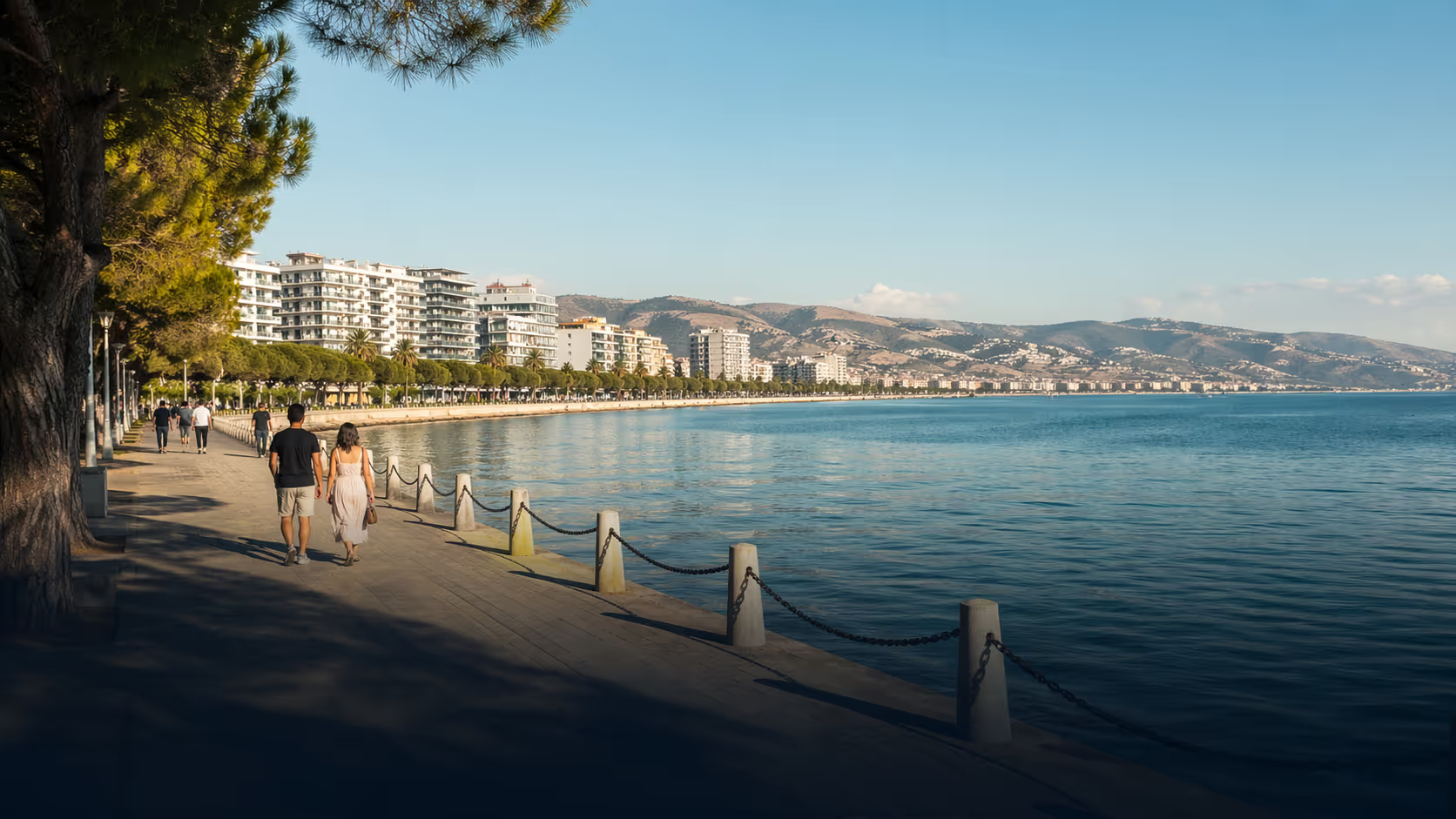
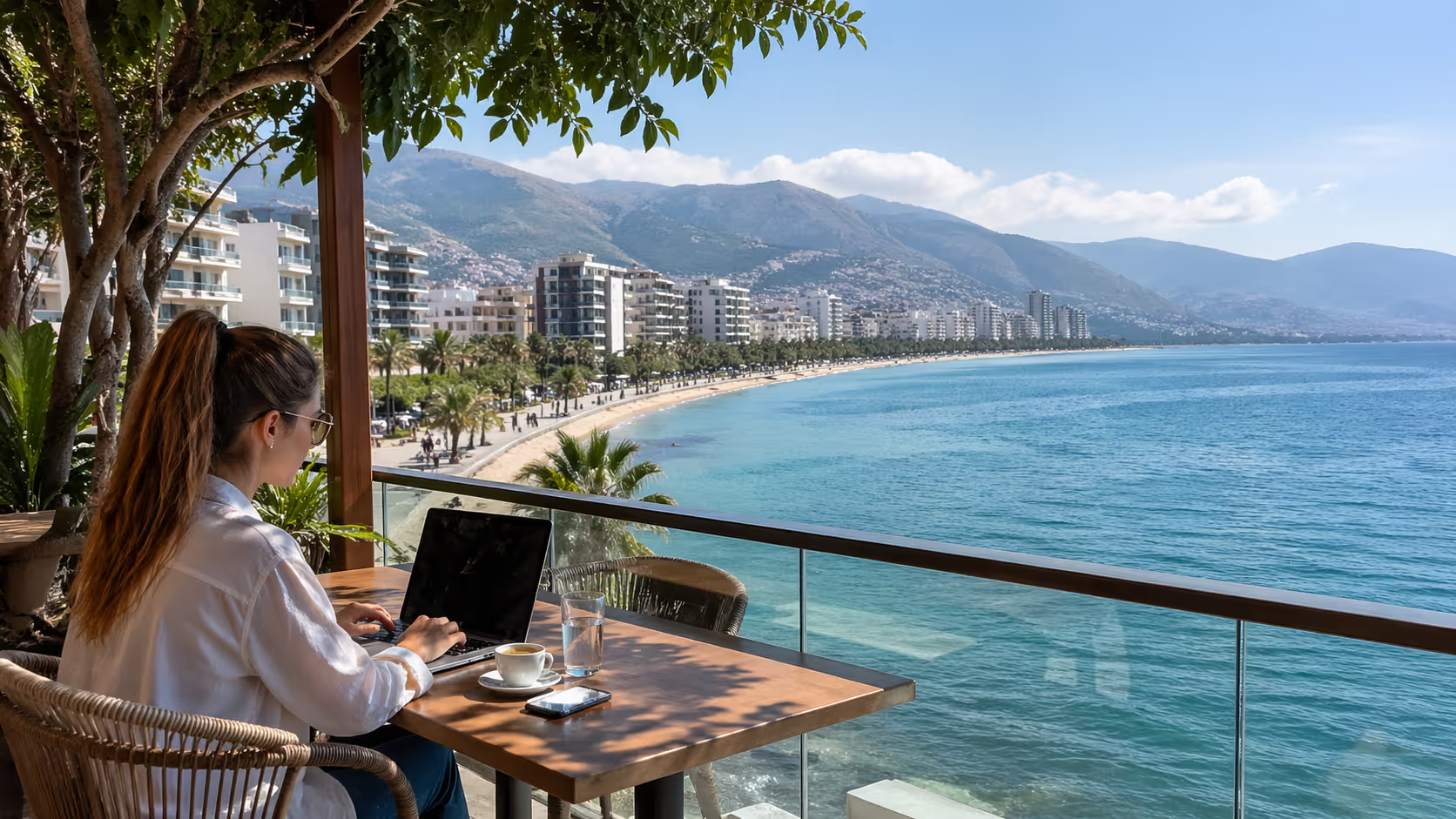
Coastal cities like Vlorë attract thousands of remote workers seeking mild winters and affordable seaside living. Many foreigners arrive with plans to stay for a month or two. They quickly fall in love with the Mediterranean lifestyle along the Lungomare promenade. They extend their stays, sign rental contracts, and open local bank accounts. These actions create legal trails that trigger Albanian tax obligations. Most expats completely miss these triggers until they face an audit. Understanding local tax legislation keeps you legally compliant and financially protected in Vlorë.
Tax residency determines which country has the legal right to tax your global earnings. This concept differs entirely from your immigration status. You can be a legal tourist in Vlorë without a visa. At the exact same time, you can be an Albanian tax resident. Do not confuse immigration law with the financial rules set by the Albanian General Directorate of Taxes.
Albania uses a strict legal framework outined in the Law on Income Tax. Article 2 of this law defines exactly who qualifies as a tax resident. The state looks at a specific set of physical and economic conditions. If you meet just one of these conditions, the government considers you a resident for tax purposes. It does not matter if you prefer to pay taxes in your home country.
The primary trigger is physical presence. You become a tax resident if you are physically present in Albania for more than 183 days in a single calendar year. The clock resets on January 1 every year. This applies whether your days are continuous or broken up into multiple short visits.
The second trigger is having a permanent home in Albania. A permanent home is any property available to you for continuous use. You do not need to own the property to meet this definition. Signing a 12-month lease for an apartment in the Cold Water neighborhood satisfies this requirement.
The third trigger revolves around your center of vital interests. The government looks at your primary family ties and economic connections. If your spouse works in Vlorë, the state considers your vital interests to be in Albania. If your children attend an international school in the city, you risk becoming a tax resident regardless of your physical day count.
The 183-day rule is the most common trap for remote workers living near the Adriatic coast. The threshold is strictly more than 183 days. Reaching day 184 officially makes you a tax resident in the eyes of the Albanian government. The government aggregates your days across the entire calendar year.
Many expats miscalculate their days by ignoring partial days. Albanian tax authorities count any part of a day spent in the country as a full day. The day you arrive at Tirana International Airport counts as one full day. The day you cross the border into Montenegro counts as another full day. A simple layover or a brief transit through the country also adds to your total count.
Consider a freelance developer from the United Kingdom. He rents a villa near Radhimë from January through late June. He stays exactly 170 days. He acts as a non-resident and only pays Albanian taxes if he bills an Albanian client. He decides to stay for a local music festival in July. This pushes his total stay to 185 days. He instantly becomes an Albanian tax resident. He now owes a flat 15% rate on his entire global income for that year.
You cannot prorate your taxes for a partial year under standard conditions. Hitting day 184 means the state taxes your worldwide income for the entire calendar year. Remote workers must track their days with absolute precision. Apps like Nomad List or dedicated tax trackers help you maintain exact records of your border crossings.
Remote workers often trigger tax residency without ever staying 183 days. The "permanent home" rule acts as a severe trap for temporary visitors. Tax authorities align their definitions with guidelines from the Organization for Economic Co-operation and Development. The tax office defines a permanent home as a residence arranged and retained for your continuous use.
Expats love renting affordable apartments near Vlorë's historic Old Town. Landlords prefer binding 12-month contracts to guarantee winter income. Signing a one-year lease establishes a permanent home on paper. You might spend only 90 days sleeping in that apartment. You might spend the rest of the year traveling through Greece and Italy. The Albanian authorities will still classify you as a tax resident.
The state looks for clear paper trails to prove continuous availability. Setting up internet service in your name provides a strong paper trail. Registering for municipal water or electricity service creates a direct link to the property. Having local utility bills in your name heavily implies you maintain a permanent home in the city.
The best strategy is to rely strictly on short-term rentals if you want to avoid residency. Booking an apartment through a vacation platform for three months does not establish a permanent home. The property goes back on the public market after your reservation ends. This proves the space is not retained for your continuous personal use.
Two different countries will sometimes demand taxes on the exact same income. You might be a tax resident in Albania by staying 200 days. Your home country might still claim you as a resident based on your passport. Albania operates a network of over 80 double taxation treaties to solve this conflict.
These treaties use a structured mechanism called tie-breaker rules. Authorities look at a descending list of criteria to decide which country gets your tax money. The first test looks at where you maintain a permanent home. The second test examines your center of vital personal and economic interests. The third test checks your habitual abode. The final test falls back on your nationality.
Imagine an American copywriter living in a Vlorë guesthouse for 190 days. She triggers the Albanian 183-day rule. The United States taxes its citizens on global income regardless of where they live. She now faces tax liabilities in both nations. The treaty between Albania and the United States applies the tie-breaker rules. She does not own property in Vlorë. She keeps her primary house and bank accounts in Texas.
The tie-breaker test concludes her permanent home and vital interests remain in the United States. She legally becomes a non-resident in Albania for tax purposes. She must still file forms with the Albanian tax authorities to formally claim treaty relief. You cannot simply ignore the local tax office. You must actively declare your treaty protection to avoid aggressive audits.
Becoming a tax resident in Albania carries specific financial costs. The country operates a relatively straightforward personal income tax system. The flat-rate personal income tax currently sits at 15%. This applies to almost all forms of global income. This rate is highly attractive compared to the heavy tax burdens found in Western Europe.
You must factor in social security and health insurance contributions if you engage in local employment. Remote workers acting as registered independent contractors face significant social contribution fees. These contributions generally account for about 25.8% of your assessed minimum salary.
Here is a realistic breakdown of typical costs associated with declaring local freelance income. Expect these baseline figures in the local currency, the Albanian Lek.
Remote workers earning high incomes abroad often find the 15% flat rate beneficial. An expat earning €80,000 from clients in Germany pays roughly €12,000 in Albanian tax. The same income might face a 40% tax rate back home. You must do the exact math for your personal situation before deciding to trigger Albanian residency.
You must handle your own record-keeping as a remote worker. The Albanian border police log your passport scans. The tax authorities can request those logs during an investigation. You need airtight proof of your movements to dispute incorrect days. Tracking is a daily responsibility.
Start a dedicated spreadhseet on January 1. Log the exact date you enter the country. Log the exact date you leave. Save every single boarding pass in a secure digital folder. Keep receipts from hotels in neighboring countries to prove your absence from Vlorë.
You must interact with the tax system if you stay past the 183-day limit. The official tax portal is known as e-Albania. You need an active phone number to register for a digital profile. You will receive a unique identification number from the central registry. This number tracks all your official tax payments.
The general individual income tax return normally has a strict filing deadline. Taxpayers must submit their documents by March 31 of the following year. You will need a certified accountant to help navigate the Albanian language forms online. Filing late triggers immediate administrative penalties.
Join the community to find trusted local accountants who specialize in remote worker incomes.
Your choice of neighborhood directly impacts your tax exposure. Vlorë offers radically different housing markets within a three-mile radius. Where you sign a contract dictates how the government views your permanent home status. Remote workers must choose carefully.
The Lungomare area features newly built apartment blocks facing the sea. This district operates heavily on a short-term model. Landlords use major booking platforms to secure weekly rentals. Renting here on a month-to-month basis keeps you off official municipal registers. You avoid creating a permanent paper trail.
The Uji i Ftohtë neighborhood attracts older expats looking for quiet living. Owners in this area heavily prefer signing formalized rental contracts with a public notary. Signing a notarized contract legally binds you to the property. This acts as undeniable proof of a permanent home for the tax office.
Avoid putting utility bills in your name if you plan to stay less than a year. Offer to pay the landlord directly in cash for electricity and water. Let the landlord keep the state accounts in their name. This simple adjustment removes a massive flag from the tax authority's radar.
Many foreigners believe they can fly under the radar in the Balkans. They assume the local government lacks the technology to track digital nomads. This is a very dangerous assumption. The Albanian tax authority has heavily modernized its digital tracking systems over the last five years.
Failing to declare your worldwide income carries harsh financial penalties. Audits targeting long-term renters have increased recently along the coast. If the state determines you overstayed the 183-day limit, they will issue a retroactive tax bill. They will assess a 15% tax on your presumed global earnings.
The reality of dealing with an audit is incredibly stressful. You will face late payment fines ranging from 10% to 50% of your owed balance. You cannot simply leave the country to avoid the debt. Albania participates in global tax data sharing systems. Tax debts follow you back to your home country.
Do not try to hide your income. Talk to a qualified tax professional during your third month in the city. The local tax office sits near the central municipality building in Vlorë. You can visit them directly, but bringing a fluent translator is fully necessary. Do not wait until March to find an English-speaking accountant.
Albanian law holds specific exemptions for certain types of foreign residents. Artists and creators receive a very unique legal benefit under the tax code. Non-citizen artists can live in Albania for up to 24 months without triggering tax residency. This exemption makes Vlorë an incredible base for foreign filmmakers and writers.
You must meet strict criteria to qualify for the artist exemption. You must earn your income exclusively from creative pursuits. You will need clear documentation of your professional status to prove this to the authorities. Working as a standard software engineer or data analyst does not qualify for this creative waiver.
Diplomats and international NGO workers receive separate protections. Article 12 of the Civil Code often shields foreign aid workers from local income taxes. Regular remote workers and digital marketers cannot access these diplomatic waivers under any circumstance.
Albania only taxes non-residents on Albania-sourced income. If you stay 100 days and build a website for a local Vlorë restaurant, that specific payment is taxable. You must pay the 15% rate on the money earned from the Albanian client. Your foreign income remains completely safe as long as your total stay remains under 183 days.
Many expats attempt to reset their tax clock by leaving the country for a weekend. They take a quick ferry from Vlorë to Italy and return three days later. They mistakenly believe this completely wipes their day count to zero. This tactic does not work for tax residency purposes.
The 183-day rule measures your cumulative total over the entire calendar year. Your days simply pause when you board the ferry. They resume the exact moment you step back onto Albanian soil. Border runs only help extend your tourist visa limits. They provide absolutely zero protection against tax residency accumulation.
Citizens from the United States enjoy a special one-year visa-free stay in Albania. This massive immigration benefit creates immense tax confusion. American expats stay for ten months legally without any immigration paperwork. They assume their tax status is equally protected.
The tax department operates independently of the border police. Staying ten months makes you fully compliant with immigration law. It simultaneously makes you a massive violator of tax law if you fail to file returns. Always separate your right to exist in the country from your obligation to pay taxes.
Opening a local bank account in Vlorë simplifies your daily life immensely. It allows you to pay rent easily and avoid horrific ATM withdrawal fees. Remote workers often rush to Credins Bank or Raiffeisen Bank during their first week. Opening an account requires a valid passport and a rental contract.
A local bank account strengthens the government's case for tax residency. It demonstrates a clear economic tie to the nation. The state frequently uses bank records to establish a center of vital interests. Frequent local spending patterns show you treat Vlorë as a primary base.
Albania shares banking data with foreign governments. The country participates in the automatic exchange of information guidelines set by the OECD. American expats must adhere to the Foreign Account Tax Compliance Act. Local banks will report your Albanian account balances directly to the IRS.
Keep your local banking footprint as small as possible. Use a local account strictly for paying rent and groceries. Keep your primary savings and business income in your home country. Flowing hundreds of thousands of euros through an Albanian account triggers immediate regulatory scrutiny.
The Albanian government actively discusses creating a formal digital nomad visa framework. These proposed visas aim to attract high-earning remote workers. These legal frameworks often include specialized tax brackets or temporary exemptions. As of current reporting, Vlorë remote workers rely on standard tax laws.
You must stay informed about legal amendments to the Law on Income Tax. European nations frequently adjust their tax policies to compete for foreign talent. A new digital nomad visa could dramatically alter the 183-day calculus. It might offer a flat yearly fee instead of a percentage tax.
Read official updates from the General Directorate of Taxes at least twice a year. Connect with local Vlorë expat groups to share on-the-ground news. Tax laws rarely change overnight. The government usually debates tax reforms in parliament for several months before passing them.
Hire an accountant who regularly reads official government bulletins. A good accountant saves you thousands of euros by anticipating legal shifts early. The initial consultation fee pays for itself immediately when tax season arrives.
Countries define their fiscal years differently. Albania strictly uses the standard calendar year from January to December. The United Kingdom runs its tax year from April to April. Australia runs its tax year from July to June. These mismatched timelines create massive headaches for expats filing in two jurisdictions.
You must diligently map out both timelines on a calendar. Income earned in October falls into two entirely different reporting periods. You must calculate your 183 days based strictly on the Albanian January-to-December calendar.
Do not try to force Albanian authorities to respect your home country's fiscal calendar. The local tax office expects your documentation based on their legal deadlines. Provide your accountant with clear monthly income statements. This allows them to carve out the exact amounts relevant to the Albanian fiscal year.
Keep a buffer fund ready for overlapping tax bills. You might owe the Albanian tax office in March. You might not receive your treaty refund from your home country until August. You need enough cash reserves to float the difference without stressing your daily budget.
Yes. If you stay 183 days or fewer in a single calendar year, and you do not secure a permanent home or establish a center of vital interests, you remain a non-resident. You will only pay taxes on money earned directly from Albanian clients.
Non-citizen artists and creators receive a specialized exemption. You can live in Albania for up to 24 months without triggering tax residency. You must provide official proof that your sole income comes from creative artistic work.
Visa laws and tax laws operate on two entirely different legally binding tracks. Extending your tourist visa allows you to remain in the country legally. If that extension pushes you past the 183-day mark, you automatically become a tax resident regardless of your visa name.
The United States taxes based on citizenship. Albania taxes based on physical presence. You will likely trigger dual taxation. You must file an Albanian tax return and use the specific tie-breaker rules in the US-Albania tax treaty to claim relief.
Follow Vlore Circle for fresh guides, local updates, and community notes around life in Vlorë. It is the easiest way to stay close to what we are building.


Be part of a growing community built around connection, local life, and a better experience of Vlorë.
join the circle