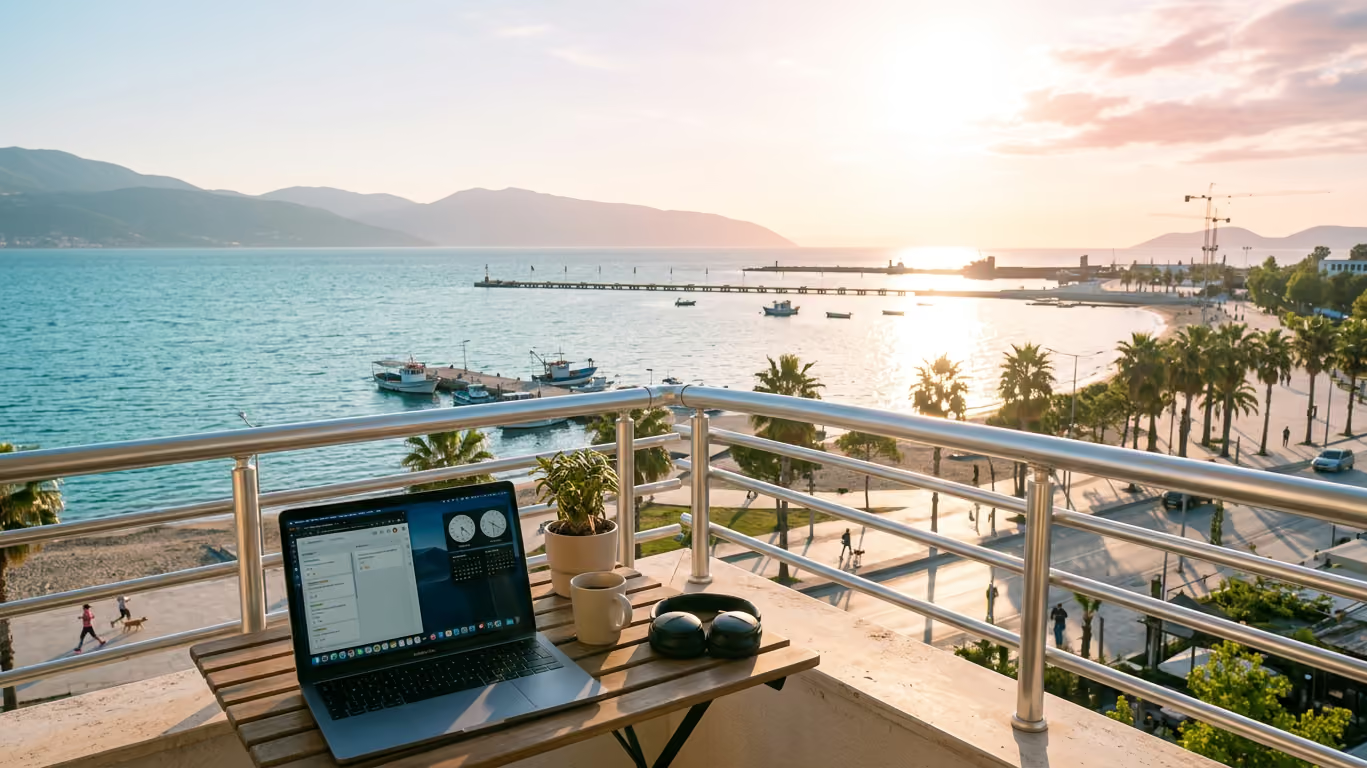
Representative image

Master global remote work from Albania. Learn to manage Central European Time offsets, optimize client overlap hours, and build a sustainable scheduling system.





How do you handle an American morning meeting when you live in Albania? You manage Central European Time offsets by stacking synchronous video calls in the late afternoon and pushing deep work to the local morning hours. This structural approach protects your local schedule while giving foreign clients the exact communication they expect.
Operating from right above the Mediterranean Sea presents distinct geographic realities. Vlorë places you exactly between major American markets and Asian business hubs. Understanding this positioning forms the foundation of a sustainable remote career.
Vlorë operates on Central European Time. This puts the city at UTC plus one hour during the winter months. During daylight saving time, the region shifts to Central European Summer Time at UTC plus two hours.
This specific geographic positioning creates a powerful daily rhythm for professionals. You can spend your early mornings swimming at the Lungomare or drinking coffee near Skela without missing client messages. The European business day matches your local clock exactly. The American business day starts just as you finish your local lunch.
Understanding your timezone involves recognizing how your position alters client availability. Your late afternoon represents the morning rush for a developer in New York. Your evening aligns with mid-day strategy sessions in California. Acknowledging these natural alignments helps you build better work boundaries.
Many remote professionals mismanage this geographical advantage. They check messages the moment they wake up. This forces them into a fragmented schedule where they feel constantly attached to their devices.
Overlap hours form the backbone of distributed team productivity across geographic regions. These are designated periods when team members work simultaneously. Without defined overlap hours, projects slow down and communication becomes chaotic.
Research from Harvard Business School indicates that remote employees often stretch beyond their typical schedule to connect with colleagues in real time. This habit creates severe burnout risks over long periods. Teams that establish predetermined overlap hours reduce unplanned evening work by nearly seventy percent.
For professionals in Vlorë serving global clients, the optimal overlap window varies significantly by season and region. You must map these overlapping windows carefully.
Western European and UK clients provide the easiest alignment. A Vlorë worker experiences maximum overlap with London clients from ten in the morning until noon. You can complete all synchronous tasks before your lunch break.
United States East Coast clients require afternoon alignment. You get three or four hours of genuine overlap between two in the afternoon and five in the afternoon local time. This matches their early morning schedule perfectly.
United States West Coast clients demand strategic scheduling. A Vlorë worker only overlaps with California during the late evening. You typically have from five until eight in the evening locally to catch their morning hours.
Clients based in Dubai or Central Asia offer alternative scheduling opportunities. You gain two to four hours of afternoon overlap. This presents excellent options for diversifying your client portfolio without ruining your evening schedule.
Systematic scheduling removes the daily mental burden of timezone math. You can implement a structured calendar system using these exact steps.
Rotating your meeting times distributes the inconvenience fairly across your team. If your American client holds a meeting at five in the evening your time for three months, you should propose a rotation. Move the next quarter's recurring meeting to an earlier slot. Document these rotations explicitly so clients understand the system.
Setting buffer times prevents minor delays from destroying your entire afternoon. A US morning meeting often runs late. This directly delays your next scheduled call with a European partner. A fifteen-minute buffer prevents calendar cascading errors.
Where you live in Vlorë dictates how easily you can handle a late afternoon client call. The local environment changes dramatically between seasons. This impacts your ability to hold professional video meetings at seven in the evening.
Renting an apartment in the Uji i Ftohtë area offers quiet evenings throughout the winter. But summer brings loud music from nearby beach clubs that easily bleeds through windows. If your core US overlap hours fall during the evening, you need excellent soundproofing.
Living near the main Independence Monument square provides distinct advantages for late workers. This area features reliable fiber internet stability year-round. It also places you near cafes that remain open and quiet during your later work shifts.
Working from cafes near the Marina Bay area works beautifully for morning European calls. The atmosphere remains calm until the early afternoon. Once the afternoon crowds arrive, you can transition back to your apartment for focus blocks.
If you take calls with West Coast clients late at night, choose neighborhoods with newer electrical grids. Areas close to the city center typically experience fewer winter power interruptions. This protects your connectivity during vital strategy sessions.
People often imagine remote work in the Balkans as typing from a sunny beach chair indefinitely. The actual daily experience involves sitting inside a quiet apartment at six in the evening while your local friends eat dinner. A time difference creates genuine temporal isolation.
The always available trap represents the biggest threat to newly relocated professionals. When a client email arrives at eight at night local time, responding immediately feels efficient. Systematic boundary erosion happens rapidly when you reward late messages with instant replies.
You must establish a firm asynchronous communication architecture. This approach reduces your dependency on real-time interaction. It enables work across geographic lines without demanding simultaneous availability from everyone.
Written records replace spontaneous video calls in a healthy remote setup. You should document all key decisions with proper timestamps and clear rationale. This allows an American manager to review your logic while you sleep.
Use templated status updates for project progress. A standardized format helps clients scan for important updates quickly. They can digest the information during their business hours without needing you present on a screen.
You need professional software to manage time zones effectively. Building a proper application stack requires a minor financial investment. These local cost estimations in Albanian Lek establish realistic budget expectations.
A premium subscription to World Time Buddy costs roughly three thousand Albanian Lek annually. This application enables drag-and-drop scheduling across multiple zones. It visually displays all participant schedules in a single clear interface.
Email scheduling tools like Boomerang require an investment of around fourteen thousand Albanian Lek per year. These tools address a fundamental communication challenge. They allow you to write an email at night but schedule the delivery for the client's morning.
A professional Calendly account costs about sixteen thousand Albanian Lek yearly. This software embeds timezone logic directly into your booking links. Your clients automatically see your available times translated into their local clock.
You must also budget for local backup connectivity. A supplementary data plan from a Vodafone or One Albania shop near the port costs around two thousand Albanian Lek monthly. This provides a necessary failover if your home fiber connection drops during an important US meeting.
Industry analysts report that calendar integration tools achieve ninety-five percent adoption across remote organizations. Dedicated timezone converters see roughly fifty percent regular usage. Embedding timezone rules directly into your main calendar proves more effective than using separate calculation apps.
Sending messages at the right time maximizes client engagement. Structuring your email delivery protects your reputation for promptness without ruining your personal evenings.
You should always schedule emails for client business hours. Never send a project update to an American manager right before you go to sleep. Schedule that message to hit their inbox just as they arrive at their desk.
Structure your emails to require responses during your actual working hours. Ask targeted questions that prompt specific answers. Set clear deadlines for when you need their input to proceed with the next step.
Always include comprehensive documentation as attachments. Your clients need enough context to review your work during their hours. If you leave out minor details, they will pause the project and wait for you to wake up.
Batching your communication saves everyone time. Consolidate multiple small questions into a single structured daily touchpoint. This prevents scattered messages from interrupting both your workflow and your client's day.
The single biggest source of scheduling errors occurs during regional daylight saving transitions. Vlorë remote workers face compounded complexity during the spring and autumn months.
The United States and Europe implement time changes on completely different dates. The US shifts its clocks in mid-March and early November. The European Union shifts clocks on the last Sundays of March and October.
This staggered reality creates a two-week period where standard offset calculations fail entirely. The gap between New York and Vlorë shrinks from six hours to five hours temporarily. Recurring calendar events often fail to update properly across different software networks.
Temporarily cancel automatic recurring meetings during these transition weeks. Reschedule them manually with an explicit note in the title. Write out the exact local time and the exact foreign time in the meeting description.
Set a calendar reminder for yourself two weeks before any scheduled transition. Use this alert to audit all your upcoming appointments. Manual verification prevents you from missing a client presentation by a full hour.
Real-time chat applications ruin work boundaries if left unmanaged. Establishing strategic Slack rules prevents timezone creep into your personal life.
You must utilize the automatic schedule features within your messaging tools. Set your application to snooze notifications outside your core collaboration hours. This status indicator tells clients exactly when you will return to read their requests.
Establish urgent timezone channels for true emergencies. Messages placed in standard channels should carry a twenty-four hour response expectation. Messages in the urgent channel require immediate attention regardless of the hour.
Enforce threaded responses within your team channels. Threaded replies prevent notification fatigue for people sleeping in other countries. This habit keeps complex conversations organized for asynchronous review the next day.
Include clear timezone indicators directly in your user profile. Ask your clients to verify your current business hours before requesting impromptu video calls. A simple note about your Central European Time location sets automatic expectations.
Winter weather along the Albanian coast brings sporadic electrical challenges. A heavy storm hitting Vlorë might temporarily drop neighborhood power grids. You need a resilient hardware setup to protect your client reputation.
A power interruption at eight in the evening kills your home router instantly. If you are presenting to an American client, you vanish from the call without warning.
Purchase a small uninterruptible power supply from an electronics store on Rruga Hasan Prishtina. Plug your home internet router directly into this battery backup. When the neighborhood power drops, your internet stays active for several hours.
Keep a local SIM card loaded with fresh data purely for tethering. Do not rely entirely on local cafe wifi during severe weather. Having a fully charged phone with an active hotspot provides a secondary layer of professional security.
Here is a practical suggestion for preserving your local lifestyle. Block out your Friday evenings completely starting at five o'clock local time. Do not let West Coast clients schedule end-of-week wrap-up calls that destroy your Friday night in the city.
Maintaining a structured record of client preferences prevents scheduling friction. Every team member operates with different personal energy levels throughout the day.
Create a private spreadsheet listing every active client on your roster. Note their exact geographic location and standard business hours. Record their preferred meeting software and communication style.
Document explicit reasons for their scheduling preferences. Note if a specific project leader prefers morning meetings because they pick up children in the afternoon. Keeping track of these details helps you propose meetings they will naturally accept.
Use shared documentation systems to replace verbal status updates entirely. Tools like Notion or Google Docs create searchable records of past decisions. This gives American teams immediate access to your reasoning without needing to call you.
When presenting strategic options to clients, write down the analysis in a structured format. Allow the client to review the document during their own timezone hours. You can review their written comments during your next morning work session.
Join the community of other professionals sharing these local productivity systems. Connecting with nearby digital workers helps you refine these technical setups faster.
This scenario involves an American software company needing daily syncs with an Albanian contractor. A six-hour time difference provides a natural alignment point in the early afternoon.
The Vlorë worker schedules a strict daily standup at two in the afternoon local time. This matches perfectly with eight in the morning for the New York client. The meeting lasts exactly fifteen minutes.
To make this efficient, the worker structures the standup as a written format. They submit a text summary of completed tasks thirty minutes prior to the call. The verbal meeting focuses purely on blocking issues.
The worker then sends an evening asynchronous update at exactly six in the evening. This message documents all work completed during the local afternoon. The client reviews this document overnight and responds with decisions.
The Vlorë professional wakes up the next morning and implements those decisions. This system mimics real-time collaboration. It prevents the need for simultaneous long-form deep work sessions.
This profile details a European marketing agency managing separate European and American project portfolios. The worker has perfect timezone alignment for European tasks but a massive offset for American deliverables.
The solution architecture groups tasks by geographic region on specific days. Monday and Wednesday mornings focus entirely on European stakeholder meetings. Zero timezone complexity exists during these days.
Tuesdays and Thursdays hold reserved blocks at three in the afternoon for American team check-ins. This hour represents a perfectly acceptable nine in the morning start for the US group.
The worker establishes a strict American decision window. They submit all asynchronous questions to US clients by one in the afternoon local time on Wednesdays. The US team reviews the questions overnight.
The Vlorë worker receives the answers by Thursday morning. This grouped schedule balances multiple regional demands. It stops the professional from adopting unhealthy morning-to-night work habits.
Freelancers often manage three or four clients spread across completely different continents. This setup lacks any single overlap window across the entire portfolio.
The structural solution requires assigning whole days to specific geographic regions. Monday becomes the dedicated American block. The worker schedules all stateside meetings between two and five in the afternoon.
Tuesday shifts to a European focus. The professional schedules meetings between ten in the morning and noon. They use the afternoon purely for disconnected deep work.
Wednesday becomes a strictly asynchronous documentation day. The calendar contains zero meetings. The worker focuses entirely on writing deliverables and answering queued emails.
Thursday caters to clients based in Dubai or Asia. The worker takes meetings between six and eight in the evening. This schedule structures a chaotic week dependably. Clients learn exactly which days they can reach you for calls.
Content creators and independent writers face strict publication schedules. A client needs the delivery finished during their active business hours to push the actual publication live.
The remote worker must establish definitive deadline cutoff times based on regional expectations. They deliver European projects by nine in the morning local time. They push East Coast deliverables by two in the afternoon.
The workflow gets structured backward from these delivery markers. The writer edits the European piece between eight and nine in the morning. They finalize the American piece between one and two in the afternoon.
Building a one-hour buffer into this structure absorbs unexpected client revision requests. The worker schedules a quick review call only after the client confirms receipt of the delivery.
You never take a phone call during a live delivery window. This system ensures foreign editors receive clean copy directly into their inbox at predictable intervals. It completely eliminates frantic midnight editing sessions.
Maintaining visibility across multiple time horizons requires specific software habits. Using integrated calendar layouts prevents double-booking critical project phases.
Link your task management software directly into your master calendar interface. Applications like Google Tasks provide unified visual representations of impending deadlines. You can see exact due dates placed directly next to scheduled client calls.
This integration provides automatic conflict detection when a written task overlaps with a newly requested meeting. You can spot the collision instantly and propose a different call time.
Keep client timezone considerations baked into your personal task computations. If a California client needs a document by their Tuesday morning, you must finish the work by your Monday evening. Your calendar should visualize that Monday deadline explicitly.
Assign different display colors to different geographic locations in your calendar application. Make your UK meetings blue and your US meetings red. This simple visual cue helps you mentally prepare for the cultural and temporal shift before clicking the join button.
Serving clients on the western edge of North America presents the highest difficulty for European residents. The five to eight evening window represents your only viable synchronous connection point.
This late timeframe creates immense psychological pressure to stretch your working hours deep into the night. It ruins dinner plans and disrupts evening rest patterns persistently.
You must limit West Coast video calls to an absolute maximum of two per week. Schedule these purely within your flexible evening hours block. Make sure the client understands these times represent boundary exceptions, not standard operating hours.
Push heavily for asynchronous updates with these specific partners. Record brief video explanations using screen capture software instead of requesting live meetings. Send the video file overnight. The client can watch your presentation with their morning coffee.
Send brief written agendas before any necessary late-night call. This forces the meeting to stay focused on high-level decisions. When the clock hits eight at night in Vlorë, you can confidently end the discussion and log off.
Transforming your daily routine requires immediate structural adjustments. Apply these concrete steps to your scheduling system this week.
Mastering timezone differences allows you to enjoy the coastal Albanian lifestyle fully. You can walk along the beach in the morning and handle global business in the afternoon. Implementing strict calendar frameworks keeps those two worlds comfortably separated.
Follow Vlore Circle for fresh guides, local updates, and community notes around life in Vlorë. It is the easiest way to stay close to what we are building.









Be part of a growing community built around connection, local life, and a better experience of Vlorë.
join the circle