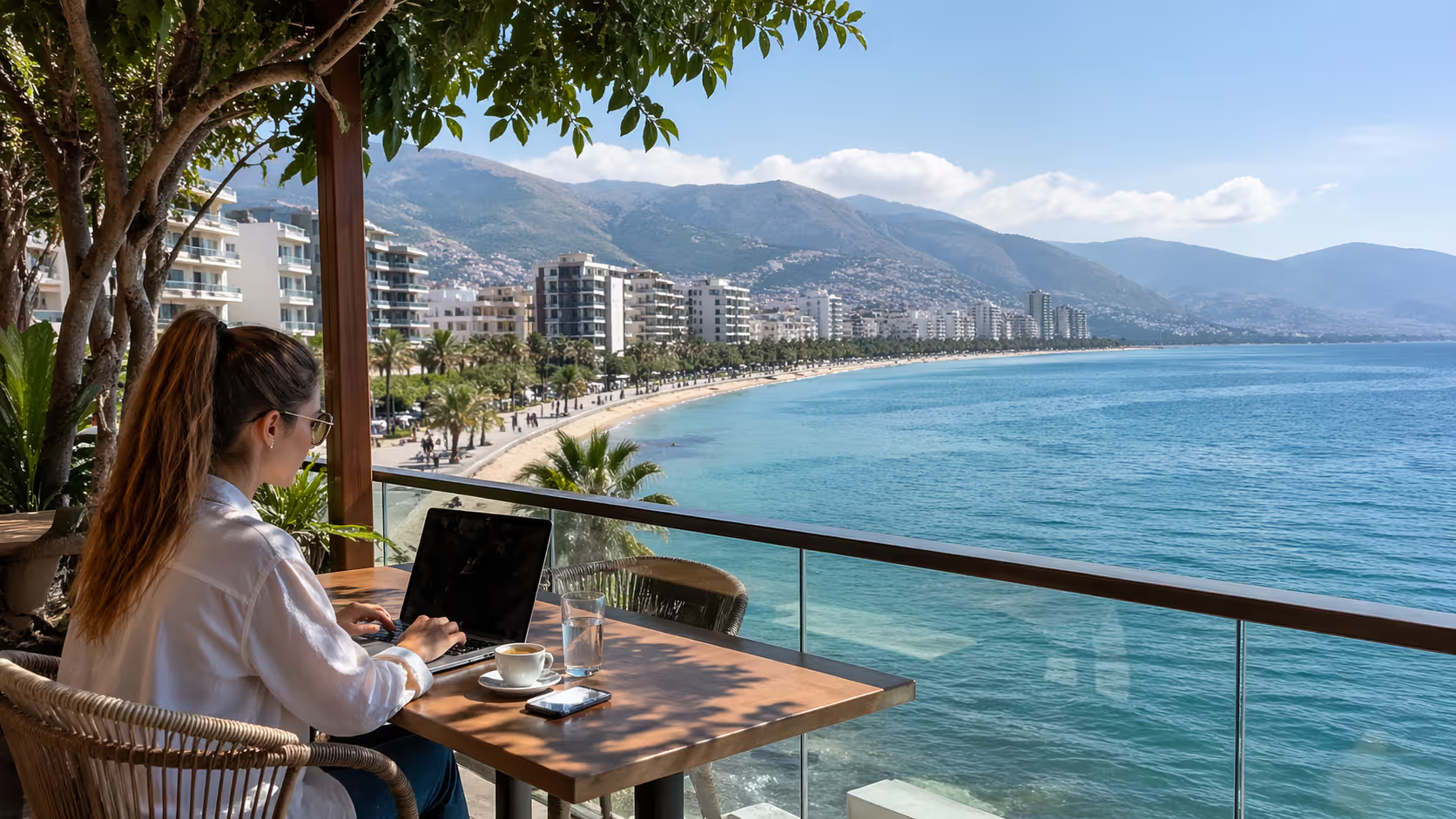
Representative image

Juggling foreign client payments, local cash withdrawals, and seasonal price hikes in Vlorë demands a reliable financial strategy for long stays.





A remote worker in Vlorë should run money through five layers, income, tracking, allocation, protection, and growth. Use a multi-currency account for foreign income, convert through a low-fee service like Wise, track daily lek spending, then review your budget every month before Vlorë’s summer prices or winter bills surprise you.
Money in Vlorë feels easier than it is. That is the counter-intuitive truth.
Rent can be lower than in Western Europe. Coffee on Lungomare may cost less than a takeaway drink in London or Berlin. A fresh lunch near the old town can still feel fair if you earn in euros, dollars, or pounds.
Yet low daily costs can hide weak money habits. Small cash payments in lek, rent quoted in euros, card fees, ATM charges, seasonal price jumps, and unclear tax status can slowly eat the advantage that brought you here.
This guide gives remote workers a practical money system for Vlorë. It is built for people who live here for months, not travelers passing through for a weekend.
Vlorë is a mixed-currency city in daily practice. The legal currency is the Albanian lek, shown as ALL. Yet many rents, tours, car rentals, and larger purchases are quoted in euros.
This matters from your first apartment viewing. A landlord in Uji i Ftohtë may quote rent at €450 per month. A supermarket near Skelë will charge in lek. A beach bar near Lungomare may accept card, but a small fruit stand near the old market will expect cash.
Remote workers often arrive with money spread across too many places. One bank account in their home country. One card for online subscriptions. PayPal or Stripe income. A savings account in another currency. Then they add Wise or Revolut after the first expensive ATM fee.
That patchwork can work for a short stay. It becomes risky once you live in Vlorë through rent cycles, visa renewals, tax deadlines, gear failures, and seasonal price shifts.
A good framework keeps your money simple. You need a clear path from earning to spending.
Your income should land in one main account. Your conversion rules should be written down. Your spending should be tracked in lek and euro. Your savings should be held away from daily cards. Your tax notes should be kept monthly, not rebuilt in panic at year end.
According to Flatio’s guidance for remote workers, multi-currency tools reduce repeated conversions when people earn in one currency and spend in another. Wise makes a similar point in its remote team guidance, where international payments and cards can reduce delays and unclear reimbursements.
The goal is not to use every finance app. The goal is to know what happens to every euro, dollar, pound, and lek that passes through your life in Vlorë.
Think of your Vlorë money setup as five layers.
The first layer is income. This is where client payments, salary, affiliate income, pension income, or project retainers arrive. For many remote workers in Vlorë, this income arrives in USD, EUR, GBP, or another foreign currency.
The second layer is tracking. This is where you record daily spending. It should show both currency and category, such as rent in EUR, groceries in ALL, coffee in ALL, and software in USD.
The third layer is allocation. This is your budget rule. You can use a 50/30/20 split, a zero-based budget, or a mix of both.
The fourth layer is protection. This includes your emergency fund, insurance, backup cards, device replacement fund, tax reserve, and simple fraud controls.
The fifth layer is growth. This is where savings move toward retirement, investments, debt payoff, or long-term goals. Vlorë’s lower living costs only matter if the surplus has a job.
The best money system for Vlorë is not exciting. It repeats.
Income lands. You convert only what you need. You withdraw cash with a plan. You pay rent from a stable currency. You track lek spending daily. You review everything once a month.
That rhythm beats a clever app stack that you ignore after ten days.
A remote worker in Vlorë needs at least three money zones. One zone for income. One zone for local spending. One zone for savings and reserves.
Many people use a multi-currency account as the bridge between home country income and Albanian life. Wise and Revolut are common names in this space. Traditional banks can work too, but they often charge more through exchange rate spreads, foreign transaction fees, and ATM fees.
The research brief notes that low-cost transfer services may charge around 0.4% to 1% for exchange, compared with bank charges that can reach 3% to 5%. Your exact fee will change by currency route, payment type, and account country. The principle stays the same. Do not convert money blindly through the first bank card in your wallet.
If you freelance, ask clients to pay into one main account where possible. If you are employed, check whether payroll can pay EUR or USD into an account with clean statements. If your income comes through platforms, route payouts into the same system each month.
This saves time later. You can see your monthly income without hunting through five apps.
If you earn in USD but rent in EUR, do not convert every payment into lek. Keep rent money in EUR if your landlord expects euros. Convert a smaller planned amount into ALL for groceries, cafes, local transport, markets, and daily services.
Rent is the biggest monthly outflow for most remote workers in Vlorë. A one-bedroom apartment can sit around €300 to €500 per month, with strong variation by area, season, view, building quality, and lease length.
Apartments near Lungomare, Uji i Ftohtë, and the beach can rise fast during summer. Inland options near Skelë, the old town, or quieter residential streets may offer better long-term value.
Keep one rent pocket or sub-account in EUR. Fund it as soon as income lands. Treat it as unavailable money.
This helps you avoid a common Vlorë mistake. People spend freely in lek for two weeks, then realize the rent payment still needs to be made in euros.
Lek is the currency of normal daily life. Bakeries, small shops, produce stands, local buses, pharmacies, and many cafes price in ALL.
If your card converts each lek purchase from USD or GBP in real time, you may lose money on exchange spreads. You may not notice it at the counter. You will feel it after a month of small transactions.
A better system is to convert a weekly or biweekly local spending amount into ALL. Use that amount for normal life. Track it as a single pool.
For example, a remote worker earning in USD might keep:
This is not a universal split. It is a starting point. Adjust it after your first full month in Vlorë.
Do not rely on one card in Albania. Cards can fail. ATMs can reject a foreign card. A fraud alert can lock your account during a weekend.
Carry one daily card. Keep one backup card at home. Keep one small emergency cash reserve in EUR and ALL.
This is not fear-based planning. It is normal expat hygiene.
If you live near Uji i Ftohtë and your only card gets blocked on a Sunday night, your next rent transfer and grocery run become stressful. A backup card turns that problem into an inconvenience.
Wise is popular with remote workers since it supports international transfers, multi-currency balances, and clear exchange pricing. The exact product features vary by country, so check what is available for your account location.
Your goal is to create a repeatable transfer flow. Do not treat each transfer as a fresh decision.
Start with your income date. If you are paid on the first business day of the month, make the second business day your money day.
On money day, move funds into four buckets:
If you get paid weekly, use the same model each Friday. If your freelance income is irregular, use a two-stage method. First cover core costs, then allocate extra income only after the money clears.
Currency markets move. Trying to time every exchange can drain focus. Remote workers already have clients, deadlines, calls, and life admin.
Write a simple rule instead.
For example:
This rule removes guesswork. It helps you avoid converting too much into lek during a month when you need euros for rent.
Many new arrivals assume ATMs are the same everywhere. They are not.
Some ATMs charge withdrawal fees. Some offer dynamic currency conversion, which means the machine offers to charge your home currency instead of lek. This can carry a poor exchange rate.
When an ATM asks whether to accept its conversion, read the screen carefully. In many cases, choosing to be charged in the local currency is cheaper. Check your own card terms before you depend on this.
Use larger planned withdrawals rather than daily small ones. Yet do not carry large cash amounts around Lungomare at night or during crowded summer weekends.
A practical setup is one weekly cash withdrawal for market shopping, taxis, tips, and small shops. Keep most spending on card where fees are fair and receipts are useful.
Keep a folder for transfer confirmations. Name files by date, amount, currency, and purpose.
A simple file name might be:
2026-03-02_Wise_USD-EUR_Rent-March.pdf
This habit helps with tax records, client reimbursements, residency questions, and your own audits. It takes ten seconds when the transfer is fresh. It can save hours later.
Procurement Express notes that cloud-based finance tools help remote teams with real-time tracking, approvals, and expense control. Solo workers can use the same logic at a smaller scale.
You do not need a corporate finance department. You need clean records.
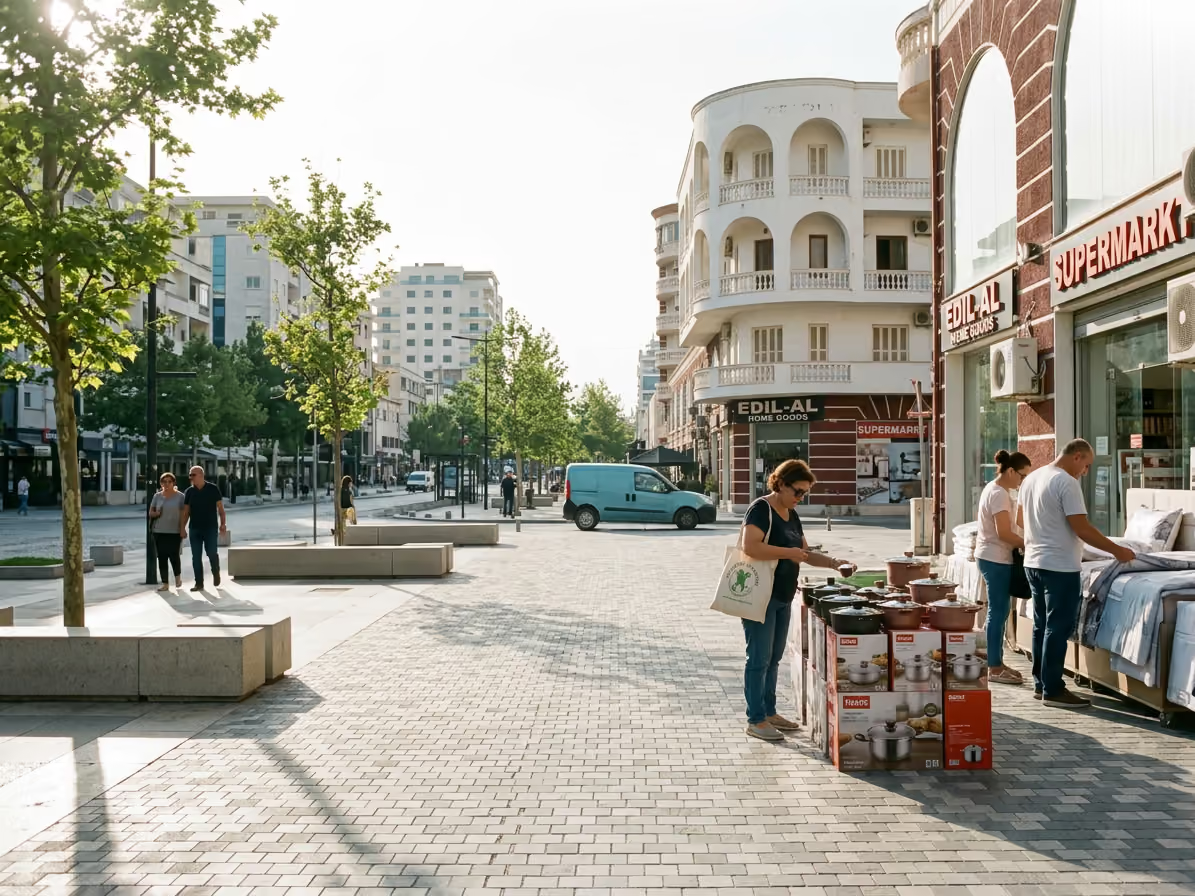
Vlorë is full of small spending moments. Coffee near Skelë. Fruit from a stand near the old market. A taxi from Lungomare after dinner. A SIM top-up. A quick seafood lunch near the port. Sunscreen during July. A heater purchase in January.
None of these feels major. Together, they can break your budget.
Local spending tracking is where many remote workers fail. Not from lack of income. From lack of visibility.
Use one method for at least 30 days. Do not switch tools every week.
Your options include:
Cloud tools can reduce manual errors in finance workflows, according to Procurement Express. For a remote worker, the same principle applies. The fewer times you copy figures by hand, the fewer mistakes you make.
A spreadsheet can still work. It needs to be simple.
Use columns like:
Neighborhood may sound extra, but it gives useful insight. You may learn that Lungomare dinners are eating your wants budget. You may learn that groceries near your apartment cost more than a weekly shop at a larger market.
Cash disappears from memory faster than card spending. If you pay 700 ALL for lunch and 300 ALL for coffee, record it before bedtime.
Do not wait until Sunday. By then, you will remember the beach walk and forget the cash.
Keep a simple daily note:
Then move those entries into your app or sheet each evening. It should take less than five minutes.
Remote workers often blur work and personal spending. In Vlorë, the overlap is real.
Your apartment is your office. Your internet is for client calls. Your cafe coffee may be linked to work. Your coworking day may be a business cost. Your phone plan may serve both life and work.
Track work-related spending from day one. Do not decide later.
Possible work categories include:
This does not mean every item is deductible in your tax country. That is a tax question. It does mean you have clean records for your accountant.
Vlorë changes with the calendar.
In summer, beach spending rises. Friends visit. Events increase. Prices near the water can feel different. Air conditioning raises electricity use.
In winter, social spending may drop. Heating can raise bills. You may use more delivery, more home cooking, and more indoor work time. Rainy days can push you toward cafes with reliable power and Wi-Fi.
Review categories by season, not just month. A July budget should not copy a February budget.
A budget is not a punishment. It is a local operating plan.
The 50/30/20 rule is a useful starter. First Alliance Credit Union explains the rule as 50% for needs, 30% for wants, and 20% for savings or debt. Remote workers can adapt it to their income pattern and local costs.
Vlorë gives many foreign earners a chance to save more than 20%. Yet that only happens if rent, dining, travel, and transfers stay under control.
If you earn a steady salary, start here.
Needs include:
Wants include:
Savings and debt include:
A remote worker earning €3,000 per month might use this plan:
| Category | Percent | Monthly amount |
|---|---:|---:|
| Needs | 50% | €1,500 |
| Wants | 30% | €900 |
| Savings and debt | 20% | €600 |
In Vlorë, many remote workers can reduce needs below 50% if they secure a fair long-term rental. That does not mean the extra should vanish into restaurants. Send the surplus to savings, debt payoff, or travel funds with limits.
Freelancers need a stricter system. Zero-based budgeting means every unit of income receives a job until nothing is unassigned.
If you receive €2,400 one month and €4,200 the next, a fixed lifestyle can trap you. Build the budget from priorities.
A zero-based order could look like this:
This gives your essentials first claim on the money. It stops a strong month from becoming a spending spree.
Here is a practical monthly baseline for one person living in Vlorë. Use it as a planning range, not a promise.
| Item | Lower range | Higher range | Notes |
|---|---:|---:|---|
| One-bedroom rent | €300 | €600 | Higher near Lungomare or sea views |
| Utilities | €60 | €150 | Air conditioning and heating change this |
| Internet | €20 | €40 | Check building options before signing |
| Groceries | €180 | €300 | Local markets can help |
| Dining and cafes | €120 | €400 | Lungomare spending adds up |
| Local transport | €30 | €120 | Depends on taxis and car use |
| Coworking and cafes for work | €50 | €250 | Varies by routine |
| Mobile plan | €10 | €25 | Data needs matter |
| Health insurance | €40 | €150 | Depends on age and cover |
| Miscellaneous | €100 | €300 | Clothes, repairs, gifts, admin |
Many remote workers land between €900 and €1,600 per month, based on housing choice and lifestyle. A couple, a family, or anyone with a car will need a different plan.
A budget without a buffer is too fragile.
Add 10% to 15% above your expected monthly costs. This buffer covers utility swings, appliance repairs, bank fees, taxi-heavy weeks, medical visits, and price changes near summer.
If your monthly plan is €1,200, aim to hold an extra €120 to €180 in the month’s spending account. If you do not use it, move it to savings at month end.
This small habit keeps a normal surprise from becoming credit card debt.
Money management abroad is not only budgeting. Tax status, residency, invoices, insurance, and employer rules matter too.
A common mistake is assuming foreign income stays outside Albania forever. That can be wrong.
The research brief flags Albania tax residency after 183 days in a year. Tax rates and rules can change. Before you rely on any rate, check the Albanian tax authority and speak with a qualified tax adviser who understands cross-border remote work.
If you live in Vlorë for a long stretch, track entry and exit dates. Use a spreadsheet, calendar, or travel app.
Record:
This is simple admin. It matters if tax residency or permit questions arise.
Do not rely only on passport stamps. Digital records, flight bookings, bus tickets, and rental contracts can help rebuild your timeline.
Tax money is not savings. It is a future bill.
If you freelance, set aside a percentage of each payment before you spend anything. Keep it in a separate account. If your tax will be paid in your home country, hold the currency needed there. If you need Albanian tax payments, plan for that too.
A common freelancer rule is to reserve 20% to 35% of income until your accountant gives a better figure. Your real number may be lower or higher based on country, structure, deductions, social security, and treaties.
Do not copy another expat’s tax setup. Two people can sit in the same cafe near Lungomare and owe tax in different countries.
If you are employed, ask for written rules on remote work costs.
Get clarity on:
Procurement Express highlights unclear reimbursable expenses as a common remote finance problem. This is not abstract. In Vlorë, internet costs may be modest, but a poor connection can damage your workday. A €30 backup mobile plan may be worth it if your calls pay the rent.
Remote workers collect tools. Project management apps. Writing tools. VPNs. Cloud storage. Design software. AI tools. Calendars. Meeting platforms.
A single subscription may feel harmless. Ten unused subscriptions can equal a month of groceries.
Run a monthly audit. Ask three questions for each tool:
Cancel or downgrade fast. Do not leave “maybe useful later” tools running for six months.
Your laptop is not only a device. It is your workplace.
Protect the gear that protects income. This may include laptop cover, phone cover, travel insurance, health insurance, and cloud backup. Keep digital copies of receipts and serial numbers.
Power cuts and connection issues can happen in Albania. They are not daily drama for every worker, but they are real enough to plan for.
A protection kit might include:
This is cheap compared with missing client deadlines.
The romantic idea is simple. Live by the sea, earn in a strong currency, spend less, save more, and work from cafes with Adriatic views.
Parts of that are true. Vlorë can give remote workers a high quality of life at a lower cost than many Western cities. The sea is real. The promenade is real. The slower pace outside peak summer is real.
The daily reality is more mixed.
You may need cash more often than expected. Your landlord may prefer euros. Your favorite cafe may have good coffee but weak Wi-Fi at call time. Summer prices can rise near the beach. Winter can feel quiet and damp. Public admin can take patience. Tax questions can be unclear without help.
Low cost does not remove money stress if your income is unstable. A freelancer waiting for late invoices can feel pressure in Vlorë just as in Lisbon or Manchester. The difference is that lower rent may buy more time, but only if you built a buffer.
Your friends visiting in August may treat Vlorë like a holiday town. You live here. Their spending pace should not become your spending pace.
This is where your framework protects you.
June through August can push spending up. Beach days turn into paid loungers, taxi rides, seafood dinners, and late drinks. Friends arrive. Events pop up. Apartments near the water become more expensive.
If you live near Lungomare, temptation is outside your door. That is part of the appeal. It is not free.
Create a summer line item before the season starts. Set aside money for guests, beach costs, and higher electricity. If the budget is €250 for summer extras, spend it guilt-free. When it is gone, return to normal routines.
Vlorë in winter is calmer. Some seasonal places close or reduce hours. Rain and wind can change your work rhythm. Heating costs may rise. You may spend more time indoors, which can raise utility use and make loneliness more visible.
This is where community has money value. A regular meetup can replace random spending. A work session with other residents can reduce cafe hopping. Shared local tips can help you find better repair shops, fair rentals, and reliable services.
Vlore Circle exists for this resident reality. We care less about postcard moments and more about the systems that help you stay. If you need grounded local advice, Join the community.
Earning in dollars or euros can make lek prices feel small. That is dangerous.
A 300 ALL coffee here, a 1,500 ALL lunch there, a 4,000 ALL dinner on Friday, and a few taxi rides can turn into a larger monthly number than expected.
Convert mentally. Know rough exchange rates. More than that, track totals. Your budget should show the truth without shame.
A low rent apartment can become expensive if it has weak insulation, bad internet, old appliances, or a poor location for your routine.
Before signing a lease, ask:
A €350 apartment with bad Wi-Fi and high electricity may cost more in lost work time than a €450 apartment with a stable setup near Skelë or a quieter part of Uji i Ftohtë.
Your neighborhood shapes your budget. Vlorë is not one price zone.
Where you live affects rent, food spending, taxis, social life, work routine, and temptation. Choose a base that fits your money system, not only your sea view dreams.
Lungomare is attractive for a reason. You get the promenade, sea air, cafes, walking routes, and easy social plans. It works well for remote workers who like morning walks and evening meetups.
The cost risk is lifestyle drift. Restaurants, bars, gelato, paid beach setups, and guest visits can lift spending. Rent near the promenade can rise in peak season.
If you live here, set a weekly cash or card cap for cafes and dining. Treat the promenade like your neighborhood, not a holiday strip.
Uji i Ftohtë gives access to beaches, sea views, and a quieter residential feel in many pockets. Some buildings are modern. Some sit on hills where walking is less simple.
Budget for transport if you do not have a car. Taxis can add up if your daily life is in Skelë, the old town, or central Vlorë.
Before renting, test the route on foot. Walk to the nearest supermarket, bus stop, pharmacy, and cafe where you would take calls. A great balcony view does not replace daily convenience.
Skelë can be practical for longer stays. You are closer to shops, services, banks, cafes, and transport links. It may lack the full sea-view fantasy, but it can reduce taxi use and daily friction.
For many remote workers, Skelë offers a better balance between cost and function. You can walk to errands. You can reach Lungomare without building your whole budget around it.
If your workday includes errands, gym, groceries, and occasional coworking, Skelë deserves serious attention.
The old town area has charm, smaller streets, local food options, and a different rhythm than the beachfront. Rents may vary by condition. Some apartments are renovated. Others need careful inspection.
Check noise, parking, internet, humidity, and heating. Older buildings can carry hidden utility costs.
The old town can work well if you enjoy local routines and do not need beach access every day. It can reduce spending if you cook more and avoid the seafront price pattern.
Beach-area rentals can be wonderful and risky. A winter price may not hold for summer. A landlord may want the apartment back for short-term guests. Bills may change with air conditioning.
Ask for the lease terms in writing. Confirm summer months. Confirm payment currency. Confirm deposit rules.
If you plan to stay year-round, a slightly inland long-term rental can beat a beach rental that becomes unstable in June.
The framework only works if you review it. A monthly money review is where you turn data into decisions.
Set a recurring appointment with yourself. Pick the same day each month. A good choice is the first Sunday morning, before the city gets busy and before the next rent cycle begins.
Make coffee at home. Open your accounts. Open your tracker. Spend 45 minutes.
Start with income. Ask:
If you are employed, this step may be quick. If you freelance, it is the core of your system.
Late invoices deserve action. Send reminders early. Tesorio notes that automation can increase the number of accounts a collector can manage, based on its remote finance guidance. A solo freelancer does not need a large collections system, but automated invoice reminders can still save time and stress.
Next, compare planned spending with actual spending.
Look at:
Do not judge the number first. Find the pattern.
Maybe groceries were fine, but dining doubled. Maybe rent is stable, but taxis rose. Maybe transfer fees are higher than expected. Maybe coworking is unused.
One clear pattern is enough for action.
Check how much you converted. Look at fees. Look at timing.
Ask:
This is where multi-currency workers gain control. The fee you see once may be small. The repeated fee over a year can be meaningful.
Your emergency fund should be visible. It should not sit in the same card balance you use for dinner.
A remote worker in Vlorë should aim for three to six months of core expenses. Core expenses mean rent, utilities, groceries, health insurance, internet, phone, and minimum debt payments.
If your core monthly cost is €1,100, a three-month fund is €3,300. A six-month fund is €6,600.
Hold the fund in a stable and accessible form. Multi-currency savings can help if your future bills may be in EUR, ALL, or your home currency.
Money is not only restriction. Ask whether your spending matched your values.
Did your cafe spending buy focus and connection, or was it boredom? Did your weekend trip refresh you, or did it add debt? Did a cheaper apartment improve savings, or did it isolate you?
Good money management in Vlorë should support a real life. It should not turn you into a spreadsheet with a sea view.
You do not need to fix everything today. Use a 30-day plan.
The aim is to leave your first month with a working system. Not a perfect one.
Write down every account and card you use.
Include:
Then mark each account with a role. Income, rent, daily spending, tax, savings, debt, or backup.
If an account has no role, question it.
Create your spending categories before you track.
Use categories that match local life:
Add neighborhood notes if you can. Lungomare, Skelë, Uji i Ftohtë, old town, port area, and beach zones tell a story.
Run one planned transfer cycle.
Move income into your main account. Convert only the amount needed for rent and local spending. Withdraw a planned amount of cash. Pay one bill or rent transfer. Save all confirmations.
Track fees. Track time. Track any problems.
If something feels clunky, adjust now. Do not wait until rent is due.
At the end of the month, compare expected costs with real costs.
Write three notes:
Then make one change only. Maybe you lower restaurant spending. Maybe you switch ATM habits. Maybe you increase the utility buffer. Maybe you move to a better tracker.
One change per month builds a system you will keep.
Every remote worker arrives with a different income pattern. The framework should flex without breaking.
Here are three common cases in Vlorë.
Maya earns $3,000 per month from a remote marketing job. She rents a one-bedroom apartment near Skelë for €420. Her landlord wants euros. Her groceries, cafes, and local transport are mostly in lek.
Her system:
Her biggest risk is lifestyle drift. Vlorë feels affordable, so she says yes to every dinner and weekend trip. Tracking keeps her honest.
Her win is savings. Your Money Vehicle reports that remote work can save workers over $4,000 per year through reduced commuting, lunches, and work clothing. If Maya directs even part of that to investments or emergency savings, Vlorë becomes a wealth-building base rather than only a cheaper place to live.
Jon earns between €1,800 and €5,000 per month as a developer. He lives near Uji i Ftohtë. His rent is €500. Some clients pay late.
His system:
Jon uses zero-based budgeting. In a €5,000 month, he does not upgrade his lifestyle at once. He fills the buffer, pays annual tools, and sets aside money for lower months.
His biggest risk is treating a high-income month as normal. His system stops that.
Sara manages a small team with contractors in Albania and abroad. She spends part of the year in Vlorë.
Her system:
Wise’s remote team guidance points to international payment tools and cards as ways to manage distributed spending. Procurement Express points to approval workflows, policy clarity, and audit habits for remote teams.
Sara’s biggest risk is blurred spending. Team dinners, travel, software, and personal costs can mix fast in a city where work and life overlap. Her solution is strict categories and card limits.
Money mistakes abroad often come from isolation. People are embarrassed to ask. They do not want to admit they overpaid rent, misunderstood a fee, or ignored tax status.
Ask earlier.
A good local network can help with practical questions:
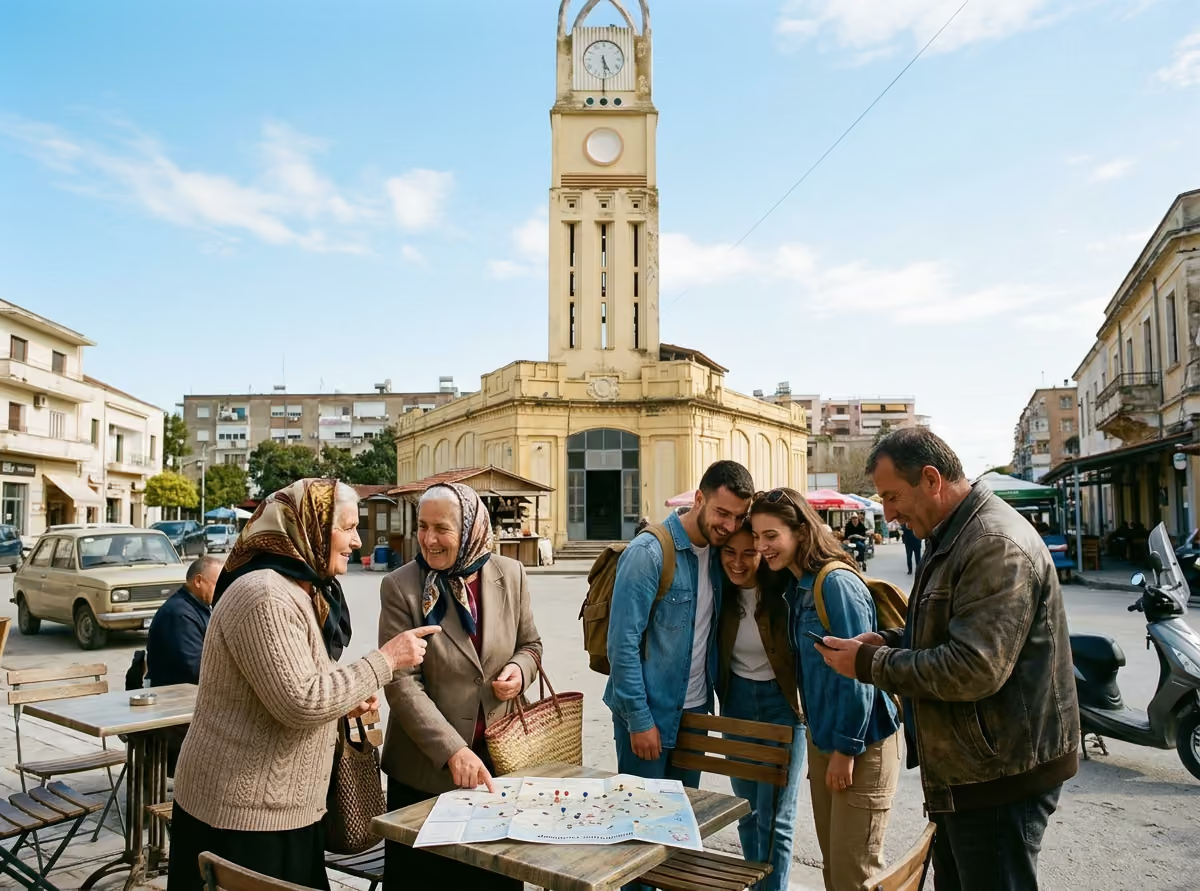
Vlore Circle is built for this kind of resident knowledge. We connect expats, remote workers, retirees, and locals who are building real lives in Vlorë. Not quick checklists. Not tourist fluff.
One of the best tips from our community is simple. Do your first apartment budget from the street up, not from the rent down.
Stand outside the building at the time you will work. Check mobile signal. Walk to the nearest grocery store. Time the walk to Lungomare or Skelë. Ask about summer rent. Ask about the last electricity bill. Then decide whether the rent is truly cheap.
The founder’s personal rule is to keep three separate balances at all times in Vlorë. One for rent in euros, one for weekly life in lek, and one emergency reserve that is never touched for social plans.
That one habit prevents most money stress.
For official tax and public finance information, use Albania’s tax authority website. For transfer tools, read the current Wise fee and account pages for your country. For cost planning, use crowd-sourced tools like Numbeo only as a rough guide, then confirm with residents on the ground.
For community support, local meetups can save money by reducing guesswork. A ten-minute conversation with someone who lives near your target building can beat hours of scrolling.
Join the community if you want practical Vlorë guidance from people who deal with these choices year-round.
Vlorë can be a strong base for remote work, but only if your money has structure before the city starts making decisions for you.
Follow Vlore Circle for fresh guides, local updates, and community notes around life in Vlorë. It is the easiest way to stay close to what we are building.

Be part of a growing community built around connection, local life, and a better experience of Vlorë.
join the circle