Representative image

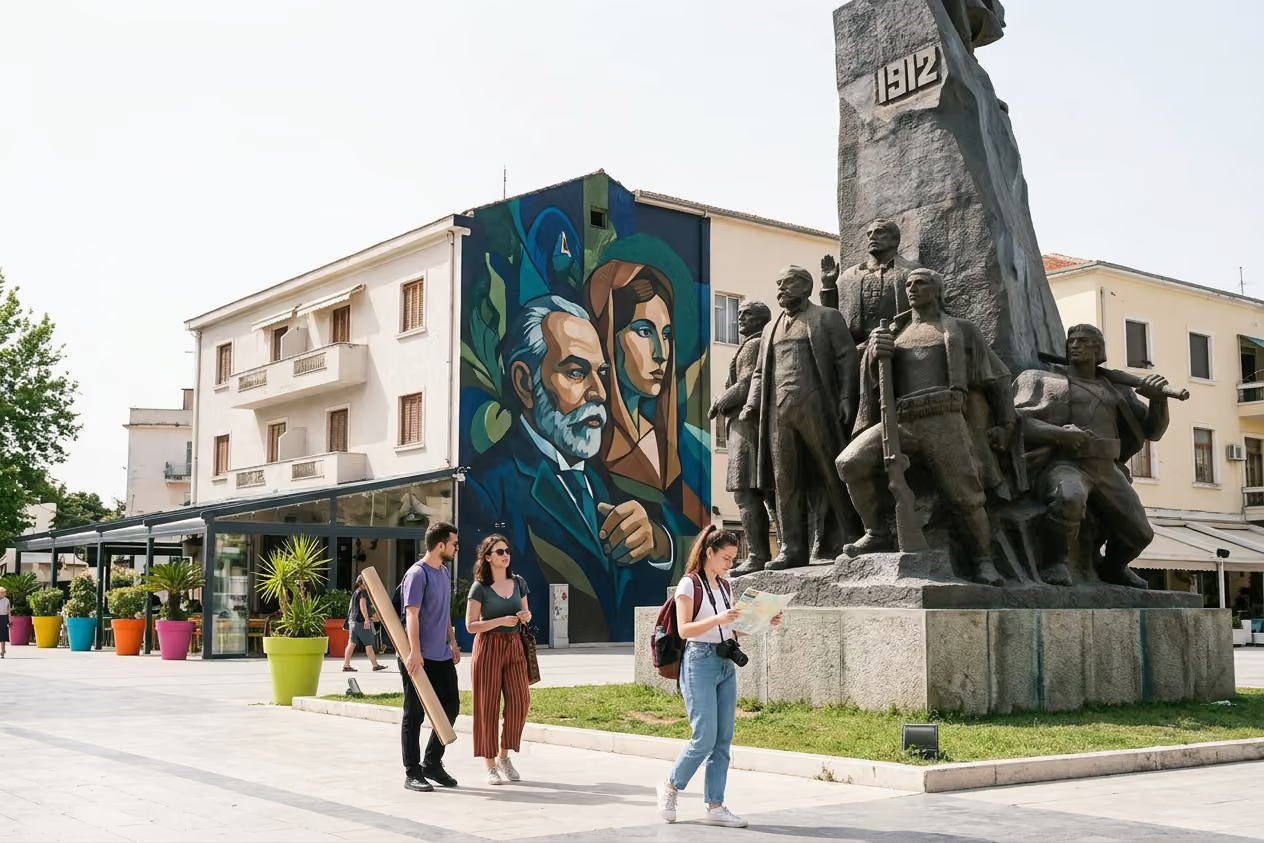
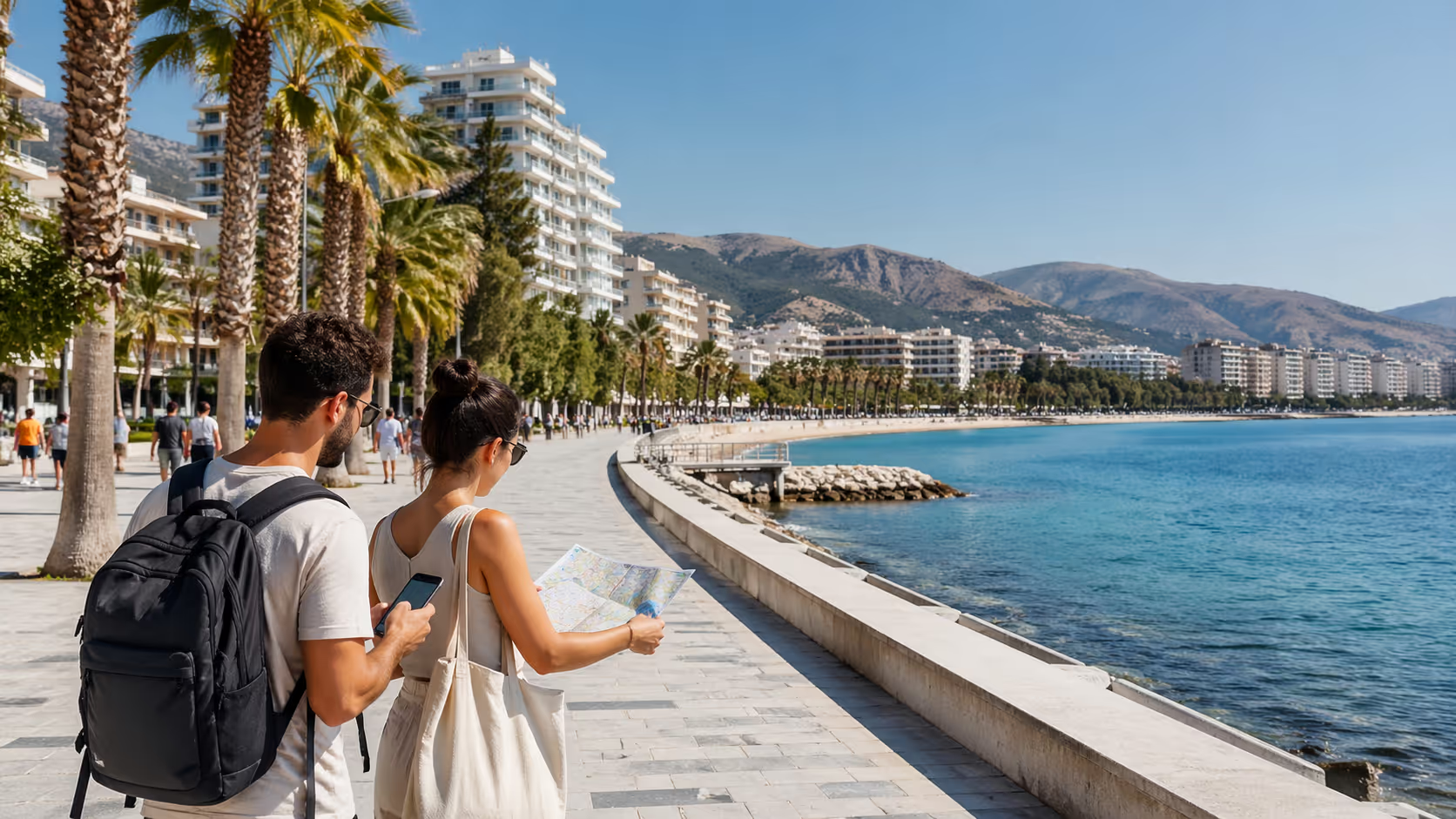
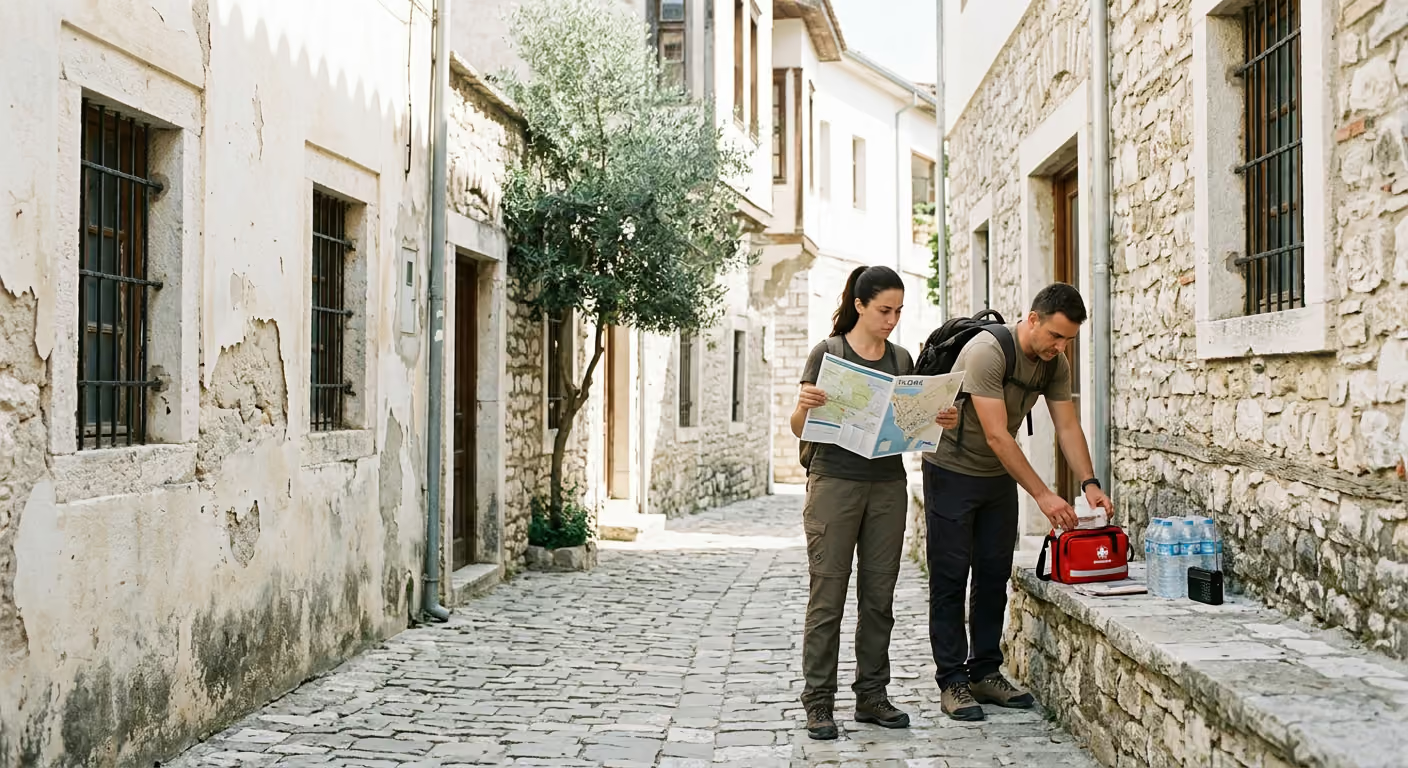
A clear map of local murals and public street art reveals the modern creative side of Vlorë beyond its beaches and historic sites.





Vlorë is not the easiest Albanian city for street art hunting, and that is part of the point. Tirana has the bigger mural reputation, but Vlorë gives you a more local, slower, sea worn version of the scene.
The best way to see street art in Vlorë is not to chase one famous wall. Use the city as a loose map, with the Old Town, the port edge, the Lungomare, and Uji i Ftohtë as your main zones.
Vlorë has a small but growing street art and mural scene, with the strongest public pieces found around the municipal core, older city streets, port side walls, and the Lungomare beach corridor. Use Street Art Cities for live pins, cross check with Bashkia Vlorë updates, then walk the route in daylight with time for side streets.
Vlorë is often sold through sea views, Independence history, and summer nightlife. That view is not wrong, but it misses a newer layer of the city. On older concrete walls, public buildings, and beachside surfaces, Vlorë is slowly showing a more modern creative side.
This matters more here than in a city where public art is already part of the brand. Vlorë is still changing fast. Apartment blocks are rising near the coast, older streets are being repaired, and the promenade has become a daily meeting place for locals, retirees, families, and remote workers.
Street art sits right inside that change. It turns blank walls into public talking points. It gives residents something to point to beyond the beach. It lets newcomers read local pride, youth culture, migration stories, and sea life without entering a gallery.
There is a useful difference between street art and murals. Street art often means smaller, rougher, and short lived work like tags, stencils, paste ups, and graffiti. Murals are usually bigger, legal, and planned with a building owner, a festival, or the municipality.
In Vlorë, murals are easier to track than raw graffiti. The city has had municipal art activity through the STAR StreetART project, which Bashkia Vlorë presents as a local StreetART initiative. That matters, since public support can turn a wall from a quick mark into a lasting city feature.
The scene is still young compared with Tirana. Vagabundler has mapped many street art spots in Albania, with Tirana as the clearest national reference point. Vlorë appears in the wider Albanian street art record, but it does not have the same dense mural map that Tirana fans may expect.
Street Art Cities gives Vlorë its own city profile. That is a useful sign that the city is present in the global street art archive. It also shows the main problem for visitors, since pins can change, art can fade, and not every wall has a known artist.
Salt air is part of the story. Walls near the promenade and beach areas face sun, sea wind, rain, and repainting. A mural in Uji i Ftohtë or along the Lungomare can age faster than a protected piece in an inland courtyard.
That makes the tour feel alive. The wall you photograph this spring may look softer by autumn. A tag may cover a detail, or a business may repaint a facade before the next summer season.
For expats and remote workers, the value is practical too. Following murals gives you a reason to learn the city on foot. You start to connect the Independence Museum area with the port, the Old Town, the Lungomare, and the beach road in a way a taxi ride never teaches you.
For retirees, the route can be gentle if planned well. Flat areas near the promenade work best. Hillier side streets near older quarters need better shoes and more patience.
For locals, murals can be a source of pride or debate. Some people love the color on tired concrete. Others see graffiti as mess, mainly when it appears on private walls or public monuments.
Both views matter. A good mural tour in Vlorë should not treat the city as a free outdoor backdrop. It should respect homes, shops, schools, memorials, and the people who live beside the wall.
Do not rely on a printed poster map for this tour. Decorative Vlorë maps from shops such as Hebstreit, Etsy sellers, or Mapmory can look good on a wall, but they are not field tools. They do not give live art pins, artist updates, access notes, or recent repainting changes.
Start with Street Art Cities. Search for Vlorë, open the city profile, and save any visible pins before you leave Wi Fi. This is the closest thing to a live street art map for the city.
Then check Bashkia Vlorë pages for STAR StreetART updates. Municipal pages can help you understand if a mural is tied to a local project, a public event, or a partner program. They may not offer a perfect walking map, but they give better context than random reposts.
Use Vagabundler for wider Albanian context. Its Albania street art map and Tirana coverage show how Albanian urban art is usually documented. You can use that model in Vlorë, even when Vlorë pins are fewer.
The strongest self guided method is the spot, archive, tour method. Find a wall, record the location, note the style, then connect it to a route. This keeps the walk grounded in real places, not vague internet promises.
Here is a simple field workflow.
Keep your map honest. If you do not know the artist, say so. If the work appears unsigned, do not attach a famous name just to make the post feel stronger.
This matters in Vlorë, where the scene is still being archived. A wrong artist credit can travel fast through Instagram, expat groups, and travel blogs. It is better to write “unsigned mural near the port edge” than to guess.
A good map should include more than art pins. Add shade, cafes, crossings, stairs, and busier road sections. Vlorë can be easy near the Lungomare, then awkward a few streets inland.
For offline use, download a city map before you start. Mobile signal is usually workable in central Vlorë, but alleys and low battery can ruin a slow art walk. Keep screenshots of key pins.
If you are new in town, start with the easy zone. Walk from the Independence Museum area toward the port side, then continue toward the promenade. This gives you history, street texture, harbor edges, and beach life in one route.
The Old Town needs a slower pace. It is better for details, doorways, textures, and smaller marks. You may not find huge walls on every corner, but you will understand how older Vlorë meets new public art.
The Lungomare is better for casual viewing. It has open space, light, cafes, sea backdrops, and a safer feel for people who do not want to wander alone. It can be crowded in July and August.
Uji i Ftohtë works best near sunset or early morning. The sea light can be beautiful, but glare can wash out color during midday. Look for painted walls near beach access points, retaining walls, and side streets off the main road.
The port edge can be interesting, but use common sense. Do not enter restricted areas. Do not photograph security gates, port operations, or workers at close range without permission.
Your map should stay flexible. If a street feels empty or badly lit, skip it. Vlorë’s art is not worth a risky detour.
A good Vlorë street art route works best as a half day walk with breaks. You are not trying to finish a museum checklist. You are reading the city through walls, corners, and public surfaces.
Start near the Independence Museum area. This part of Vlorë gives the route a local frame. The city is closely tied to Albanian independence, and murals near civic areas often lean into national identity, flags, history, or public pride.
From there, move toward Sheshi i Flamurit and the municipal core. This is where public art projects and civic walls are most likely to appear. The STAR StreetART project linked by Bashkia Vlorë makes this zone worth checking before you head to the beach side.
Look for larger walls on public buildings, schools, sports areas, and wide side streets. These are the surfaces most likely to host planned murals. A commissioned wall often has a cleaner composition than a quick tag.
Next, curve toward the Old Town. This part of the walk is less about giant murals and more about small discoveries. Painted shutters, rough marks, repaired walls, and newer pieces can sit close to old stone and plaster.
Move slowly here. The best details may be around corners, beside small shops, or on side walls facing a narrow lane. Ask before taking close photos of people’s homes or doorways.
After the Old Town, turn toward the harbor side. This is where Vlorë shifts from civic identity to working city. Industrial walls, blank surfaces, and transport edges often attract bolder marks.
Stay on public pavements and visible streets. Do not enter port land, construction sites, or fenced spaces. The best photo is never worth a conversation with security.
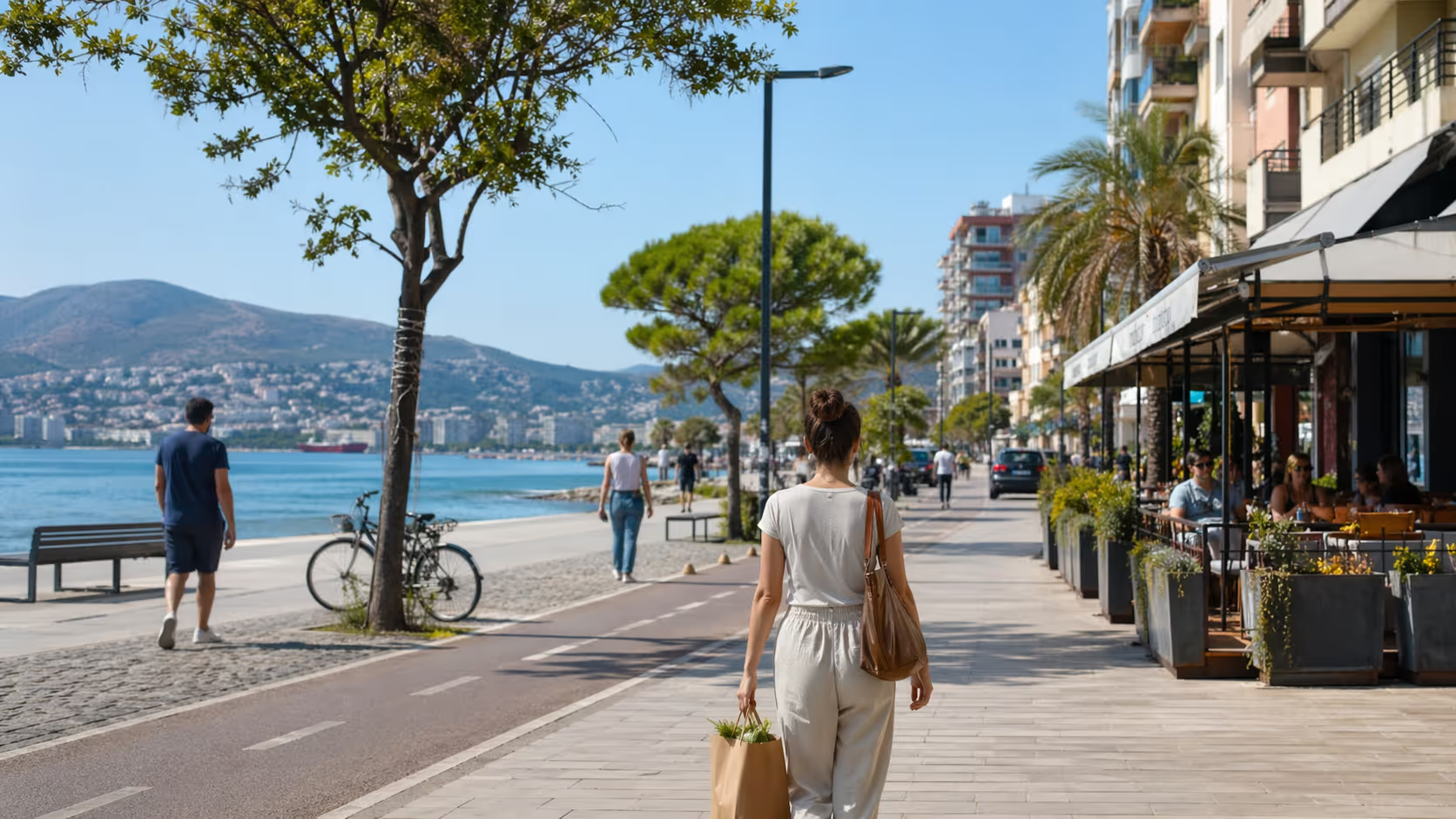
From the harbor edge, continue toward the Lungomare. The mood changes again. The promenade opens the city to the sea, with walkers, cyclists, cafes, evening xhiro, and sunset crowds.
This is the most accessible section for many newcomers. It is flat, social, and easy to combine with coffee or dinner. It is a good place to photograph sea themed murals, abstract walls, or painted surfaces near beach businesses.
Finish in Uji i Ftohtë if you still have energy. This area gives you beach access, evening light, and a calmer end outside the city core. It is better by bus or taxi if the full walk feels too long.
A full route can take three to five hours with photo stops. A shorter version can take ninety minutes from the Independence Museum area to the Lungomare. A very easy version can focus only on the promenade and nearby side streets.
Begin at the Independence Museum in the morning. Walk nearby civic streets and scan public walls, school walls, and side streets. Save every good wall in your map app.
Continue toward Sheshi i Flamurit. This anchor keeps you in the local core rather than drifting too quickly toward tourist zones. Watch for national symbols, flag colors, and large public surfaces.
Cut into the Old Town lanes before lunch. Look for smaller marks, painted doors, and layers of repair on older facades. Take detail shots here rather than only wide wall shots.
Pause for coffee near the center. Use the break to sort photos, check whether any signatures are visible, and compare pins with Street Art Cities. Delete duplicate shots now so your phone does not turn into a mess.
Move toward the port side after the harshest midday light passes. Focus on walls that face open roads, not restricted areas. Use a wider frame to show how the art sits beside the working city.
End on the Lungomare near sunset. This gives you better color, softer shadows, and the sea as a background. If you continue to Uji i Ftohtë, take a taxi back after dark.
Rain changes the route. Colors can look richer, but pavements get slippery and the sky goes flat. Keep to central streets and the promenade.
Start near the municipal core, then move to covered cafe stops between walls. Use reflections in puddles if the ground is safe. Avoid steep lanes and unlit side streets.
Do not lean bags or camera gear against wet walls. Paint, salt, dust, and rain can stain clothes fast. Bring a small cloth for your lens.
Summer needs a different plan. Start early, before beach traffic fills the streets. Midday heat makes wall hunting tiring, mainly away from shade.
Photograph large walls before parked cars block them. Many businesses open later, so early morning gives cleaner frames. Keep water with you from the first stop.
Use the evening for the Lungomare only. The promenade is full of people at sunset, which can add life to wide shots. For clean mural photos, arrive before the main evening walk begins.
Vlorë’s public art is easier to enjoy when you know what you are looking at. Not every painted wall is the same. The city mixes planned murals, informal graffiti, decorative business walls, and event based public art.
The first group is the municipal or project mural. These are usually large, public facing, and easier to read from across the street. They may show identity, nature, folklore, youth themes, or civic pride.
Bashkia Vlorë’s STAR StreetART page is the key local reference for this side of the scene. It points to municipal interest in public wall art and related activity. That does not give every pin, but it confirms the city has treated street art as more than random decoration.
The second group is coastal and nature inspired work. These pieces may show sea creatures, waves, birds, boats, or abstract water forms. They fit Vlorë’s daily life, where the sea is not a postcard but a working and social space.
The third group is identity and history based art. In Vlorë, this may connect to flags, independence themes, national colors, or public memory. Be careful here, since some walls may sit close to monuments or civic sites.
The fourth group is informal graffiti. This can include names, tags, slogans, quick characters, and layered marks. It is often more temporary, and it may be painted over without notice.
The fifth group is commercial wall painting. Cafes, beach bars, hostels, and shops may use murals to create a photo corner. These can still be fun, but they are not always part of the street art scene.
Artist credit is the hardest part. Some murals carry a signature or social handle. Others do not. Some may be made by teams or through projects rather than one named artist.
When you photograph a wall, look along the bottom corners. Artists often sign low, near the edge. Check side borders, utility boxes, and small painted tags.
If a signature is clear, photograph it. If it is not clear, do not guess. You can post the wall location and ask local art groups or residents if they know the creator.
Avoid the common trap of importing Tirana names into Vlorë. Albania has national street art patterns, and some artists work across cities. Still, a wall in Vlorë should not be credited to a known artist without proof.
Street Art Cities can help with credits when a pin is complete. Its model works well since it links cities, locations, and artists where known. For Vlorë, use it as a starting point rather than a final authority for every wall.
Vagabundler is useful for style comparison. Its Albania mapping shows how pieces are documented through photos, locations, and artist notes. You can borrow that discipline for your own Vlorë field notes.
Alamy’s Vlorë street image archive shows another useful clue. There are many street level images from the city, including urban walls and coastal scenes. Stock photos are not a formal art map, but they help confirm the visual character of public space in Vlorë.
Use plain language. Write what you see. Mention location, color, subject, surface, and condition.
A good note might say, “Large sea themed mural on a wall near the Lungomare, with blue and white forms, some fading near the lower edge.” That is more useful than “famous masterpiece near the beach.”
Mention access. Is it on a main road, a side lane, a school wall, a cafe wall, or a retaining wall? Can a person in a wheelchair reach the viewing point?
Mention the light. A west facing wall may look best in the morning if sunset glare hits it straight on. A shaded alley may need a brighter part of the day.
Mention change. If paint is flaking, if a car blocks the lower half, or if a business sign cuts the composition, write that down. Future walkers will thank you.
Street art photography in Vlorë has one big challenge, light. The same coastal sun that makes the city feel open can flatten paint, create glare, and throw harsh shadows across a wall.
Shoot early morning for clean color. This is best near the Lungomare, the port edge, and beach roads. You will get fewer parked cars, fewer people in frame, and softer contrast.
Late afternoon is good for atmosphere. Sunset near the Adriatic can make a wide scene feel warm, mainly if the wall faces the right direction. Watch for glare from white pavement, glass, and the sea.
Midday is the hardest time. Colors can look faded, and shadows can cut a mural in half. If midday is your only time, focus on shaded walls, close details, textures, and signatures.
Use a wide angle for large murals. A phone’s wide lens can work well if you keep the camera level. Step back until the wall edges look straight, then crop later.
For narrow streets in the Old Town, avoid extreme wide settings if faces or buildings warp badly. Take several overlapping shots instead. You can stitch them later, or use them as a record.
Get a full wall shot first. Then take details. Start with the whole piece, then move closer for brushwork, cracks, tags, signatures, and small symbols.
Include context in some images. A mural beside a palm, an old balcony, a beach road, or a port wall tells a better Vlorë story than a tight crop alone. Context helps people understand where the wall lives.
Ask before photographing people. If a resident is sitting beside a doorway, or a shop worker stands in front of a mural, speak first. A smile and a simple “photo?” goes a long way.
Avoid photographing children without clear permission from a parent or guardian. This is extra true near schools, playgrounds, and sports areas. A mural is public, but children’s privacy still matters.
Do not block pavements. Vlorë pavements can be uneven, narrow, or shared with parked cars. If you set up a tripod, keep it out of the walking line.
Drone use needs care. Do not fly over crowds on the Lungomare. Do not fly near port areas, police, military, or restricted sites. Check current Albanian drone rules before you launch.
For phone users, turn on grid lines. Keep vertical lines straight. Tap the brightest part of the wall to control exposure if the sun is strong.
Use HDR with care. It can help with bright sky and shaded walls, but it can make colors look fake. Keep edits honest if your goal is documentation.
For night shots, use a small tripod or lean against a stable surface. Many Vlorë murals are not lit like gallery works. Low light can look moody, but it can blur fast.
Respect private property. Do not climb gates, lean into courtyards, or move cafe furniture for a better angle. Public art does not give you a right to enter private space.
If you post online, credit the artist when you know the name. If the artist is unknown, credit the location and say that the artist is unconfirmed. Tagging the city or map platform is fine, but do not invent a creator.
For bright promenade walls, lower exposure slightly. This keeps whites from burning out. Tap and hold on your phone screen to lock focus.
For shaded Old Town lanes, raise exposure only a little. Too much brightness can add noise and make old plaster look flat. Use a steady hand.
For sunset walls near Uji i Ftohtë, shoot both with and without people. A passerby can give scale. A clean frame helps document the art.
For faded murals, move closer. Texture can be more interesting than color. Cracks, salt marks, and repainting lines show how the city ages.
A street art day in Vlorë can be nearly free. Your main costs are coffee, water, local transport, snacks, and maybe a taxi back from Uji i Ftohtë. That makes it one of the best low budget ways to learn the city.
Expect to spend very little if you walk the central route. A coffee stop, bottled water, and a byrek or sandwich can carry you through the route. Prices change by season and location, with beach front cafes usually higher than inland bakeries.
Use Albanian lek for small purchases. Some central places accept cards, but small shops and kiosks may prefer cash. Keep coins and small notes for water, bus rides, and quick snacks.
Comfort matters more than gear. Wear shoes that can handle broken pavement, polished promenade surfaces, and dusty side streets. Sandals can work on the Lungomare, but they are poor for side lanes.
Bring water from the start in summer. Shade is not constant between the center and the promenade. Heat can turn a relaxed wall hunt into a chore by noon.
Public buses and taxis can shorten the route. If you stay near the Lungomare, take a taxi to the Independence Museum area, then walk back toward the sea. If you stay in the center, walk outward and take a taxi back from Uji i Ftohtë.
Do not assume every route is wheelchair friendly. The Lungomare is the easiest area, with wider space and better surfaces. Older lanes, curbs, parked cars, and uneven pavements can make central side streets harder.
Parents with strollers should use the promenade first. Then add small central loops only if the pavements look manageable. A full Old Town and port route can be tiring with a stroller.
Solo walkers should start in daylight. Central Vlorë and the promenade are social, but quiet side streets can feel empty outside peak hours. Share your route with a friend if you plan to hunt walls in less familiar areas.
For remote workers, this route can fit into a workday. Do one zone before lunch, work from a cafe, then finish with the Lungomare at sunset. This is often better than trying to cover the whole city in one sweep.
For retirees, split the tour into two mornings. Day one can cover the civic core and Old Town. Day two can cover the Lungomare and Uji i Ftohtë.
For photographers, the lowest cost upgrade is time. Visit the same wall twice in different light. You will learn more than you would from buying extra gear.
Coffee in a simple local cafe may be one of your smallest costs. Beach front places can charge more, mainly in summer. Check the menu before sitting if budget matters.
A bottle of water from a market is cheaper than ordering drinks on the promenade. Carry it in your bag. Refill where possible if you know the water source is safe for you.
A short taxi ride can save a long tired walk. Agree on the price or use a trusted taxi contact before you get in. Ask locals or your building host for current norms.
A printed decorative map is optional. It can make a nice apartment piece, but it will not replace Street Art Cities or your own saved pins. Treat it as decor, not a field guide.
The romantic idea is simple. You imagine wandering Vlorë with a coffee, finding bright murals on every corner, then ending at sunset with perfect photos. Some days do feel close to that.
The daily reality is rougher and more interesting. Vlorë’s street art is scattered. Some walls are faded, blocked by cars, tagged over, or hard to frame.
This is not Tirana 2.0. Tirana has had more visible mural energy, festival activity, and mapping density. Vlorë is smaller, quieter, and more uneven.
That does not make it worse. It makes it a different kind of city walk. You are not moving through a polished outdoor gallery, you are watching a coastal city test new public art habits.
Some pieces may be municipal and clean. Others may be raw marks on tired concrete. Some may have no artist credit at all.
Summer can make the tour harder. Crowds, parked cars, heat, and beach traffic can block walls. The city looks alive, but clean photography gets harder.
Winter has its own tradeoffs. Streets are calmer, and locals reclaim the promenade. Rain, wind, and grey light can make murals look flatter.
Salt air is real. Paint near the sea can fade, peel, and stain. A wall that looked sharp in an online image may look worn when you arrive.
Maps can be outdated. Street Art Cities is useful, but user generated platforms need updates. Bashkia pages can confirm projects, yet they may not track every wall after completion.
Decorative map posters can confuse newcomers. They show Vlorë as a stylish shape, not a live street art route. Do not use them as your only guide.
Some alleys will feel too private. If a mural sits beside a home, treat it like a neighborhood space. Do not stand there for ten minutes with a large camera if residents look uncomfortable.
Graffiti can create mixed feelings. One person sees youth expression. Another sees damage. Be careful with language when talking to locals.
The best mindset is patient and practical. Plan a route, then accept that two or three strong walls may be enough. The side benefit is that you learn Vlorë street by street.
This is where the tour becomes useful for newcomers. You will learn where pavements improve, where cafes cluster, which roads are noisy, and which beach sections feel calm. The art becomes a reason to understand daily life.
For people moving to Vlorë, that is more useful than a perfect Instagram list. A mural walk teaches you how the city breathes in the morning, at lunch, and after sunset. You start to see where you might live, work, and meet people.
The best host tip from our Vlorë Circle community is simple, do not start at the beach. Start in the city core, then let the route carry you to the sea.
Many newcomers do the opposite. They walk the Lungomare first, take sunset photos, then decide Vlorë’s street art scene is small. They miss the older streets, civic walls, and rougher surfaces that give the tour more depth.
Begin near the Independence Museum or Sheshi i Flamurit. Give yourself one slow hour before you head toward the coast. Look at side walls, not only main facades.
Then move to the Old Town. This is where patience helps. A small stencil on an old wall may say more about Vlorë’s changing character than a polished beach mural.
Save the Lungomare for the end. The light is better, the walk is easier, and you have earned the sea view. If you are meeting friends, this is the natural place to finish.
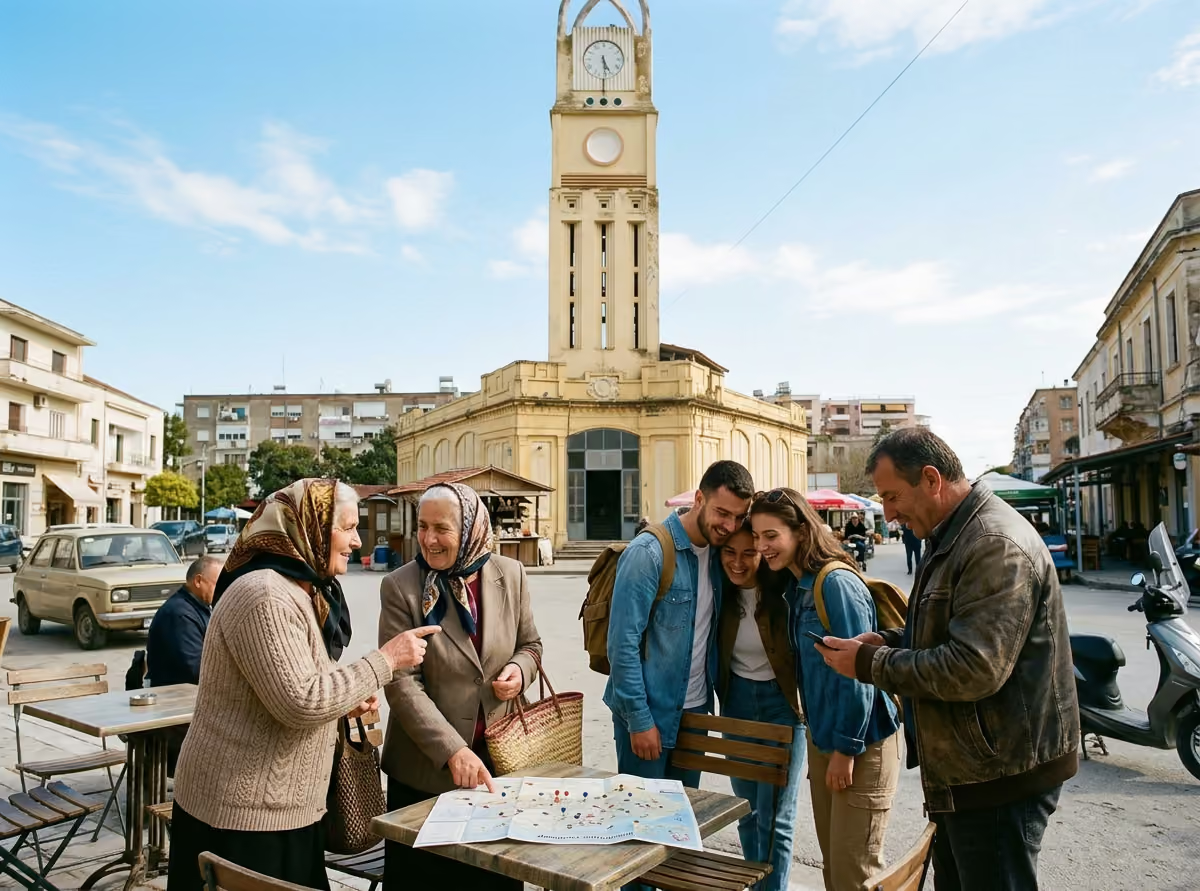
Bring one local into the route if you can. Ask a cafe owner, neighbor, or Albanian friend if they know who painted a wall. You may get a story that no app has recorded.
If you are new in Vlorë and want people to walk with, Join the community. Vlore Circle meetups are built for residents, remote workers, retirees, and locals who want real connections in the city.
A group walk changes the experience. One person spots signatures. Another knows a shortcut. Someone else remembers what the wall looked like last year.
This is the part no map can replace. Vlorë is a relationship city. The best local knowledge often comes through repeated coffee chats, not one search result.
For live street art pins, start with Street Art Cities. Its Vlorë city page is the most direct public database for the city. Check it before each walk, since listings and user updates can change.
For official local context, check Bashkia Vlorë and its STAR StreetART page. This is the best source for municipal art activity. It can help separate public projects from random street markings.
For national street art comparison, use Vagabundler. Its Albania and Tirana street art mapping gives you a stronger sense of how walls are archived. It is helpful when Vlorë feels under documented.
For visual reference, Alamy can be useful. Its Vlorë street image collection shows the city’s public surfaces, street settings, and coastal urban character. Treat it as visual evidence, not a walking guide.
For decorative city maps, Hebstreit, Etsy, and Mapmory show Vlorë as a graphic city form. These are fine for your apartment or office. They are not reliable for mural hunting.
For local questions, ask in resident groups rather than tourist only groups. People who live near a wall may know if it was painted for an event, a school, a business, or a municipal project. They may know if it was recently covered.
When you ask online, include a clear photo and location. Say, “Does anyone know the artist of this wall near the Lungomare?” Avoid vague posts that force others to guess.
If you find a damaged or offensive wall, do not try to fix it yourself. Contact the property owner or relevant local authority. Painting over someone else’s work can create more problems.
If you are organizing a group walk, keep it small. Six to ten people is easier on narrow pavements and side streets. Large groups can block residents and make private areas feel invaded.
If you want to publish a map, ask before using other people’s photos. Street art is public, but photographers and artists still deserve credit. A responsible map builds trust.
The best base depends on your pace. If you want the easiest walking and sunset finish, stay near the Lungomare. If you want older streets and civic history, stay closer to the center.
The city center works well for serious mapping. You can reach the Independence Museum area, municipal streets, Old Town edges, and port side roads without starting your day in beach traffic. This is the best base for people who want to understand Vlorë beyond summer.
The Old Town is better for slow walkers who like texture. You may not find huge murals every few minutes, but you will see layers of repair, small marks, older architecture, and street level life. Wear better shoes here.
The port edge suits photographers who like contrast. Working city surfaces, wide walls, rough textures, and sea industry can make strong frames. Stay on public streets and avoid restricted areas.
The Lungomare is the safest starter zone for most newcomers. It is social, open, and easy to pair with coffee or dinner. It is the best choice for a relaxed evening route.
Uji i Ftohtë is ideal for the final section. The area gives you sea light, beach access, and a softer end to the day. It is less practical as the only base for art hunting if you want the civic and Old Town layers too.
For remote workers, the Lungomare base is comfortable. You can work from nearby cafes, walk at sunset, then meet people after. The tradeoff is that you may stay inside the coastal bubble.
For retirees, a base near the promenade is often easier. Flat walking matters. Taxis can take you to the center for shorter art walks.
For long term residents, try rotating zones. Do one morning in the center, one evening on the Lungomare, and one weekend walk in the Old Town. Your map will grow slowly and feel more accurate.
A good neighborhood base turns the tour from a one time activity into a city habit. You notice new paint, fresh tags, repairs, and seasonal changes. Over time, the walls become part of your local routine.
Vlorë’s murals are not a polished checklist, and that is what makes the route worth doing. Walk slowly, keep your map honest, and let the walls teach you the city one street at a time.
Follow Vlore Circle for fresh guides, local updates, and community notes around life in Vlorë. It is the easiest way to stay close to what we are building.

Be part of a growing community built around connection, local life, and a better experience of Vlorë.
join the circle