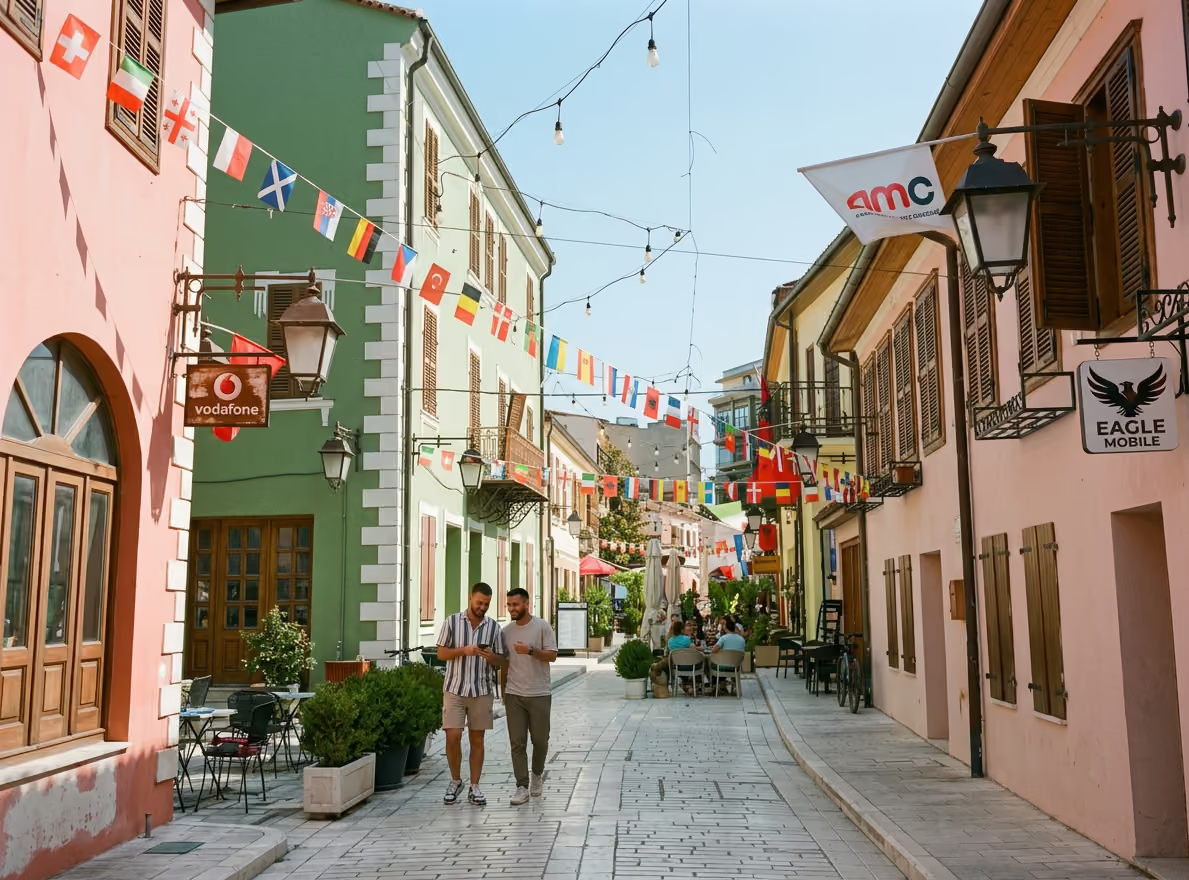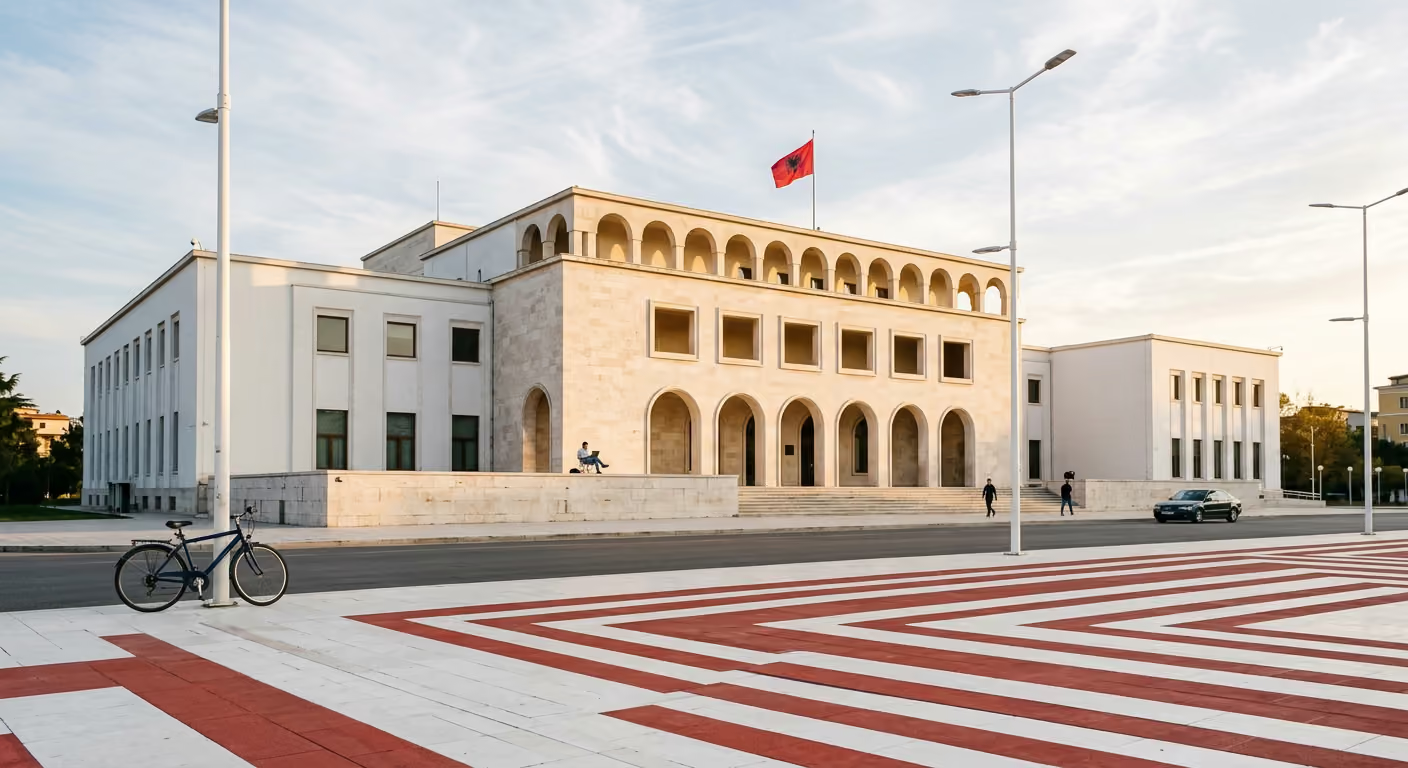
Representative image

Setting up a home office in Albania brings clear legal obligations for companies and staff regarding written agreements, safety, and equal workplace rights.





Remote work in Albania is not a casual handshake arrangement when you are an employee. It sits under the Albanian Labour Code, with Article 15 covering work from home and telework, plus wider rules on pay, hours, safety, tax, social security, visas, and disputes.
For people living in Vlorë, this matters in very real ways. A laptop job from an apartment near Lungomare may feel simple, yet your contract, visa status, tax days, and employer duties decide whether that setup is stable or risky.
Albanian law does not treat every laptop job the same way. The key split is between work from home and telework. Both are covered in Article 15 of the Labour Code, according to legal analysis by Indrit Shtupi and Edvana Tiri in the Revue Européenne du Droit Social.
Work from home means the employee performs the job at home. It does not require the use of information and communication technology. A person assembling products, processing documents, or doing written work from home may fit this model.
Telework is more relevant for most expats and remote professionals in Vlorë. It means work done from home or another agreed location through digital tools, during agreed working hours. That could mean a marketing manager working from an apartment in Skelë, a software developer based near Uji i Ftohtë, or an accountant working from a home office near the Old Town.
The International Journal of Legal and Social Order explains that telework is treated as a specific type of employment contract. It still sits inside the wider Labour Code. The normal rules on pay, leave, working time, safety, and equal treatment still apply, except where the Labour Code makes a clear exception.
That point matters. A remote employee is not a second class employee. If the role is comparable to an office role, the remote worker should receive equal treatment on core working conditions.
For Vlorë residents, the confusion often starts with words. Many people say “freelancer” when they mean remote employee. Others say “digital nomad” when they are really working under a standard employment contract for one company.
Those labels carry legal weight. A freelancer selling services to foreign clients is not in the same position as an employee with set hours, a manager, company tools, and a monthly salary. A digital nomad visa does not replace a work permit for local employment.
The safest starting point is to ask one plain question. Who controls the work?
If the company sets your hours, assigns daily tasks, provides tools, supervises output, and pays a regular salary, the relationship may look like employment. If you choose clients, set your own rates, use your own tools, and carry business risk, the relationship may look more like freelance work.
Albanian law focuses on the substance of the relationship, not only the label on the contract. A document titled “service agreement” may still create employment style duties if the daily reality looks like a job.
This is where many newcomers get exposed. They rent a flat near the promenade, join a few calls from home, then assume the legal side can wait. That can work for a short stay, but long term life needs better paperwork.
Remote work law in Albania is still young compared with some EU countries. Sources on telework rights note that financial institutions have been among the stronger adopters of telework rules. Many other sectors are still catching up, especially smaller firms that moved into remote work after pandemic period habits changed.
Albania’s EU candidate path may lead to closer alignment with European work standards over time. Eurofound’s work on the right to disconnect gives useful context. The core idea is that a worker should not have to engage with work outside agreed hours.
Albanian law does not yet have a broad standalone right to disconnect in the way some European systems discuss it. Still, regular working hour rules and Article 15 duties point in that direction. A teleworker should not become available all day and all night just since the office is now a laptop.
In Vlorë, this point is practical. Many remote workers serve foreign teams in different time zones. A person near Cold Water may start the day with Albanian coffee, then end it on late calls with New York or Toronto. Without written limits, that pleasant seaside routine can become unpaid night work.
Vlorë is not Tirana with a beach. It has its own rhythm, rental market, internet habits, social circles, and seasonal pressures. Remote work here can be excellent, but the legal structure has to match daily life.
The city attracts several groups. There are foreign freelancers staying near Lungomare for the sea and lower costs. There are retirees who still consult part time. There are Albanian professionals working for Tirana firms from Vlorë. There are foreign employees whose companies allow them to work from abroad.
Each group faces a different legal map. A US freelancer billing EU clients from an apartment near Skelë is dealing with visa, tax residency, and health insurance questions. An Albanian employee doing bank operations from home is dealing with Labour Code rights, equipment, reimbursements, and working hours. A foreign company hiring a sales lead in Vlorë may face permanent establishment risk if that person signs deals from Albania.
Vlorë’s seasonality makes the legal side more visible. Summer rentals rise near Lungomare, Uji i Ftohtë, and the beach road toward Radhimë. Some remote workers move inland during July and August to keep costs stable. If your contract names a work location, check whether a temporary move needs approval.
Internet access is another local issue. Many flats near the promenade have usable fiber or cable options, but quality varies by building. A formal telework contract should say who pays for internet and how outages are handled. If a landlord controls the router or the connection is shared, that can affect your work duty.
The city’s social pattern matters too. Remote workers can become isolated. Article 15 analysis places weight on integration and avoiding isolation. That may sound abstract, but in Vlorë it means regular contact with your team, clear meetings, and a work setup that does not leave you cut off in a rented studio all winter.
Winter is the quiet test. In July, Vlorë feels full. Cafes along Lungomare stay active late. By January, many seasonal places close or shorten hours. A remote worker without community, clear hours, and a proper contract can feel stranded.
This is one reason Vlore Circle focuses on year round life, not just summer photos. A stable remote setup needs more than Wi Fi and a sea view. It needs paperwork, a tax plan, reliable work tools, and people you can ask for local help.
The cultural part matters as well. Albania often runs on personal trust. Landlords, accountants, employers, and service providers may prefer direct conversation. That can be warm and helpful, but it should not replace written contracts when work rights are involved.
If a manager says, “we will cover your internet later,” put it in writing. If a company says, “you can work from Vlorë for a year,” ask for a location approval letter. If a client says, “this is freelance,” check whether the terms really look freelance.
For expats, there is another layer. Albanian immigration, tax, and labour rules do not all answer the same question. A visa may let you stay. It may not settle tax residency. A tax number may not give the right to work locally. A freelance contract may not protect you like an employment contract.
This is where many people mix up permissions. Living in Vlorë legally, working legally, and paying tax correctly are related but separate. You need to check all three.
Local advice can save money. Ask residents which accountants understand foreign income. Ask which internet providers work well in your building near Skelë or Uji i Ftohtë. Ask other remote workers how they handled proof of address, insurance, and bank paperwork.
Join the community if you want a practical local place to ask these questions. Legal topics feel less heavy when you can compare notes with people who have already dealt with the same forms, landlords, and contract clauses.
A good remote work contract should remove doubt before the first problem appears. Under Article 15, telework must be agreed clearly. Legal commentary on Albanian telework points to location, working hours, technology, and cost coverage as core items.
Start with the work location. If you work from a home in Vlorë, the contract should name that. If the employer allows other locations, such as a coworking space in Skelë or a temporary stay in Tirana, the contract should say so.
For telework, the use of information and communication technology should be stated. This includes laptop, software, phone, video tools, cybersecurity tools, and any company systems. Do not rely on “standard tools” as a vague phrase.
Working hours need to be written in plain terms. A schedule such as Monday to Friday, 9:00 to 17:00, gives a baseline. If the role involves flexible hours, the contract should still say how availability is measured.
Cost reimbursement should be direct. The International Journal of Legal and Social Order notes that employer duties include equipment and related costs. This can cover internet, work phone costs, software access, maintenance, and reasonable electricity tied to work use.
Equipment ownership should be listed. If the employer provides a laptop, monitor, chair, or secure phone, the contract should say who owns it, who repairs it, and when it must be returned. If the employee uses personal equipment, the contract should say whether this is allowed and what support applies.
Health and safety should not be ignored. A home desk in an apartment near the beach road is still a workplace for telework purposes. The employer has duties tied to safe work, even if the employee is not in the company office.
Data protection is another contract area. Remote workers may handle client lists, financial data, medical data, or internal files from home. The contract should cover secure storage, passwords, device access, and what happens if a device is lost.
Communication rules help avoid isolation. The research on Albanian telework mentions the employer’s role in keeping workers integrated. A weekly video meeting, monthly team day, or direct manager check in can be part of the arrangement.
The contract should cover performance measurement. Remote work should not mean unclear expectations. The worker should know what output matters, which deadlines apply, and how feedback is given.
A termination clause is needed too. Remote status should not make dismissal easier than office work. General Labour Code protections still apply to employment contracts.
For hybrid work, the contract needs extra care. If you work three days from home in Vlorë and two days from an office in Tirana, travel time, transport support, meals, and office attendance should be discussed. CEE Legal Matters has raised questions around costs and transport in remote work settings, which are common sources of disputes.
Hybrid work can create fairness problems. If office employees receive meal support, a remote employee may claim equal treatment. If transport support is removed, the employer should have a clear legal and practical reason.
Here is a useful contract checklist for Albanian telework:
If the agreement is for a foreign employer, add cross border clauses. These should cover governing law, payroll, tax withholding, social security, and whether the employer has registered in Albania. For a long term employee based in Vlorë, those points can become serious.
A written side letter can help too. Many international companies approve “work from anywhere” informally. If you plan to stay in Albania for months, ask for written approval that names Albania and states the approved dates.
For freelancers, the document should look different. A freelance service contract should mention scope, fees, invoices, payment terms, intellectual property, client communication, and tax responsibility. It should avoid employment style control if the aim is genuine independent work.
A freelancer contract should not set daily hours like a normal employee contract. It should not require constant manager approval for every task. It should not provide paid annual leave unless local legal advice has checked the model.
This line matters for digital nomads. If your visa or stay basis says you work for foreign clients, a local Albanian employer relationship may create new permit duties. A small side job for a cafe, hotel, or tour business in Vlorë can change your legal position.
Remote employees keep the core protections of the Labour Code. Remote status does not erase paid leave, working time limits, wage rules, overtime rights, anti discrimination protection, or social security duties.
The equal treatment principle is the anchor. Workers from home or through telework should not receive less favorable working conditions than comparable office workers. This point appears in both legal sources on Albanian telework.
Equal treatment covers more than salary. It can touch promotion access, training, workload, leave approval, benefits, and discipline. If office workers get training days in Tirana, remote workers should not be forgotten.
Employers have duties around equipment. They should provide and maintain the tools needed for work, or clearly approve use of personal tools. If the employee uses personal tools, cost and security terms should be written.
Costs are one of the most common flashpoints. Internet bills, electricity, mobile data, software, repairs, and office supplies can all trigger conflict. The cleanest method is a fixed monthly allowance plus reimbursement for approved larger costs.
Health and safety still matter. A remote worker with back pain from a kitchen chair may not think of this as a legal issue. Yet a long term telework setup should be safe enough for daily work.
That does not mean an employer can enter your apartment freely. Privacy still matters. Any home workstation check should be agreed, limited, and respectful. Photos, self assessment forms, or video checks may be safer than visits.
The employer should prevent isolation. This duty is easy to overlook. Remote workers need regular communication, fair access to managers, and team inclusion.
In Vlorë, isolation often appears in winter. A worker living alone near the Old Town may have limited social contact after work. If that person is cut out of team meetings, training, and office news, the remote setup can become unfair.
Working hours are another key right. Telework does not mean the day has no end. If the contract says 9:00 to 17:00, messages at 22:30 should be the exception, not the norm.
The right to disconnect is not fully codified as a separate Albanian right in the research sources. Eurofound defines it as the right not to engage in work outside working time. Albanian law points toward this through working time protections and agreed schedules.
Overtime should be controlled. A remote worker who keeps answering calls after dinner may create unpaid overtime. Employers should set approval rules, such as written manager approval before extra hours.
Paid leave still applies. A remote worker cannot be treated as if working from home is a holiday. Leave must be requested, approved, tracked, and paid under the normal rules.
Sick leave should be handled correctly. If you are ill in your Vlorë apartment, you are not automatically available for “light work” from bed. The company should follow its sick leave process.
Anti discrimination protections apply too. The Albanian Constitution, Labour Code, and social security framework protect workers against unequal treatment based on grounds such as age, gender, race, and religion, according to Remote.com’s country overview. Remote arrangements should not be used to sideline parents, older workers, disabled workers, or foreign staff.
Social security is part of the employment picture. For Albanian employment contracts, mandatory contributions apply. A foreign employer may need local registration or an employer of record style solution if the employee is based in Albania for work.
This is a key difference from pure freelancing. Employees should not be left to “sort everything out” if the employer is really controlling the job from abroad. Payroll, tax withholding, and social security can become employer obligations.
The worker has duties too. Remote rights do not remove work discipline. The employee must perform the role, protect company data, use tools properly, report problems, and follow agreed hours.
A worker should not move the workplace without telling the employer if the contract names a location. For example, leaving Vlorë for Kosovo or Greece for a month may trigger data, tax, or insurance issues for the employer. Ask before changing country.
A worker should keep records. Save receipts for internet and equipment. Keep emails approving remote work. Track overtime requests. Save screenshots of work schedules if a dispute starts.
Concrete records matter more than memory. In a dispute, “my manager told me on WhatsApp” is weaker than a signed contract and clear reimbursement policy. Still, written chat messages can help if they show a pattern.
Employers need a policy before problems start. The legal sources on telework in Albania point to rules, assessment, equipment, cost coverage, safety, and integration. A company that sends workers home with no structure is inviting disputes.
A sound employer process starts before telework begins. The company should assess the role. Can the work be done off site? Does the worker need secure systems? Are clients affected? Are there health and safety risks?
The employer should create written telework rules. These rules should say who can request telework, how approval works, what tools are used, which costs are covered, and how performance is reviewed. They should not be hidden in a casual email chain.
Consultation matters. If telework changes the daily job, workers should understand the change and agree where required. Post pandemic habits do not replace lawful contract terms.
Equipment duties are central. Employers often assume the employee can use a personal laptop. That may be risky for data, security, and cost reasons. A company device is usually cleaner.
Maintenance should be clear. If the company laptop fails in Vlorë, who pays for repair? Can the worker use a local repair shop near Skelë? Is there a courier process to Tirana? These details save lost work days.
Internet support needs local realism. A remote employee near Lungomare may have good speeds in one building and weak service in another. The employer can set minimum connection standards, but should state who pays.
Electricity and utilities are harder. Many companies use a monthly allowance to avoid calculating every kilowatt. If the work needs heavy equipment, special cooling, or high power use, the allowance should reflect that.
Cybersecurity is an employer duty and a worker duty. The company should provide secure access, password rules, VPN if needed, and data handling training. The employee should not work from open cafe Wi Fi with sensitive files unless the system is protected.
Health and safety can be handled with a practical checklist. Desk height, chair support, lighting, cables, fire risk, and screen setup all matter. The aim is not to turn a home into a corporate office. The aim is to reduce avoidable harm.
Privacy must be respected. Monitoring software, webcam checks, and location tracking can become excessive. A remote worker does not give up private life rights by working from home.
Managers need training. Remote work fails when managers treat silence as laziness or constant messages as supervision. Clear output goals work better than digital pressure.
Integration is part of the employer’s role. This means team meetings, one to one check ins, access to company news, and fair promotion paths. A worker in Vlorë should not learn about changes days after the Tirana office.
The employer should set boundaries on working time. If the company has staff across time zones, it should define core hours. It should set emergency rules. It should avoid a culture where fast replies at midnight are rewarded.
For foreign employers, Albania adds tax and corporate risk. World From Anywhere notes that a foreign employer can face permanent establishment risk if remote workers create a taxable presence. The risk rises when the worker negotiates contracts, closes sales, or represents the company in Albania.
A low level support role may carry less risk. A senior sales director in Vlorë signing Balkan region deals carries more. The company should get tax advice before assuming “one remote worker does not matter.”
Payroll is another issue. If the worker is under an Albanian contract, social security and payroll rules apply. A foreign company may use a local entity, local registration, or an employer of record provider. The right route depends on the role and duration.
Employers should not use freelance labels to dodge duties. If the worker is really an employee, misclassification can create back pay, social security, tax, and permit issues. The risk grows when the person works full time for one company.
Dispute prevention is cheaper than dispute handling. A clear policy, good contract, fair allowance, and trained manager will solve most remote work issues before the labour inspectorate or court enters the picture.
Visas are separate from employment rights. This is the point many newcomers miss. You can have a valid stay in Albania and still have questions around whether your work activity is allowed.
Albania has a digital nomad style route for non residents who work remotely for foreign clients or foreign employers. World From Anywhere describes this as aimed at remote workers, freelancers, and entrepreneurs serving clients outside Albania. Applicants usually need to show remote work activity, income, and health insurance.
The exact paperwork can change. Always check current Albanian government channels or a qualified immigration adviser before filing. Online guides are useful for planning, but official rules control the result.
Many nationalities can enter Albania visa free for short periods. The research notes that stays under 90 days may not need a visa for many people. That does not mean every kind of work is allowed.
Tourist status is not a work permit. A person answering a few emails for a foreign employer during a short visit may face less practical risk than someone living in Vlorë for months and working full time. Still, long term remote work on tourist status is a weak foundation.
A digital nomad visa is not a blank check. It is usually built for foreign sourced work. A local side contract with a Vlorë hotel, real estate agency, marketing firm, or tour company may fall outside that basis.
Foreign employees have another issue. If a foreign company sends you to Albania or approves long term work from Albania, your stay status and employment setup both need review. A work permit may be needed if the work is tied to local employment.
Freelancers need clean client records. Keep contracts, invoices, payment proof, client locations, and service descriptions. If questioned, you want to show that your income comes from foreign clients and fits your visa basis.
Income proof should be consistent. Bank statements, platform reports, invoices, and tax returns should tell the same story. If your contract says freelance design and your bank statements show wages from a local Albanian firm, expect questions.
Health insurance is often part of remote stay planning. Private insurance can be required for visa purposes. It is also practical in Vlorë, where private clinics may be easier for foreigners than public systems.
Address proof matters too. A lease in Skelë, Lungomare, Uji i Ftohtë, or the Old Town can support residency files. Ask your landlord early if they will provide the needed documents. Not every landlord is comfortable with formal paperwork.
Here is a practical file to keep as a remote foreigner in Vlorë:
Do not wait until day 80 to ask questions. If your stay is likely to pass the visa free period, start early. Albanian offices can be helpful, but timing and document format matter.
A short stay can turn into a long stay quickly in Vlorë. People arrive for September, then enjoy the warm sea, slower pace, and lower winter rent. By spring, they may have crossed tax or immigration thresholds without planning.
Digital nomads should think beyond entry permission. Can you open a bank account? Can you sign a long lease? Can you receive tax residency documents? Can you prove foreign income? These practical questions decide whether life works.
If you are unsure whether your setup counts as freelance or employment, get advice before signing. The cost of a one hour review is smaller than the cost of a visa refusal, tax dispute, or contract mess.
Tax is where remote work gets serious. Albania uses a 183 day threshold for tax residency, according to World From Anywhere’s Albania guide. If you spend 183 days or more in Albania during a tax year, you may become tax resident and face tax on global income.
Count days carefully. People often forget short trips. A month in spring, a summer return, then autumn in Vlorë can add up fast.
Tax residency is not the same as citizenship. It is not the same as immigration status. It is based on tax rules, time, and personal ties.
Global income taxation can surprise remote workers. A freelancer billing clients in Germany, the US, or the UK may still need to report income in Albania once tax resident. Relief may depend on treaties and home country rules.
Dual tax issues can arise. Your home country may still see you as tax resident under its own rules. This is common for people who keep a home, spouse, business, or company abroad.
A local accountant is helpful, but choose carefully. Ask whether they have handled foreign client income, digital nomad cases, and cross border employment. A standard small business accountant may not know these edge cases.
Employees under Albanian contracts trigger social security contributions. Remote.com notes that Albania has mandatory social security protections tied to employment. The employer and employee sides need to be handled through payroll.
Foreign employers face extra complexity. If they have a worker based in Albania, they may need to register, use an employer of record, or change the work setup. The correct answer depends on local activity, contract type, control, and duration.
Permanent establishment risk is a corporate tax issue. It can arise when a foreign company has enough business presence in Albania through people or activity. A remote worker can create risk if they negotiate contracts, sell locally, or act as a key business representative.
Not every remote worker creates permanent establishment. A developer writing code for a foreign product may be lower risk. A country manager in Vlorë closing deals with Albanian clients is much higher risk.
Companies should map the role before approval. Can the employee bind the company? Do they meet clients in Albania? Do they sign contracts? Do they manage local staff? Do they hold stock or equipment for sale?
The worker should care too. If the employer later realizes there is tax risk, they may revoke remote approval or change the contract. Clear review at the start protects your stability.
Freelancers face their own tax duties. A freelance worker may need to register activity, issue invoices, keep records, and file tax returns. The exact route depends on residency, income source, business form, and current Albanian tax rules.
Platform income can be messy. Upwork, Fiverr, direct bank transfers, PayPal style tools, and crypto payments may all need records. Keep monthly exports and invoices.
Cash work is risky. A foreigner doing local cash work in Vlorë may create immigration, tax, and labour problems. It can also weaken any digital nomad visa position.
Social security for freelancers differs from employee payroll. Do not assume an invoice contract gives access to the same benefits. Ask how health coverage, pension contributions, and local registration work for your case.
Retirees who consult part time should get advice too. Pension income, consulting fees, home country tax, and Albanian day counts can overlap. A few paid projects can change the filing picture.
The practical rule is simple. If you plan to stay in Vlorë past a season, talk to an accountant before the threshold is crossed. Do not wait until a foreign tax office or Albanian authority asks for records.
Most remote work disputes start small. The laptop breaks and no one pays. The internet bill rises. A manager sends messages late at night. A remote worker is left out of training. A benefit given to office staff is denied to the person working from home.
Under Albanian law, disputes fall under the general Labour Code framework. Article 15 becomes the reference point for home work and telework issues. The labour inspectorate and courts may be involved where informal resolution fails.
The first step is documentation. Save the contract, policy, emails, chat messages, payslips, reimbursement requests, and receipts. Write down dates and names after calls.
The second step is a written request. Keep it calm and specific. Say what the contract provides, what happened, what amount is unpaid, and what remedy you seek.
For example, a worker in Vlorë may write: “My telework agreement states that the employer covers internet costs. I have attached invoices for March, April, and May. Please confirm reimbursement in the next payroll.”
The third step is internal escalation. If the manager does not respond, contact HR or the company director. Keep a record of every step.
The fourth step is outside advice. A labour lawyer, accountant, union contact, or labour office can help assess the claim. For foreigners, choose someone who understands remote work and cross border contracts.
Cost disputes are common. A company may say internet is personal. The employee may say it is needed for work. A fixed allowance in the contract avoids this conflict.
Unequal treatment disputes are also common. A remote employee may claim they missed bonuses, training, meal support, or promotion access. The employer should show a fair reason for any difference.
Working time disputes are harder to prove. Keep call logs, chat times, task requests, and calendar records. A pattern of late night demands can support a claim that remote work exceeded agreed hours.
Health and safety disputes may involve home workstation issues. The employee should report problems early. The employer should respond with reasonable adjustments, equipment, or guidance.
Isolation claims are growing in many countries. The Albanian research notes that employers must help integrate remote workers. If a remote employee is excluded from meetings, training, and team updates, this can become more than a morale problem.
Termination disputes can be serious. If an employee is dismissed after requesting reimbursements or refusing constant after hours work, the facts should be reviewed. Remote status should not be used as a pretext for unfair treatment.
Freelancers have different dispute paths. A genuine freelancer may need to rely on contract law, invoice terms, and civil claims rather than Labour Code rights. This is why classification matters at the start.
If the freelancer was misclassified and really worked like an employee, they may seek recognition of employment style rights. That can involve detailed review of control, hours, tools, exclusivity, payment method, and management.
Foreign law clauses can complicate disputes. A contract may say UK law, German law, or US state law applies. Yet if the daily work is in Albania, local mandatory rules may still matter. Get legal advice before assuming the foreign clause decides everything.
For Vlorë residents, local practical pressure is real. You may not want to fight your employer from a rented apartment near Lungomare with bills due. Try to resolve early, in writing, before the amount grows.
A good dispute file includes:
Do not threaten legal action in the first message if the issue may be an admin mistake. Start firm and polite. Escalate when needed.
Remote work is built on trust, but disputes are solved with proof. That is the reality.
The romantic version is easy to sell. Wake up near the Adriatic, drink coffee by Lungomare, answer emails with a sea view, then swim after work. Some days in Vlorë really do look like that.
The daily version is more mixed. Your landlord may not understand why you need a stable router. A summer power cut may interrupt a client call. A foreign employer may forget you are in a different legal system. A visa deadline may arrive faster than expected.
Remote work in Albania can offer a good life, but it rewards organized people. You need a contract folder, a tax plan, a permit plan, and a backup internet option. You need to know when your workday ends.
The biggest mistake is treating Albania as a legal blank space. It is not. The Labour Code has rules. Tax residency has thresholds. Social security applies to employment. Immigration status matters.
The second mistake is copying advice from tourists. A person who spent three weeks in Himarë answering emails is not the same as a person living in Vlorë for a year. Long stay residents need stronger foundations.
The third mistake is assuming cheap living means low risk. A lower rent outside summer does not cancel unpaid social security, tax filings, or a bad contract. Professional stability still needs formal structure.
The fourth mistake is isolation. Many remote workers arrive in Vlorë knowing no one. They work from home, order food, scroll online, and slowly lose local connection. Legal stability and social stability go together.
A worker with community hears practical tips early. Which notary is used to foreign documents. Which area has fewer winter closures. Which accountant has handled foreign income. Which mobile provider works better near Radhimë.
The host tip from our circle is this: set up your “boring folder” before you set up your beach routine. Put your contract, lease, insurance, visa papers, tax notes, invoices, and equipment receipts in one cloud folder and one offline copy. When a problem appears, you will thank yourself.
Another local tip is to test your home office before signing a long lease. Visit the flat during working hours. Run a video call. Check mobile signal inside the room where you will work. Ask who controls the router.
If you work from cafes, be honest about limits. Many Lungomare cafes are fine for email and light calls in shoulder season. They are not a full legal workplace, and they may not suit confidential work.
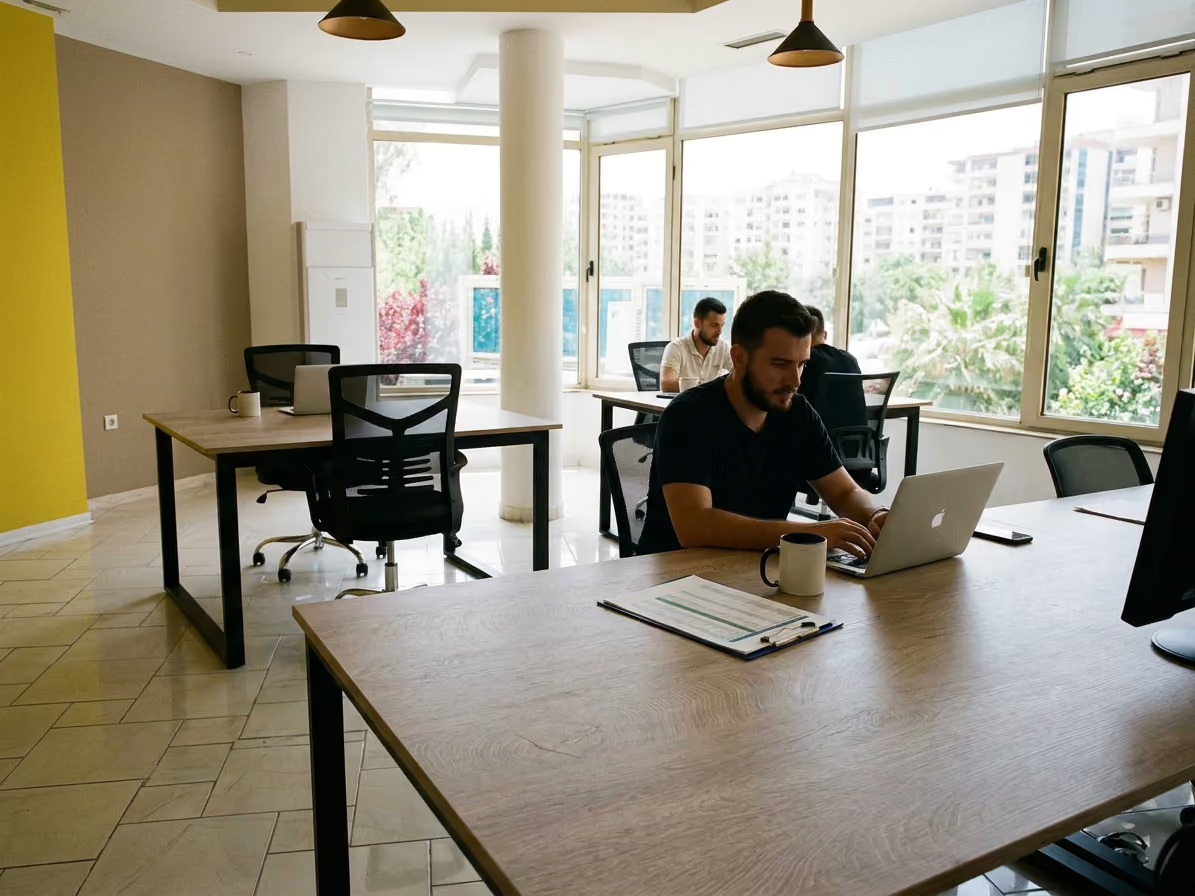
Coworking options can help, but check noise, chair quality, meeting rooms, and backup power. A pretty room is not enough for a full time job. Your back, clients, and contract need better.
The best remote workers in Vlorë build a small local system. They know their accountant, landlord, internet provider, doctor, and two or three other remote workers. They know where to print documents and where to get a quick SIM card.
This is the difference between staying and drifting. Vlorë can be warm and generous, but it will not manage your paperwork for you. A stable life here comes from mixing local relationships with clear legal habits.
Start with your work status. Are you an employee, freelancer, company owner, contractor, retiree consultant, or job seeker? Write it down in one sentence.
Next, match the status to the right documents. An employee needs an employment contract or remote work addendum. A freelancer needs service contracts and invoices. A company owner needs corporate and tax records.
Check your stay permission. How long can you remain in Albania? Does your nationality have visa free entry? Do you need a digital nomad visa, residence permit, work permit, or other route?
Track your days from day one. Use a spreadsheet or travel app. Count every day in Albania, including arrival and departure days if tax advice tells you to.
Review the 183 day tax threshold early. If you may cross it, speak with an accountant before it happens. Bring foreign tax records and client contracts to the meeting.
Ask your employer for written approval. The approval should name Albania. It should state dates, work location, payroll approach, equipment, and who covers costs.
If the employer refuses written approval, treat that as a warning. A verbal “no problem” may not protect you if HR, tax, or security teams later object.
Set up a compliant work location. For an apartment in Skelë or Uji i Ftohtë, confirm internet options before paying deposit. Ask for permission to install a better connection if needed.
Create a backup plan. Keep mobile data ready. Know a quiet cafe or coworking room for emergencies. Have a power bank for short outages.
Clarify cost coverage. If you are an employee, ask about laptop, monitor, chair, internet, phone, software, repairs, and electricity allowance. Get the answer in writing.
Clarify working hours. If your team is in a different time zone, define core overlap hours. Agree how overtime is approved.
Protect data. Use secure Wi Fi, password managers, device locks, and company approved tools. Avoid client calls in loud cafes on the promenade if confidential names or figures may be heard.
Plan health coverage. Check insurance terms for Albania. Know where you would go for urgent care in Vlorë.
Build local support. Meet other remote workers and residents before you need help. Join the community if you want grounded advice from people living here year round.
Review the setup every three months. Remote work arrangements change. A short stay becomes long stay. A freelance client becomes full time. A simple tax position becomes cross border.
When your life changes, update the paperwork. That one habit prevents many expensive problems.
For a short stay, many people answer emails for foreign work, but tourist status is not a work permit. If you plan to live in Vlorë and work full time, check visa, residence, tax, and work authorization rules before the visa free period ends.
If you are an employee under a telework arrangement, employer cost duties can include tools and work related expenses. Put the internet allowance or reimbursement method in the contract, so there is no dispute later.
No. A visa or residence route deals with permission to stay. Business registration and tax filing deal with how you report and pay on income.
Yes, in some cases. If your role creates enough business presence in Albania, such as negotiating or closing contracts, the employer may face permanent establishment, payroll, or social security issues.
Follow Vlore Circle for fresh guides, local updates, and community notes around life in Vlorë. It is the easiest way to stay close to what we are building.
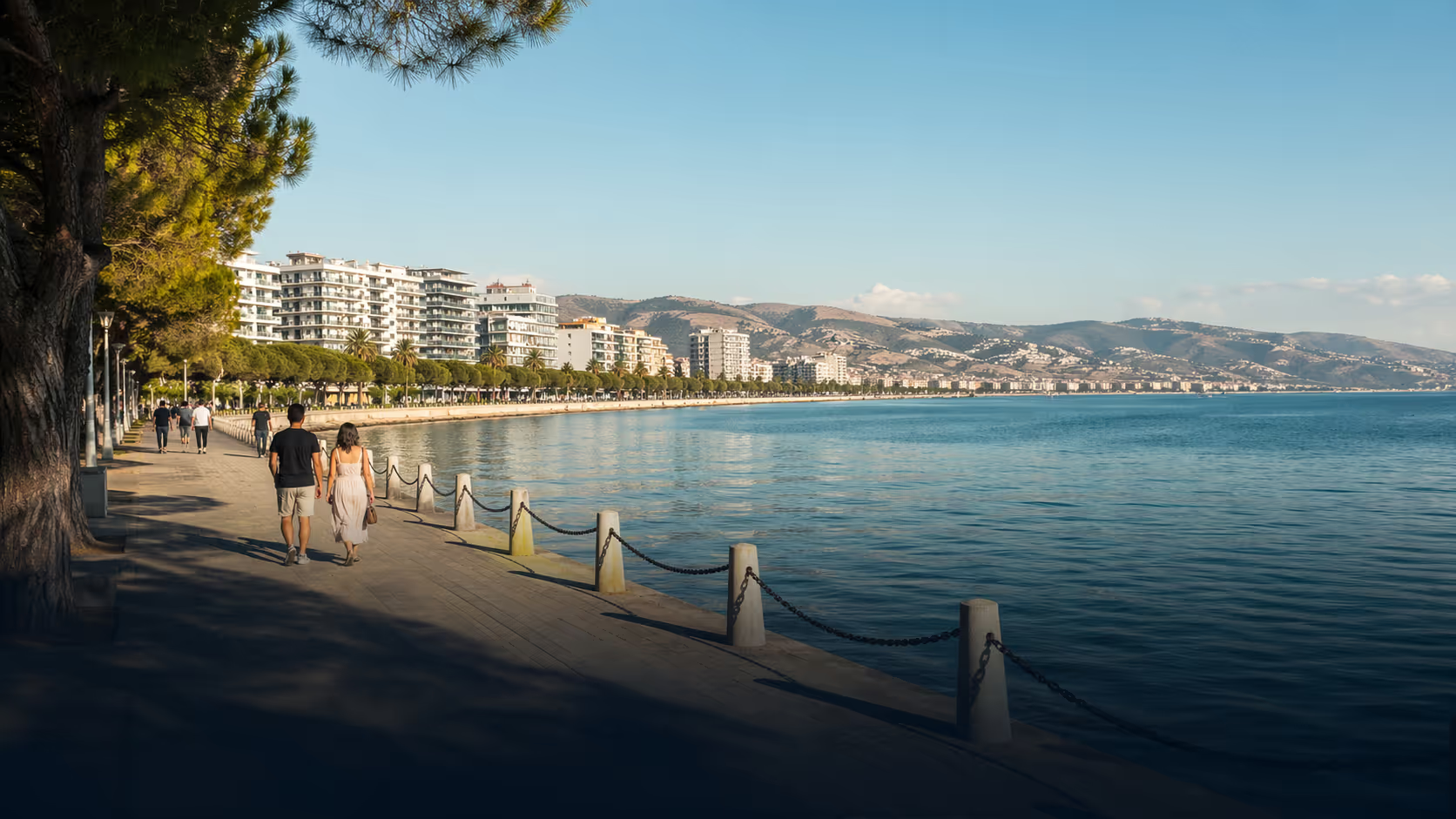
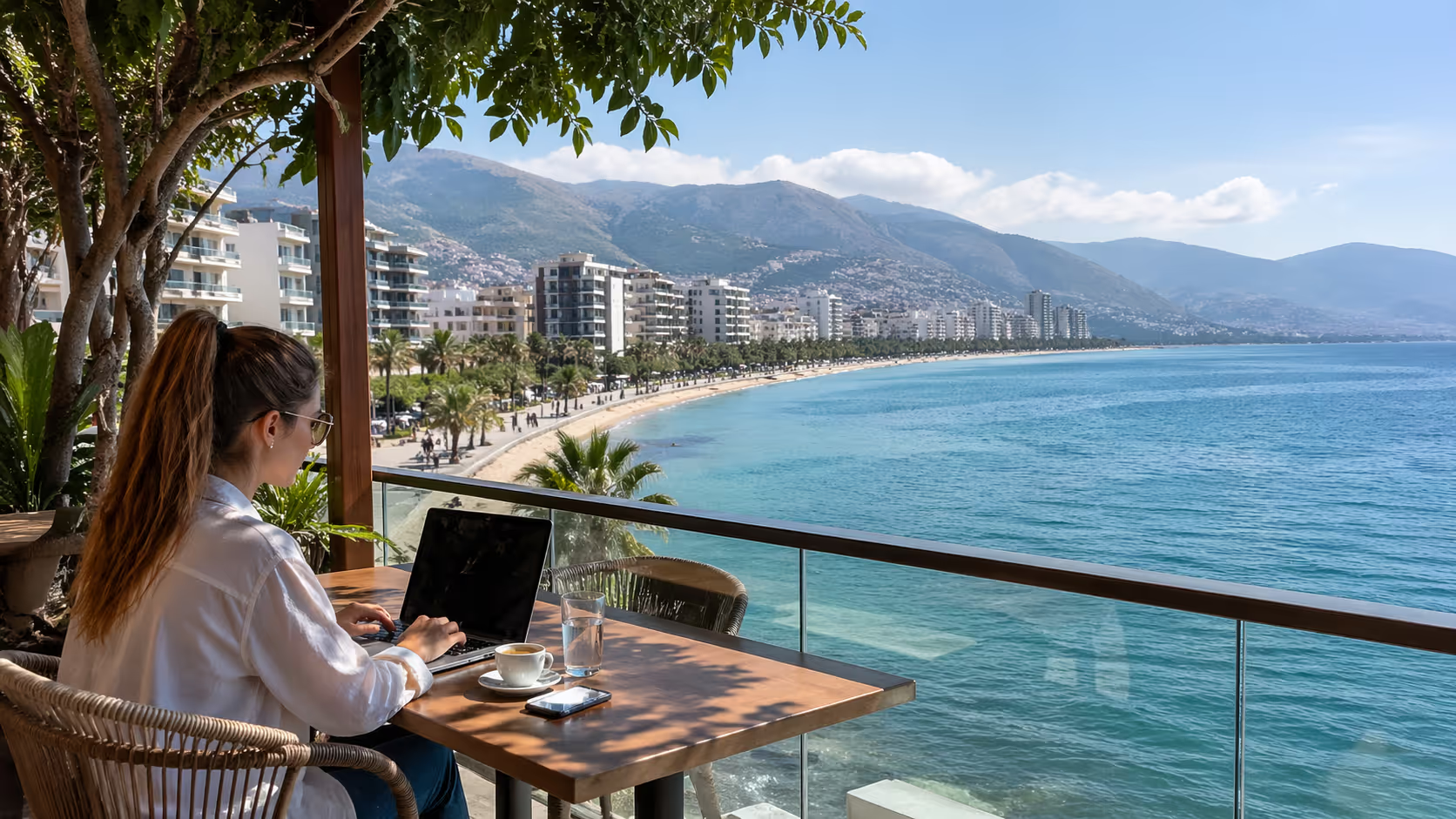

Be part of a growing community built around connection, local life, and a better experience of Vlorë.
join the circle