Representative image

Vlorë seems like a simple seaside resort, but its streets hold the monuments and Ottoman landmarks of modern Albania's founding story.





The best history walk in Vlorë is not the one that tries to see every old building in one afternoon. It is the one that links the Independence Museum, the Independence Monument, the Muradie Mosque, Old Town streets, and the waterfront into one clear story of port life, Ottoman rule, national identity, and daily city life.
Vlorë is where Albania declared independence on November 28, 1912, so a walk here is not just sightseeing. It is a way to understand why locals treat the flag, the old center, and the city’s public squares with real feeling.
Vlorë can fool new arrivals. At first glance, the city may feel like a beach town with apartments, cafes, palm trees, and summer traffic along Lungomare. Then you step toward the old center and the mood changes.
The city is one of Albania’s national memory points. The Independence Declaration of 1912 placed Vlorë at the center of the modern Albanian state. Ismail Qemali raised the Albanian flag here on November 28, 1912, and that date is still marked each year as Flag Day and Independence Day.
This is why a self-guided history walk matters for expats and long-stay residents. You are not only learning where to take guests. You are learning why a flag on a balcony, a statue in a square, or a school event in late November can carry deep meaning.
The city has several layers. The older story begins with Illyrian settlement along the Adriatic coast. The Ottoman era shaped the streets, religious sites, and social layout of the old town. The early 20th century added the national story that made Vlorë a symbol across Albania.
A good walk does not treat these layers as separate boxes. It lets them overlap. You can start near a modern road, pass a renovated street, stand at an independence site, then turn toward a mosque that speaks to centuries of Ottoman and Muslim heritage.
This is why walking works better than driving. A car makes Vlorë feel broken into zones. On foot, the distances between memory, religion, trade, and the sea start to make sense.
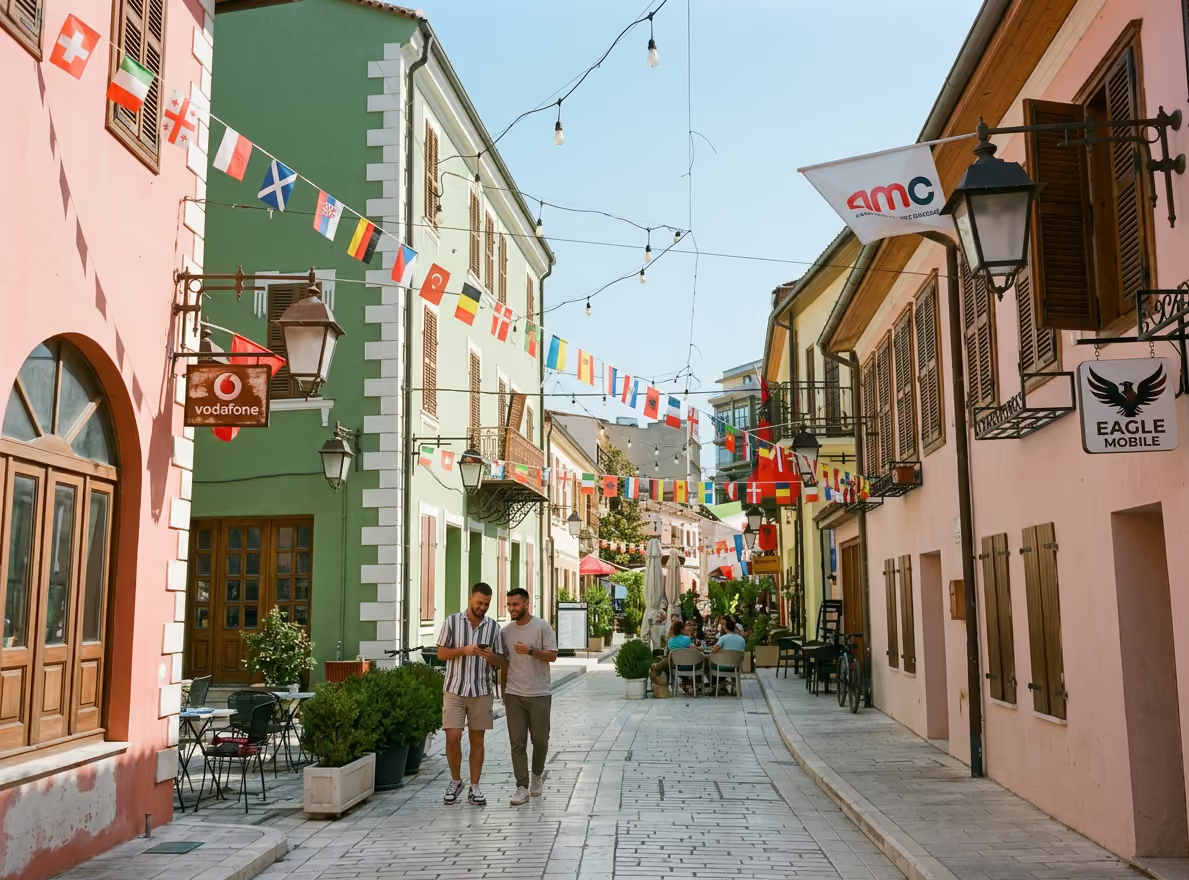
Albania Turism describes Old Town Vlorë as a place of cobblestone streets, Ottoman houses, squares, markets, and artisan shops. That is the right mental map. You are reading the city at street level, not only checking sites from a list.
For newcomers, this walk is a grounding tool. It helps you move from “I live near the beach” to “I live in a city with a national role.” That shift changes how you talk with neighbors, taxi drivers, teachers, and shop owners.
It can also stop you from making the common expat mistake of treating Vlorë only as a cheap coastal base. The beach is part of the appeal. The history is part of the deal.
Begin at the National Museum of Independence if opening hours fit your day. RoutePerfect notes that the museum displays historic artifacts, documents, and furniture tied to the independence period. That makes it the best starting point for the walk.
The museum matters for one clear reason. It sits on the ground of the 1912 independence story. You are not viewing the event from far away. You are standing inside the city that became the stage for Albania’s formal break from Ottoman rule.
The core date is November 28, 1912. On that day, Ismail Qemali and other leaders declared Albania’s independence in Vlorë. For Albanians, this date is not a side note. It is a national marker, similar to a founding date in other countries.
Do not rush the museum. Look for documents, period furniture, portraits, and the way the rooms arrange the story. Museums never only show objects. They decide what order the visitor should follow and what message the visitor should carry out.
This point matters in Albania. The country passed through Ottoman rule, monarchy, Italian and German occupation, communist rule, and post-communist change. Each period shaped public memory in a different way. A museum about independence must choose where to place stress.
Ask yourself simple questions inside. Who is shown as the main actor? Which objects receive the most attention? What mood does the room create? Pride, sacrifice, unity, and statehood are all part of the story.
For a resident, this helps you understand national holidays with more care. When Albanian flags appear across Vlorë in late November, the display is not just decoration. It links homes, streets, schools, and public buildings back to this city’s role.
If the museum is closed, do not scrap the route. Start outside and use the building as a point of orientation. Then continue toward the Independence Monument and Old Town. The street itself still carries the story.
A self-guided walk should leave room for pauses. Sit for a coffee after the museum if the day is hot. Take notes on names you see. If you return later with a local friend, ask how they learned the independence story at school.
This is where cultural appreciation starts. You are not trying to master Albanian history in one morning. You are showing respect by learning the names, the date, and the setting.
Read the first room more slowly than you think you need to. It often frames the whole visit.
Take one photo only if rules allow it. Then put the phone away for a few minutes.
Write down three names, one date, and one question. This gives you a reason to speak with locals later.
End by stepping outside and looking back at the building. Link the indoor story to the street around it.
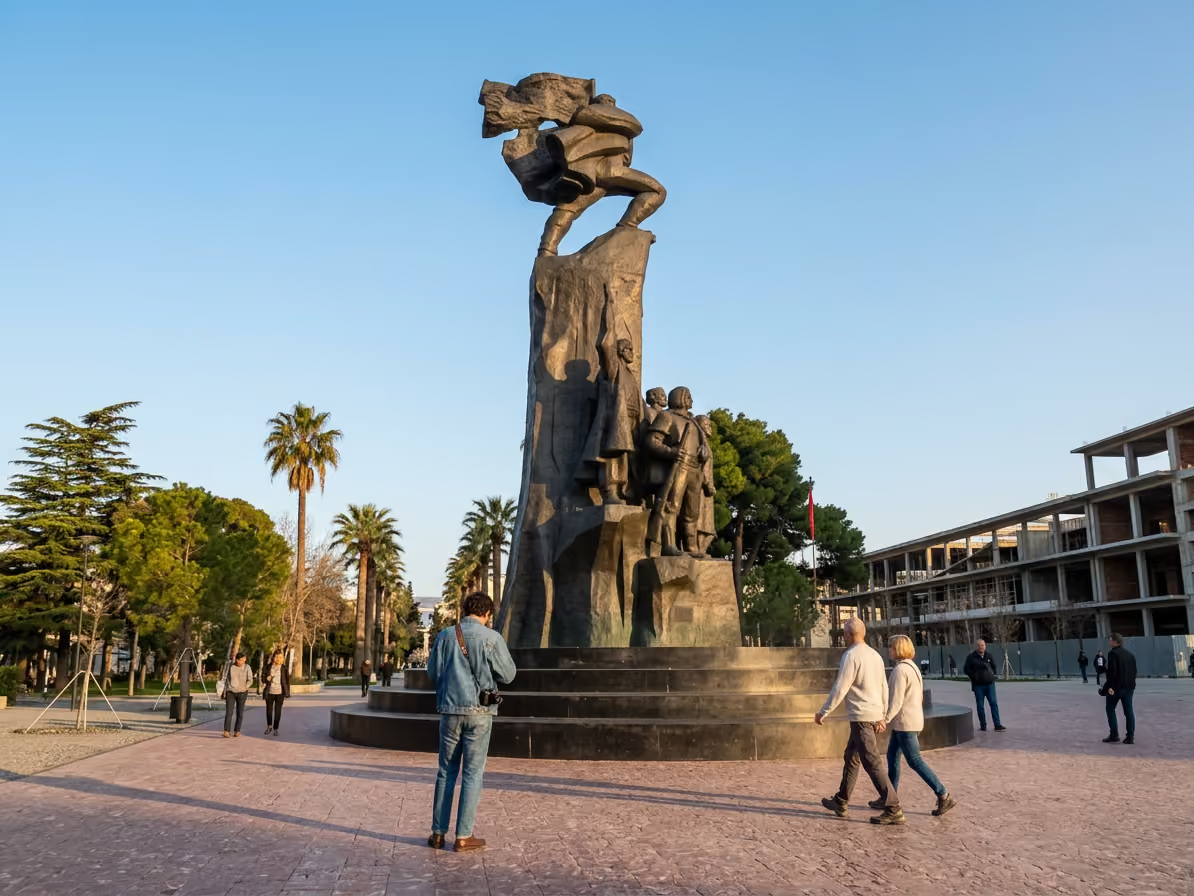
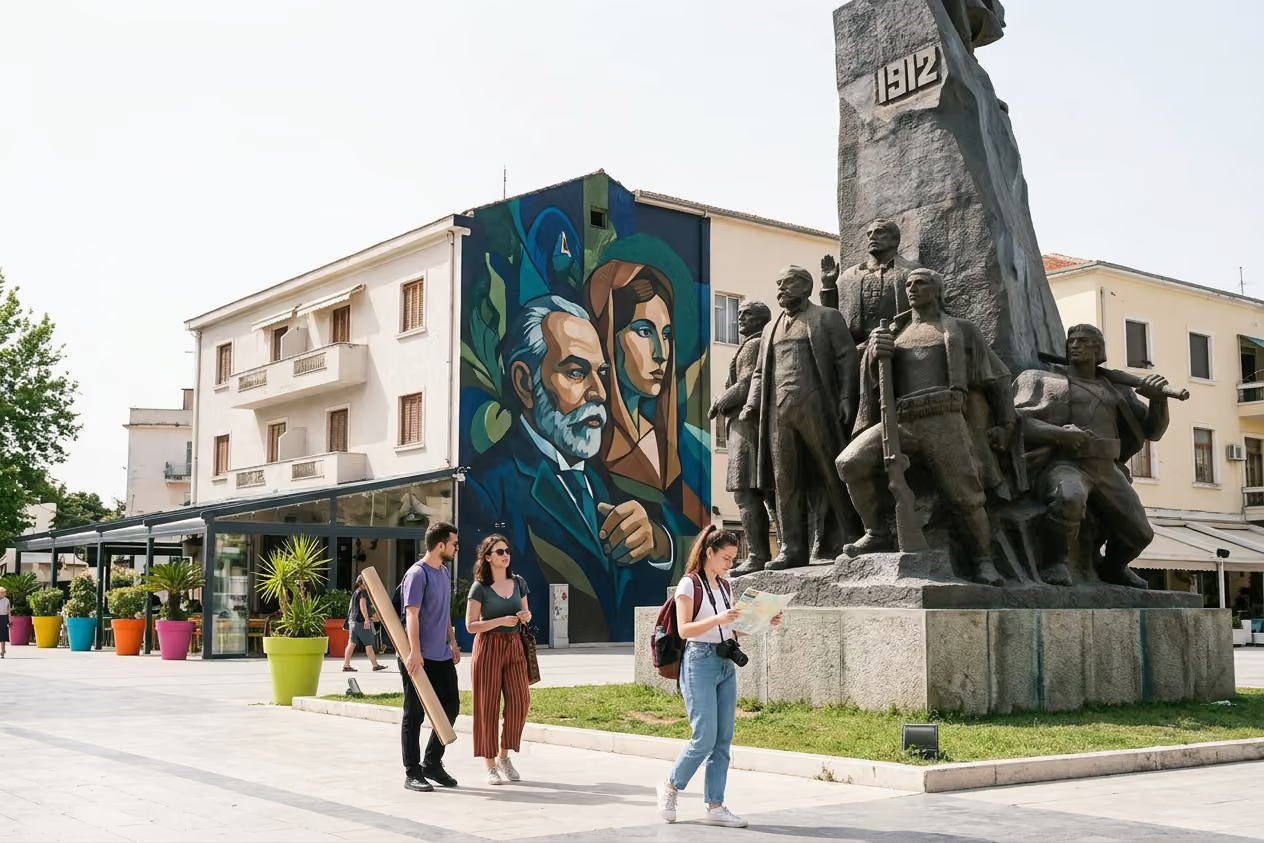
After the museum, head toward the Independence Monument and the public space around it. Albania Turism places the monument in the center of Old Town and presents it as one of the main sites tied to the declaration of freedom and unity of the Albanian people.
This section of the walk is the national story in public form. A museum speaks through objects. A monument speaks through scale, posture, and location. It asks people to stop, look up, and remember.
The monument marks the meaning of 1912 in open space. It is not only for tourists. Locals pass it during errands, meetings, school days, and family walks. That daily use keeps the site alive.
Stand back before taking photos. Look at how the figures are arranged. Notice how the monument uses body language and grouping to show unity. The message is direct, yet the feeling changes with the time of day.
Morning light can make the square feel calm. Midday can feel harsh in summer. Late afternoon is often better for walking, since the heat drops and people return to the streets.
This is a good point to reflect on the difference between state history and lived history. The monument gives one large message. The surrounding streets give smaller ones. Old buildings, renovated facades, uneven pavement, parked cars, and cafes all sit around the national symbol.
That mix is not a flaw. It is the real city. Vlorë is not a museum set. It is a working place where residents pay bills, meet friends, fix apartments, and argue about parking near historic streets.
If you visit with children or guests, keep the story short and clear. “This city is where Albania declared independence in 1912.” That one sentence gives the stop meaning. Then add detail only if people ask.
For expats, learn the Albanian date phrase if you can. “Njëzet e tetë Nëntori” means November 28. You will hear it near Independence Day. Even a small language effort can change how locals receive your interest.
The monument is a good place to avoid shallow commentary. Do not compare it only to statues in other countries. Ask what it does in Albanian public life. A national monument in a young modern state can carry a different weight than a decorative square in an older empire capital.
Take time to look at the square from several corners. The same monument can feel formal from one side and everyday from another. That is the point of walking. It gives you angles a taxi window cannot give.
Look at who uses the space. Older men, school groups, families, workers, and visitors may all pass through at different hours.
Look at the edges. Cafes, shops, side streets, and benches tell you how public memory sits inside daily life.
Look at the maintenance. Renovated areas and worn areas both tell the truth about local budgets and city change.
Look at the flag. In Vlorë, the flag is not a prop. It is tied to the city’s main story.
From the Independence Monument, slow down and move through the Old Town streets. Albania Turism describes this area through cobblestone streets, Ottoman houses, squares, and local craft spaces. This part of the route rewards patience.
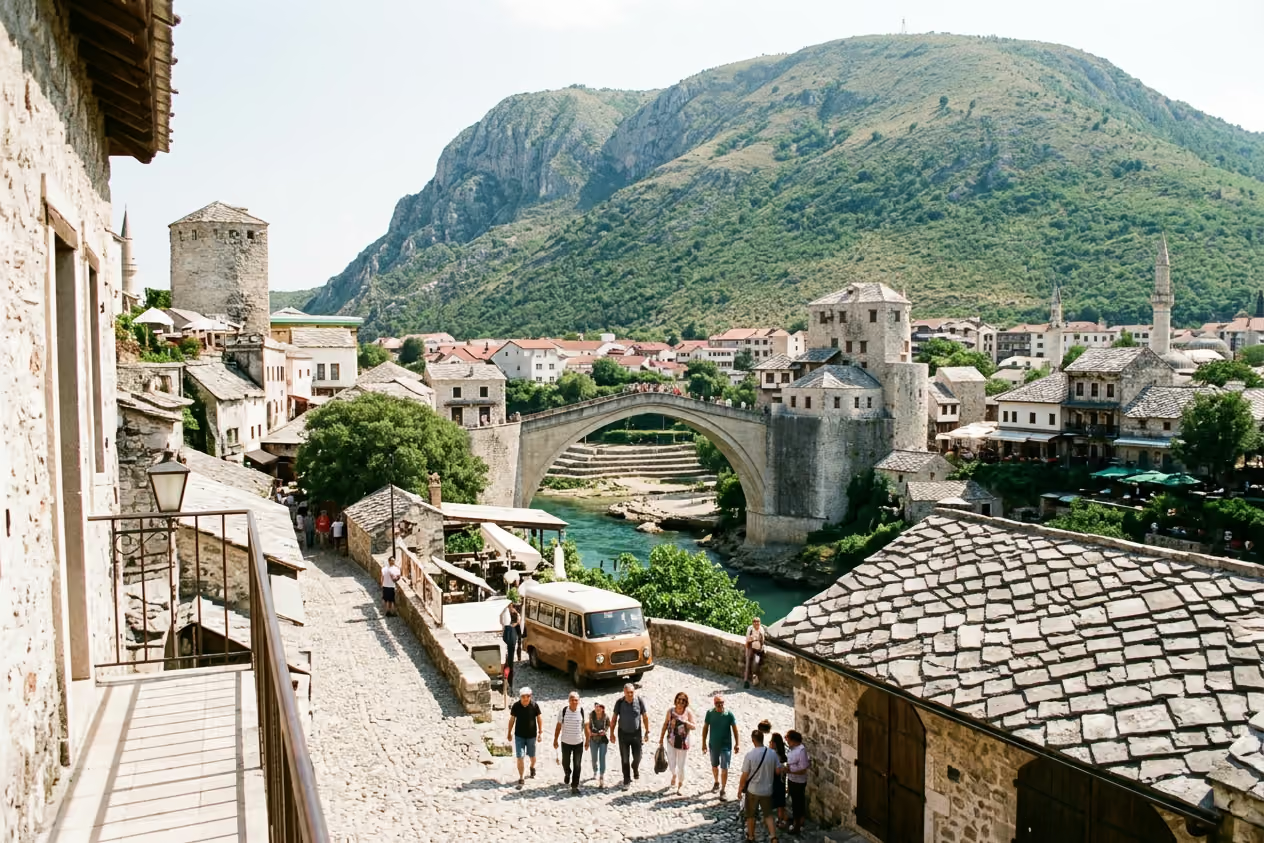
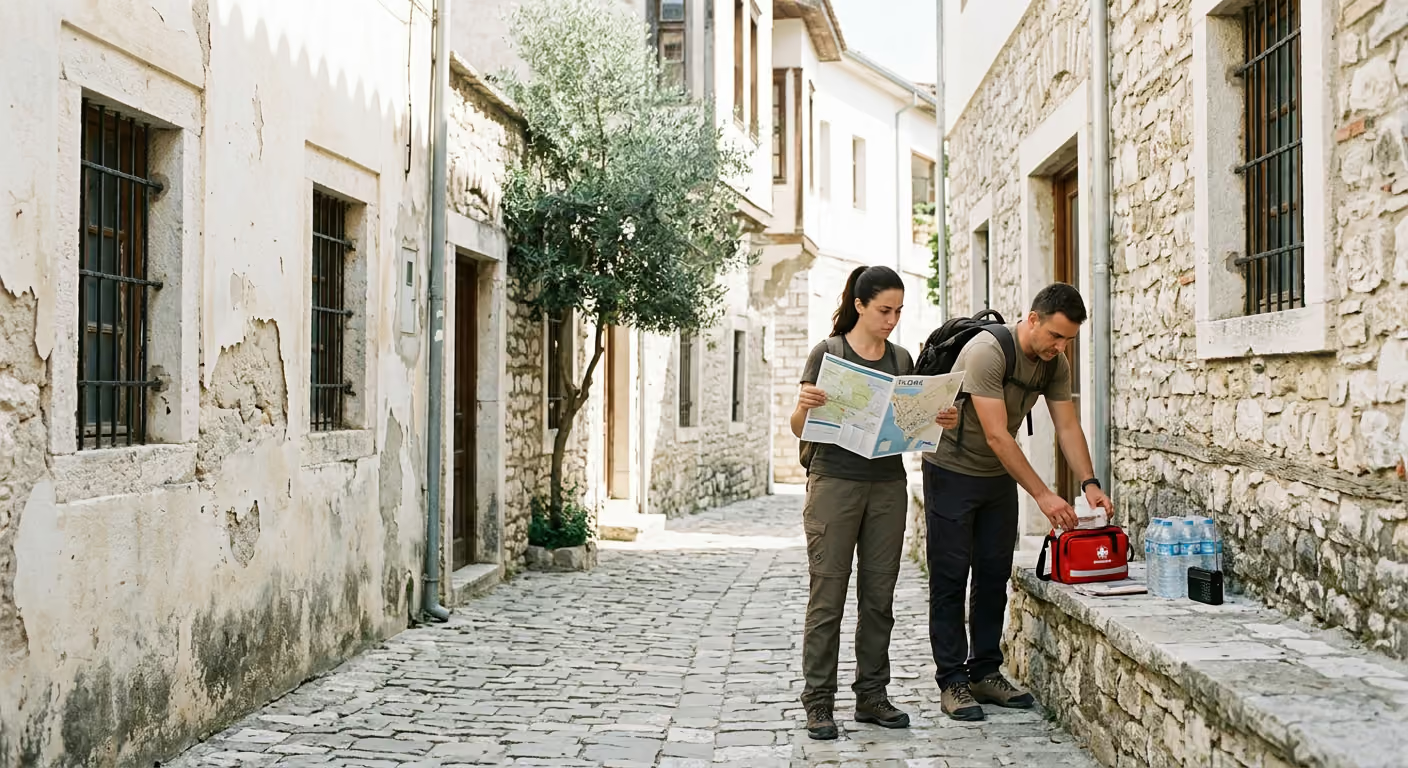
The old center is best read in pieces. Notice narrow streets, older building lines, small courtyards, and places where renovation stops suddenly. Some streets feel polished. Others show age, patched walls, and uneven surfaces.
This is where many visitors get the wrong idea. They arrive looking for a perfect old town. Vlorë gives something more honest. It gives a living district that has been repaired in places, left rough in others, and folded into modern traffic and commerce.
That uneven look is part of post-communist urban life. Albania went through decades of state control, religious suppression, restricted movement, and limited private property norms. After the 1990s, cities changed fast. Vlorë still shows that shift in its streets.
The Ottoman layer is visible less through grand set pieces and more through urban form. Streets can feel organic, not grid-like. Corners turn suddenly. Older houses may face the street in modest ways. Public and private space can sit close together.
Do not treat every old wall as an attraction. People live and work here. Some doors lead to family homes. Some balconies are private. Keep your camera respectful, mainly when children, worshippers, or residents are present.
This part of the walk is a good time to look for small details. Woodwork, stone, rooflines, painted shutters, older door hardware, and shop signs all help you read the city. You do not need expert training. You need to slow your pace.
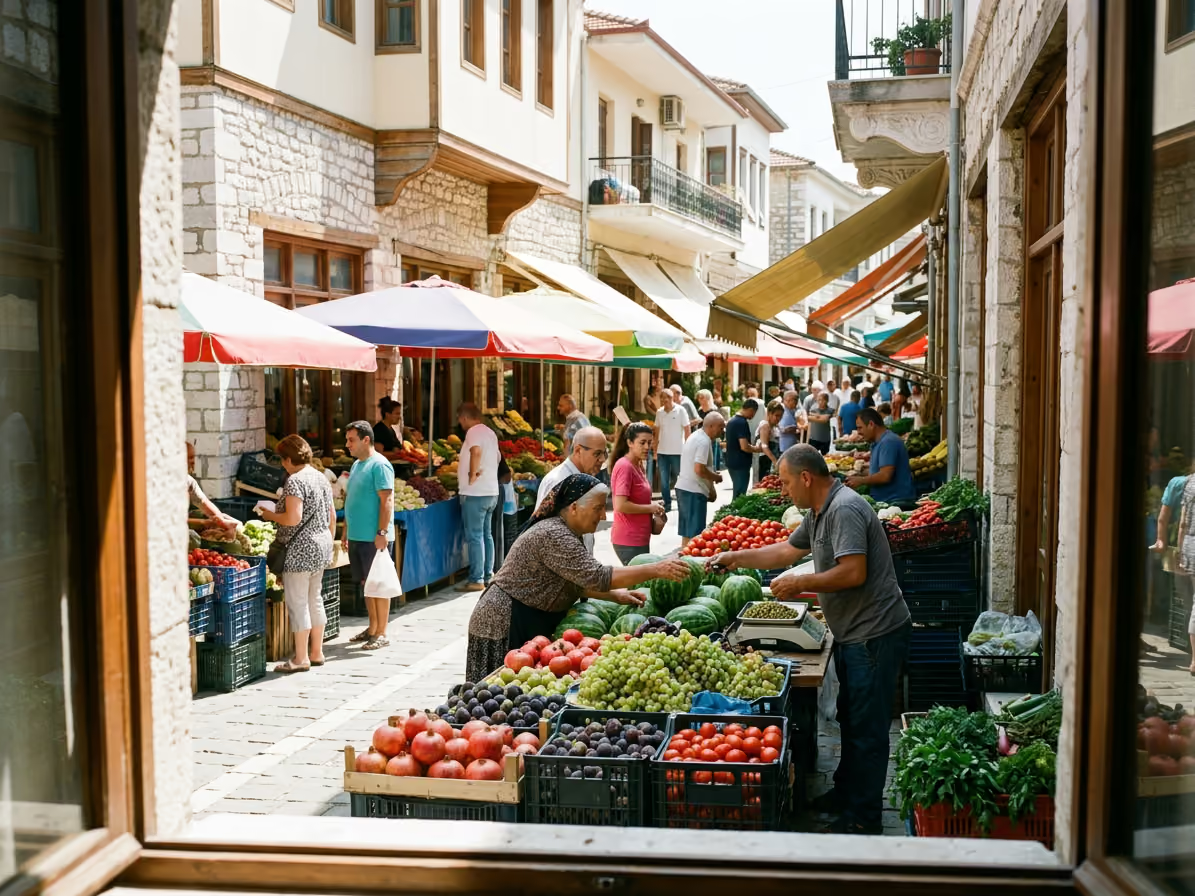
If you see artisan shops or small markets, enter with courtesy. Greet people with “Mirëdita” during the day. Ask before taking photos of goods or shop interiors. Buying a small item can be better than taking ten pictures.
The self-guided walker should resist the urge to turn every corner into content. Some places are better left as lived space. A quiet lane near Old Town is not empty. It may be part of someone’s normal route to school, prayer, or work.
TripAdvisor lists walking tours and cultural activities in Vlorë, which shows visitor demand for this kind of experience. A self-guided walk can be just as meaningful, if you bring care and context. The route is not only about what you see. It is about how you behave.
For residents, this area is useful beyond history. It gives you a more human map of the city. If you live near Lungomare or Uji i Ftohtë, Old Town can feel like another Vlorë. Walking links those worlds.
Renovation can make streets easier to walk and nicer to photograph. It can bring more visitors and more business.
It can also smooth out rough details that once showed age. A painted facade may look clean, yet it may tell less of the older story.
Do not ask which version is “real.” Both the repaired street and the worn building are real. They show different chapters of Vlorë’s current life.
The Muradie Mosque is one of the most meaningful stops on the route. It represents the Ottoman and Islamic layer of Vlorë’s history, and it still carries religious meaning. Treat it as a living place, not only an old structure.
Albania Turism presents the mosque as part of the city’s spiritual and architectural heritage. That wording matters. Architecture is only one part of the visit. The site also points to worship, community memory, and the return of religious life after communist-era suppression.
Albania’s communist period banned or restricted religion in severe ways. Many religious sites across the country were damaged, closed, reused, or neglected. The presence of an active mosque today is tied to post-1990 religious return. That gives the building a deeper role than its age alone.
Before entering, check the situation. If people are praying, wait outside. Dress modestly. Keep shoulders and knees covered if you plan to enter. Speak softly in the courtyard and near the door.
Remove shoes if entry rules require it. Women may be asked to cover hair in some mosques, so carry a light scarf. If no one is available to guide you, do not wander into private or restricted areas.
The Muradie Mosque helps you avoid a narrow reading of Albanian identity. The independence story was national, not only religious. Albanians include Muslim, Orthodox, Catholic, Bektashi, and non-religious communities. Vlorë’s story includes that mix.
It is common for outsiders to confuse Ottoman with Turkish. Be careful with that. The Ottoman Empire included many peoples, languages, and local identities. Ottoman heritage in Vlorë does not mean the city was simply “Turkish” in a modern ethnic sense.
The mosque area also helps you see how religion, public space, and local memory overlap. It may sit near traffic, shops, and daily errands. That mix is normal in many Albanian cities. Sacred space and ordinary life are close together.
If you are not Muslim, you can still appreciate the site. Respect does not require pretending to understand everything. It requires quiet conduct, modest dress, and a willingness to learn without treating worshippers as part of the display.
For long-term residents, this stop can shape how you speak about Albania. Avoid lazy phrases like “the country is Muslim” or “the country is secular” without context. Albania is more layered than that. Vlorë shows those layers in a short walk.
Check prayer time or signs before entry.
Dress modestly and carry a scarf if needed.
Ask before taking interior photos.
Keep your voice low near the mosque.
Do not block the entrance for photos.
Leave if a caretaker or worshipper asks for privacy.
A full self-guided history walk should take about three to four hours at a calm pace. That includes stops, museum time, coffee, photos, and pauses in shade. If you only walk between points, you miss the main value.
Use this route when you want a balanced first pass through historic Vlorë.
This route works best in spring, autumn, or a summer morning. Summer afternoons can be hot, mainly away from the sea breeze. Bring water and wear shoes that can handle uneven paving.
If you live in Vlorë, do the walk twice. Do one version alone. Do another with an Albanian friend, landlord, language teacher, or neighbor. The second walk will feel different since local stories fill gaps that signs and guide pages cannot cover.
GetYourGuide’s two-day Vlorë itinerary places city sights alongside coastal time, which reflects how many visitors split their stay. For residents, the better move is to give history its own half day. Do not squeeze it between beach plans and dinner.
If mobility is a concern, adjust the route. Cobblestones, curbs, narrow paths, and uneven repairs can slow the walk. Use taxis between sites if needed and focus on shorter loops near the museum, monument, and mosque.
Do not count on perfect signage. Save map points before you leave your apartment or hotel. Keep your phone charged. Carry some cash in Albanian lek for coffee, water, or a taxi back.
The walk itself costs 0 lek if you do not enter paid sites. Museum prices and hours can change, so check locally on the day. Your main expenses may be drinks, snacks, or transport from neighborhoods like Uji i Ftohtë, Skelë, or the far end of Lungomare.
In summer, start before the heat builds. A 9:00 start gives you museum time and a cooler walk through Old Town.
In winter, late morning works well. Streets are quieter, light is better, and cafes near the center feel more local.
Near November 28, expect more flags and public attention around independence sites. That period gives the walk more meaning, but some spaces may be busy.
On rainy days, cobblestones can be slick. Wear shoes with grip and shorten the route.
Vlorë’s history is not only inland. The city’s coastal position shaped trade, movement, and identity for centuries. A history walk should end with at least a short link to the waterfront.
Albania Turism notes that Old Town is accessible from the beaches and marina, with waterfront paths nearby. This link matters. Vlorë grew as a port city, and its sea-facing role gave it contact with people, goods, and political ideas.
The sea is not background scenery here. It is part of why Vlorë mattered. Coastal towns tend to absorb outside influence faster than inland villages. Merchants, sailors, officials, soldiers, and migrants all leave traces.
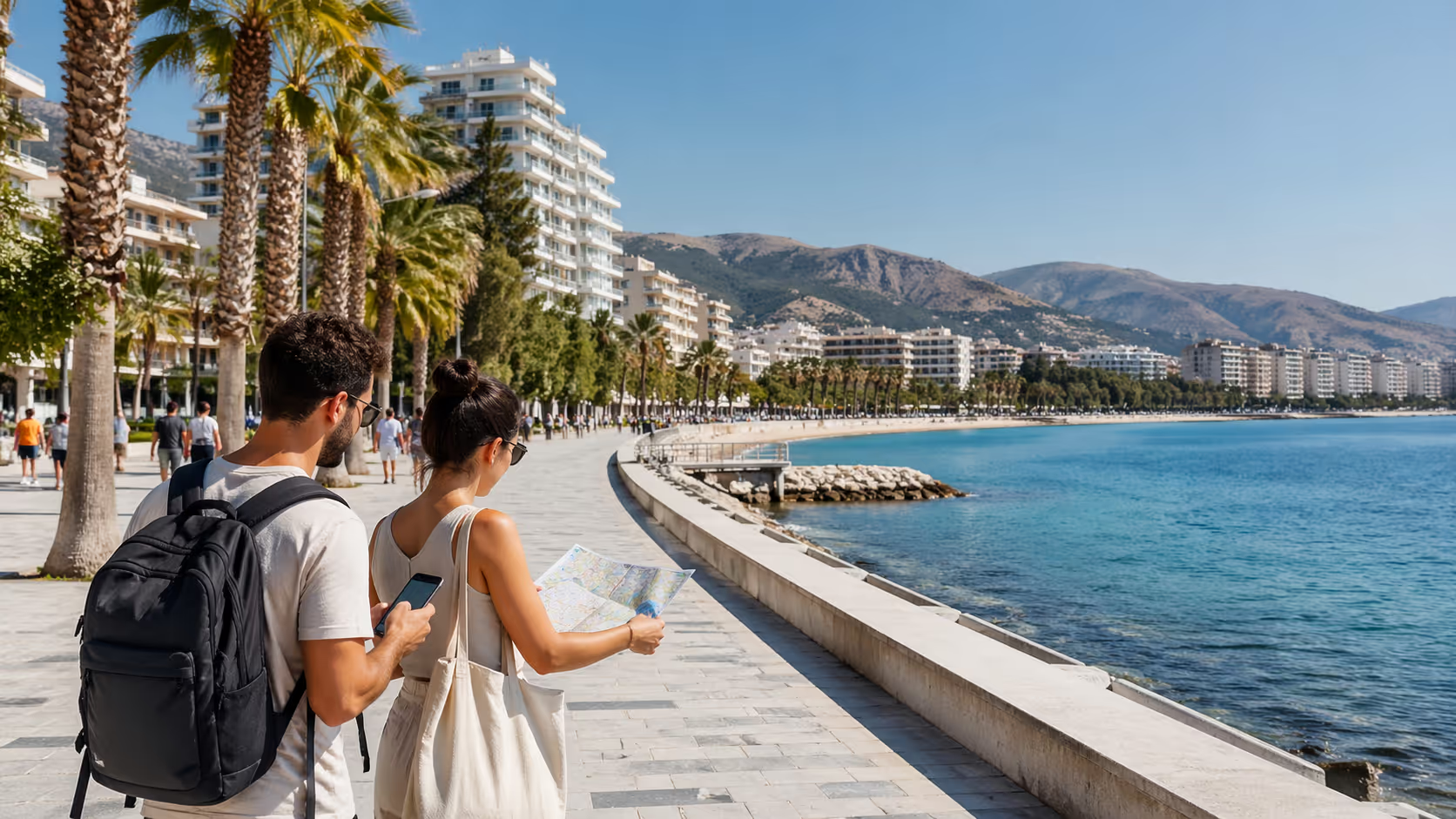
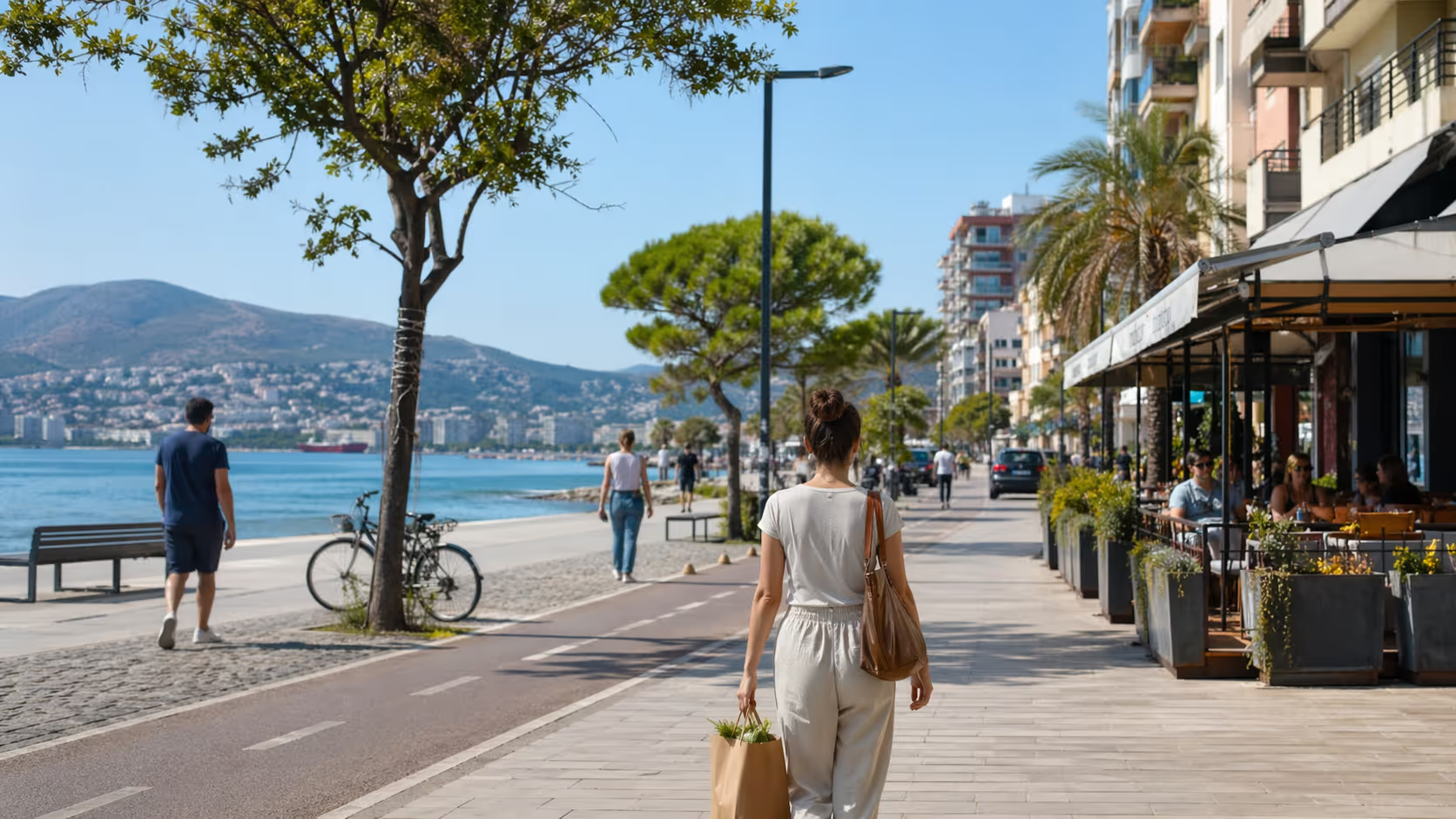
Walk from the old center toward the promenade if your energy is good. The change can be striking. Older streets give way to wider roads, newer buildings, hotels, cafes, and the public life of Lungomare. You move from memory space to leisure space.
For newcomers, this contrast explains Vlorë better than a guidebook paragraph can. The same city holds a national monument, a mosque, apartment blocks, beach bars, fishing boats, and evening walkers. None of these cancels the others.
The promenade can feel far from the independence story, mainly in August. Music, traffic, beach clothes, and family walks create a summer mood. Yet the route back to the old center reminds you that Vlorë is not only a resort.
This is useful for remote workers and retirees settling here. You may choose housing near the sea for comfort. You still need Old Town and the center to understand the civic life of the city. Schools, offices, ceremonies, and memory sites pull people inland.
A good final stop is a cafe between the old center and the waterfront. Sit where you can watch people move between errands and evening plans. That half-hour may teach you more about modern Vlorë than another photo stop.
If you want to keep walking, follow the promenade after the history loop. If you are tired, take a taxi from the center back to your neighborhood. The point is not distance. The point is reading the connection between sea, state, and daily life.
Ask what the port made possible.
Ask why independence happened in a coastal city.
Ask how summer tourism changes the way visitors see Vlorë.
Ask what parts of the city residents use year-round.
These questions keep the walk from becoming only a photo route.
The first mistake is monument collecting. Some people rush from the museum to the monument to the mosque and call the walk complete. They miss the streets between them, which often carry the richest clues.
The second mistake is treating Old Town as a perfect preserved quarter. Vlorë is not frozen. Some buildings are restored, some are worn, some are changed for new uses, and some sit in between. That mix is the city’s real condition.
The third mistake is reading all history as a straight line toward 1912. The independence event matters deeply, but the earlier Ottoman period was not only a waiting room for nationalism. People lived full lives then, with trade, family, faith, and local power structures.
The fourth mistake is using broad labels too fast. “Ottoman,” “Albanian,” “Muslim,” “European,” and “Balkan” all need care. Each word can help, but each can flatten the city if used lazily.
The fifth mistake is photographing religious or residential space without consent. A mosque, courtyard, shop, or old doorway may look public to a visitor. It may feel private to the people who use it.
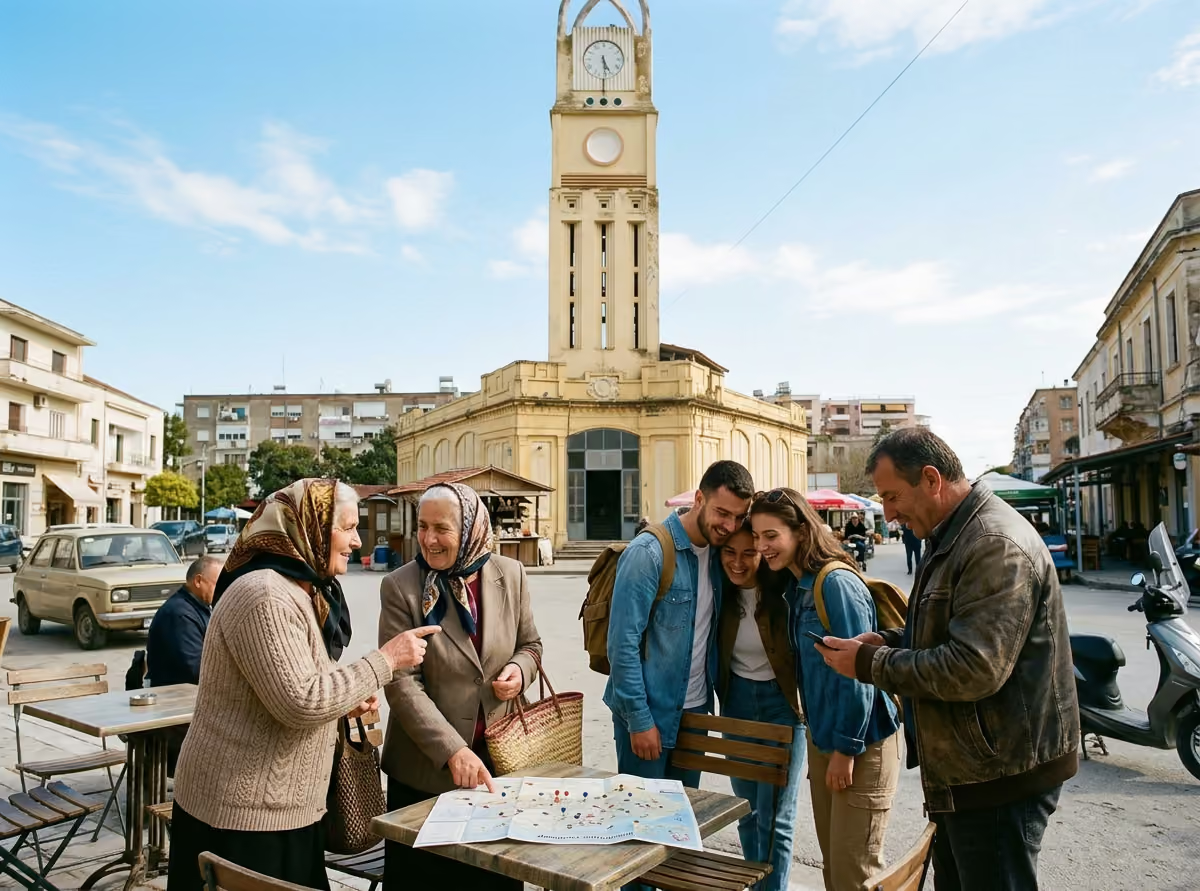
The sixth mistake is skipping local conversation. Formal history gives the frame. Local stories give texture. Ask a cafe owner how the area has changed. Ask a neighbor what November 28 feels like in Vlorë. Keep the question simple and respectful.
The seventh mistake is expecting every answer to match. Memory is not always tidy. One person may speak with pride about restoration. Another may miss the older street feel. One may value tourism growth. Another may worry about rents and noise.
This is where the romantic idea of Albania needs a reality check. Many newcomers arrive with images of cheap coffee, blue water, old streets, and easy living. Daily life is more complex. You will meet beauty, bureaucracy, unfinished sidewalks, warm hospitality, power cuts in some periods, construction noise, and strong local pride in the same week.
Living in Albania is not a permanent holiday. It is normal life in a country still working through rapid change. Vlorë can be generous, but it asks for patience. The history walk helps you see that change did not begin with tourism.
A resident who understands this will settle better. You will complain less about every rough edge. You will still notice real problems, but you will place them in a broader story.
Do not ask, “Why is this not restored?”
Ask, “Who pays for restoration, and who benefits from it?”
Do not ask, “Is this Ottoman or Albanian?”
Ask, “How did Ottoman rule shape Albanian urban life here?”
Do not ask, “Why is a mosque part of a national route?”
Ask, “How do religious and national identity sit together in Vlorë?”
Do not ask, “Where is the most photogenic street?”
Ask, “Which streets show the city as people use it?”
Cultural appreciation is not a soft idea. It shows up in shoes, voice level, photo habits, clothing, spending, and questions. Vlorë residents notice how visitors move through meaningful places.
Start with greetings. “Mirëdita” works during the day. “Faleminderit” means thank you. A few Albanian words can soften many encounters, mainly in older shops near the center.
Dress for the route, not only for the beach. If you plan to visit the Muradie Mosque, do not arrive in swimwear or a bare beach outfit. Carry a light shirt or scarf in your bag if you start near Lungomare.
Ask before photographing people. This is basic respect, but it matters more in old streets and religious spaces. A resident at a doorway is not part of the attraction.
Spend small money locally if you can. Buy water from a corner shop, coffee near Old Town, or a small craft item from a local seller. Do not treat the area only as a backdrop for free content.
Keep noise down near homes and places of worship. Some old streets carry sound. Loud group talk can feel intrusive, mainly in the morning or during prayer times.
Be careful with political statements. Albania’s history includes occupation, dictatorship, migration, and major family disruption. If a local shares a view, listen first. You do not need to solve the past over coffee.
If you are an expat, your role is different from a short-term visitor. You use local services, rent local housing, and shape the social mood of the city. That gives you more reason to learn the history with care.
Vlore Circle was built for this kind of settling. We are not here to sell a fantasy version of the city. We help residents, remote workers, retirees, and locals connect through practical guides and real-life meetups. If you want people to walk with, swap notes with, or ask local questions, Join the community.
Our founder’s advice is simple: do the walk once without headphones. Let the city sound different from the beach area. Listen to footsteps on stone near Old Town, traffic near the center, the call of daily shop life, and the quieter tone near the mosque.
Community members often say the walk feels more meaningful after they have lived here for a month. The first week, you are busy finding groceries, SIM cards, rent, and routines. After a few weeks, the history starts to land.
If you are new in Vlorë, invite one person rather than a large group. A slow walk with one neighbor or fellow expat creates better conversation. You can stop, ask questions, and change pace without pressure.
For this walk, Old Town is the main neighborhood to understand. It sits close enough to the modern center to feel accessible, yet it has a different rhythm from Lungomare, Skelë, or Uji i Ftohtë. The streets ask you to slow down.
Old Town is where the route holds together. The Independence Monument, the Muradie Mosque area, older streets, and local commercial life sit within a walkable zone. You can cover a lot without needing a car.
The area is not uniform. Some streets have been renovated for visitors and public life. Other parts still show older wear. This creates a useful lesson for residents. Heritage is not one fixed thing. It is cared for, marketed, neglected, repaired, and used at the same time.
If you live near the promenade, Old Town may feel less polished than the beach strip. That is part of its value. It shows you the city outside the summer frame. It gives more context for local errands, ceremonies, and public memory.
If you live near the center, the old streets may be part of your regular map already. A history walk can make them feel less ordinary. You start seeing why certain corners matter and why national symbols appear in daily space.
Use the neighborhood as a repeated study, not a one-time stop. Visit in morning, late afternoon, and near a national holiday. The same streets will show different faces.
Morning can reveal school routes, deliveries, and quiet shop openings. Late afternoon brings social movement and softer light. National holidays add flags and public feeling.
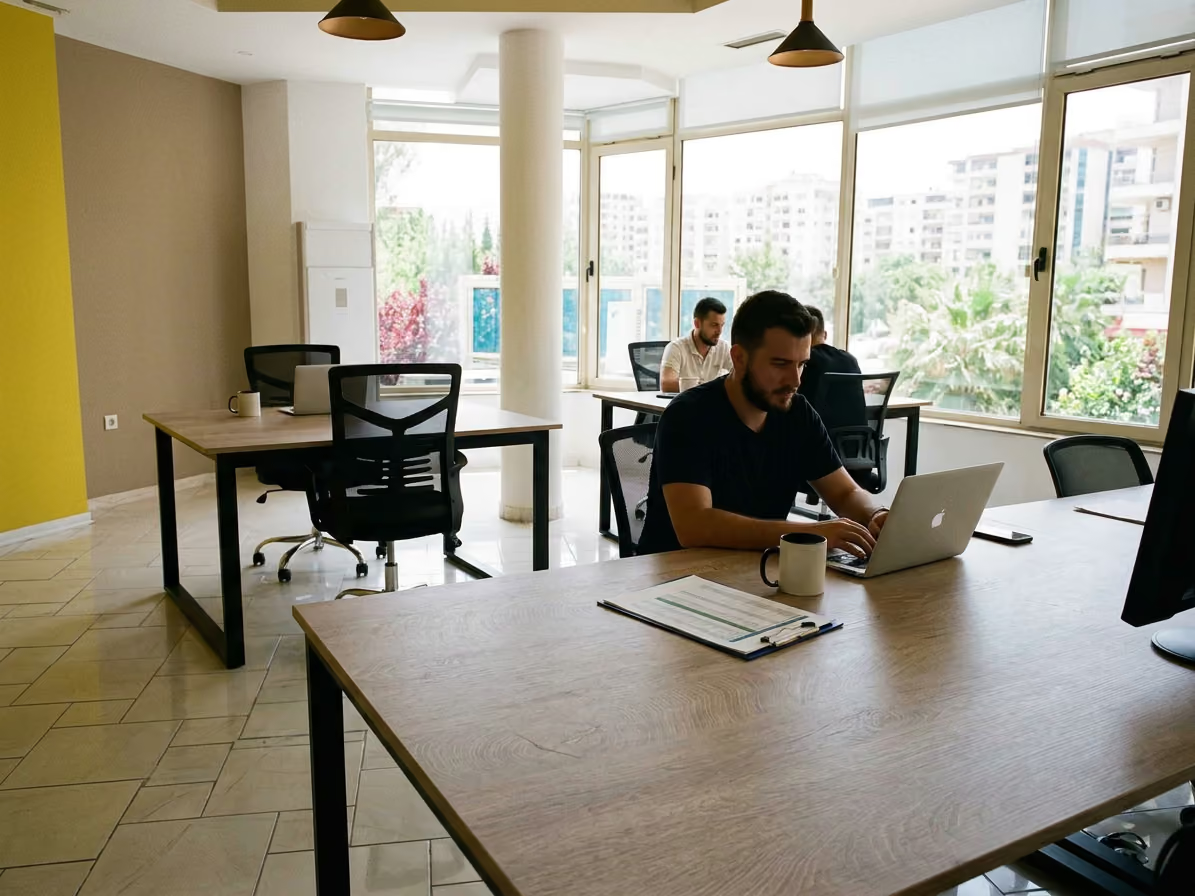
For remote workers, Old Town can be a good mental reset from screens. Take a lunch break walk if you work near the center. Keep it short, but choose one detail each time: a doorway, a street angle, a plaque, or the way people use a square.
For retirees, the walk can become a gentle routine if the uneven paving suits your mobility. Choose a small loop and repeat it. Familiar streets become easier when you know where the curbs, shade, and benches are.
For families, keep the route short. Children may not care about the full independence story yet. Give them one task, like finding flags, spotting old doors, or choosing the cafe stop.
Wear closed shoes for cobbles and uneven sidewalks.
Carry water, mainly from May through September.
Use shade breaks near cafes or squares.
Save map points before leaving home.
Check museum hours locally.
Respect mosque entry rules.
Keep cash in Albanian lek for small purchases.
A self-guided walk should open the door, not close the subject. Vlorë’s history is too large for one afternoon. Use the route as a base for deeper learning.
Start with the National Museum of Independence. Return when you have more questions. A second visit often feels richer, since the names and dates are less new.
Read general Albanian history after the walk, not before. If you read too much first, the city can become abstract. Walking gives your reading a map. The museum and monument give the key date. The mosque and old streets give the deeper layers.
Talk with locals from different age groups. Older residents may speak about communist times and the post-1990 changes. Younger residents may focus on tourism, education, jobs, or leaving and returning. Both views matter.
Use local guides when you want more detail. A trained guide can explain dates, names, and architectural points in a way a map cannot. A self-guided route is a strong start, but guided interpretation can add depth.
Watch how the city changes over a year. In July and August, Vlorë feels like a busy coastal destination. In February, it feels more local and practical. In late November, the independence story becomes more visible.
Keep a small note list. Write down sites, questions, and local terms. Albanian history has many names that may feel unfamiliar at first. Repetition helps.
If you attend a Vlore Circle meetup, ask others how they first understood the city’s history. Some people start through museums. Some through landlords. Some through schools, language classes, or holiday events. Shared stories make settling easier.
The goal is not to become an expert overnight. The goal is to stop moving through Vlorë as if it were only a sunny place with good rent and sea views. The city deserves more attention than that.
Walk Vlorë with patience and the city becomes easier to understand, not only easier to photograph.
Follow Vlore Circle for fresh guides, local updates, and community notes around life in Vlorë. It is the easiest way to stay close to what we are building.

Be part of a growing community built around connection, local life, and a better experience of Vlorë.
join the circle