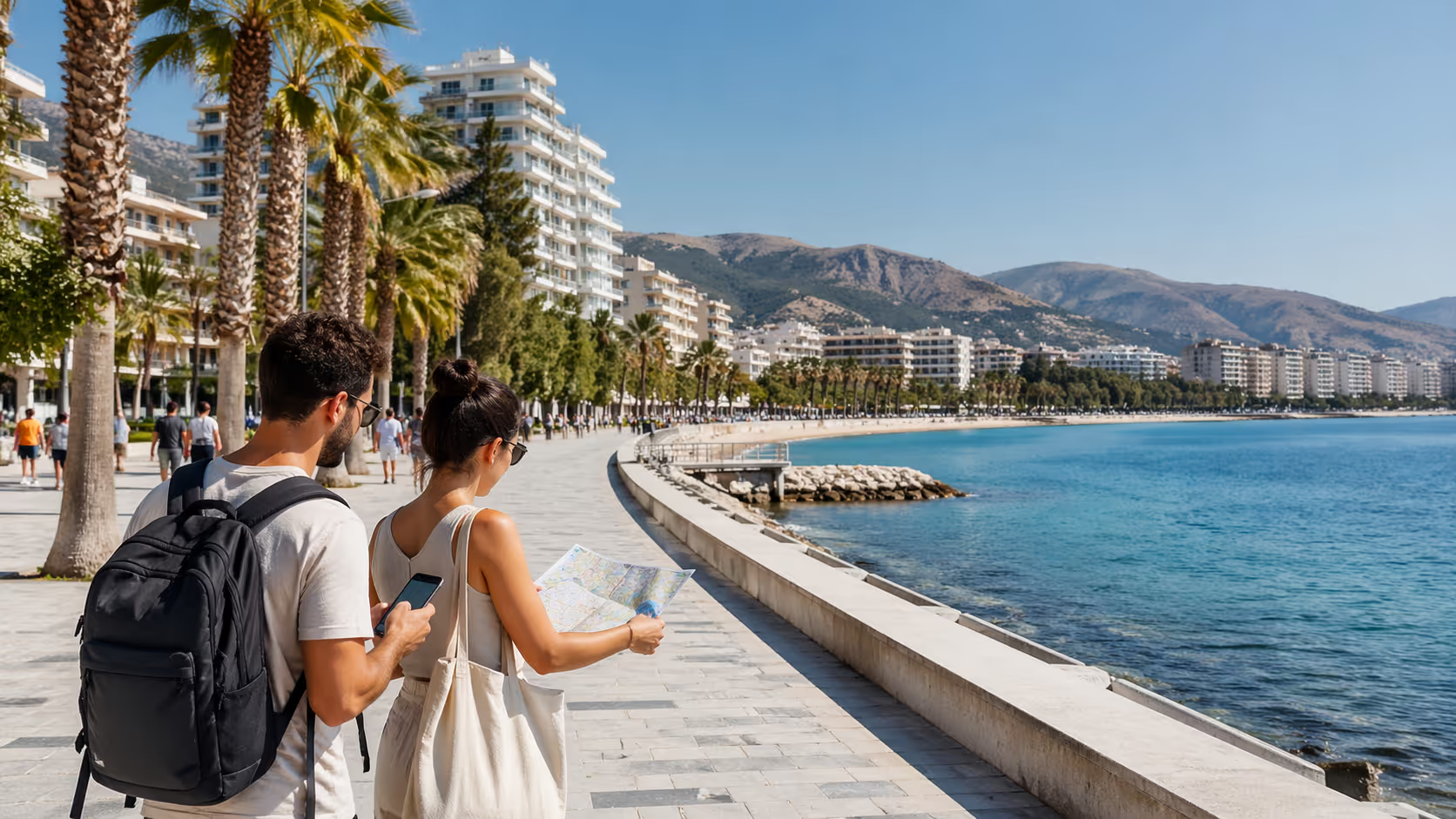
Representative image

Conversational Albanian fluency for daily life in Vlorë becomes achievable in six months through structured study and regular practice with local residents.





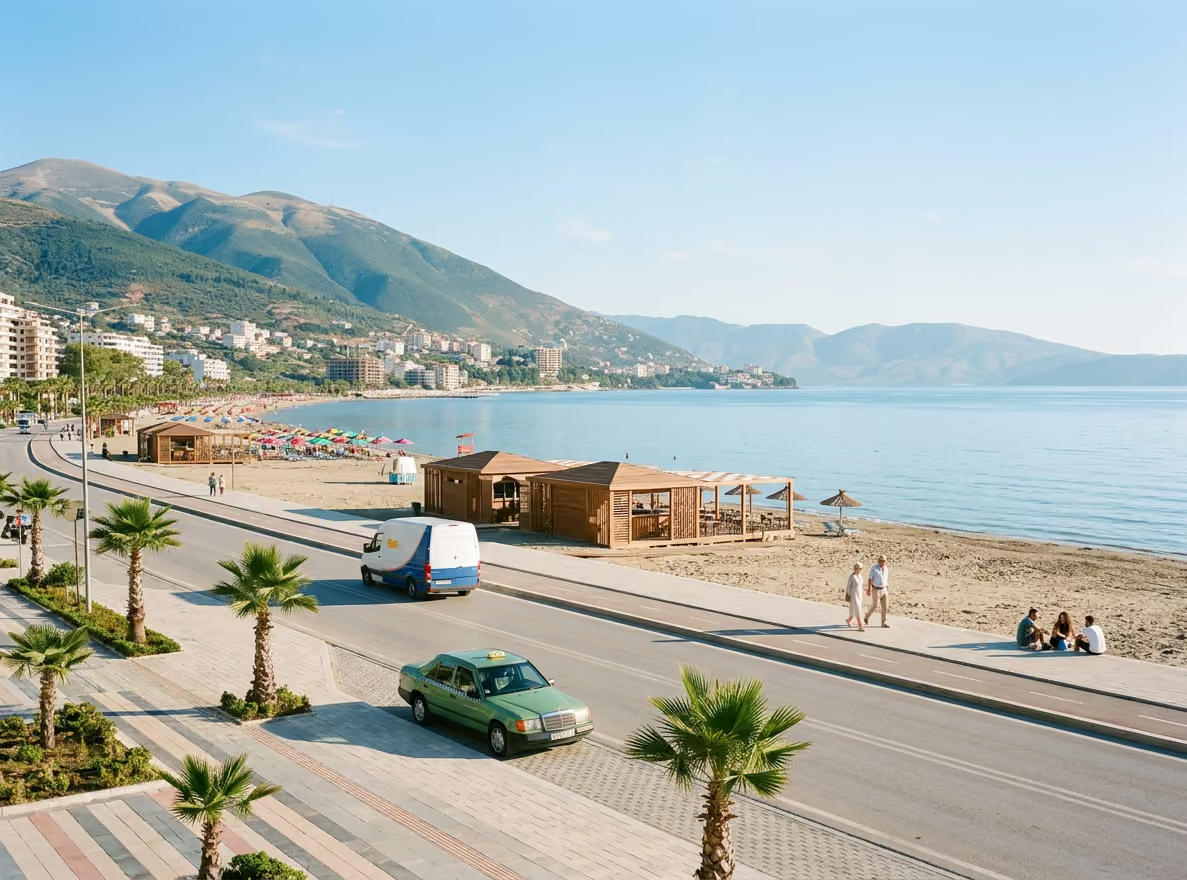
The counter-intuitive truth is that Albanian gets easier when you stop trying to “master” it from your apartment and start using small phrases badly in real places like Lungomare, Plazhi i Ri, and the old market streets near the city center.
For a Vlorë expat, a solid 6-month Albanian plan means 1 to 2 hours of daily study, split across Standard Albanian, apps, pronunciation, and real talks with locals. Aim for A1-A2 by the end of month 2, then push toward A2-B1 by month 6 through market chats, café practice, local meetups, and simple Albanian-only tasks.
Albanian is not one single sound across the country. The main split is between Gheg in the north and Tosk in the south. Standard Albanian, or Shqip Standard, is based mainly on Tosk, which makes it the right starting point for life in Vlorë.
That is good news for expats in Vlorë. You are already in the part of Albania where standard speech feels closer to daily local speech. You still hear casual Vlorë phrases, shortcuts, and local rhythm, but your base should stay standard for the first 6 months.
Do not start by copying every street phrase you hear at the beach. You may sound fun for one sentence, then get lost in the reply. Build clean Albanian first, then add local color later.
Vlorë is a coastal city with many layers. You have old families from the city center, seasonal workers, Tirana weekenders, Italian-speaking returnees, Greek-speaking families, and younger Albanians who switch into English fast. If you only rely on English, you can survive here, but you stay outside many normal moments.
Those moments matter. The best fish price at the port, the landlord who fixes a leak faster, the neighbor who explains parking near your building, the café owner who remembers your order, all of these get easier with Albanian.
Language is social access in Vlorë. It helps you move from being “the foreigner near Lungomare” to being a known face at the bakery near your apartment. You do not need perfect grammar for that. You need steady effort, clear pronunciation, and enough courage to speak first.
The Foreign Service Institute places Albanian in a harder group for English speakers, with a long full-time path to professional skill. That can scare new learners. For expat life, the target is different.
You are not training to give a legal speech in Albanian. You are training to rent an apartment, order food, meet neighbors, read signs, book services, and join real conversations. That is a much smaller and more useful goal for your first 6 months.
The Council of Europe’s CEFR scale gives a helpful frame. A1 means you can use simple phrases. A2 means you can handle routine daily tasks. B1 means you can deal with most common situations and speak about familiar topics.
For Vlorë, a strong 6-month target is A2 with parts of B1. That means you can buy fruit at the market, ask about bus times, explain a small health issue, book a table, and chat about family, weather, football, rent, food, and the sea.
You will still make mistakes. You will still miss fast jokes. You may understand the first sentence from a taxi driver and lose the second. That is normal.
The point is not to sound Albanian by month 6. The point is to become useful in Albanian. That shift keeps you motivated.
The first two months should feel boring in the best way. You are laying tracks. You are not collecting rare words or memorizing long grammar tables.
Your target is simple. Learn the alphabet, build clear pronunciation, learn 500 useful words and phrases, and use them in low-pressure places around Vlorë.
Start with the alphabet. Albanian uses the Latin script, which helps English speakers. Still, some letters and sounds need real practice.
Pay attention to Ë, Ç, Q, Gj, Xh, Dh, and Ll. Albania Blog’s tourist phrase guide gives useful pronunciation notes, such as Ç sounding like “ch.” The sound Ë often gives beginners trouble, so drill it early.
Do not skip pronunciation. If you build bad sound habits in month 1, you will pay for them in month 4. A native speaker may understand your sentence on paper, yet miss it when you say it out loud.
A useful first-week drill is simple. Pick 20 phrases, listen to a native version, repeat them out loud, then use 3 of them outside. Do that daily.
Start with greetings and politeness.
Use these from day one:
Then add daily city phrases:
Use them near real places. Ask “Sa kushton kjo?” at a fruit stand near the city center. Say “Dua një kafe, ju lutem” at a café on Lungomare. Ask “Ku është farmacia?” near Plazhi i Ri, even if you already know.
This is not fake practice. It trains your mouth under social pressure. That is the missing piece in app-only learning.
Keep the rhythm light enough to repeat.
Monday to Friday, do 20 minutes of flashcards. Use OnAlbanian, Anki, or a Memrise deck. Preply’s guide to learning Albanian points learners toward structured tools and timed practice. OnAlbanian lists a large bank of verbs, nouns, adjectives, and quizzes, which makes it useful for basic drills.
Add 15 minutes of pronunciation. Use short native audio. Repeat out loud. Record yourself once or twice each week.
Add 10 minutes of writing. Write 5 simple sentences about your day. Keep them boring. “I drink coffee.” “I go to the beach.” “I buy bread.” Boring sentences become useful speech.
Add 5 minutes of real life. Say one phrase to a local person. That can be a baker, waiter, doorman, cashier, barber, or neighbor.
On Saturday, do a 30-minute review. Check which words you keep missing. Move weak words back into daily review.
On Sunday, rest or do passive listening. Put Albanian radio, songs, or a short video in the background. Do not turn Sunday into a punishment day.
The best beginner areas are places where the script is clear and the task is simple. Bakeries are perfect. You can point, say one phrase, pay, and leave.
Try bakeries near the old town streets, small markets behind Lungomare, and cafés along Rruga Murat Tërbaçi. Plazhi i Ri is useful too, since staff are used to foreigners. They will often give you a patient first reply.
Use the fruit and vegetable market for numbers. Ask prices. Repeat the number back. If you do not understand, ask the vendor to write it or show it on a calculator.
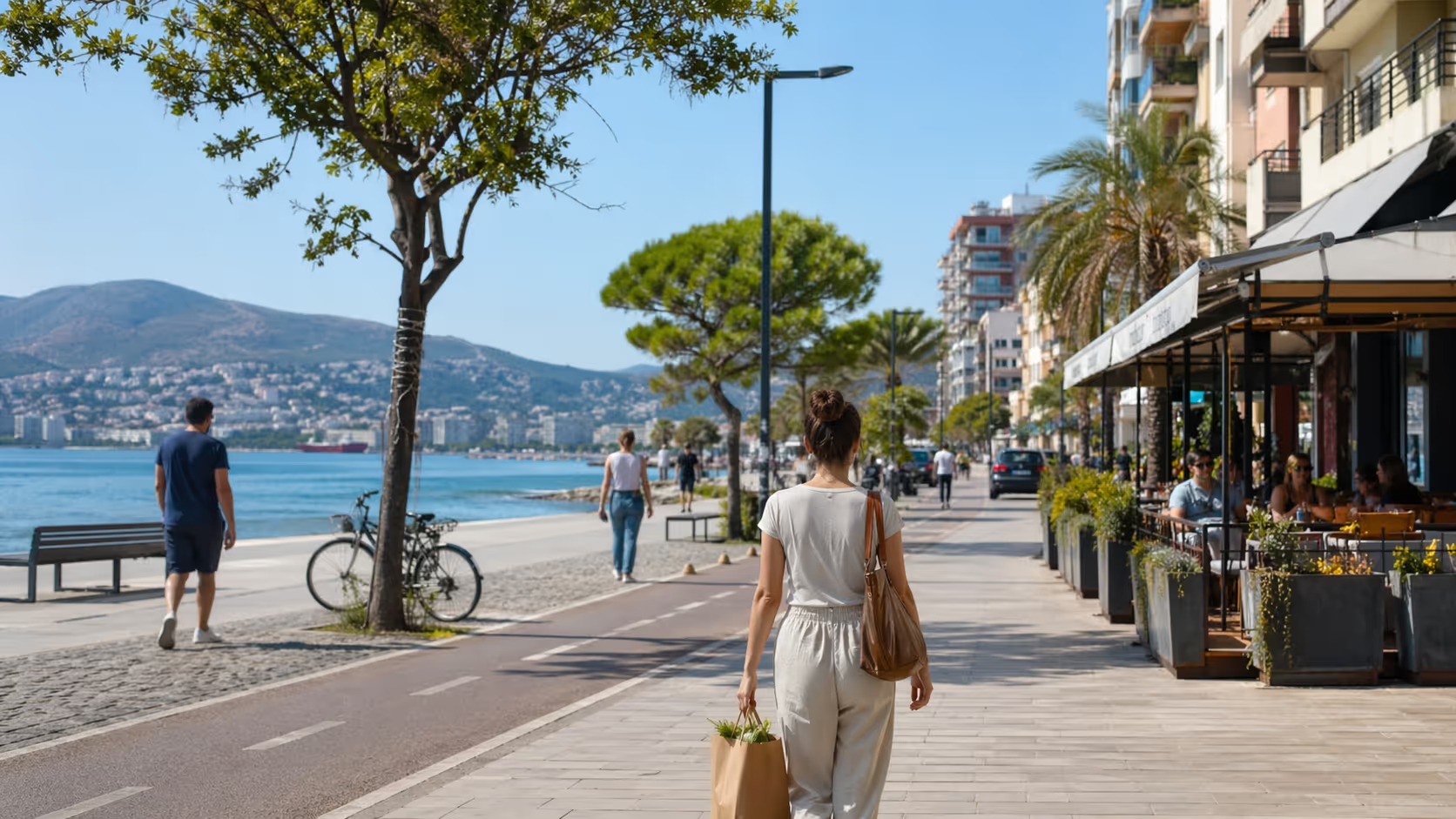
Use the promenade for listening. Sit on a bench near Lungomare and notice repeated words. Do not judge your comprehension. At first, you are training your ear to hear word edges.
Use buses and furgons for place names. Say “Vlorë,” “Orikum,” “Radhimë,” or “Sarandë” clearly. Then listen for replies about time, price, or departure.
By the end of month 2, you should be able to handle a tiny script in each place. You may not understand full replies, but you can start the exchange. That is A1 moving toward A2.
Apps are useful. Apps are not a social life. This distinction matters for expats in Vlorë.
Many learners feel safe with flashcards. The app never frowns. It never answers too fast. It never switches to Albanian slang near the beach.
The danger is passive knowledge. You know a word on screen, but you cannot say it when the waiter looks at you. You recognize a verb in a quiz, but you freeze at the rental office.
Spaced repetition systems help memory. Tools like Anki use review timing to bring words back before you forget them. The research shared in many language guides points to SRS as a strong method for long-term recall.
Use SRS for what it does best. Store words. Repeat them. Keep them alive.
Then force each word into life. If your app teaches “bukë,” buy bread and say it. If it teaches “ujë,” order water. If it teaches “sot,” use it in a sentence today.
Do not use seven apps. You will waste time picking tools instead of learning Albanian.
Use one flashcard tool. Anki is flexible and strong. OnAlbanian is built for Albanian and includes large grammar and vocabulary resources. Memrise can help with phrase exposure if you find a quality Albanian course.
Use one tutor platform or course. Preply and iTalki can connect you with Albanian tutors. LearnAlbanian.com offers adult courses, which can suit expats who want structure rather than scattered videos.
Use one listening source. Pick short YouTube lessons, Albanian news clips, or simple native audio. Do not start with long political debates or fast comedy.
Use one notebook. Paper works. A notes app works too. Write your own Vlorë phrasebook.
Your phrasebook should not be generic. Make it local.
Add phrases for:
When a phrase matters to your real week, it sticks faster.
Spend 80 percent of your study time on structured input at first. Spend 20 percent on real speech from week 1. By month 3, move closer to 60 percent structure and 40 percent speaking.
This protects you from two extremes. Pure app study creates silent learners. Pure street immersion creates stress and confusion for beginners.
RealAlbanian’s learning tips put focus on basics, immersion, and partners. That mix is right for Vlorë. You need a base, then you need people.
A good daily plan in month 2 looks like this:
If you work full time, split it into pieces. Do flashcards with morning coffee. Listen during a walk on Lungomare. Send one Albanian text to a tutor at lunch. Speak at the bakery after work.
Short sessions work if they repeat. A 10-minute session done daily beats a 2-hour session done once then forgotten.
Most generic decks teach words you may not use soon. Build your own from your life.
If you live in Plazhi i Ri, add words tied to beach life and apartment buildings. If you live near the city center, add words for markets, offices, traffic, repairs, and neighbors. If you live in Uji i Ftohtë, add transport, hills, beach cafés, and guesthouse vocabulary.
Create cards both ways. English to Albanian. Albanian to English. Then create sentence cards.
For example:
This is how you move from single words to usable speech.
Months 3 and 4 are where many expats stall. The newness fades. The grammar gets harder. Locals answer too fast. You feel less proud of ordering coffee for the 80th time.
This is the plateau phase. Treat it as normal, not as proof that you are bad at languages.
Your goal now is controlled conversation. You are not trying to debate politics. You are trying to keep a 3-minute exchange alive.
By month 3, start themed learning. Study one topic per week and use it outside.
Week 1 can be food. Learn words for bread, cheese, fish, meat, salad, coffee, water, wine, raki, breakfast, lunch, dinner, bill, table, and menu.
Use those words at a byrek shop, a seafood restaurant near the port, or a café on Lungomare. Order fully in Albanian once per day.
Week 2 can be transport. Learn bus, taxi, ticket, station, time, today, tomorrow, left, right, near, far, stop, and road.
Use it when asking about buses to Orikum, Radhimë, or Sarandë. Even if the person answers in English, repeat your Albanian phrase first.
Week 3 can be housing. Learn rent, contract, key, deposit, electricity, water, internet, repair, window, bathroom, kitchen, month, and payment.
Use these words with your landlord or agent. If you are not moving, role-play with a tutor. Housing vocabulary pays off fast in Albania.
Week 4 can be health. Learn pharmacy, doctor, pain, fever, allergy, medicine, appointment, today, tomorrow, morning, and evening.
Practice at a pharmacy by asking for something simple. You can keep the conversation low-risk. “Më falni, a flisni anglisht?” is still useful after your Albanian opening.
Albanian grammar has cases, verb forms, gender, and word order patterns that may feel new. Do not try to learn every rule at once.
Learn grammar through sentence frames.
Start with:
Then swap vocabulary inside each frame. This gives you useful speech faster than memorizing long tables.
For verbs, focus on high-use verbs first. OnAlbanian’s verb resources can help here, since it lists many verb forms. Start with jam, kam, dua, shkoj, vij, marr, jap, bëj, flas, kuptoj, ha, pi, blej, paguaj, and kërkoj.
Do not chase rare verbs. You need “I pay,” “I go,” “I want,” and “I understand” far more than abstract words in month 3.
By month 3, you need planned speech. Casual practice is not enough.
Book a tutor twice per week if your budget allows. If not, set up a language exchange with a local who wants English, Italian, German, French, or Spanish. Facebook groups and expat circles in Vlorë can help, but screen people with common sense and meet first in a public café.
Use places that make conversation easy. A café near Lungomare works well. So does a quiet table near the city center in the late afternoon. Avoid loud summer beach bars for your first sessions.
Each session should have a script.
First 10 minutes, greetings and small talk. Next 20 minutes, one topic. Last 10 minutes, correction and new phrases.
Ask your partner to correct only the main errors. If they correct every word, you will stop speaking. If they correct nothing, you will repeat mistakes.
Use a simple line: “Please correct only mistakes that block meaning.” Learn that idea in Albanian later. At first, say it in English if needed.
At the end of month 4, do a practical test across Vlorë.
Go to a bakery and buy something with no English. Go to a café and order your drink. Ask for the bill. Ask a shop worker where something is. Ask a neighbor one simple question. Send one Albanian voice message to your tutor.
Then write what happened. Which phrases worked? Which replies did you miss? Which sounds caused confusion?
That test is more useful than an app score. It shows the gap between study Albanian and Vlorë Albanian.
By now, your Albanian should have a small engine. It starts slowly, but it starts.
Month 5 is where your plan needs more life. You have enough Albanian to stop hiding in beginner drills. Now you need repeated contact with real people, real noise, and real stakes.
Immersion does not mean throwing away structure. It means using Albanian inside your normal week.
Vlorë gives you strong immersion options. The city has cafés, beaches, fish markets, neighborhood shops, gyms, hair salons, religious sites, sports clubs, seasonal events, and family-run restaurants. Each setting teaches a different version of daily speech.
Start with one Albanian-only hour per week. During that hour, do simple tasks without English unless safety or money issues need clarity.
Try this route. Walk from your apartment near Plazhi i Ri to Lungomare. Buy coffee in Albanian. Ask for water. Ask what time the café closes. Stop at a small shop and buy fruit. Ask the price. End by writing 5 sentences about the outing.
Then expand to half a day. Do not make the first Albanian-only block too hard. Success builds the next attempt.
By month 6, try one Albanian-first day each week. Albanian-first means you open every exchange in Albanian. If the person switches to English, you can smile and say, “Po mësoj shqip,” which means “I am learning Albanian.”
Many locals respond warmly to that. Some will slow down. Some will laugh kindly and teach you a better word. A few will switch to English anyway. Take it as normal.
Shadowing means you listen to native audio and repeat it almost at the same time. It trains rhythm, stress, and mouth movement.
Use short audio. Ten seconds is enough. Repeat it 10 times. Copy the music of the sentence, not only the words.
This helps in Vlorë since local speech can feel faster than lesson audio. You may hear softer southern Tosk pronunciation, casual “po,” shortened replies, and relaxed café speech.
Start with clean standard audio. Then add local speech from real talks. Ask your tutor to record useful lines for you. For example:
These are more useful than textbook sentences about fictional train stations.
Do not attend a gathering and hope Albanian appears by magic. Set a small goal before you go.
At a language exchange, introduce yourself to three people in Albanian. At a community dinner, ask two people where they are from. At a beach volleyball game, learn five sports words. At a local cultural event, ask one question about the program.
Vlorë’s Independence Day events can give strong exposure to Albanian, since the city has deep national meaning in Albania’s history. The energy is high, so do not expect quiet lesson conditions. Your goal is listening, greetings, and small comments.
Zvërnec is another useful weekend setting. Visits around the monastery area, the lagoon, and local restaurants give you a slower social pace. Practice with simple questions about food, road directions, and opening times.
Llogara trips can work too. You may meet drivers, restaurant staff, hikers, or local families. Learn words for mountain, sea, road, wind, cold, and view before you go.
By month 6, you need to tell short stories. Not perfect stories. Clear stories.
Prepare 5 personal stories in Albanian:
Each story should be 5 to 8 sentences. Practice with a tutor. Then tell one version to a local friend or language partner.
Stories create connection. A neighbor may not care that you can name 20 vegetables. They may care that you moved from Berlin, Milan, Manchester, or Toronto and chose Vlorë for the sea, cost, pace, or family reasons.
Real community starts when your Albanian carries your life, not only your shopping list.
Many expats blame grammar when the real issue is sound. They form a correct sentence, say it with foreign stress, then get blank looks. That can feel discouraging.
Fix sound early and keep fixing it. Albanian is more phonetic than English in many ways, but several sounds still need care. You cannot treat Albanian letters like English letters.
Albania Blog’s tourist phrase material points beginners toward pronunciation and native checks. That advice matters. A native speaker can hear problems you cannot hear.
Start with Ë. It is common and easy to ignore. Do not drop it.
Practice pairs with and without Ë if your tutor gives examples. Record yourself. Listen back. Your ear will improve over time.
Practice Ç, which sounds like “ch.” Practice Q and Gj with a tutor, since many English speakers flatten them. Practice Dh, which may feel close to “th,” but needs local checking.
Practice R and Ll. These can change how local people hear your words.
Do not obsess over sounding native. Aim to be clear. Clear speech gets better replies.
Albanian stress can feel unpredictable to beginners. Listen closely to where native speakers put weight in a word. Then copy full phrases, not single words.
For example, do not only practice “faleminderit.” Practice it inside a real exchange.
“Faleminderit, ditën e mirë.”
Thank you, have a good day.
Use polite closing phrases at shops. These phrases build social warmth and pronunciation skill at the same time.
Do not ask every cashier to become your teacher. That is unfair and awkward. Use tutors, patient friends, or language partners for correction.
In daily life, ask for one word only. If you forget how to say “receipt,” ask. If you mispronounce a street name, ask once and repeat.
Good correction spots in Vlorë include quiet cafés in the afternoon, meetups, private lessons, and small shops when there is no line behind you. Bad correction spots include busy summer restaurants, crowded bakeries, and any moment where staff are rushed.
Your pronunciation will improve faster if you get checked weekly. Even 10 minutes of native feedback can save months of bad habits.
A 6-month plan needs measurement. App streaks are not enough. You need proof that your Albanian works in Vlorë.
Use weekly tests that match your life. Keep them simple, written, and repeatable.
Learn 50 useful words per week during the first 3 months. In months 4 to 6, reduce new words if needed and spend more time using old ones.
Your weekly list should include:
Pick words from your real week. If your air conditioner breaks, learn repair words. If you visit the dentist, learn health words. If you start a gym membership near Lungomare, learn workout words.
At the end of each week, test yourself in three ways. Can you recognize the word? Can you say it? Can you use it in a sentence?
A word is not “known” until it survives a real sentence.
Write down three Albanian exchanges per week. They can be tiny.
Example:
For each exchange, note one win and one gap.
Win, “I remembered ‘Sa kushton?’”
Gap, “I did not understand the number.”
Next week, train the gap. Numbers are common trouble, so practice them with prices. Ask vendors to repeat. Listen for patterns.
At the end of each month, role-play one real Vlorë task with a tutor or partner.
Month 1, café order and greetings.
Month 2, market shopping and directions.
Month 3, restaurant booking and food preferences.
Month 4, housing question and repair request.
Month 5, health issue and pharmacy visit.
Month 6, apartment search or local event small talk.
Record the role-play if your partner agrees. Listen later. Notice pauses, repeated errors, and missing words.
This gives you clear feedback. It turns vague feelings into actions.
Use the CEFR scale as a guide, not a cage.
By month 2, you want A1 skills. You can introduce yourself, ask simple questions, and understand slow replies.
By month 4, you want A2 skills in your daily topics. You can handle shopping, transport, food, and simple personal details.
By month 6, you want A2 with B1 islands. That means you can speak with more flow about familiar topics like your work, your home, your week, and your reason for living in Vlorë.
Do not worry if your skills are uneven. You may be B1 in café talk and A1 in medical talk. That is normal for expats. Your life teaches some topics more than others.
Most Albanian learning failures in Vlorë are not caused by lack of talent. They come from bad systems.
The first trap is app-only learning. It feels productive, but it delays speaking. The fix is simple. Speak from week 1, even if it is only one phrase.
The second trap is perfection. Some expats wait until they can form correct sentences before they talk. That day never comes. Speak early, then clean it up.
The third trap is relying on English zones. Lungomare, Plazhi i Ri, and tourist-friendly cafés can make life too easy. Staff may switch to English the moment they hear your accent.
Use that convenience when needed, but do not let it steal your practice. Open in Albanian. If they answer in English, continue with one more Albanian sentence.
The fourth trap is learning random words. “Elephant” and “airport security” can wait. “Deposit,” “receipt,” “leak,” “bill,” “left,” “right,” “cheap,” and “expensive” matter now.
The fifth trap is ignoring local social rules. Albanians often value politeness, greeting, and relationship. A warm “Mirëdita” before a request can change the tone of an exchange.
The sixth trap is treating every local as a free tutor. People have jobs, families, and busy days. Be respectful. Use paid tutors or language exchanges for long correction.
The seventh trap is comparing yourself to multilingual Albanians. Many young people in Vlorë speak Albanian, English, Italian, or Greek with ease. That can make you feel slow. Remember that they grew up with different exposure.
Your job is not to compete. Your job is to show respect through effort.
Vlorë speech can include local slang, relaxed endings, and fast social replies. Do not panic when the street sounds different from your app.
For the first 6 months, keep learning Standard Albanian. Ask your tutor to mark local phrases as “standard,” “casual,” or “Vlorë style.” This stops you from using a beach phrase in a formal office.
Listen to local speech for rhythm, but answer with clean simple Albanian. That gives you the best chance of being understood.
Families face a different problem. Adults may study, but children pick up phrases from playgrounds, school, and neighbors. Kid-focused Albanian resources can be limited, so families need creative routines.
Use labels at home. Put Albanian words on door, table, chair, water, bread, and window. Use picture cards. Practice greetings as a family before leaving the apartment.
Set playdate phrases. Teach children “hello,” “my name is,” “can I play,” “thank you,” and “goodbye.” Keep it practical and kind.
Parents should not expect children to translate official matters. Adult language learning still matters for landlords, schools, clinics, and paperwork.
Remote workers often start with strong plans, then client calls take over. The cure is micro-study.
Do 10 flashcards before opening Slack. Listen to 5 minutes of Albanian during a walk. Say one phrase at lunch. Review 5 verbs before bed.
If you work from cafés near Lungomare or the city center, turn the place into practice. Order in Albanian. Ask for the Wi-Fi password in Albanian. Thank staff by name if you know it.
Tiny daily contact beats weekend guilt.
Albanian is easier when people expect to hear you use it. That is where local support matters.
A tutor gives structure. A language partner gives real exchange. A meetup gives social pressure in a friendly setting. A neighborhood routine gives daily repetition.
Do not rely on willpower alone. Build a small social system around the language.
For the first 2 months, one lesson per week can help with pronunciation and basic structure. From months 3 to 6, two lessons per week can speed speaking if your budget allows.
Ask for lessons built around Vlorë tasks. A good tutor can help you role-play a landlord call, market shopping, café ordering, doctor visit, or neighbor chat.
Send your tutor voice notes from real life. Ask them to correct sound, phrasing, and word choice. Bring photos of signs or bills that confuse you.
Preply’s Albanian learning guide points to tutor support as one route for progress. LearnAlbanian.com offers adult learning options for people who prefer a course format. OnAlbanian can fill the self-study side between lessons.
Language exchange works best when both sides benefit. If a local person helps with Albanian, offer real English practice or another skill in return.
Meet in public spaces first. Pick a café near Lungomare, the city center, or Plazhi i Ri. Keep the first meeting short.
Set a format:
Bring a topic. Food, work, family, travel inside Albania, apartment life, and local habits all work well.
If you want a softer entry, join community meetups where language practice can happen naturally. Vlore Circle exists for expats, remote workers, retirees, and locals who want real life connection in Vlorë. Join the community if you want a practical way to meet people beyond tourist circles.
Your neighborhood can become your language anchor.
If you live near Lungomare, pick one café, one bakery, and one market stand. Use Albanian there each week. Familiar faces reduce stress.
If you live in Plazhi i Ri, practice beach and apartment words. Ask about umbrellas, chairs, water, rent, noise, and opening times.
If you live near the city center, use pharmacies, barbers, repair shops, and small markets. The pace can be more local than the seafront.
If you live in Uji i Ftohtë, practice directions, taxis, beach access, hills, and guesthouse words. The area gives you repeat contact with service staff and neighbors.
The key is repetition with the same people. A random stranger hears your mistake once. Your bakery owner hears your progress across months. That creates trust.
Our host tip from Vlore Circle is simple. Pick one “safe mistake zone” in Vlorë and return there every week.
That might be a quiet café on Lungomare in the morning, a fruit stand near the center, or a bakery close to your apartment in Plazhi i Ri. Tell the staff you are learning Albanian. Use one new phrase each visit.
This is not glamorous, but it works. People get used to your effort. You get used to being imperfect in public.
That is how language turns from homework into belonging.
You can learn a lot of Albanian without a big budget. You still need to plan the cost in time, attention, and sometimes paid help.
The lowest-cost route uses free apps, free videos, a notebook, and daily street practice. That can work if you are disciplined and social.
A stronger route adds a tutor once or twice per week. This gives correction, accountability, and speaking time.
A community route adds meetups, language exchanges, and local routines. This may cost only coffee money, but it asks for social effort.
Use OnAlbanian for grammar and vocabulary drills. The platform lists large resources for verbs, nouns, adjectives, and quizzes. Use Anki for your custom Vlorë deck.
Use free Albanian videos for pronunciation. Keep videos short. Repeat more than you watch.
Use your phone recorder. Record phrases, tutor corrections, and your own speech. This costs nothing and gives honest feedback.
Use local signs. Photograph menus, shop signs, apartment notices, and public signs. Translate them later with your tutor or app. Then read them again when you pass the same place.
If you can pay for support, start with tutoring. Check current prices on platforms like Preply or iTalki, since rates vary by tutor, experience, and lesson length.
Spend money where it saves time. Pronunciation checks, role-play, and correction are worth more than passive worksheets.
A useful monthly paid plan might include:
Keep your budget tied to outcomes. If a resource does not make you speak more clearly or more often, cut it.
Many expats come to Vlorë for affordability. Research shared in expat guides often places long-term rent around 300 to 500 euros per month, with big variation by season, building, sea view, and neighborhood.
Language learning protects that affordability. If you can speak basic Albanian, you are less dependent on English-speaking agents and tourist-facing services. You can ask better questions, compare options, and build direct relationships.
This does not mean Albanian will always get you a lower price. It means you understand more of what is happening. That alone can save stress.
The romantic version is easy. You move to Vlorë, drink coffee by the sea, learn Albanian from smiling locals, and become part of the city in a few months.
The real version is messier. You will forget words in front of waiters. You will answer “po” when you meant “jo.” You will understand a price, then miss the follow-up question. You will study hard, then hear two teenagers speak and feel like you know nothing.
This is normal expat life. Albania is warm, social, and welcoming in many ways, but it does not absorb you automatically. You have to show up.
Some days locals will praise your Albanian after one phrase. Other days they will switch to English at once. Some people will be patient. Some will be busy. Some will correct you. Some will laugh, usually without malice.
You need a thick skin and a soft attitude. Take correction without shame. Take confusion without drama. Take progress seriously, but not personally.
Vlorë is not a language school built around your needs. It is a real city with rent issues, traffic, summer crowds, winter quiet, family obligations, business stress, and daily routines. That is what makes learning Albanian here valuable.
You are not learning from a polished course alone. You are learning from the bakery line, the beach chair guy, the old man at the café, the landlord, the pharmacist, the taxi driver, and the neighbor who tells you when the water is back.
By month 6, you may still feel far from fluent. That is fine. Fluency often takes 1 to 2 years or more, and full professional skill can take far longer. A 6-month plan is not a magic finish line.
It is a strong start. It can move you from silent observer to active resident. It can turn daily tasks from stressful to manageable. It can make Vlorë feel less like a place you consume and more like a place you take part in.
Learn enough Albanian to be useful, kind, and present in Vlorë, then let the city meet you halfway.
Follow Vlore Circle for fresh guides, local updates, and community notes around life in Vlorë. It is the easiest way to stay close to what we are building.

Be part of a growing community built around connection, local life, and a better experience of Vlorë.
join the circle