Representative image

Vlorë education choices include local public schools, accredited online international programs, and flexible homeschooling frameworks for expat children living along the Albanian coast.





School choice in Vlorë means three tracks, not one simple school list. Families usually choose between international online programs, Albanian public schools, or a supervised homeschool framework that keeps credits portable.
For most expat families, the safest long-term plan is a hybrid one: use an accredited international or online curriculum for continuity, then add local Albanian classes, sports, beach clubs, or community activities for social life in Vlorë.
Vlorë is not Tirana. That is the first honest point.
Tirana has more embassies, more private schools, more foreign families, and more formal education services. Vlorë has the sea, the Lungomare, lower daily stress for many families, and a growing expat base, but fewer brick-and-mortar international school choices.
For families moving to Vlorë, school planning usually starts with three clear frameworks.
International schools are private programs that use global curricula. These may follow American, British, IB, AP, Cambridge, or other international tracks. In Vlorë, this often means online or hybrid schooling rather than a large campus with uniforms and a full foreign staff.
Public schools are Albanian state schools. They are free, follow the national curriculum, and teach mainly in Albanian. They can work well for younger children or bilingual children, but they require patience and language support.
Homeschooling is parent-led education, often backed by an online provider. It can be self-paced, teacher-led, or one-to-one. For expat families in Vlorë, this is often the most flexible option, but it still needs legal care.
This topic matters in Vlorë since many families arrive for more than a summer. Some come for a digital nomad year near the beach. Some come for retirement with school-age children still at home. Others have Albanian family roots and want their children to learn the language without losing progress toward U.S., U.K., or international graduation.
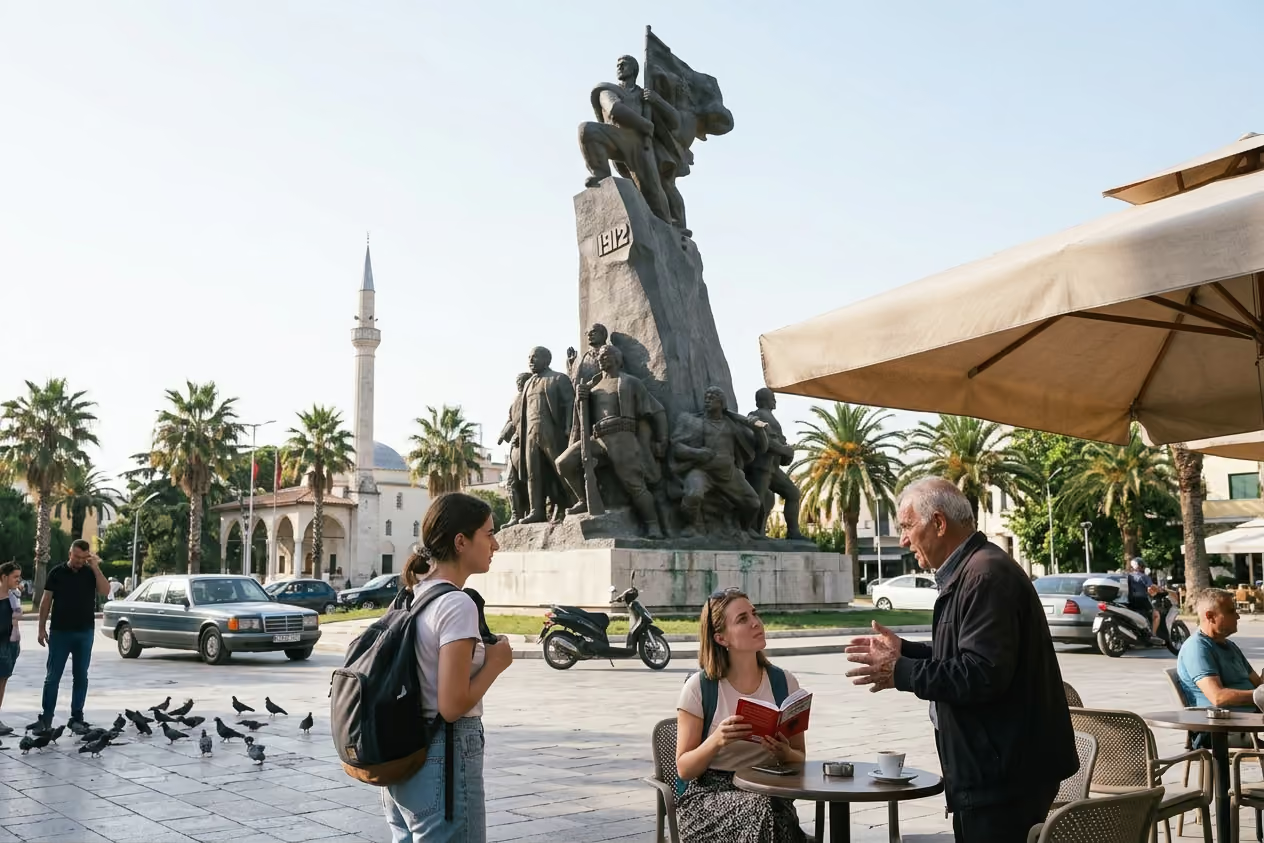
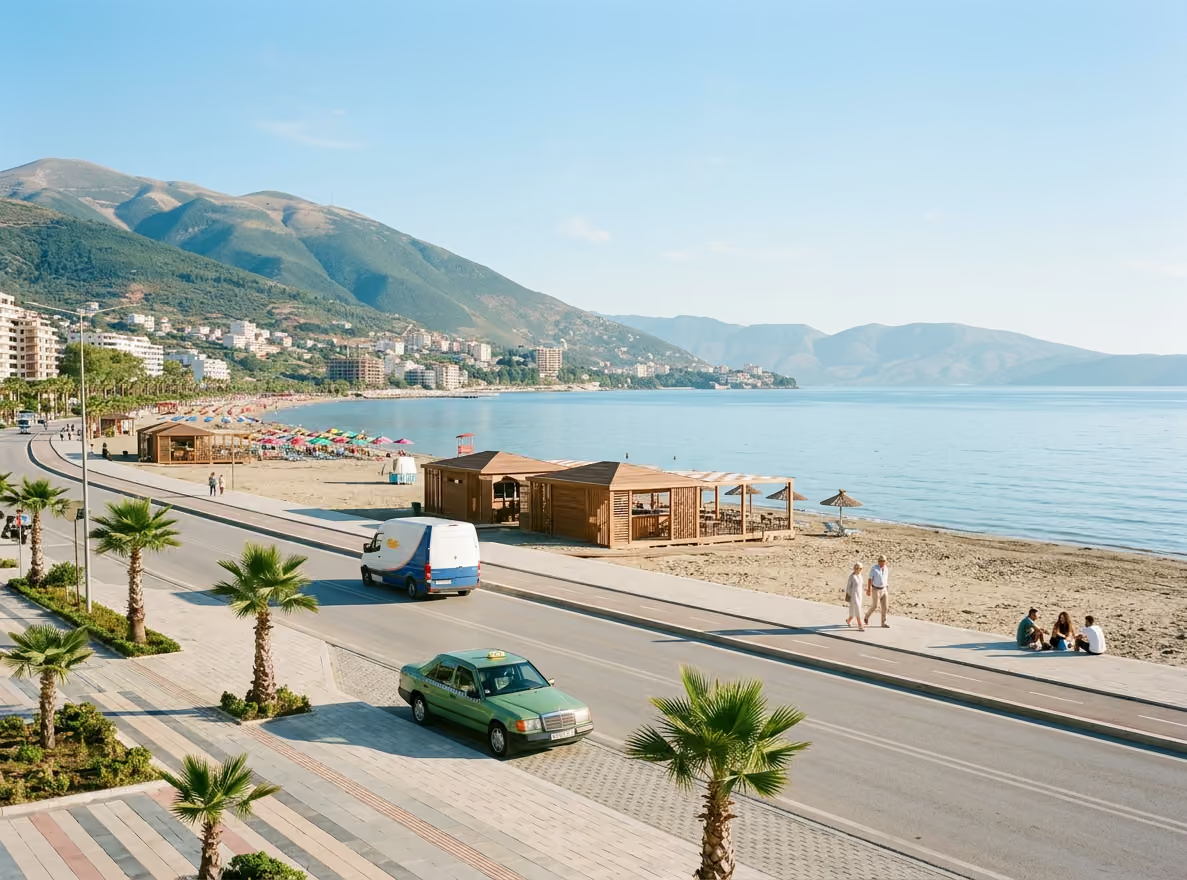
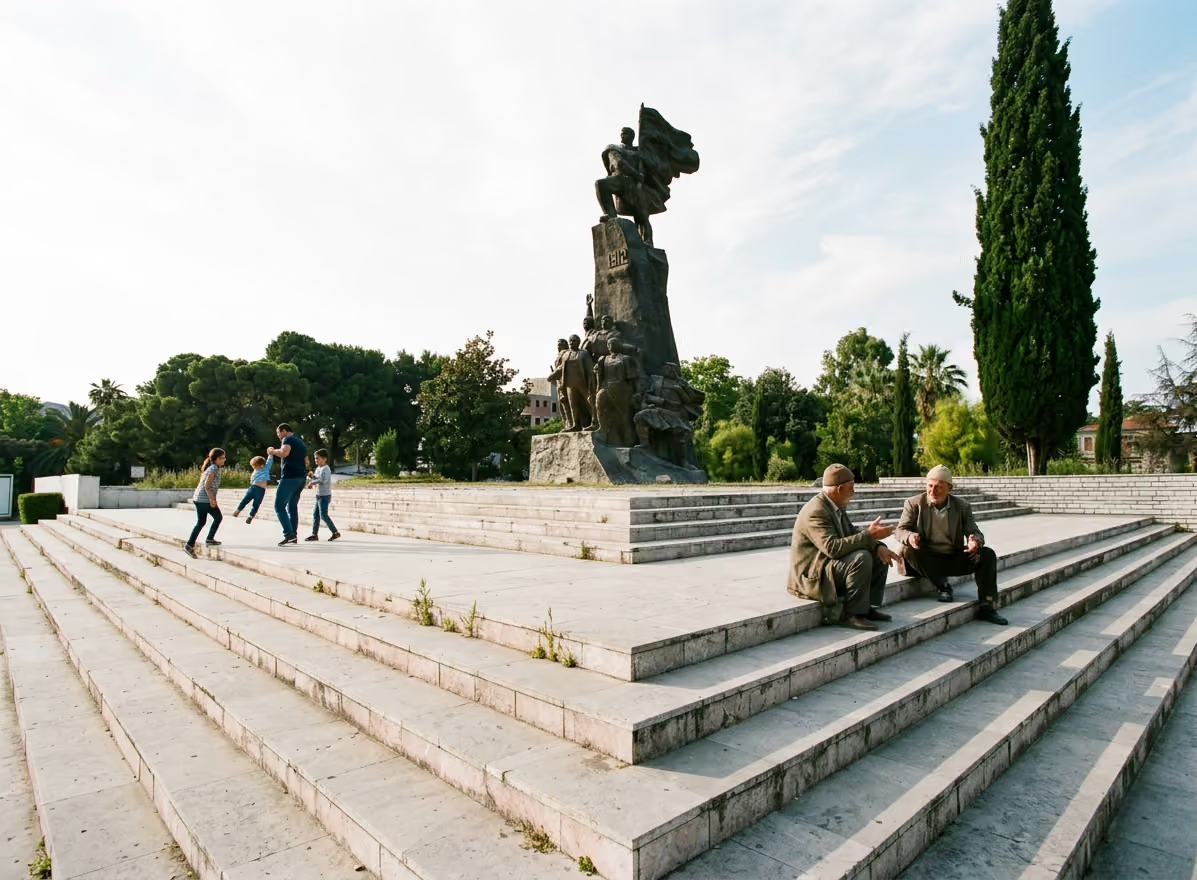
The city itself shapes the decision. A family living near Lungomare can build daily life around beach walks, cafés with Wi-Fi, swim lessons, and evening social time. A family in the city center near Sheshi i Flamurit may have easier access to local schools, offices, and tutors. A family in Uji i Ftohtë may enjoy calmer living but may need a car for school runs and activities.
The romantic idea is simple. Move to the Albanian coast, rent an apartment with a sea view, and let the kids learn anywhere online between beach days.
The real daily life is more practical. Children need routine, friends, transcripts, stable internet, quiet study space, and adults who understand Albanian paperwork. If the education plan is weak, the beach will not fix it.
At the time of writing, Vlorë does not have the same confirmed range of brick-and-mortar international schools that families may expect in larger European capitals. This does not mean international education is impossible. It means the main options are online international schools, hybrid programs, private tutoring, and local social activities.
This is the biggest surprise for many families. They search for “international school Vlorë” and expect a campus with English-medium classes, foreign teachers, school buses, and a clear fee schedule. In practice, most international continuity in Vlorë comes from accredited online providers.
K12 Private Academy, International Schooling, Connections Academy, The School House Anywhere, and similar providers are common reference points for mobile families. These programs can offer American-style curricula, AP courses, NCAA-approved classes, one-to-one instruction, or structured online classrooms. Some serve children across many countries, which makes them useful for families who do not know where they will live next year.
International Schooling says it serves more than 15,000 students across more than 190 countries, with over 600 teachers and support across many languages. It states that it holds accreditation from bodies such as Cognia, WASC, and others. This matters for families who need transcripts accepted outside Albania.
K12-powered options focus on full online schooling for international families. K12 Private Academy covers Pre-K through grade 12, with year-round enrollment, AP courses, career electives from grade 6, and NCAA eligibility options. For a teenager aiming at a U.S. college path, those details matter more than the view from the apartment balcony.
Connections Academy is different. It is known as a tuition-free online public school model in the U.S. context, tied to state-aligned curriculum and certified teachers. For expat use, families must check eligibility rules, state residency rules, and technology needs before relying on it from Albania.
The School House Anywhere and Bina School are useful reference points for families comparing online homeschool programs. The School House Anywhere presents customizable curricula and a wide mix of publishers. Bina School writes about live online learning models for globally mobile families.
The review from a Vlorë family point of view is clear. Online international schooling works best when parents can provide structure at home. It is not a drop-off solution. It is school at home, with outside support.
Start with accreditation. Look for names like Cognia, WASC, NEASC, College Board approval, or NCAA course approval if these fit your child’s future path. Accreditation is not a decoration. It protects the transcript.
Next, check the curriculum path. A British-style child may need Cambridge or IGCSE planning. A U.S.-bound child may need AP, NCAA, or state-aligned credits. A younger child may need strong reading, math, and teacher feedback more than a famous curriculum label.
Then check the rhythm. Some children do well with self-paced classes. Others need live classes at fixed times. A quiet 15-year-old may thrive in self-paced science and math. A 9-year-old may need a teacher on screen and a parent nearby.
Time zone is another practical detail. Vlorë runs on Central European Time. A live class based in the U.S. may meet in the evening here. That can work for teens, but it may be hard for younger children who are tired after local activities.
Technology is not optional. You need reliable internet, a backup mobile data plan, headphones, a printer for some families, and a calm desk. Apartments near Lungomare can have good internet, but quality changes by building. Test the connection before signing a long lease.
The social side needs planning. Online schooling gives academic continuity, but it does not give playground life by itself. Families in Skelë or near the promenade often add language lessons, football, swimming, art classes, or regular meetups with other children.
It works well for families who may move again. If your child started grade 7 in Spain, moves to Vlorë in March, then may return to Canada next year, portable credits can reduce stress. The child stays in one system.
It is strong for teens with university targets. A 10th grader cannot risk losing a year through mismatched credits. A recognized transcript matters for later applications.
It works for children who need English-medium instruction. If your child speaks no Albanian, entering a public classroom can be hard. Online international schooling gives breathing room as they learn local language after school.
It is less ideal for parents who are not available during the day. Young children need adult support. A 7-year-old cannot be left alone with a laptop and called educated.
Albanian public schools are free state schools under the national education system. Compulsory education runs from age 6 to 16. The curriculum covers math, science, Albanian language and literature, history, civics, arts, physical education, and foreign language study.
The main language is Albanian. This is the central issue for expat families.
Public school can be a strong route for children who already speak Albanian, have one Albanian parent, or plan to stay long term. It can give fast local integration. It can build real friendships beyond the expat bubble.
It can be much harder for a child who arrives at age 12 with no Albanian. The child may understand math concepts but fail to follow word problems. They may know science in English but not the Albanian terms. They may feel socially exposed in class.
Nationally, Albania has a strong public school tradition and broad enrollment in state education. The Ministry of Education and Sports oversees public education policy, standards, and school administration. UNESCO country education data gives wider context for Albania’s education system, but local school experience can vary by city, neighborhood, school director, and teacher.
For Vlorë families, the public school question is not only “Can my child enroll?” It is “Can my child learn and feel stable there?”
Schedules vary by school and grade. Many public schools use a morning timetable, and some schools may use shifts when space is tight. Parents should ask the school director about hours, classroom size, language support, and after-school needs.
Homework is common. Albanian language assignments can be the hardest part for foreign children. Parents who do not speak Albanian may need a tutor from the first month.
Foreign languages are taught in many schools, with English common in urban areas. That does not mean other subjects are taught in English. A child may have English class but still study math, history, and biology in Albanian.
School culture can feel more formal than some international systems. Respect for teachers matters. Parents may need to visit the school in person and build a relationship with the director or class teacher.
Younger children adapt faster. A 6-year-old or 7-year-old can absorb language through play, classroom routine, and local friends. They still need support, but the academic stakes are lower.
Children with Albanian relatives often do well. Grandparents, cousins, and local family can help with language, homework, and social cues. This can make public school feel less foreign.
Children who already speak another Balkan language may pick up Albanian context faster in daily life, but Albanian is its own language. Parents should not assume it will be easy.
Teens face the hardest transition. Grades, subject terminology, social groups, and future exams all matter. For high school students, many families prefer online international schooling plus Albanian lessons.
The major benefit is local integration. Your child learns Albanian, understands Albanian culture, and makes friends in the city. This can matter if Vlorë is not a stopover but a real home.
The cost benefit is clear. Public schooling is free. Families still pay for supplies, clothes, transport, extra lessons, activities, and sometimes classroom contributions, but tuition is not the issue.
The challenge is academic continuity. If your child may return to a U.S., U.K., German, or other system, you need records and translations. You may need placement testing later.
The other challenge is parental access. If you do not speak Albanian, parent-teacher communication may need a translator. This can be a friend, local tutor, or bilingual parent from your circle.
For some families, public school becomes the anchor. For others, it becomes too much too fast. Both outcomes are normal.
Homeschooling in Albania should not be treated as an unregulated free-for-all. European home education rules vary widely, and Albania is best approached with care, local confirmation, and written records.
Research from Cambridge Home School Online’s overview of European homeschooling laws shows that many European countries allow home education with some form of notification, assessment, school supervision, or exams. Countries such as Austria, Finland, Latvia, and Lithuania permit home education under different oversight models. France has tighter rules with annual checks.
For Albania, the practical reading for expat families is this: homeschooling can be possible, but parents should seek approval or confirmation from local education authorities and keep the child aligned with acceptable standards. Some families use an accredited online school as proof that education is structured and documented.
Do not rely on a café conversation or a social media comment. Ask locally, keep copies, and get help from an Albanian speaker if needed.
A careful framework has three layers.
The first layer is legal status. Parents should check with local authorities in Vlorë, the school office, or the relevant education directorate. Ask what they require for a child living in the municipality who is not attending public school.
The second layer is curriculum and records. Use an accredited provider or keep organized lesson plans, grades, attendance, samples of work, and test results. This protects the child if you move again.
The third layer is social life. A child who studies online still needs peers. In Vlorë, that may mean football near the stadium area, swimming near the beach zone, art lessons, Albanian tutoring, or family meetups at Lungomare cafés.
Self-paced online school can work for independent children. A motivated teen can complete math, English, science, and electives with a clear weekly plan. Parents still need to check progress.
Live online classes work better for children who need teacher contact. These classes create a schedule. They can reduce parent stress.
One-to-one tutoring is helpful during transition years. International Schooling promotes one-to-one models with personalized support. A child who arrives in March can avoid being thrown into a mismatched grade level.
Parent-built homeschooling gives the most freedom, but it has the highest record burden. If you build your own curriculum, you need to prove what was taught. For families moving countries, this can become risky without a supervising school or accredited transcript.
A hybrid plan often works best. The child uses an accredited online school for core subjects, then takes Albanian language, sport, music, or local activities in Vlorë. This gives both continuity and connection.
The biggest risk is isolation. A child can do well academically and still feel lonely.
Vlorë has public beaches, local sports, and family-friendly cafés, but it is not a large international school ecosystem. You must build the social structure. Do not wait for it to happen on its own.
Some Balkan expat forums describe homeschooling as less common or even socially awkward in parts of the region. That does not make it wrong. It means families may need to explain their choice more often and find peers online or through local groups.
This is where community matters. If you are new to Vlorë, Join the community and ask which families have children the same age. A single good playdate can change the first month.
Most families should start school planning in May or June for a September start. Public schools follow a fixed academic calendar. Online providers may allow year-round entry, but popular teacher-led programs can still have placement timelines.
If you arrive mid-year, do not panic. You still have options. The key is to protect documents and avoid making a rushed choice that hurts transcripts later.
Do not leave the meeting without writing down the next step. Ask who to call, what to bring, and when to return.
Families often focus on the first enrollment form and forget the real test. The real test is week seven, when novelty fades and school becomes daily life.
Costs range from free public education to high private international tuition. The main mistake is comparing tuition only. Families must add tutoring, technology, books, exam fees, transport, and social activities.
Use the figures below as planning ranges, not fixed quotes. Exchange rates shift, providers change pricing, and family needs vary. For simple planning, many families use roughly 95 to 100 Albanian lek for 1 U.S. dollar.
| School path | Likely tuition | Planning range in ALL | Extra costs to plan |
|---|---:|---:|---|
| Albanian public school | Free tuition | 0 ALL | Supplies, clothes, transport, tutoring |
| Local private Albanian school | Varies by school | Ask locally | Registration, uniforms, transport, books |
| Online international school | Often paid | About 475,000 to 800,000 ALL per year for many private online paths | Tech, books, exams, tutoring |
| High-end international program | Can exceed 10,000 USD per year | About 950,000 to 1,000,000+ ALL per year | Placement fees, exam fees, support services |
| Parent-led homeschool | Low to medium | About 50,000 to 400,000+ ALL per year | Materials, online courses, tests, local tutors |
| U.S. public virtual model | May be tuition-free for eligible families | 0 tuition if eligible | Technology, eligibility limits, state rules |
Public school tuition is free. That is attractive for long-term residents.
You still need school supplies, notebooks, pens, clothing, transport, and sometimes paid activities. If your child needs Albanian help, private tutoring may become the main cost.
A language tutor in Vlorë can be more useful than a more expensive curriculum upgrade. For a child entering Albanian public school, two to three short sessions per week may change the whole experience.
Parents should budget for translation too. School records, birth certificates, or legal documents may need certified translation. Costs vary by translator and document length.
Private online schools vary widely. K12 Private Academy-style programs and similar international providers can reach several thousand dollars per year. The research range often used for planning is about 5,000 to 8,000 USD per year for many full-time private online academy paths.
Some programs charge by grade. Some charge by course. Some charge extra for teacher support, live lessons, exams, or special programs.
Ask clear fee questions before you enroll. Is the transcript included? Are AP exam fees included? Are books digital or printed? Is there a refund window? What happens if the family leaves Albania?
For teens, do not choose only by price. A cheaper program that is not recognized can become expensive later if a university rejects credits.
Parent-led homeschooling can be cheap on paper. You can use library-style materials, open resources, paid workbooks, and low-cost online tools. Yet the parent time cost is high.
Accredited online homeschool support costs more, but gives structure. It can provide records, teacher feedback, and recognized completion documents.
One-to-one models cost more than self-paced models. They may be worth it for children with gaps, anxiety, language needs, or mid-year transitions.
Social spending matters too. A child studying from home may need paid activities for connection. Budget for sport, swimming, art, music, or language groups.
Living near Lungomare may give you easy walking access to cafés, playgrounds, sea air, and other families. It may cost more in rent.
Living in the city center may make school offices, public schools, shops, and tutors easier to reach. It may feel less resort-like but more practical.
Living in Uji i Ftohtë or toward Radhimë can be calm and beautiful, but you may need a car. That cost should be part of the school decision.
A cheaper rent far from activities can create a hidden school cost. Your child may lose social time if every lesson needs a drive.
The best curriculum is the one that matches your child’s next likely school system. Do not choose based only on where you are now. Choose based on where the child may need to enter next.
If your family may return to the United States, an American curriculum with clear credits, grade reports, AP options, and NCAA-approved courses may be best. K12 Private Academy and similar providers publish pathways that can support U.S. academic planning.
If your child may move into a British system, ask about Cambridge, IGCSE, A Levels, or British-aligned learning. Not every “international” program serves that path.
If your family is mobile and unsure, choose the most transcript-friendly option. Accreditation, course descriptions, grade reports, and teacher comments can help schools place your child later.
If your child is young, focus on literacy, math, routine, and emotional safety. A third grader can recover from many curriculum differences. A 10th grader has less room for errors.
| Framework | Core curriculum | Main language | Accreditation or oversight | Flexibility |
|---|---|---|---|---|
| International online school | American, British, AP, IGCSE, or custom global tracks | Usually English | May include Cognia, WASC, NEASC, College Board, NCAA | High |
| Albanian public school | Albanian national standards | Albanian | Ministry of Education and Sports | Low to medium |
| Parent-led homeschool | Parent-selected subjects and resources | Parent choice | Depends on provider and local approval | Very high |
| Hybrid model | Online core plus local language and activities | English plus Albanian | Depends on online school and local records | High |
Accreditation tells future schools that the program meets outside standards. It does not guarantee your child will love the program. It does make the paperwork stronger.
For U.S.-bound athletes, NCAA-approved courses matter. A teen who hopes to play college sports cannot assume any online course will count. Families should verify course approval before enrollment.
For AP students, College Board course authorization matters. Ask whether the course appears on official records and how exams are arranged.
For younger children, accreditation is less dramatic but still useful. If you move to another country, a recognized transcript may prevent placement stress.
Online programs can help with uneven levels. A child may be grade 6 in English, grade 7 in math, and beginner in Albanian. A flexible program can handle that better than a fixed classroom.
Public school is less flexible. Grade placement may follow age and prior records. Teachers may not have time to customize for one foreign child.
Homeschooling can adapt fastest. It can fill gaps and let a child move ahead in strengths. The parent must keep records so the child’s progress is visible later.
A mixed plan can work well. For example, a 12-year-old in Vlorë could study accredited English, math, science, and history online, then take Albanian language with a local tutor and join a football club near the stadium.
School choice and neighborhood choice are linked in Vlorë. The wrong apartment can make a good school plan hard. The right location can make daily life smoother.
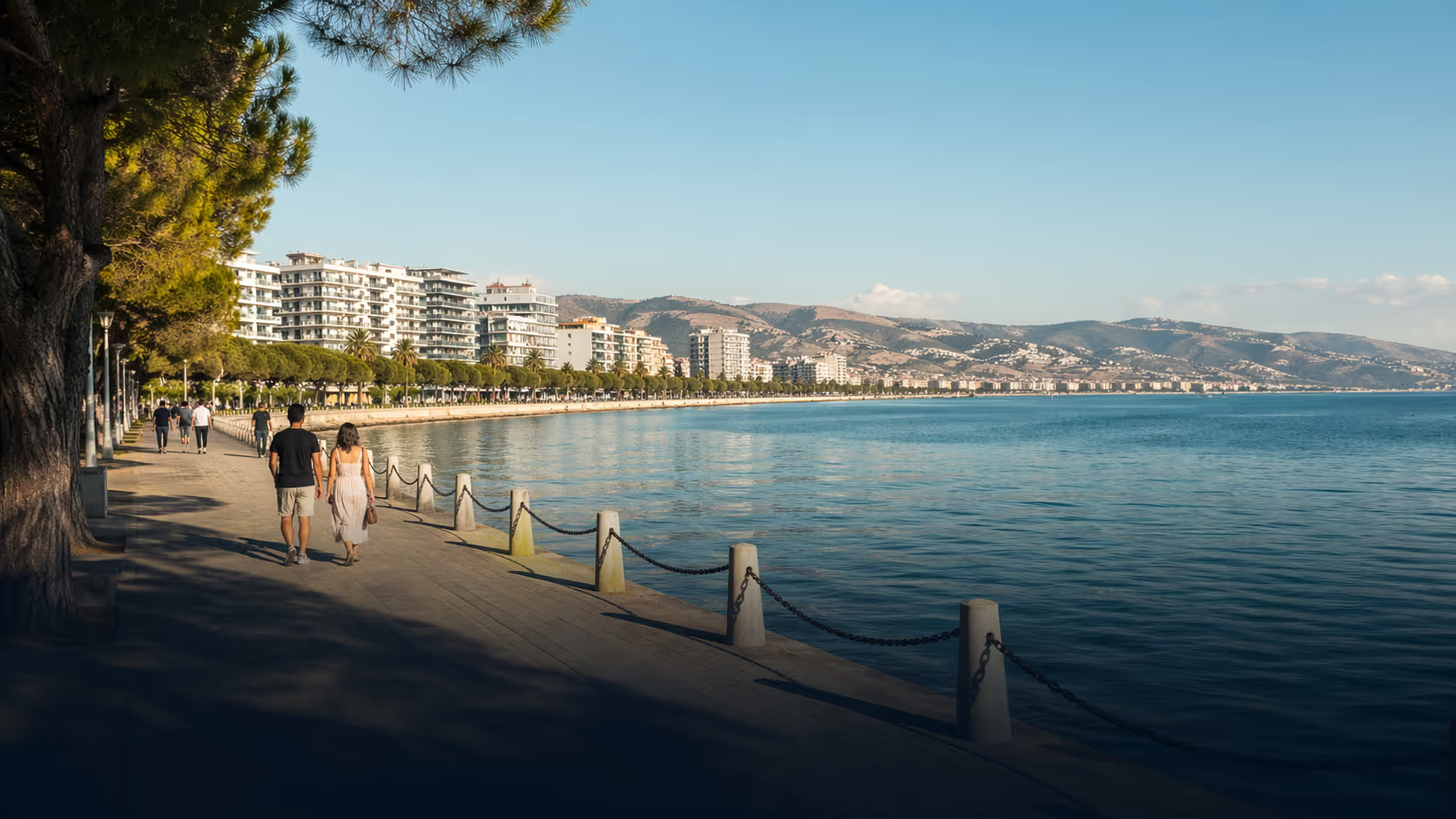
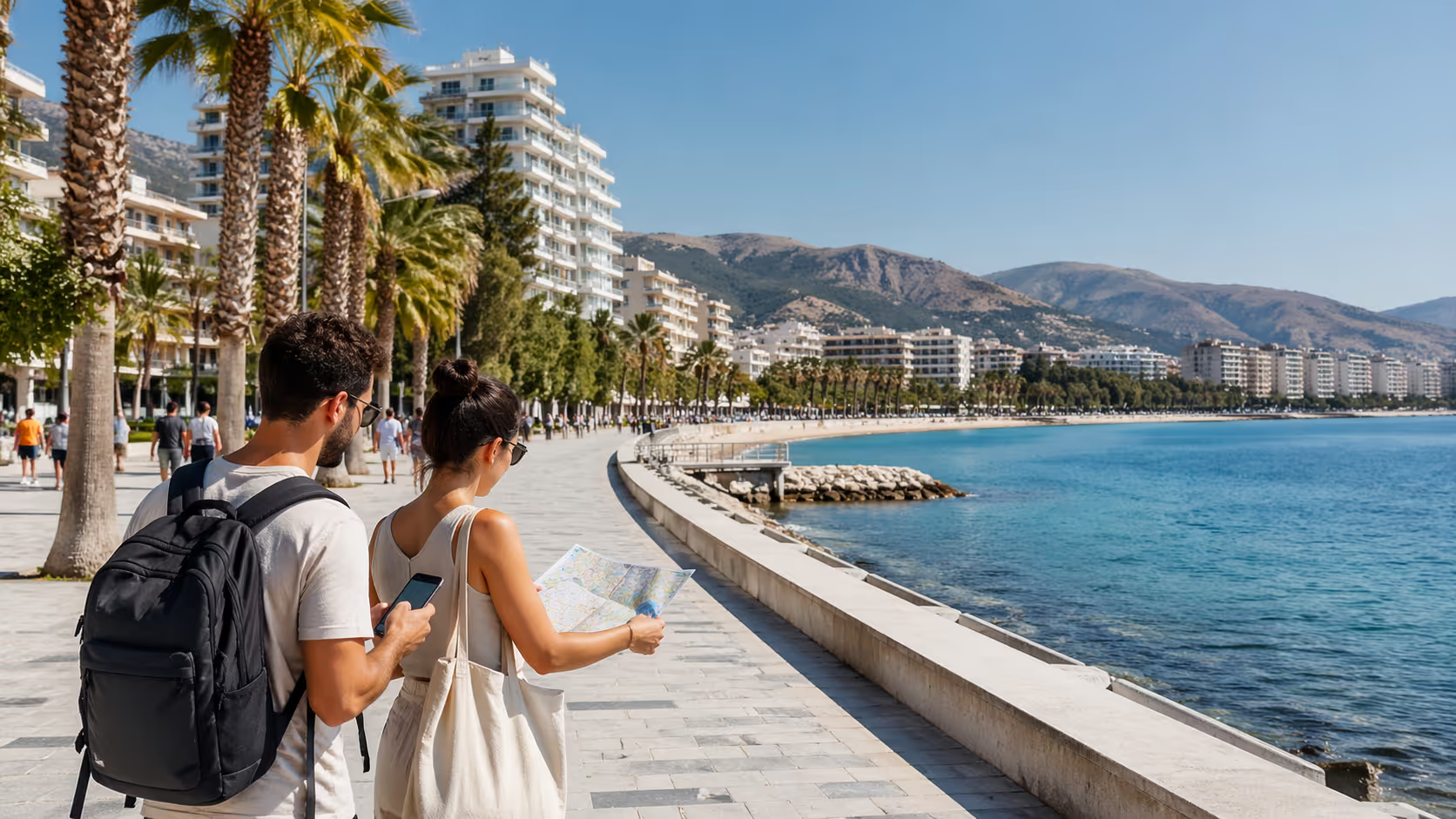
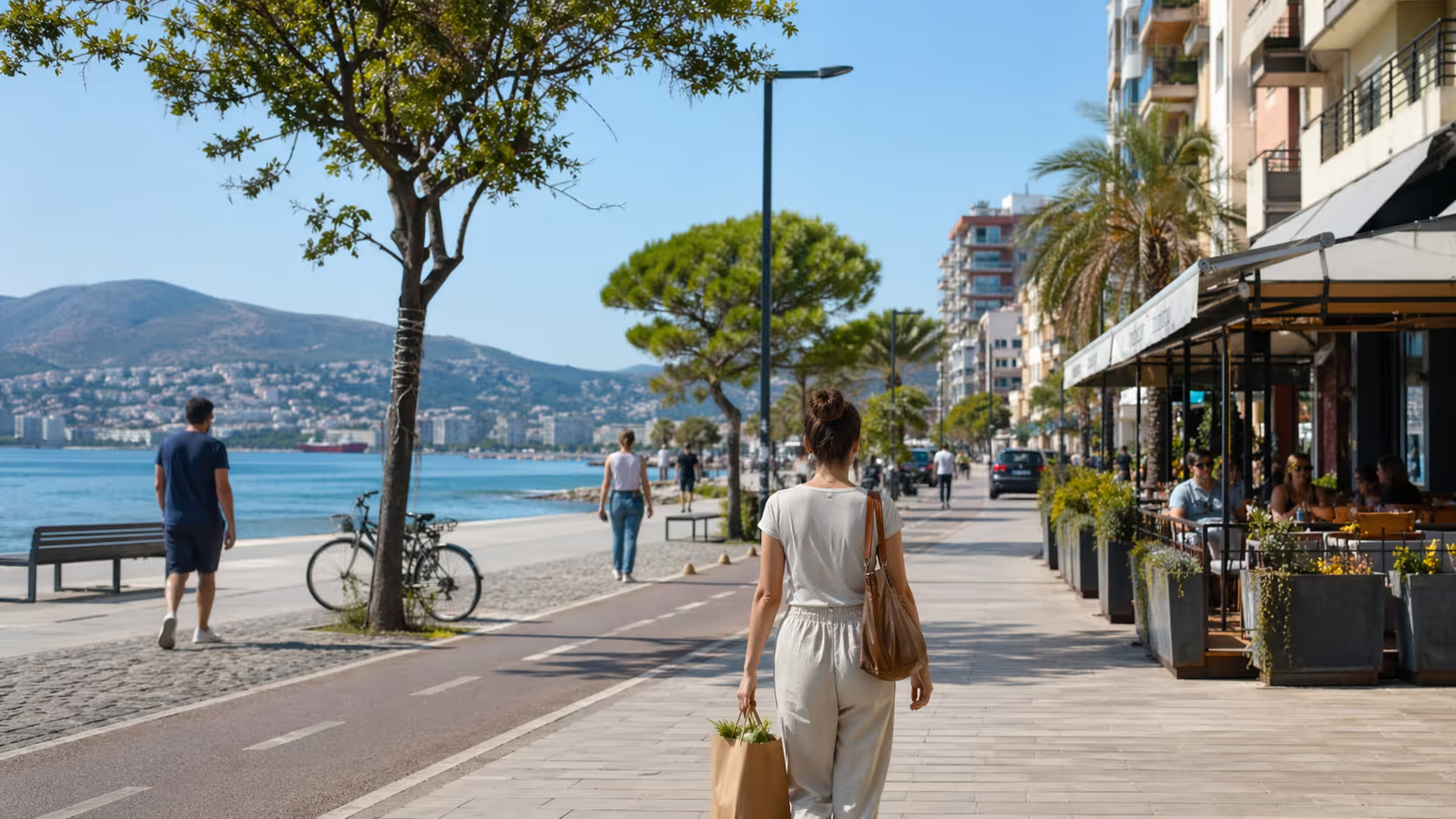
Lungomare and Skelë suit families who want walkable coastal life. The promenade gives children space to move after online classes. Parents can find cafés, restaurants, and services nearby.
This area can work well for online school families. A child can study in the morning, walk by the sea at lunch, then attend sport or language lessons later. Families are more likely to meet other foreigners near the beach zone.
Noise and seasonal traffic can be issues. Summer can change the mood of the whole area. If your child needs quiet for exams, check the apartment building carefully.
Internet quality changes by building. Ask for a speed test in the exact apartment, not only the provider name.
The city center is practical. It can give easier access to public schools, offices, shops, translators, and tutors. It may be better for families using Albanian public school.
Children may have less beach access day to day, but errands are easier. Parents without a car may prefer this area.
If you need to visit school offices, print documents, translate papers, and meet tutors, the center helps. It feels more local and less resort-focused.
Some streets are busy. Visit at school commute times before signing a lease.
Uji i Ftohtë is popular with families who want sea views and calmer living. It can feel more residential in parts, with quick access to the coast.
It works best with a car or a very clear transport plan. A beautiful apartment can become stressful if every class, shop, or meetup needs complicated travel.
For online school families, it can be a strong base. The home study space matters more than distance to a campus.
For public school families, check the exact school catchment and commute. Do not assume the nearest school is the right fit.
Radhimë and nearby coastal areas can be lovely for space and sea access. They are less practical for daily school life.
These areas suit families with flexible online schooling, a car, and children who do not need frequent city activities. They may not suit teens who want friends nearby.
Winter life is quieter outside the city. That can be peaceful for adults, but isolating for children.
If you choose an outer area, build a weekly city routine. Plan fixed days for lessons, sport, and social time in Vlorë.
The first mistake is assuming Vlorë works like a large expat capital. It does not. The city can be warm and welcoming, but school infrastructure for foreign families is limited.
The second mistake is waiting too long. May and June are better months for September planning. If you arrive in August, public school offices may be harder to manage and online programs may have less time for placement.
The third mistake is treating “free” as simple. Public school is free, but language is not free. Your child may need months of Albanian support.
The fourth mistake is choosing an online school without checking accreditation. A smooth website is not the same as a recognized transcript.
The fifth mistake is underestimating parent workload. Online school and homeschool both require adult structure. The younger the child, the more hands-on the parent must be.
The sixth mistake is ignoring friendships. A child can have perfect grades and still hate the move. Social life is not a bonus. It is part of the relocation plan.
The seventh mistake is choosing an apartment only for the view. A sea view does not help if the Wi-Fi drops during exams or the child has no quiet desk.
A family with two children moves near the city center. The younger child is 7 and starts Albanian public school. The older child is 13 and stays in an accredited online program.
The younger child struggles for the first two months, then starts using Albanian with classmates. A tutor comes twice a week. The older child keeps U.S. credits and joins a local sport.
This split model is common for mobile families. One child integrates locally. The other protects academic continuity.
A digital nomad family rents near Skelë. Their 11-year-old uses a teacher-led online program for core subjects. The family keeps attendance logs, grades, and writing samples.
Three afternoons per week, the child takes Albanian, swimming, and art. The parent joins local meetups and arranges playdates.
The child does not have a school building, but does have a rhythm. That rhythm is what makes the model work.
A family arrives in Vlorë in October and starts casual homeschooling with free videos. No records are kept. No local authority is contacted. The child studies some days and skips others.
Six months later, the family needs to move again. The next school asks for transcripts, course descriptions, and proof of grade level. The parents have little to show.
The fix is simple at the start and painful later. Use accredited courses, keep records, and ask local questions early.
Families should keep a school folder before arriving in Vlorë. Use both digital copies and printed copies. Albanian offices still often value paper.
Bring the child’s passport. Bring parent passports too.
Bring birth certificates. If possible, bring apostilled copies for foreign documents. Ask a local professional whether translation is needed.
Bring school transcripts and report cards for at least the last two years. For teens, bring all high school records.
Bring vaccination records. Keep the original and a translated summary if possible.
Bring any learning support plans. These may include ADHD reports, dyslexia assessments, speech therapy notes, or individualized education plans.
Bring proof of address in Vlorë when you have it. A rental contract can help.
Bring residency documents if you have them. Some schools or offices may ask about the family’s legal status.
The Albanian Ministry of Education and Sports publishes national education information and policy. It is the starting point for official context.
The e-Albania portal is useful for many public services. School processes may still require in-person contact, but families should know the portal.
The Municipality of Vlorë can direct families toward local offices and public services. For school placement, local education structures and the school director are often the practical path.
For U.S. families, the U.S. Embassy in Albania can be a useful reference for citizen services and education-related questions. It will not choose a school for you, but it can point families toward official channels.
For British families, the British Council Albania can help with English language exams and education context. It is not a Vlorë school placement office.
For online programs, contact the provider directly and ask for written answers. Save every email.
Ask what documents are required for enrollment.
Ask who decides grade placement.
Ask what language support exists.
Ask how attendance is tracked.
Ask how parents receive updates.
Ask what happens if the child leaves mid-year.
Ask how transcripts or completion records are issued.
Ask about exams, deadlines, and fees.
Ask what support exists for children who arrive with no Albanian.
These questions may feel basic. They prevent confusion later.
The dream version of Vlorë family life is easy to sell. Children finish lessons by noon, eat lunch near the sea, swim in the afternoon, and learn Albanian from friendly neighbors.
Some days really can look like that. The city gives families access to the coast, slower routines, and more outdoor time than many large cities.
The daily reality has more friction. Winter can be quiet. Rain can make apartment life feel small. Online classes can clash with time zones. Albanian paperwork can feel slow. Children may miss old friends.
Public school brings its own reality. Your child may come home tired from listening to Albanian all day. Homework may take longer than expected. Parents may feel helpless if they cannot read the assignment.
Homeschooling brings another reality. The parent becomes teacher, schedule manager, tech support, and social planner. That can be rewarding, but it can drain energy fast.
International online school brings structure, but the child still studies from home. If the apartment is noisy, crowded, or dark, school quality drops. A good desk and reliable Wi-Fi are part of the education budget.
Vlorë can be a very good place for children, but it rewards families who plan. The beach is a benefit, not a school system.
Host tip from our community: do a two-week “test timetable” before you lock the plan. Wake up at school time, run the online class schedule, walk the commute, test the Wi-Fi, visit the nearest playground, and book one Albanian lesson. If the rhythm feels strained in week one, fix it before September.
The other host tip is social. Do not wait until your child is lonely to look for other families. Join the community early, ask about children’s ages, and set one simple meetup near Lungomare or the city center. Education continuity matters, but belonging matters too.
There is no single best school plan for every family in Vlorë. A good plan fits the child’s age, language, future country, parent availability, and budget.
Use an accredited online program or keep the child enrolled in their home-country system if allowed. Add Albanian lessons and local activities.
Short stays are not ideal for full public school immersion unless the child already speaks Albanian. The transition cost may be higher than the benefit.
Keep records from day one. A short stay can still create a transcript gap if handled loosely.
A hybrid model often works best. Use online international school for core academics, then build local life in Vlorë.
Younger children may try public school if parents are committed to Albanian language support. Teens should be more cautious, since credits and exams matter.
This group should review the plan every term. If the family decides to stay longer, public school or stronger Albanian integration may become more attractive.
Public school becomes more realistic. Children need Albanian if they will build adult life in Albania.
The best path may still differ by child. One sibling may thrive in Albanian school. Another may need international online learning for university goals.
Long-term families should invest in language early. Albanian lessons help school, friendships, errands, and confidence.
Protect transcripts first. Choose accredited coursework, clear grading, and recognized exams.
Public school may work for fluent Albanian speakers or children already in the Albanian system. For a foreign teen arriving fresh, it can be a major risk.
Ask about graduation requirements before enrollment. Do not assume credits will transfer.
Ask direct questions before choosing any path. Does the school or provider support dyslexia, ADHD, autism, anxiety, speech needs, or gifted learning?
Online school can help some children through pacing and quiet work. It can hurt others who need in-person support.
Public school support may vary by school and teacher. Meet the director and be clear about needs.
Homeschooling can be flexible, but parents need training, patience, and outside help. A local tutor or therapist may be part of the plan.
You need to ask the local school or education office in Vlorë. Requirements may depend on your status, documents, address, and the child’s prior records. Bring passports, rental proof, school records, and any residency papers you have.
Some U.S. online public programs have state residency rules. Connections Academy is tied to U.S. public virtual schooling models, so eligibility must be checked directly. Private online academies may be simpler for families living abroad.
It is less common than public school, and some people may not understand it at first. Families who use accredited programs, keep records, and build local social routines usually have an easier time explaining the choice.
Choose accreditation and records over convenience. For university-bound teens, ask about AP, IGCSE, A Levels, NCAA approval, College Board status, transcripts, and school profiles before paying fees.
Follow Vlore Circle for fresh guides, local updates, and community notes around life in Vlorë. It is the easiest way to stay close to what we are building.

Be part of a growing community built around connection, local life, and a better experience of Vlorë.
join the circle