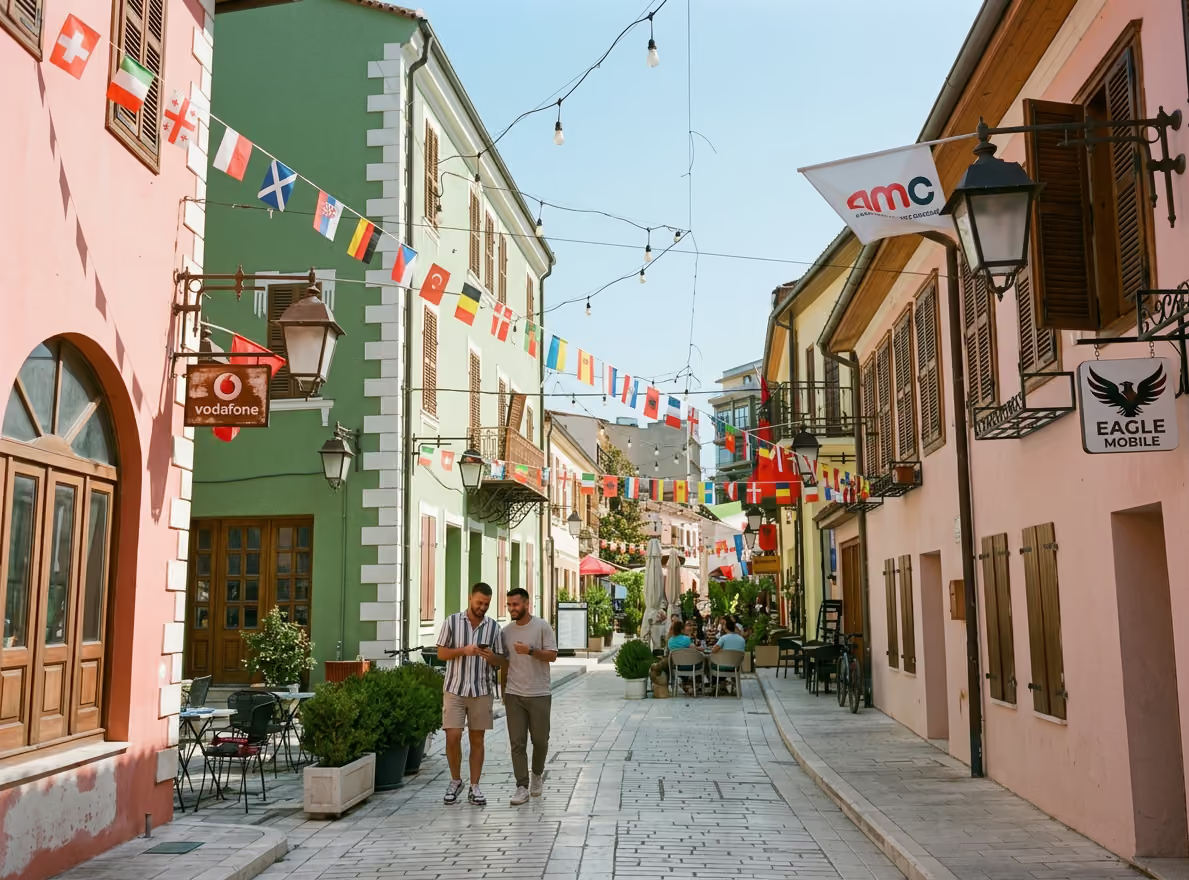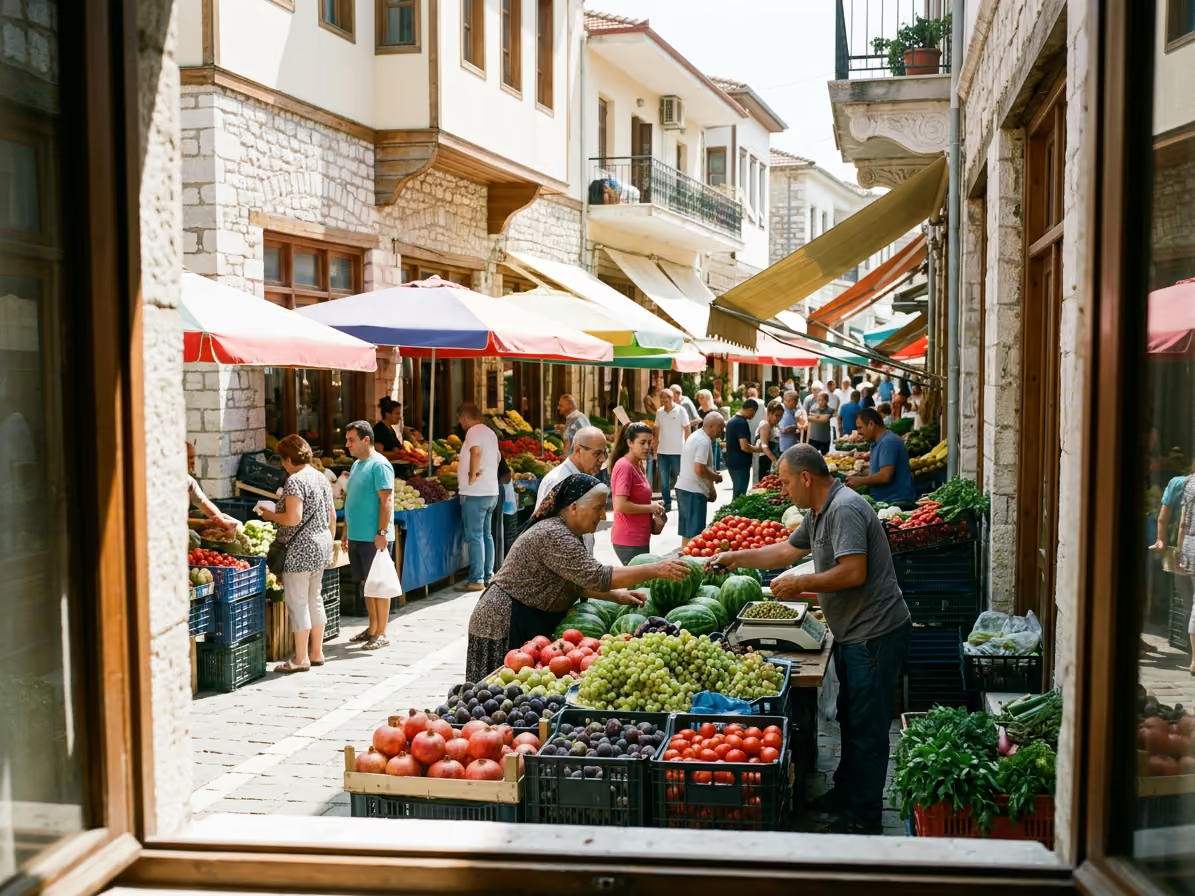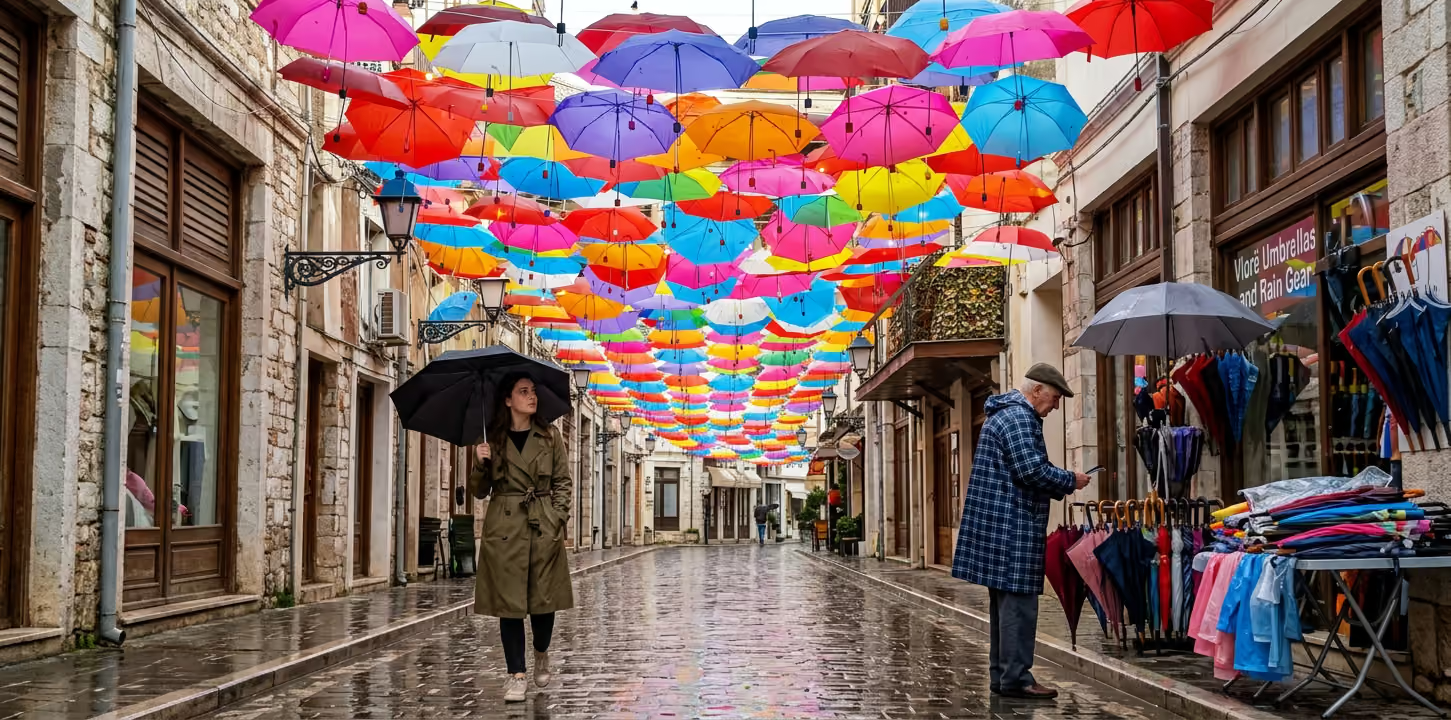
Representative image

Three distinct historical eras shaped the architecture of Vlorë, creating a mix of Ottoman stone mosques, Communist housing blocks, and modern coastal developments.





You searched for Vlorë architecture and found scattered notes on one mosque, a vanished castle, and a few pretty promenade photos. This guide gives you a clear way to read the city on foot, from Ottoman stone and brick, to Communist concrete, to the glassy bayfront of modern Vlorë.
Vlorë’s architecture is best understood as layers, not a single style. Start in the old city core around Muradie Mosque, move toward the museum streets and the former castle area, then compare those older forms with Communist apartment blocks and the newer Lungomare waterfront.
Vlorë is not a museum city frozen in one period. It is a working coastal city where old houses, religious monuments, state buildings, apartment blocks, hotels, cafés, and unfinished plots sit close together. That mix can confuse new residents at first.
The main pattern is simple. Ottoman Vlorë gave the city mosques, stone houses, defensive works, and narrow urban pockets. Communist Vlorë added standard housing blocks, state institutions, and a hard practical style. Post-1991 Vlorë brought private construction, tourism buildings, renovated streets, and the long bayfront promenade.
This matters in Vlorë more than in many Albanian cities. The city is tied to the 1912 Albanian Declaration of Independence, it sits on a strategic bay, and it has long faced Corfu, Italy, and the wider Adriatic. Its architecture tells stories about trade, religion, defense, ideology, migration, and tourism.
The easiest way to read those stories is not through a long lecture. Walk a route. Look at materials. Compare rooflines. Ask why one building faces the street and another turns inward. Notice which sites are protected, which are reused, and which are half hidden behind new construction.
For expats and long-term residents, this is more than sightseeing. It helps you understand why certain streets feel older, why some apartments have odd layouts, and why locals speak about buildings with pride, sadness, or humor. It can shape where you rent, where you take guests, and how you talk about the city with respect.
Vlorë has a practical rhythm. In the morning, the old center near Muradie is easier to walk before traffic thickens. Late afternoon is better for the promenade and bayfront. Midday in summer can turn a short architecture walk into a heat problem, mainly around open streets with little shade.
Think of the city as three overlapping maps. The first is the Ottoman map, with Muradie Mosque, old houses, and the memory of the castle. The second is the state-planned map, with blocks, schools, offices, and public squares from the Communist period. The third is the current coastal map, with hotels, apartments, cafés, and the Lungomare.
None of these maps fully replaced the others. They sit on top of each other. That is why Vlorë can feel uneven, charming, raw, and unfinished on the same walk.
The best starting point is Muradie Mosque, often called the Lead Mosque in English-language guides. Albaniaturism and Evendo both describe it as a 16th-century Ottoman mosque linked to Mimar Sinan, the great imperial architect of the Ottoman world. The commonly given construction period is 1537 to 1542, during the reign of Sultan Suleiman the Magnificent.
Muradie Mosque is compact, balanced, and easy to miss if you expect imperial scale. That is part of its value. It is not trying to dominate Vlorë like a huge Istanbul mosque. It sits low in the urban fabric, with a square prayer hall, a dome on a polygonal base, and an 18-meter minaret built in white chiseled stone, according to Albaniaturism.
Look closely at the wall surfaces. The alternating red and white brickwork gives the building texture and rhythm. The contrast between brick and stone is one of the easiest Ottoman details to spot in Vlorë.
The mosque is an active worship site, not only a monument. Dress modestly if you enter. Do not step inside during prayer without asking. If the door is open and no prayer is taking place, a quiet look may be possible.
A good first exercise is to stand across from the mosque and read the building in three parts. The cube-like prayer hall is the base. The dome is the vertical lift. The minaret is the marker that turns the building from a small hall into a city landmark.
Many visitors rush to photograph the dome. Take time with the doorway and masonry instead. Sinan’s work is often praised for proportion, and this site shows that value at a small scale. It feels measured rather than grand.
From Muradie Mosque, walk toward the Ethnographic Museum area. The museum is housed in an Ottoman dwelling dated to 1862, according to the Mauritius Images archive description. This gives you a different side of Ottoman architecture, domestic life rather than prayer or power.
Ottoman domestic buildings in Albania often used local materials, inward-facing rooms, and layouts shaped by climate and family life. At the museum, the value is not only the façade. The rooms, household objects, and traditional arrangement help you picture Vlorë before apartment blocks and beach towers.
The Ethnographic Museum makes a useful contrast with Muradie Mosque. One is public and religious. The other is private and domestic. Together, they show that Ottoman Vlorë was not only about rule and empire. It was lived through courtyards, kitchens, guest rooms, textiles, and craft.
If open, check visiting hours in person before planning your whole morning around the museum. Small museums in Albania can change hours, close for maintenance, or open with a staff member on request. Bring cash in lek, and do not expect card payment at every small cultural site.
The lost Vlorë Castle is the third Ottoman layer in the city story. Wikipedia’s Vlorë Castle entry records a 1537 construction date, an octagonal plan, walls about 100 meters per side, an area of 3.5 to 4 hectares, hexagonal bastions, two gated entrances with drawbridges, and a sea-facing tower. The same source notes that it was captured by Venetians in 1690 to 1691 and demolished by 1906.
This is the point where many visitors feel frustrated. They expect castle walls and find mainly an absence. Yet that absence matters. A vanished fortress teaches you how often Vlorë has been rebuilt, erased, and reinterpreted.
For a self-guided walk, treat the castle as an imagined footprint. Stand near the historic core and face the bay. Think about why an Ottoman fortress here would need to watch sea routes, inland roads, and the mouth of the bay. Vlorë’s coastal position was not decorative. It was military and commercial.
Do not over-credit one famous name. Mimar Sinan is linked to Muradie Mosque and likely to the castle design in several accounts, yet local builders and regional craftsmen shaped the actual work. The brickwork, stone cutting, repairs, and daily use came from many hands.
A full Ottoman architecture day can stretch beyond Vlorë city. Dervish Ali’s Towers in Dukat, within Vlorë County, are listed by Into Illyria as an early 19th-century complex and a Cultural Monument since 1979. The site is linked with Dervish Ali, an anti-Ottoman revolt leader, and was built by masters from Ioannina.
Dukat is not a casual stroll from the city center. You need a car, a trusted driver, or a planned trip. Pair it with Llogara or the villages south of Vlorë if you want a full day. The towers add a defensive and rural angle to the Ottoman-era story.
The key Ottoman visual clues are easy to learn. Look for domes, minarets, brick and stone contrast, inward domestic spaces, and thick masonry. Then ask what kind of life the building served. Prayer, defense, family life, storage, or local power.
The Communist period from 1944 to 1991 changed Vlorë in ways that older monuments cannot explain alone. The city grew through state planning, industrial work, standard housing, schools, offices, and public buildings. The architecture became plainer, harder, and more repetitive.
This period is often skipped by visitors. They see concrete blocks and call them ugly. Residents who lived through the period see more than ugliness. They see housing allocation, state jobs, shortages, parades, school life, surveillance, and a shared urban memory.
The easiest Communist-era features to identify are apartment blocks with simple rectangular forms. Many have flat façades, repeated balconies, exposed concrete, and practical stairwells. The style was less about individual expression and more about standard units.
Look around the blocks behind the main roads and near older state institutions. You will see buildings that were not made for sea-view marketing. They were built for workers, clerks, teachers, and families who lived inside a controlled state system.
Public buildings from the period often have broad entrances, symmetrical layouts, and stern proportions. Some have been repainted, reclad, or repurposed. A Communist building with new shopfronts at street level may still show its original bones above the first floor.
Vlorë’s Communist architecture cannot be separated from religious suppression. Albania under Enver Hoxha closed religious sites across the country, and many buildings were repurposed. The research notes the national scale of religious closures, with mosques and other religious sites heavily affected, but local building-by-building histories need archive checks before making firm claims.
That caution matters. It is easy to repeat a dramatic story about every old mosque or church. Ask locals, compare sources, and avoid treating rumor as fact. In Vlorë, a building can have several lives, and not every phase is documented on a public sign.
For a useful comparison, stand near Muradie Mosque and then walk toward a plain mid-century apartment block. The mosque uses proportion, masonry, and a vertical minaret. The block uses repetition, concrete, and balconies. One speaks through craft. The other speaks through uniformity.
Yet uniform does not mean meaningless. A Communist block can reveal how the state organized domestic life. Shared entrances, small kitchens, narrow balconies, and central stairwells shaped daily habits. Neighbors knew each other partly through design.
Some Communist-era structures in Albanian cities were tied to youth culture, workers’ clubs, party offices, or collective events. In Vlorë, ask older residents about former cinemas, cultural houses, factories, schools, and sports halls. Many stories live in memory, not in polished plaques.
When viewing this era, avoid two easy mistakes. Do not romanticize it as pure retro style. Do not dismiss it as worthless concrete. For current residents, these buildings are still homes, workplaces, and family history.
The best time to look at Communist apartment blocks is late afternoon. The side light reveals balcony patterns, stair towers, patched plaster, satellite dishes, and later additions. You will see how residents have altered standard designs with awnings, windows, plants, paint, and air conditioners.
That personal layer is part of the architecture now. A state-planned block built for sameness has become a patchwork of private choices. This is one of the clearest post-1991 changes visible from the street.
For newcomers looking at rentals, Communist-era blocks can be practical. They may have central locations, thicker walls, and lower prices than glossy new towers. The trade-offs can include old lifts, stairwell wear, limited parking, poor insulation, or dated plumbing.
Do not judge from the façade alone. Some plain blocks contain renovated apartments with good layouts. Some new façades hide weak soundproofing. Architecture gives clues, not final answers.
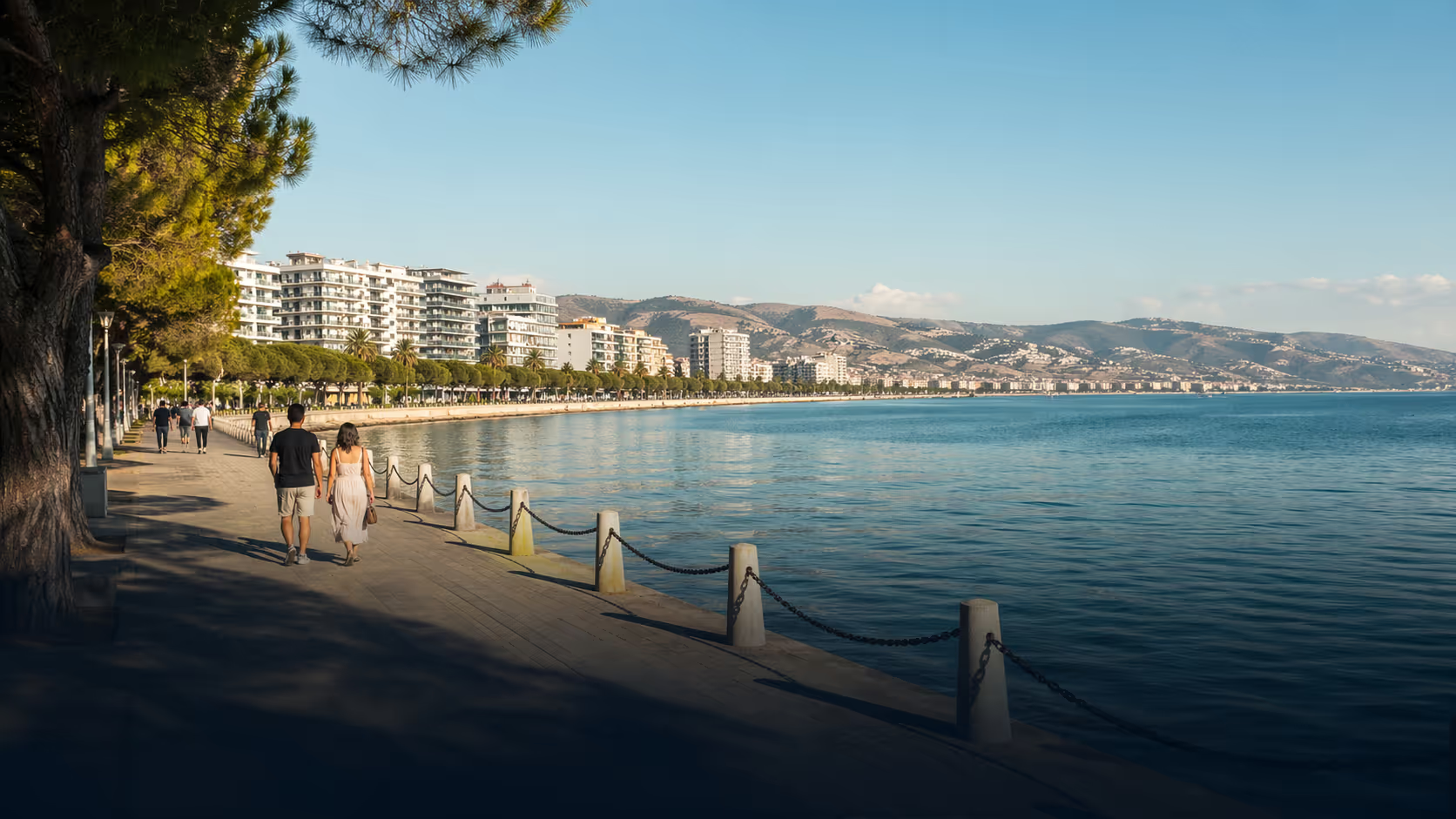
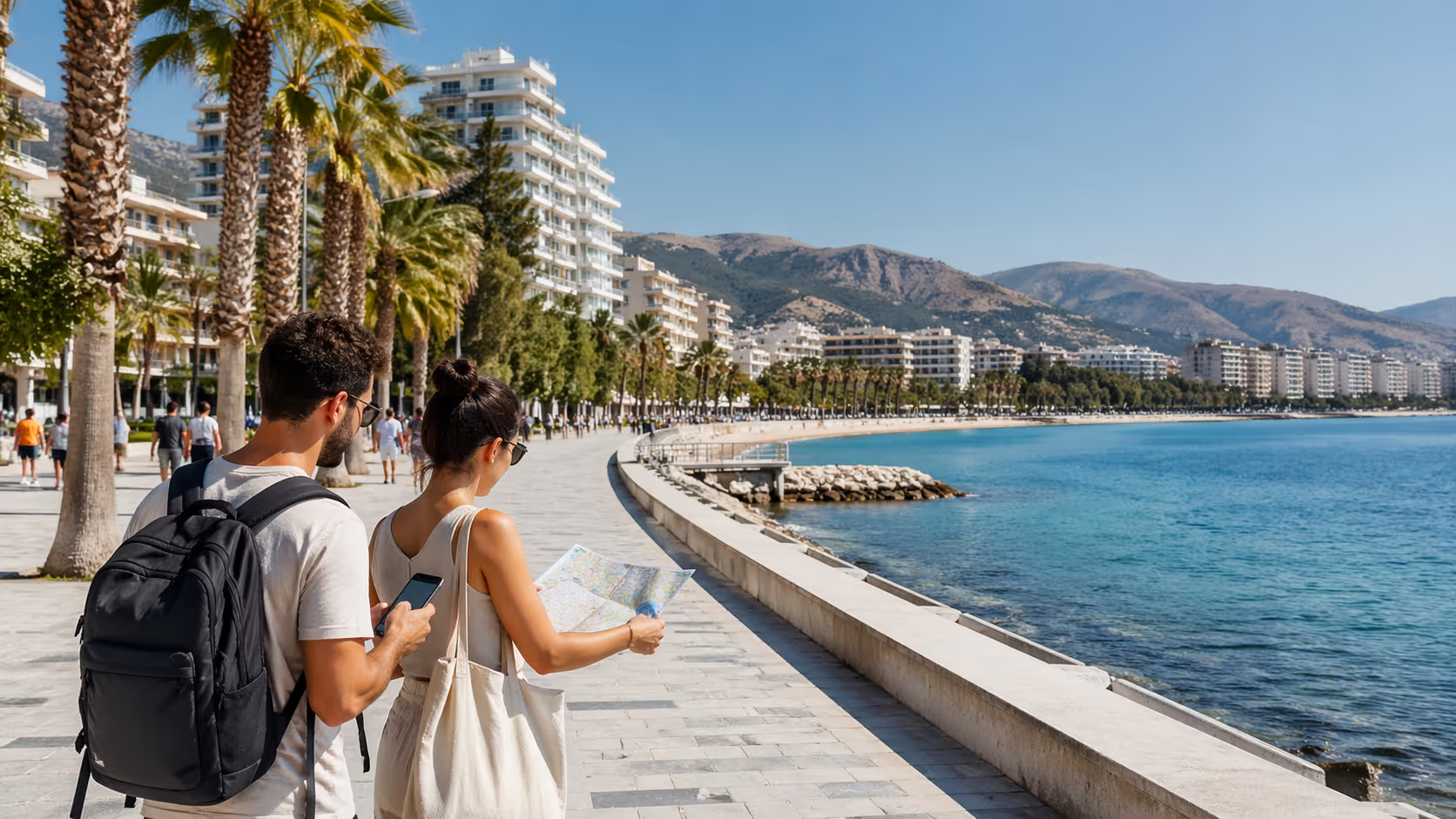
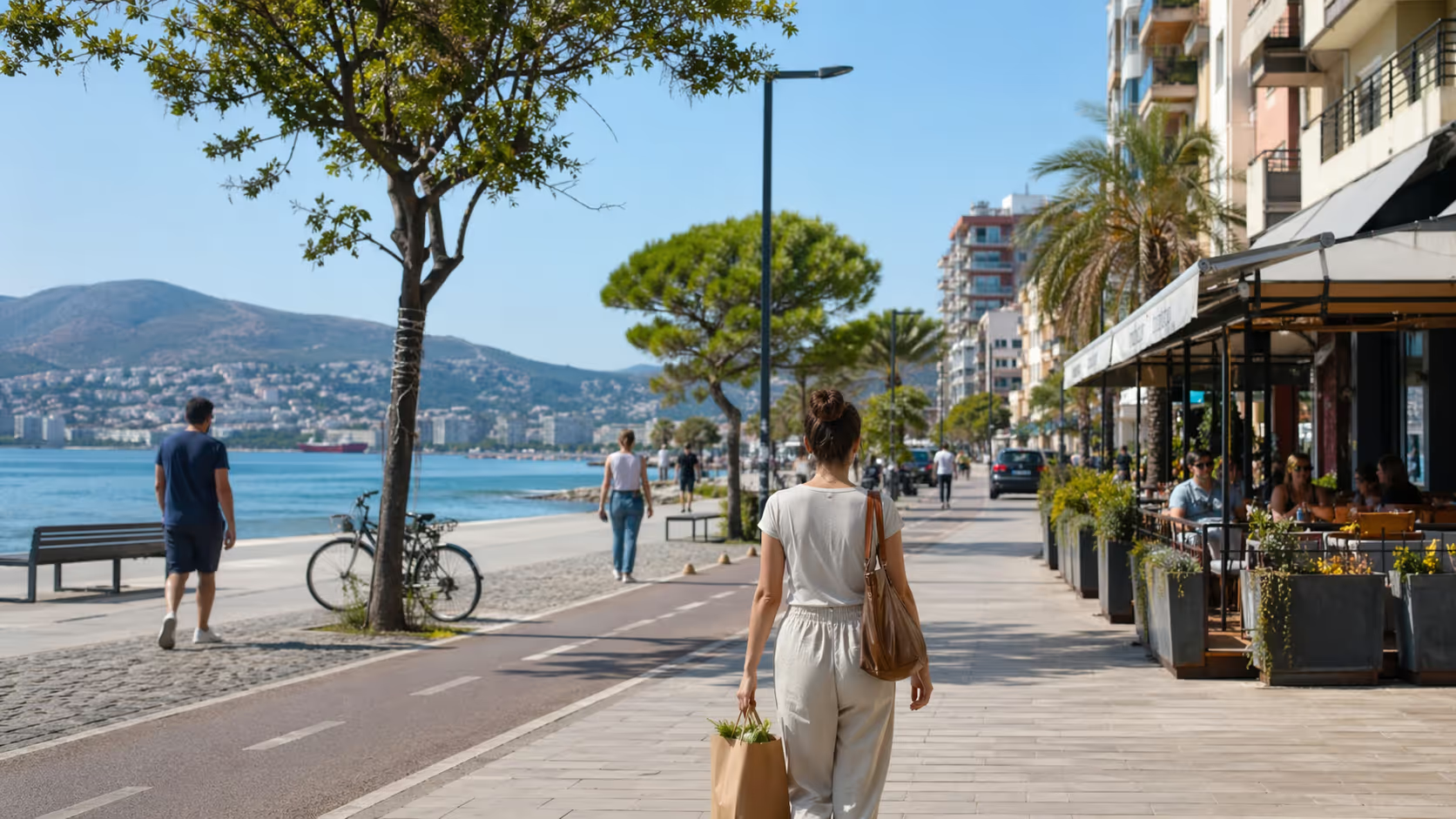
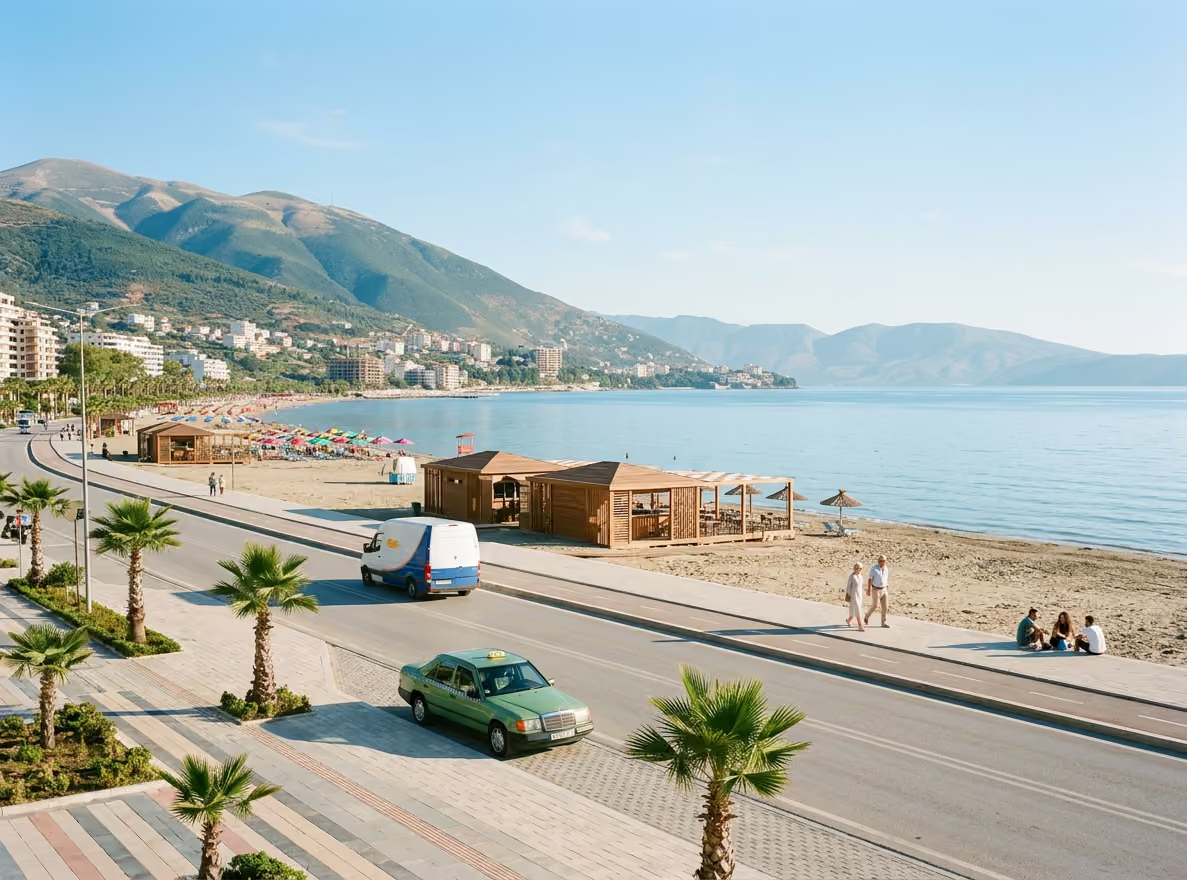
Modern Vlorë is easiest to read along the bayfront. The Lungomare promenade has become the public stage of the city. People walk, cycle, meet friends, take evening xhiro, and bring visitors there first.
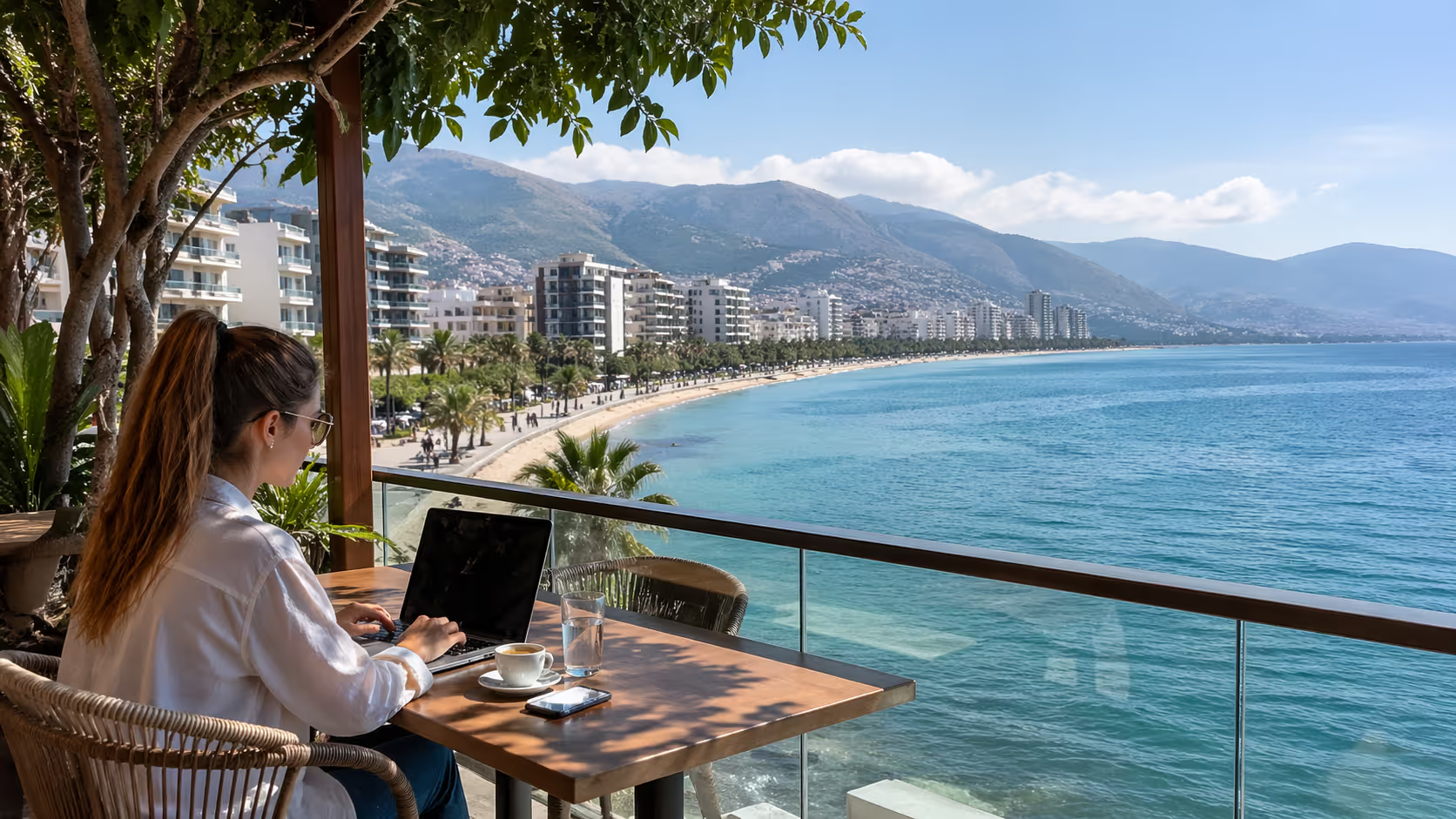
The style here is different from Muradie and from Communist blocks. You see wide paving, palm-lined stretches, cafés, hotels, apartment towers, glass railings, and sea-facing terraces. The architecture is tied to tourism, summer rental income, and the image of Vlorë as a Mediterranean city.
The promenade is not only a pretty surface. It changed how residents use the coastline. A walk that once felt broken into separate beach and road segments now has a stronger public route. The bay became more legible for pedestrians.
Modern buildings near Lungomare vary in quality. Some are clean and well detailed. Others feel rushed, bulky, or out of scale. This is one of the honest truths about fast-growing coastal cities.
Post-1991 construction in Albania often moved faster than planning control. In Vlorë, that can mean mixed rooflines, blocked views, narrow gaps between buildings, and sudden style changes from one plot to the next. One tower may use reflective glass, the next uses pastel render, and the next still shows unfinished concrete.
For architecture lovers, this is not a failure of the guide. It is the subject. Modern Vlorë is a living argument about money, taste, law, tourism, and public space.
Walk the Lungomare from the area near the central waterfront toward the beach zones. Watch how the ground floors work. Cafés and shops create activity where they open to the promenade. Blank walls or parking entrances make dead spots.
Look up at balcony depth. Sea-facing balconies are one of the main design features of new Vlorë apartments. They sell the promise of morning coffee with a bay view. Yet deep balconies can block light for rooms behind them, and shallow balconies can become decorative more than useful.
The modern bayfront is a good place to think about adaptive reuse too. Vlorë is not only building new. It is trying to keep selected old sites visible within a fast-changing city. The tension is clear near the historic core, where older monuments need space, care, and respectful sightlines.
The challenge is that heritage protection and real estate pressure do not always move at the same speed. A protected mosque or house may survive, but its setting can change around it. A monument loses some force when blocked by traffic, signs, or tall new structures.
For residents, the modern layer has daily benefits. Better promenade space supports walking, social life, and outdoor habits. New apartments can offer lifts, insulation, parking, and sea views. New cafés create meeting points for remote workers and retirees.
The costs are real too. Summer crowds, noise, rent spikes, and construction dust shape daily life near the beach area. A winter apartment viewing in Lungomare can feel calm, then July brings a different city to your doorstep.
If you plan to live near the bayfront, visit at three times. Go in the morning, late evening, and a summer weekend if possible. Listen for road noise, beach bars, scooters, delivery traffic, and construction work.
Architecture here is tied to lifestyle. A new building with a perfect balcony may still be a poor fit if the street below is loud until late. A plain side-street apartment near the promenade may give better sleep and still keep you close to the sea.
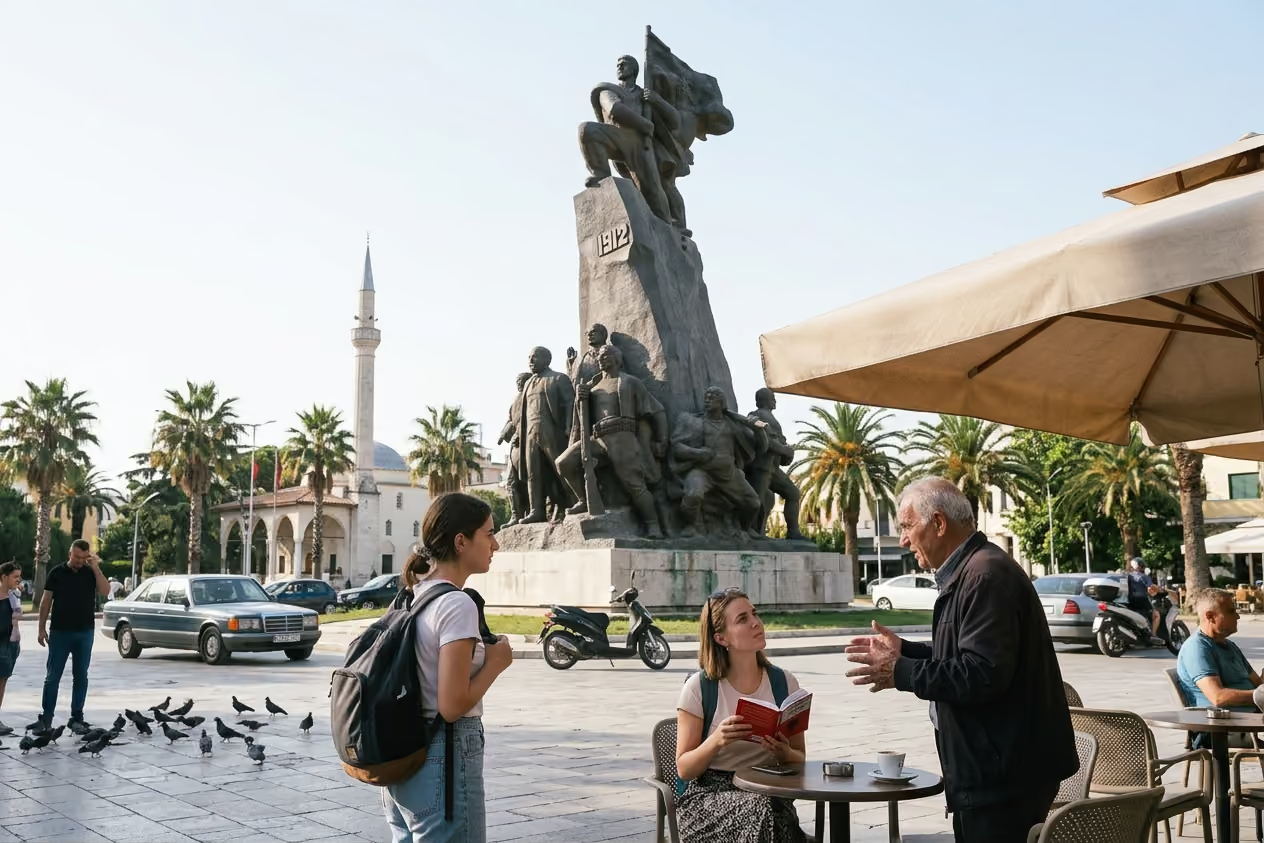
Vlorë’s architecture carries a national story, not only a local one. The city is known as the birthplace of Albanian independence, tied to the 1912 declaration. ExploreVlora describes Vlorë through that independence role, and this theme appears across monuments, museums, and public memory in the city.
Independence architecture is not one single style. It is a layer of meaning placed on older and newer buildings. Ottoman-era houses, museum spaces, monuments, and public squares can all become part of the independence route.
The museum streets help connect domestic architecture with national history. An old house is not only a pretty old house when it holds costumes, tools, photos, documents, or objects tied to local identity. It becomes a place where residents explain who they are.
When you walk from Muradie toward museum areas, notice scale. Streets narrow, buildings sit closer, and the feeling changes from the open bayfront to an older urban grain. This is where Vlorë feels less like a summer resort and more like a historic Albanian city.
The Independence Museum and related sites should be checked for current opening details before visiting. Hours can shift, and renovations can change access. Ask at your hotel, a local café, or a community group before bringing guests.
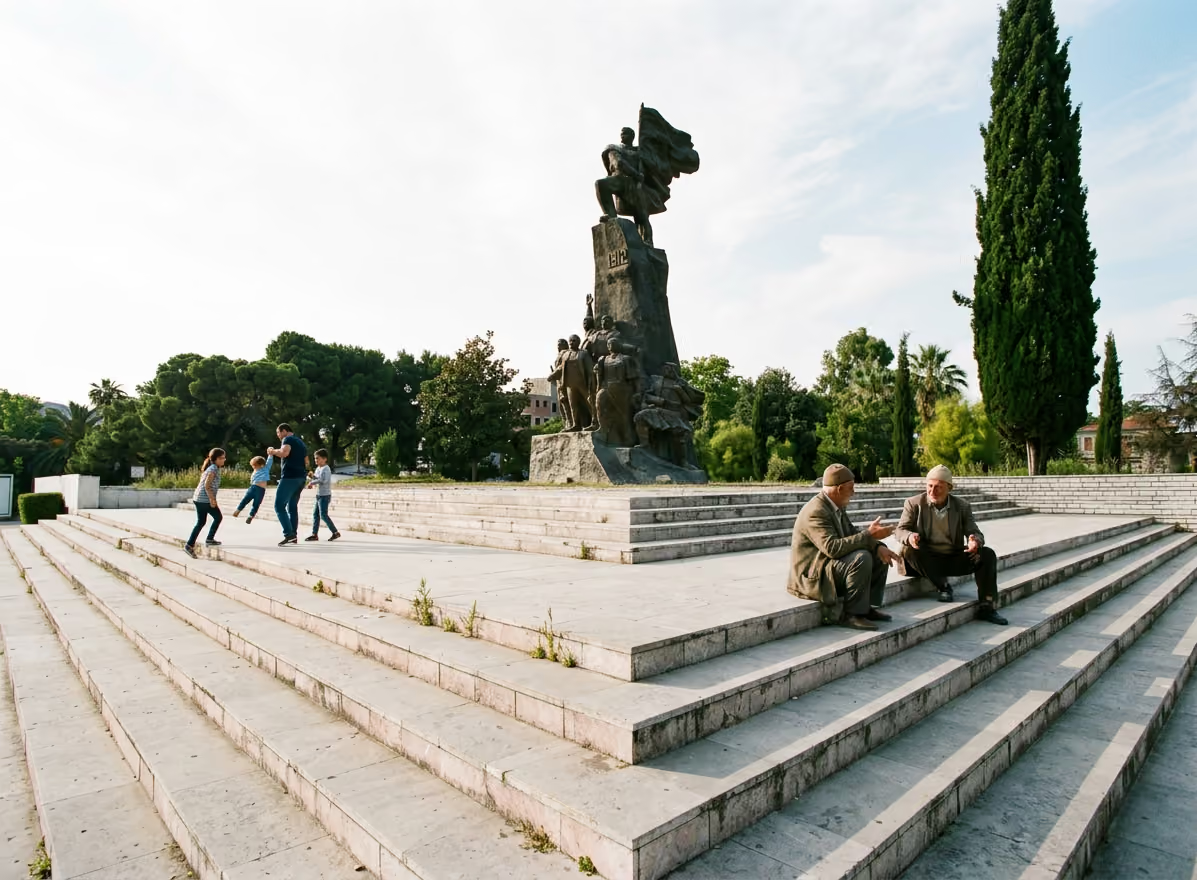
The public monuments tied to independence create another style layer. Monumental forms use scale, symbolism, and open space. They are meant to be read by crowds, not only by one visitor at a doorway.
This matters for residents. National holidays, school visits, official ceremonies, and family walks can bring these places to life. A site that looks quiet on a random Tuesday may become full during Flag Day or city events.
The city’s story is not neutral. Ottoman rule, national awakening, Communist interpretation, and post-1991 identity all shaped how buildings are presented. A museum label may frame one era with pride, another with pain, and another with silence.
A respectful self-guided tour leaves room for complexity. The Ottoman period gave Vlorë major buildings and urban form, but it was tied to imperial rule. The Communist period built housing and institutions, but it restricted freedom and religion. The modern period brings investment and public space, but it can erase texture through overbuilding.
This is the reality of Vlorë’s built heritage. The city is not asking you to choose one era as good and another as bad. It asks you to see how people adapted to each one.
For remote workers and new residents, museum streets make good slow-walk routes. They are close enough to cafés and central services, yet they give a deeper sense of place than the beach strip alone. Bring visiting friends here before dinner on the promenade. The contrast will make Vlorë easier to understand.
A good architecture walk in Vlorë should be short enough to finish, but rich enough to teach your eye. Do not try to see every site in one day. Vlorë is better read in layers across several walks.
Start at Muradie Mosque in the morning. Stand across the street first, then move closer. Look for the dome base, the white stone minaret, and the red and white masonry pattern.
If entry is possible, keep your visit quiet and short. Remove shoes if requested. Do not photograph worshippers. If prayer is starting, step back and return later.
From Muradie, walk toward the Ethnographic Museum area. Use the route to notice older façades, lower rooflines, and any surviving domestic details. The goal is not only to reach a museum, but to train your eye between stops.
At the museum, focus on domestic space. Look for room arrangement, household objects, timber details, and the way older homes managed privacy. This helps you understand the lived side of Ottoman Vlorë.
End by thinking through the lost castle footprint. Use the historic center and bay direction to imagine why a large Ottoman fortress stood here. Keep expectations realistic. You are reading absence, not climbing intact walls.
This route is about 1.5 kilometers if kept tight around the core. Allow two hours with stops. In summer, start before 9:30 am or after 5:30 pm.
Begin near the central areas where older apartment blocks stand close to shops and public services. Choose streets with repeated balconies, plain façades, and mid-rise blocks. Walk slowly and look at building rhythm.
Do not enter residential stairwells without a resident’s invitation. The street view gives enough material. Notice entrances, mailboxes, ground-floor conversions, awnings, and patched façades.
Compare original form with later changes. Enclosed balconies, new windows, extra air conditioners, and different paint colors show how private life modified state housing. This is post-1991 change written on Communist walls.
Stop at a café near one of these blocks and watch how residents use the street. Older men may sit outside. Children may pass from school. Small shops may occupy spaces never planned for that role.
Allow 90 minutes. This route is less about famous landmarks and more about daily urban life. It is best for people thinking about long-term rentals outside the tourist strip.
Begin near the central waterfront and follow the promenade toward the beach area. Do this around sunset if you want the full social rhythm of Vlorë. The evening xhiro is part of the architecture experience.
Look at how buildings meet the promenade. Active ground floors make better streets. Blank parking ramps, closed shutters, and service backs weaken the public edge.
Study the balconies and façades. Ask which buildings seem built for year-round living and which seem built mainly for summer rental income. You can often tell by entrance quality, lobby care, window systems, and winter activity.
Pause at several points and look back toward the city. The bayfront skyline shows the speed of modern growth. You will see ambition and disorder in the same view.
Allow two hours, more if you stop for coffee. In July and August, crowds can slow the walk. In winter, the same route feels calmer and more local.
Start near the museum and central monument areas tied to national memory. Check current museum access before leaving home. Build the walk around meaning, not only architectural style.
Look at how open space is used around monuments. Large public monuments need viewing distance. If traffic or parked cars crowd the site, notice how that changes the experience.
Connect museum houses with the city’s independence story. Older domestic buildings can carry political memory when they are used to display local identity. This is one of Vlorë’s strongest urban themes.
End at a café in the central area and write down three buildings you noticed. For each one, name the era, the material, and the story. This simple exercise makes the walk stick.
Architecture walking in Vlorë can be low-cost. Most street viewing is free. Your main expenses are museum entries, coffee stops, local transport, and a taxi or car if you extend to Dukat for Dervish Ali’s Towers.
Carry small cash in Albanian lek. Small museums, cafés, and taxis may not take cards. A practical amount for a half-day city walk is 1,000 to 2,000 lek per person, covering coffee, water, small entry fees if charged, and local transport if needed.
For a longer county trip, costs rise. A taxi or private driver to Dukat will cost far more than a city walk. Confirm the fare before you leave Vlorë, and agree on waiting time if you want the driver to stay.
Bring water from May through September. Streets near the older core can feel hot when shade is limited. On the promenade, sea breeze helps, but sun exposure can still be strong.
Footwear matters. Old pavements, broken curbs, construction edges, and polished promenade surfaces all appear on these routes. Wear shoes that handle uneven ground.
Accessibility varies by site. The Lungomare is the easiest route for many people with mobility limits. The older core has more curbs, street crossings, and uneven surfaces. Castle-related walking is interpretive, since the fortress is gone, yet some nearby terrain and streets can still be awkward.
Muradie Mosque access depends on worship use. Treat the site with care. For women and men, modest dress is the safest choice. Shoulders and knees covered will avoid most issues.
Museums may have limited accessibility, mainly when housed in older buildings. Steps, narrow doors, and uneven floors are common. Call ahead through local tourism channels if access is a concern.
Traffic is part of the walking experience. Vlorë drivers can be assertive, and crossings are not always respected in the way newcomers expect. Make eye contact, move carefully, and avoid stepping into the road with your phone raised for photos.
Photography is usually easy from public streets. Inside religious sites or museums, ask first. Do not photograph private homes through windows or open doors. A beautiful old doorway may still be part of someone’s daily life.
If you want deeper context, hire a local guide for one route, then repeat the walk alone later. Good guides can point out details you would miss, such as reused stones, old street names, or stories tied to families. The second solo walk helps you absorb the information.
For remote workers, architecture walks pair well with work breaks. Do an Ottoman core walk before lunch, work in a café near the center, then take a Lungomare walk at sunset. This turns city learning into a normal week, not a tourist project.
The old center around Muradie Mosque is the best base for reading Vlorë’s early layers. It has the strongest concentration of Ottoman and museum-related sites. It is walkable, central, and close to cafés where you can pause between stops.
This area can feel mixed. You may see protected monuments, busy roads, modern signs, parked cars, and ordinary shops in the same frame. Do not expect a polished old town like Gjirokastër or Berat. Vlorë’s old center is more fragmented.
That fragmentation is part of its truth. The city rebuilt, expanded, and redirected itself toward the coast. The old center survived in pieces rather than as one perfect historic district.
For residents, the old center is useful. You are close to public services, markets, cafés, and year-round activity. You are not dependent on summer tourism. The trade-off can be traffic, older housing stock, and less sea-view appeal.
Lungomare is the modern showcase. It is the place to study new Vlorë, from promenade design to high-rise apartments. It is great for walking, social life, and first impressions.
Living near Lungomare feels easy in many ways. You can walk by the sea, meet friends, and reach beach cafés fast. Many newer apartments target this area, so lifts and updated interiors are more common.
The drawback is seasonality. Summer noise and prices can change the feel of the neighborhood. Winter can be calm and pleasant, but some tourist-facing places may reduce hours.
For architecture study, do not only look at the sea side. Walk one or two streets behind the promenade. This is where service entrances, older buildings, parking pressure, and new towers meet. The back streets often tell the clearer story.
Dukat gives you the county layer. Dervish Ali’s Towers add rural defense, revolt memory, and early 19th-century building craft to the Vlorë architecture picture. This is not city architecture, but it belongs to the wider region.
A Dukat visit works best with a driver and a half-day plan. Pair it with village stops or a mountain road route. Bring cash and check road conditions in bad weather.
The contrast between Muradie, Lungomare, and Dukat is useful. Muradie shows Ottoman religious architecture in the city. Lungomare shows modern coastal development. Dukat shows fortified rural heritage tied to local power and resistance.
If you are choosing where to live, use these zones as a mental map. Old center for daily services and history. Lungomare for sea access and social walking. Back streets behind the bay for more practical year-round living. Dukat and the villages for day trips, space, and heritage beyond the city.
The romantic version of Vlorë architecture is easy to sell. Ottoman domes, sunset promenades, sea views, and old stone towers make a lovely story. Daily life is more complicated.
Some heritage sites are not well signed. Some museums may have changing hours. Some old buildings need repair. Some modern buildings look good outside but have weak insulation or poor sound control.
The city has construction noise. New apartment projects, roadwork, and renovation can affect entire blocks. If you rent near a building site, your sea-view dream can start each morning with drilling.
Traffic and parking shape architecture too. A beautiful street feels different when cars block the pavement. A monument feels smaller when surrounded by signs and traffic. This is part of living in a growing Albanian coastal city.
The beach area has a seasonal split. In winter, you may get quiet walks and easy café seats. In summer, the same street can fill with cars, music, visitors, and higher short-term rental pressure.
Older apartments can be sturdy and central, but they may need work. Check plumbing, electrical systems, damp, window quality, and heating or cooling. Do not assume a renovated kitchen means the building systems are strong.
New apartments can be comfortable, but quality varies. Ask about building management, elevator maintenance, insulation, water pressure, legal paperwork, and winter occupancy. A building full of empty summer units can feel lonely in January.
Heritage pride can sit beside neglect. Locals may love a building and still accept that it lacks funding or care. Public agencies, owners, residents, and businesses all play a role, and coordination is not always smooth.
For newcomers, the best attitude is curious but grounded. Ask questions. Listen to older residents. Compare what you read with what you see. Accept that some answers will be partial.
Do not treat Vlorë like an open-air set for foreign photos. People live behind the balconies and doors you admire. A respectful architecture walk keeps distance, asks permission, and gives religious sites quiet.
This is where Vlore Circle’s local focus helps. We care about the city as residents, not short-term tourists. If you want to keep learning with people who live here, Join the community and come to a local meetup.
Our host tip is simple. Walk the same route twice, once with your camera down.
The first walk can be for orientation. Take photos, note landmarks, and save map pins. The second walk should be slower. Notice smells from bakeries, the sound of prayer or traffic, the shade line on a façade, and how people use steps, balconies, and corners.
Community members often say the same thing after a few months in Vlorë. The city starts to make sense when you stop chasing only the “best” landmark. A plain apartment block, a patched balcony, or a closed museum door can teach you just as much about life here.
If you are new, start with Muradie Mosque, then take coffee nearby, then walk to the Ethnographic Museum area. Do not overload the day. Let one small part of the city become familiar.
When showing guests around, avoid giving them only the Lungomare version of Vlorë. Take them to the old center first. Then walk the bayfront at sunset. The shift from stone and brick to glass and promenade gives a better story.
For renters, use architecture as a filter. If you like old center life, accept older stairs and street noise. If you like modern bayfront life, accept seasonality and higher demand. If you want quiet, look behind the main beach roads or farther from the summer core.
Ask locals for building names, former uses, and street nicknames. Albanian cities often carry memory through informal speech. A building may have a name that never appears on a map.
Most of all, do not rush to judge Vlorë’s uneven look. The unevenness is the record. Ottoman, Communist, and modern Albania are all visible here, often on one block.
Follow Vlore Circle for fresh guides, local updates, and community notes around life in Vlorë. It is the easiest way to stay close to what we are building.

Be part of a growing community built around connection, local life, and a better experience of Vlorë.
join the circle