Representative image

Clear insight into the coastal city awaits as you trace its journey from early Illyrian trade routes through Ottoman rule to national independence.





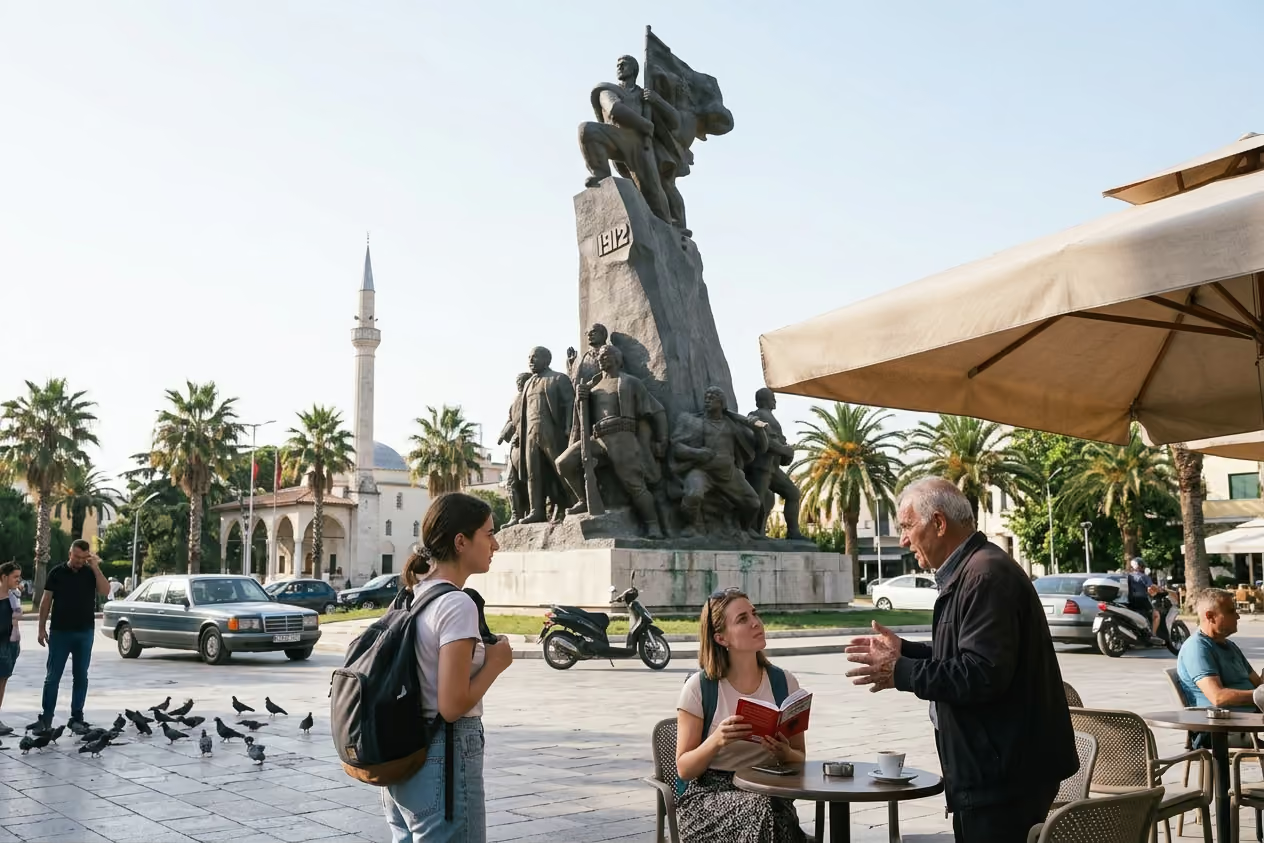
You arrive at Flag Square on a warm afternoon, cross the open paving toward the Independence Monument, then realize the city is not only a beach stop. The port is close, the old mosque is a short walk away, and the hills above town hold older stories than the 1912 flag.
Vlorë matters in Albanian history since the country declared independence here on November 28, 1912, led by Ismail Qemali during the First Balkan War. To understand the city well, read it in layers: Illyrian settlements, ancient ports, Byzantine and Ottoman rule, the Albanian national awakening, and the hard years after independence.
Vlorë is not a museum city in the usual sense. Daily life moves around cafés, the Lungomare, apartment blocks, port traffic, beach plans, and family visits. Yet the city keeps pulling you back to 1912, often in plain view.
If you live near Skela, the port area puts you close to the Independence Museum. If you live near the city center, Flag Square and the Independence Monument become part of your normal route. If you stay near Uji i Ftohtë, the beach road looks modern, but the bay in front of you has been used by traders, armies, and fleets for centuries.
This matters for newcomers. Vlorë can feel easy to read from the surface. Sea, cafés, seafood, summer crowds, mountain views, and a long promenade. The deeper story explains why locals speak about the flag with care, why November 28 has real weight, and why names like Ismail Qemali are not just street names.
The city is a practical place to live, not only a symbol. People still meet at cafés around the center. Families still use the promenade in the evening. Retirees still sit in shaded spots near older streets. Yet the story of Albania’s state begins here, and that changes how the city feels.
Vlorë is often called the city of independence. That label is fair, but it can flatten the past. The city was not born in 1912. Its bay, hill routes, and nearby ancient sites show a much older pattern of settlement and movement.
The wider Vlorë area sits between the Adriatic and Ionian seas. The Karaburun Peninsula, Sazan Island, Orikum, Kanina, and the inland routes toward the Vjosa valley all shaped the city’s role. Control of this coast meant access to ships, trade, and military routes.
For expats and remote workers, this history helps with daily orientation. Kaninë is not only a village above town, it is a defensive viewpoint. Muradie Mosque is not only a pretty Ottoman building, it marks the city’s pre-independence urban story. The Independence Museum is not only for school groups, it is a key to understanding why modern Albania formed under pressure.
For retirees, long-term residents, and families, the history can make routines richer. A walk from Flag Square to the old mosque becomes a short lesson in statehood and faith. A drive to Orikum becomes a route through ancient and Cold War layers. A day trip to Amantia or Apollonia gives the bay a wider setting.
Vlorë Circle is built for people who live here year round, not just for people passing through for three sunny days. History is part of that work. A city feels less confusing when you know why its streets, monuments, and public holidays matter.
Vlorë’s earliest story is tied to the ancient peoples of the western Balkans. The research record often speaks of Illyrian roots across Albania, and the Vlorë region fits that wider frame. Inland hill settlements, coastal routes, and nearby ancient cities all point to a zone shaped by movement between mountains and sea.
The ancient name most often linked with Vlorë is Aulon. Ancient writers used forms of this name for a settlement on the bay. The modern name Vlorë is often treated as the later form of that old coastal identity.
Near today’s city, the wider region holds better-known ancient sites. Orikum lies south of Vlorë near the bay and the road toward the Llogara Pass. Amantia sits inland near the village of Ploçë, above the river routes. Apollonia, north of Vlorë near Fier, was one of the great ancient cities of the region.
These sites help explain Vlorë’s position. The city is not isolated. It sits in a chain of coastal and inland places that linked the Adriatic, Ionian, and Balkan interior.
During Roman rule, the area became part of the wider Roman world. Roads, ports, and military movement mattered. Orikum gained attention in Roman civil war accounts, and the bay served as a strategic maritime space.
After Rome split, the region fell within the eastern, Byzantine sphere for long periods. Coastal Albania was often contested. Imperial forces, local powers, and outside rivals all had interest in these routes.
The medieval period brought layered control. Byzantine rule, Norman attacks, Venetian interests, local noble families, and Balkan powers all touched parts of the coast. Kaninë Castle above Vlorë is a good place to sense that long contest over the bay.
Ottoman expansion changed the region from the late 14th century onward. Encyclopaedia Britannica notes that Albania came under Ottoman rule after medieval fragmentation, and Ottoman power shaped Albanian life until the early 20th century. Vlorë’s port made it useful to the empire, both for trade and for military control.
Under Ottoman rule, Albanian society changed. Many Albanians converted to Islam across the centuries, and Ottoman administrative systems shaped land, taxation, and public life. Vlorë’s old urban core once reflected this Ottoman period more clearly than it does today.
The 19th century brought the Albanian national awakening, known as Rilindja Kombëtare. Leaders, writers, teachers, and activists argued for Albanian language, culture, and political rights. Ismail Qemali from the Vlorë family became one of the central political figures of this era.
The Balkan Wars created the opening for independence. Britannica describes the First Balkan War of 1912 as a conflict in which Balkan states fought the Ottoman Empire. Albanian leaders feared that neighboring states would divide Albanian-inhabited lands after Ottoman power weakened.
On November 28, 1912, Albanian delegates gathered in Vlorë and declared independence. Ismail Qemali led the assembly and became head of the first Albanian government. RTSH notes that the Provisional Government of Vlorë formed on December 4, 1912, only days after the declaration.
Independence did not settle the matter at once. The Treaty of London in 1913 recognized Albania as a state, but borders and authority remained under pressure. Greece, Serbia, Montenegro, and other powers had their own aims in the region.
Qemali’s government faced internal and external pressure. It did not become a stable state machine overnight. He resigned in 1914, and Albania soon faced World War I occupation by foreign powers.
The post-1912 years matter as much as the flag moment. Albania declared independence in Vlorë, then had to fight for survival as a state. The country’s independence was reaffirmed after World War I, with the 1920 Conference of Ambassadors playing a key role in the postwar settlement.
For Vlorë, that means the city is both birthplace and witness. It hosted the founding act, then lived through the uncertainty that followed. That is why a serious visit should not stop at one monument photo.
When locals speak about ancient roots, they often mean a wide region rather than one single ruin in the city center. Vlorë’s deep past is best read through the bay, the hills, and nearby archaeological parks. The modern city grew over older layers, and not every trace is visible at street level.
Start with the geography. Vlorë Bay is sheltered by the Karaburun Peninsula and Sazan Island. That shelter mattered for ancient ships. It gave the coast value long before modern port cranes and ferries.
The Illyrian world was not one single state in the modern sense. It was a wider cultural and political zone in the western Balkans. Tribes, hill settlements, coastal trade points, and local leaders shaped the region.
In the Vlorë area, hilltop sites make this pattern easier to understand. Amantia is one of the best day trips for this. It sits inland, away from the beach image of Vlorë, and reminds you that power in antiquity often meant control of heights, roads, and agricultural land.
Amantia’s remains include defensive walls and a stadium area. The site is quiet compared with major European ruins, so it asks for patience. Go for the setting, the stones, and the sense of an inland city tied to routes rather than resort life.
Orikum gives a different lesson. It sits by the coast south of Vlorë, close to the road that leads toward Llogara and the Riviera. In ancient times, this area linked sea movement with the mountain pass.
For many residents, Orikum is a beach or weekend apartment area. The older story sits nearby, often missed by people going straight to the water. This is a common Vlorë pattern: daily life sits right beside history, but the signs are not always loud.
Apollonia is not in Vlorë city, but it belongs in any serious Vlorë history plan. It lies north near Fier and was a major Greek and Roman city. UNESCO’s Butrint page gives a strong reminder that southern Albania’s ancient urban history is part of a wider Mediterranean world, and Apollonia fits that same broader context.
Aulon, the ancient name linked with Vlorë, is harder to visit as a single site. The modern city covers much of the older footprint. You need to think in layers, not in one clean archaeological park.
This can frustrate newcomers. They expect a neat old town with walls and plaques. Vlorë’s ancient past is more scattered, and some of it sits outside the city core.
A practical way to read it is to use three points. First, stand near the port and look across the bay. Second, drive or take a local trip to Orikum. Third, plan a separate inland visit to Amantia or a northbound trip to Apollonia.
Together, those places show the ancient logic of Vlorë. The coast offered access. The hills offered defense. The inland routes offered food, labor, and movement.
Do not expect polished interpretation everywhere. Some sites have limited signage. Bring water, cash, sun protection, and a downloaded map.
If you are new in town, go with someone who has been before. Local drivers and history-minded residents often know the right turnoffs better than apps. This is one reason we tell people to Join the community before planning deeper day routes.
The medieval story of Vlorë is a story of control. Whoever held the coast could watch ships, tax trade, and guard routes inland. That is why the high ground above the city matters so much.
Kaninë Castle is the best place to feel this. The village of Kaninë sits above modern Vlorë, with wide views over the bay, Sazan Island, the city, and the road south. It is close enough for a short taxi ride, but it feels like a different reading of the city.
From Kaninë, you can see why Vlorë was contested. The port, the bay, and the inland approaches sit below you. A ruler did not need a modern map to understand the value of that view.
The castle has roots in earlier fortification, with later medieval and Ottoman layers. Like many Balkan hill sites, it changed hands and changed form across centuries. The stones do not tell one simple story.
Byzantine influence shaped coastal Albania after antiquity. Local powers rose and fell. Normans crossed the Adriatic. Venetian and other maritime interests looked toward the same coastline.
This period can be hard to explain in one clean line. Modern national borders did not exist. Power was often local, dynastic, and tied to military control.
For residents, Kaninë is useful since it turns abstract history into a clear view. You can stand there and see the modern city, then understand the older city’s logic. The bay was not only scenic, it was a prize.
The road to Kaninë from the city center is short, but the mood changes fast. Apartment blocks give way to village houses and hillside views. In summer, go early or near sunset to avoid harsh heat.
Bring shoes with grip. Parts of the castle area can be uneven. A taxi is often simpler than trying to combine city buses and uphill walking.
Kaninë is not a polished European castle visit with ticket booths, audio guides, and a gift shop at every turn. Its value is in the view, the stonework, and the sense of layered rule. If you need lots of labels, read before you go.
A good mini-route starts at Flag Square, then continues by taxi to Kaninë. Start with the national story in the city. Then go uphill to see the strategic setting that made the national story possible.
Kuzum Baba, the hill closer to the center, gives another viewpoint. It is easier to reach from town and has a strong place in local memory. It does not replace Kaninë, but it helps you see the city from above without leaving the urban area.
Medieval Vlorë is not always visible at street level. Earthquakes, rebuilding, war, modern planning, and socialist-era changes altered the urban fabric. The best way to find it is to pair hill viewpoints with older religious and civic sites in the center.
Ottoman Vlorë lasted far longer than independent Vlorë has so far. That fact can surprise newcomers. Albania declared independence in 1912, but Ottoman rule shaped public life for centuries before that.
The Ottoman period brought new administration, faith patterns, military systems, and urban forms. Mosques, markets, baths, houses, and port facilities shaped everyday life. Much of that older city has been changed or lost, but traces remain.
Muradie Mosque is the key Ottoman landmark in central Vlorë. It stands near the old city area, within walking distance of Flag Square. Its low, balanced form contrasts with the taller apartment blocks and traffic nearby.
The mosque is commonly linked with the 16th century and the era of Sultan Suleiman. Many local guides connect it with the architectural circle of Mimar Sinan. Whether you visit as a person of faith or as a history reader, dress and act with respect.
Muradie Mosque helps correct a common mistake. Some newcomers think Vlorë history jumps from ancient times to 1912. The mosque shows the long Ottoman layer between them.
Ottoman Vlorë was a port town, not a remote backwater. Ships, soldiers, merchants, officials, and local families all moved through the city. The bay gave it value in imperial planning.
The old Ottoman urban fabric is not as complete as in Berat or Gjirokastër. Vlorë modernized hard, and parts of the old center changed across the 20th century. This gives the city a different feel from Albania’s UNESCO old towns.
That can disappoint visitors who expect a preserved old quarter. Vlorë’s history is more fragmented. A mosque here, a hill site there, a museum near the port, and a monument in the square.
For residents, that fragmentation is part of the truth. Vlorë is a working city that grew, broke, rebuilt, and expanded. It is not a frozen postcard.
Ottoman rule was not only buildings. It shaped family names, landholding, religious life, trade, and political ties. Many Albanian elites served in Ottoman structures, then later argued for Albanian rights within or beyond that system.
Ismail Qemali himself came from a notable Vlorë family and served in Ottoman administration before leading the independence movement. His career shows the complexity of the period. The path to independence was not a clean break made by outsiders, but a political shift led by people who knew the empire from inside.
To see Ottoman Vlorë in the city, walk slowly around Muradie Mosque and the streets near the center. Look for scale. Older urban life worked at a lower height and slower pace than the road system around it now.
Then look toward the port. Ottoman Vlorë’s value came from that coastal link. The same shoreline that brings summer visitors once mattered for imperial control.
A good local habit is to visit Muradie Mosque outside prayer times if you only want to look at the architecture. Keep voices low. If the gate or door situation is unclear, ask politely before entering.
Do not treat the mosque as a photo prop. It is part of the city’s living religious fabric. That respect will make your history walks better and your local relationships smoother.
The Albanian national awakening, known as Rilindja Kombëtare, is the bridge between Ottoman Vlorë and independent Albania. It was not only a political movement. It was a language, school, culture, and identity movement.
Across Albanian lands and diaspora circles, writers and activists pushed for Albanian education and national consciousness. Names such as Naim Frashëri, Luigj Gurakuqi, and Ismail Qemali belong to this wider movement. The research framework points to these figures as key voices in the push for language, culture, and independence.
For Vlorë, Ismail Qemali is the central figure. He was born into a prominent local family and became a major Ottoman statesman before turning toward Albanian independence. This background gave him political experience and contacts.
The pressure grew in the early 20th century. The Ottoman Empire was weakening. Balkan states were preparing to claim territory. Albanian leaders feared that waiting would mean losing lands to neighbors.
The First Balkan War in 1912 made the danger immediate. Britannica describes the war as a conflict between the Balkan League and the Ottoman Empire. For Albanian national leaders, the collapse of Ottoman power opened a narrow and risky path.
The delegates who gathered in Vlorë were not meeting in calm conditions. They were acting during war, uncertainty, and competing territorial claims. The decision carried urgency.
On November 28, 1912, the Albanian Declaration of Independence was made in Vlorë. The date is now Albania’s Independence Day and Flag Day. In Vlorë, it is not a distant national holiday, it is the city’s defining civic memory.
The image most people know is the raising of the flag by Ismail Qemali. That moment matters, but the political work around it matters too. A state needs more than a flag.
RTSH notes that the Provisional Government of Vlorë formed on December 4, 1912. This was the first institution of the Albanian state. It came only days after independence was declared.
The first government had to deal with recognition, borders, administration, and security. It had limited resources. It faced pressure from outside powers and internal divisions.
This is where the romantic story needs correction. Albania did not declare independence and then step into stable statehood the next morning. The years after 1912 were tense and fragile.
The Treaty of London in 1913 recognized Albania, according to historical summaries of the postwar settlement. Yet borders left many Albanians outside the new state. Neighboring claims and Great Power decisions shaped the outcome.
Qemali resigned in 1914 after political pressure and instability. World War I then brought occupation by foreign powers. Albania’s early statehood was repeatedly tested.
For Vlorë residents, this explains the solemn tone around November 28. The day is celebratory, yes, but it is not light entertainment only. It marks a risky act under pressure.
If you attend public events in Vlorë near Independence Day, go with that context. Expect flags, ceremonies, school groups, music, and family walks. The main symbolic zone is around Flag Square and the Independence Monument.
The city can be crowded around the holiday. Parking near the center may be difficult. Walking from Skela or from nearby streets is often better than trying to drive close to the square.
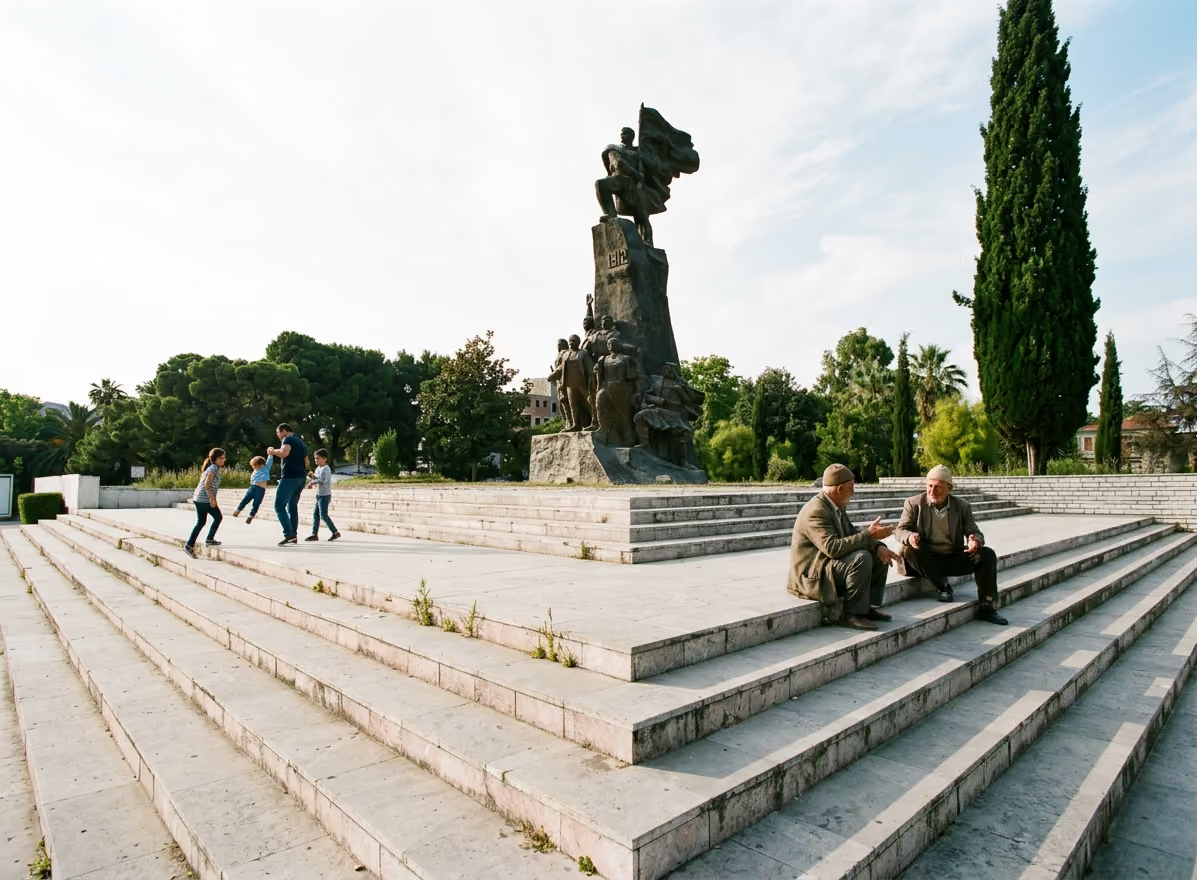
Flag Square is the natural starting point. It is open, central, and tied to the independence memory. The Independence Monument dominates the space and gives the city its clearest national symbol.
Do not rush through the square. Stand back and look at how the monument works in the urban setting. It is meant to be public, visible, and ceremonial.
The monument is not the place where all the political work happened. It is a memorial site. Its role is to turn the 1912 event into a shared civic space.
From Flag Square, walk to Muradie Mosque. This short move takes you from the national story into the Ottoman layer. It is one of the simplest and best history pairings in the city.
Look at the mosque’s proportions. Notice how it sits close to roads, shops, and modern buildings. Vlorë does not separate old and new into neat zones.
Next, continue toward the Independence Museum near the port area. This building is tied to the first Albanian government. RTSH identifies the Provisional Government of Vlorë as the first institution of the Albanian state, formed in December 1912.
The museum area helps you connect the symbolic flag moment with administration. A declaration is one act. A government is the next step.
Check opening times before you go. Museum schedules can shift, and holiday hours may differ. Carry cash in lek for tickets, water, or a coffee nearby.
The port area around Skela adds another layer. It is not only a transport zone. It is part of why Vlorë had value across history.
From the museum, look toward the water and Sazan Island. Think about ships, not just sunsets. Vlorë’s story is inseparable from sea routes.
Kuzum Baba is worth adding if you want a city view. The hill gives a readable map of Vlorë, from the port to the Lungomare and across the bay. It is a good place to pause after the center.
Kaninë Castle needs a separate short trip. From the castle, the city’s strategic position becomes clear. It is the best viewpoint for understanding control of the bay.
For a longer history day, add Orikum. You can combine the ancient site area with the modern seaside town and the road toward Llogara. This works well for residents who have a car or a trusted driver.
For a deeper ancient day, choose Amantia or Apollonia. Do not try to pack every site into one day. The roads, heat, and limited signage can make an overfilled plan feel rushed.
A practical note for newcomers: Vlorë’s history sites are not all managed in the same way. Some feel formal. Some feel open and lightly marked. Some require more local knowledge.
Use offline maps, but do not rely on them fully. Ask café owners, taxi drivers, or community members for current advice. Road works, access points, and small site details can change.
Start at Flag Square. Give yourself ten minutes before taking photos. Read the space first, then look at the monument details.
From the square, walk toward Muradie Mosque. Keep the route slow. The point is not distance, it is the shift from state memory to Ottoman urban memory.
After the mosque, head toward the Independence Museum near Skela and the port. This gives the walk a clear story line. Flag, Ottoman city, first government, sea route.
End with a coffee near Skela or toward the center. Use the pause to write down three dates: 1912, 1913, and 1920. Those dates help anchor the story.
This walk is best in the morning or late afternoon. In July and August, midday heat can make even a short route tiring. Wear a hat and carry water.
Plan about 90 minutes without a museum visit. Add more time if the museum is open and you want to read displays. If you are with children, break the route with a snack near the center.
Start near the center and take a taxi to Kaninë Castle. Walking all the way up is possible for fit people, but the road and heat can make it less pleasant. A taxi lets you save energy for the site.
At Kaninë, look first before taking close photos. Find the port, Flag Square area, Lungomare, Sazan Island, and the road south. This view explains centuries of military interest.
Walk around the castle area with care. Stones and paths can be uneven. Do not climb on fragile sections.
After Kaninë, return toward Kuzum Baba if you want a second viewpoint closer to the city. The two views work well together. Kaninë gives the strategic bay view, and Kuzum Baba gives the urban view.
End near the city center for lunch. This route pairs well with traditional food rather than a beach club meal. It keeps the day connected to the older city.
This route is best for people who like maps, views, and military history. It is less ideal for anyone needing smooth pavements or stroller access. Ask a local driver to wait or agree on a pickup time.
This is not a walking route from the center. It is a resident-friendly day plan by car or local transport. Start in Vlorë, then head south toward Orikum.
Stop near the Orikum area and visit the ancient site if access is open and clear. Check locally before leaving. Site conditions and access can vary.
From there, continue toward the Llogara road if you want the full geography lesson. The pass shows how coast and mountain connect. It also explains why movement through this region was never only about the beach.
If you prefer inland antiquity, choose Amantia instead. Leave early from Vlorë and bring water, snacks, and cash. The inland setting gives a different view of ancient power.
Do not combine Orikum, Llogara, Amantia, and Apollonia in one day. That turns history into a checklist. Pick one main theme and let the place breathe.
For residents, repeat these routes across seasons. A November walk around Flag Square feels different from a July walk in beach traffic. A spring visit to Kaninë gives clearer air and easier heat.
Most central history walks in Vlorë are low cost. Flag Square, the exterior of Muradie Mosque, the port views, and many street-level sites can be seen without a ticket. Your main costs are coffee, water, taxis, and museum entry where charged.
Carry lek in cash. Small sites, taxis, and cafés may not suit card payments. A 500 to 1,000 lek cash buffer is useful for a simple city walk.
For a taxi to Kaninë, agree on the price before leaving. Ask whether the driver will wait. If not, arrange a pickup time or have a local taxi number ready.
Museum prices and hours can change. Check at the door, ask your host, or message someone local before planning your day around one museum. This is extra useful around national holidays.
For Independence Day on November 28, expect the center to be busier than usual. Streets around Flag Square may have ceremonies or temporary changes. Go on foot if you live close enough.
For summer history walks, avoid the hottest part of the day. Start before 9:00 or go after 17:30. The stone, pavement, and open squares hold heat.
For winter, bring a light jacket. Vlorë has mild weather compared with inland Albania, but wind near the port and bay can feel sharp. Rain can make castle stones slippery.
For day trips to Amantia, Orikum, or Apollonia, plan transport first. Public transport may not drop you exactly where you need to be. A car, hired driver, or shared trip with residents often works better.
Bring a downloaded map. Mobile signal is usually fine in the city, but inland roads and site areas can be less predictable. A power bank helps if you take many photos.
Use footwear that fits old stones and uneven pavements. Vlorë’s central walk is easy, but Kaninë and archaeological sites are different. Sandals may be fine for the Lungomare, not for ruins.
Respect religious sites. At Muradie Mosque, dress modestly, keep voices low, and avoid entering during prayer if you are only visiting for history. Ask before photographing people.
If you are new to Albania, keep expectations grounded. Some signs may be missing. Some museum text may not answer every question. The city rewards people who read ahead and ask locals.
The romantic version of Vlorë is easy to sell. A flag raised above a coastal city, mountains behind the bay, a nation born by the sea, and families walking under red flags each November. That story is real, but it is not the whole city.
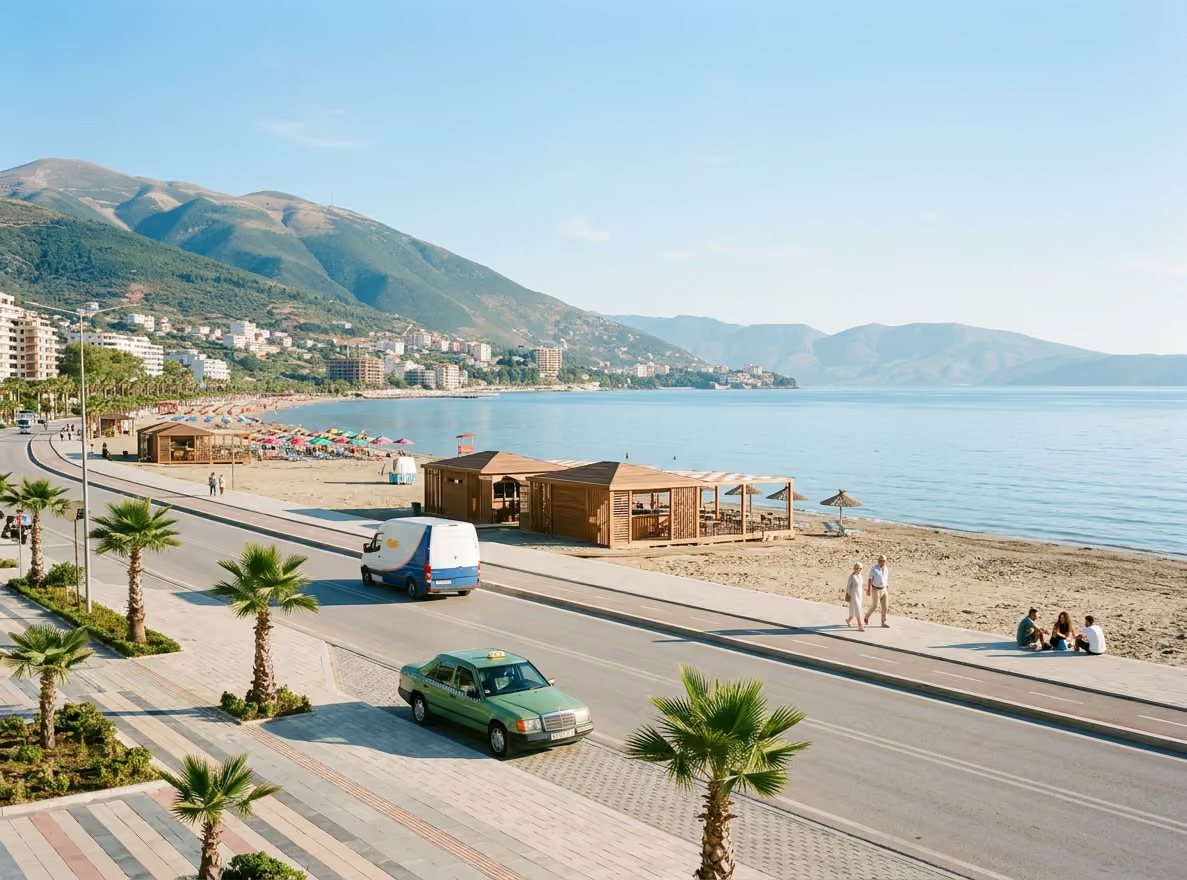
Daily Vlorë can be messy. Traffic near the center can be loud. Summer crowds can overwhelm the Lungomare and Uji i Ftohtë. Construction and road changes can make familiar routes feel different from one month to the next.
History sites may not always be presented in the polished way that newcomers expect. Some signs are limited. Some buildings need more care. Some heritage points sit beside parking, cafés, or busy roads.
This does not make the history less meaningful. It makes it more local. Vlorë is not a staged old town, it is a living city that carries its past in uneven ways.
The independence story can be simplified in public memory. You may hear a clean version: Albania declared independence, and the nation began. The fuller story is harder and more interesting.
After 1912 came recognition problems, border disputes, political opposition, and World War I occupation. Qemali’s government did not last long. Albania’s statehood had to be defended through diplomacy and survival.
The Ottoman story can be simplified too. Some people treat it only as oppression. Others focus only on architecture and food. The reality includes administration, conversion, elite careers, taxes, local power, and cultural change across centuries.
The ancient story can be romanticized as pure Illyrian continuity. Be careful with that. Ancient identity, medieval rule, Ottoman life, and modern nationalism do not line up in a simple straight line.
For expats, the best approach is humility. Listen more than you explain. Ask Albanians how they learned the 1912 story in school and what November 28 means in their family.
For remote workers, history can be a way out of the café bubble. A morning at the Independence Museum or a Saturday in Kaninë gives you a stronger link to the place where you are working from. That link makes daily life feel less temporary.
For retirees, the city’s layered past can become a weekly rhythm. One week, walk the independence core. Another week, take a taxi to Kaninë. Later, join a group day trip to Apollonia or Amantia.
For families, keep history tactile. Children remember flags, views, old stones, and short stories better than long lectures. Use Flag Square, the mosque, and the port as simple anchors.
The reality is this: Vlorë’s history is powerful, but not always packaged. You have to assemble it across sites, views, conversations, and reading. That effort is part of becoming a resident rather than a passerby.
Our strongest advice is to do Vlorë history in two passes. First, take the simple center walk from Flag Square to Muradie Mosque to the Independence Museum. Later, go up to Kaninë and look back at the bay.
Do not start with a packed day trip. Start with the city under your feet. Once you understand the center, the wider region makes far more sense.
Ask a local what November 28 feels like in Vlorë. You will hear family stories, school memories, and strong opinions about the city’s role. Those conversations often teach more than plaques.
If you are here long term, do one history walk in each season. In winter, the city feels more local and reflective. In summer, the same places sit inside a louder coastal rhythm.
Bring friends who are new in town. History walks are an easy way to turn small talk into real connection. That is part of why Vlore Circle exists.
If you want company for local walks, practical relocation chats, and real-life meetups, Join the community. Vlorë is easier to understand when you are not learning it alone.
Revisit this guide before November 28, before hosting guests, and before planning a day trip to Kaninë, Orikum, Amantia, or Apollonia. Come back again after you have lived in Vlorë for a few months, since the same streets will start to mean more.
Vlorë’s past is not locked behind museum glass. It is in the square, the mosque, the port, the hills, and the way locals speak about the flag.
Follow Vlore Circle for fresh guides, local updates, and community notes around life in Vlorë. It is the easiest way to stay close to what we are building.

Be part of a growing community built around connection, local life, and a better experience of Vlorë.
join the circle