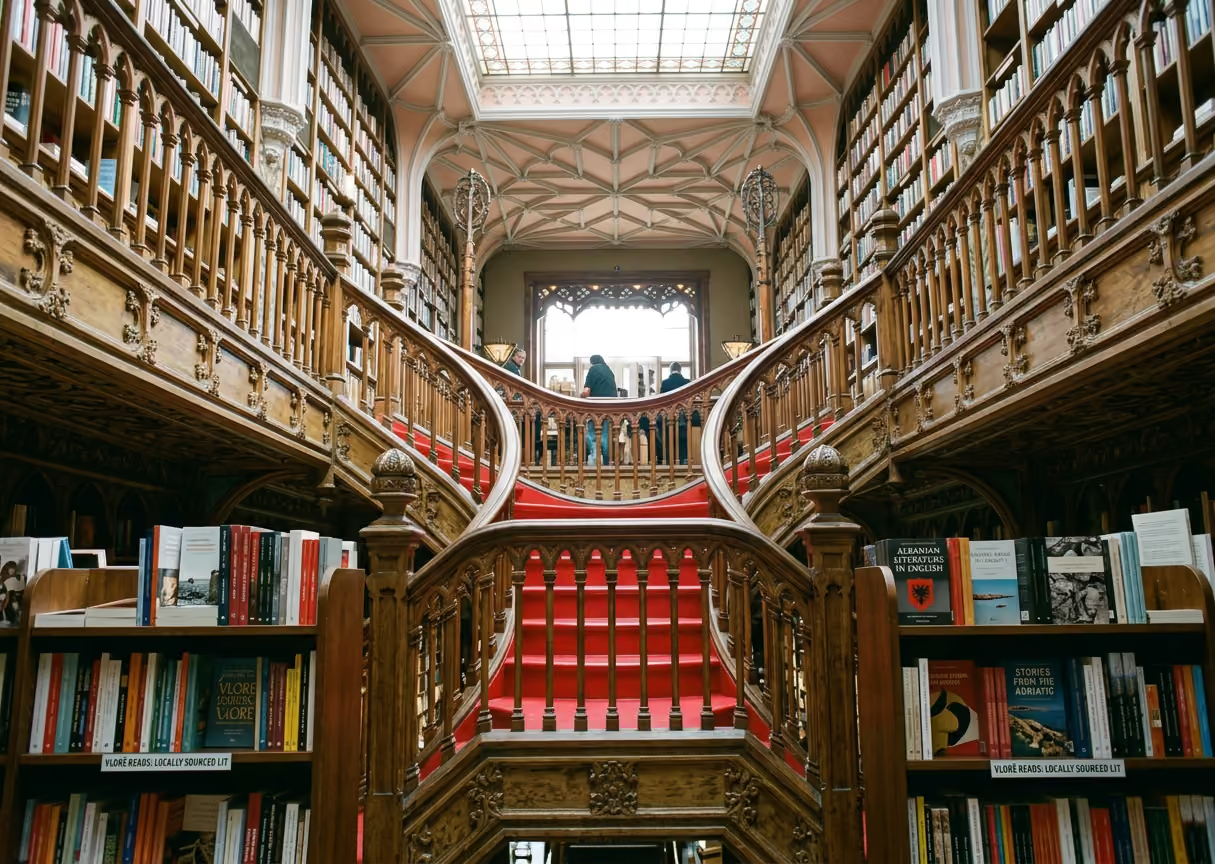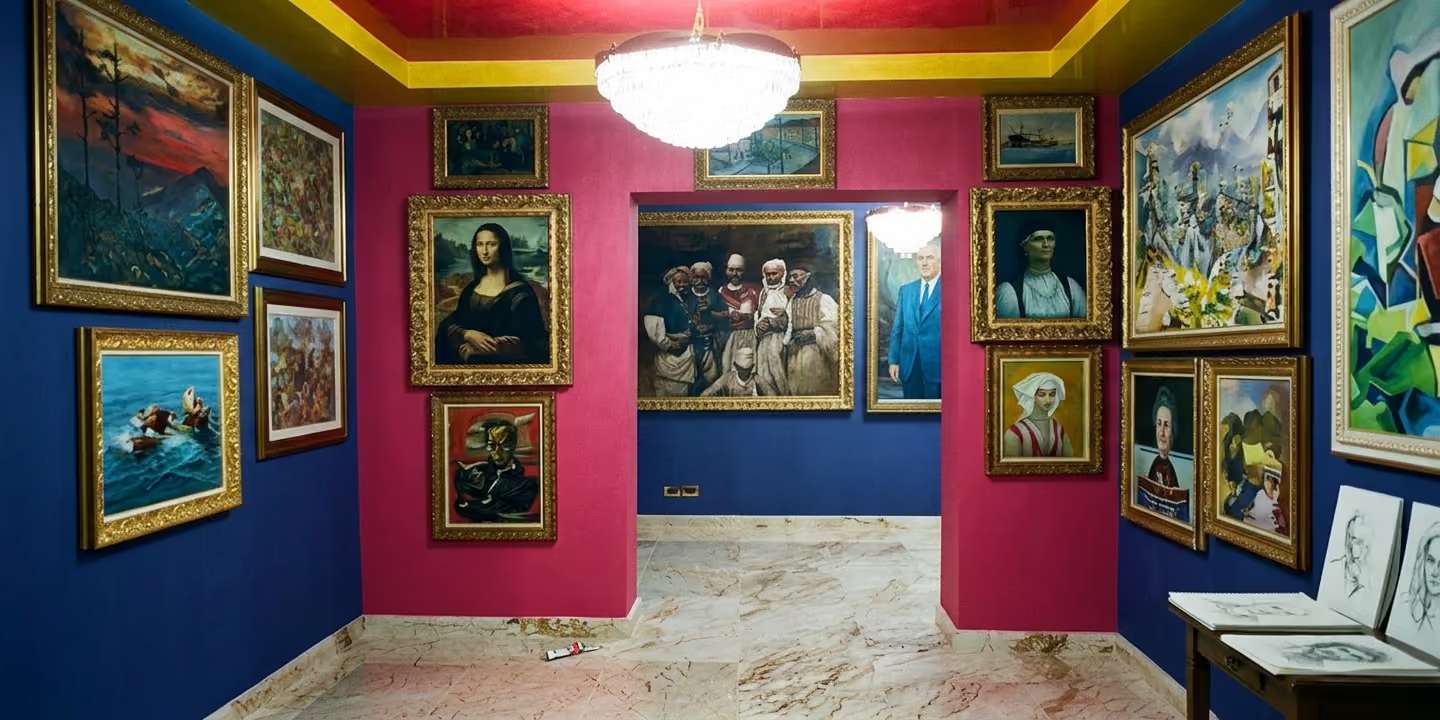
Representative image

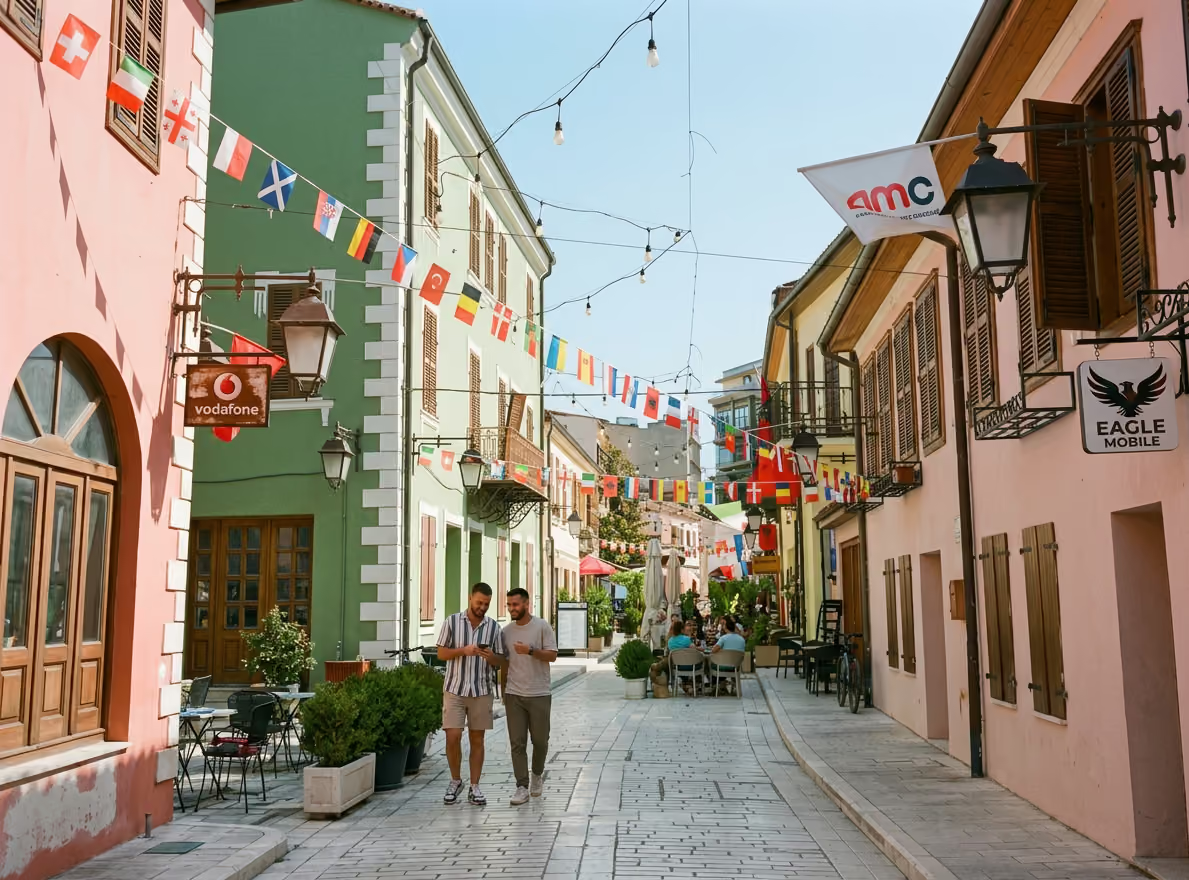
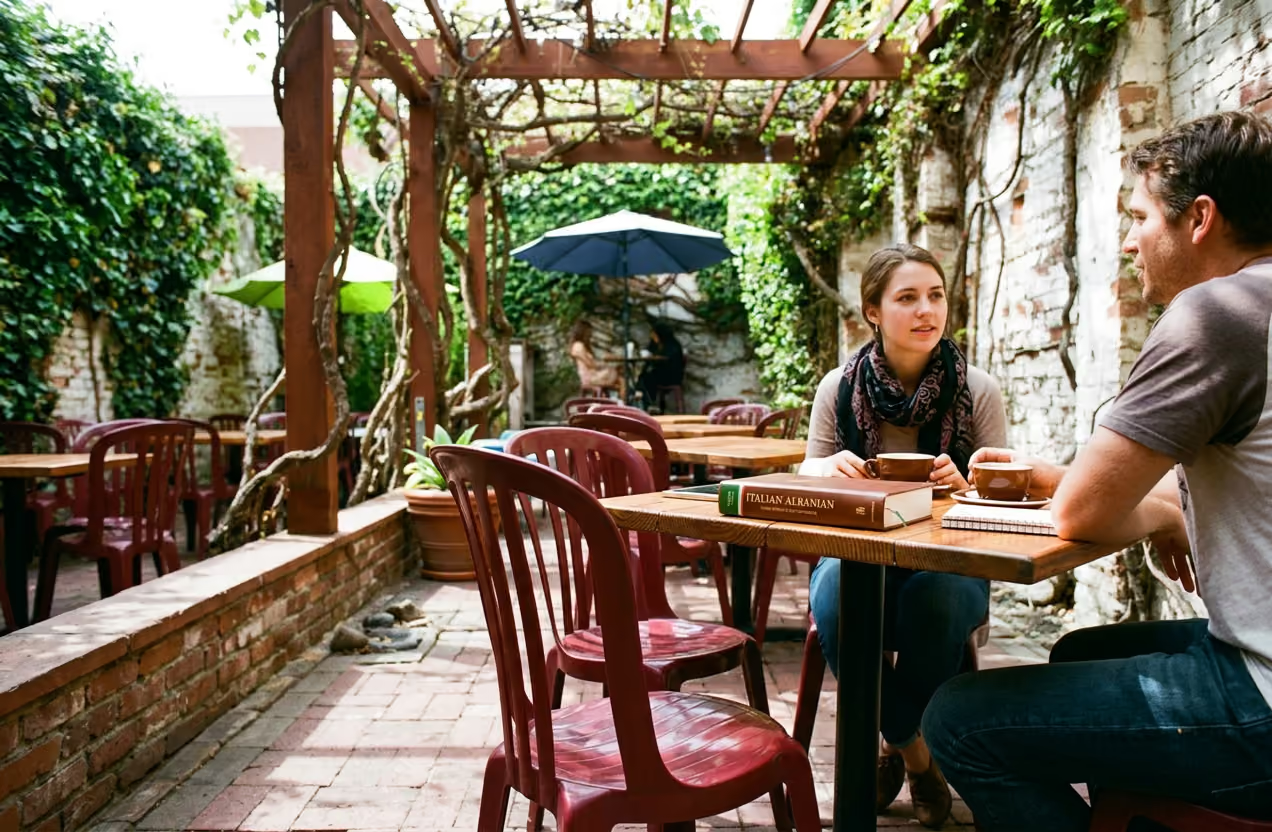
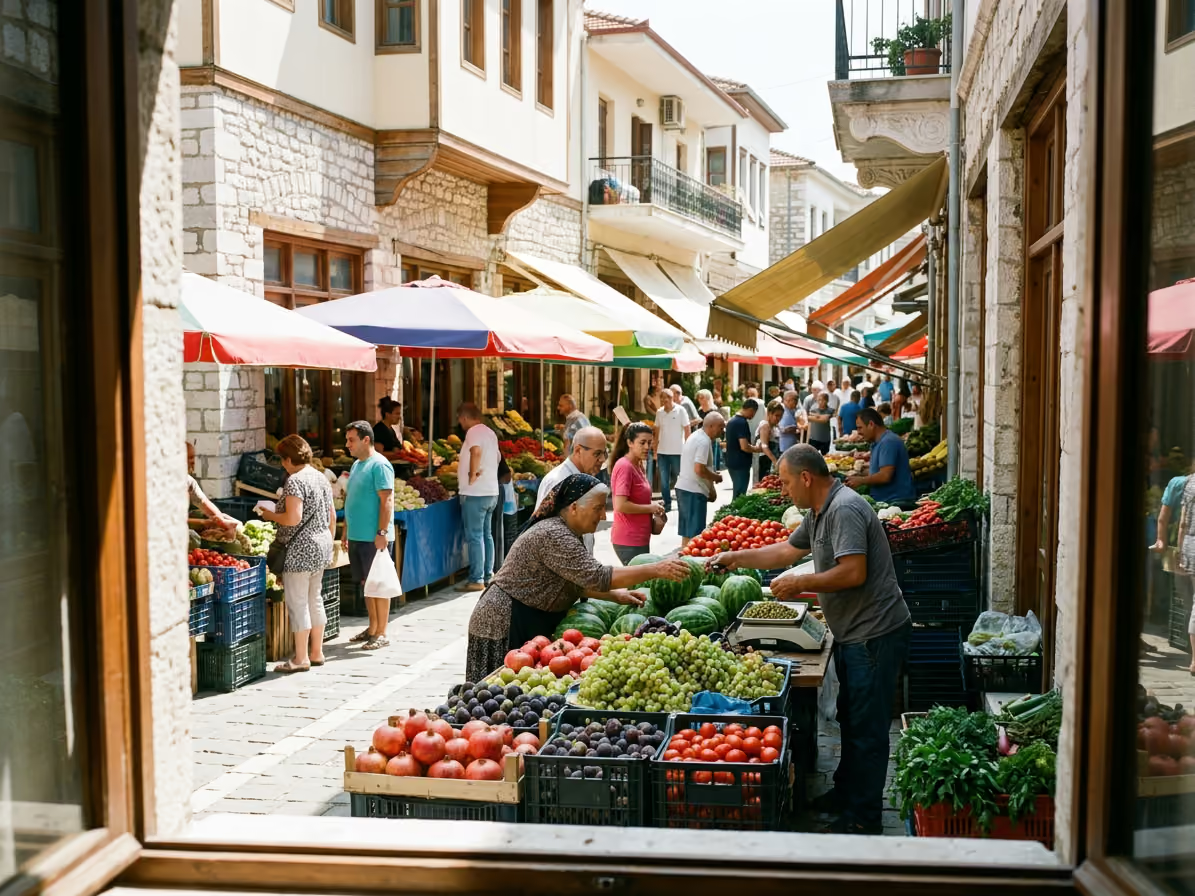
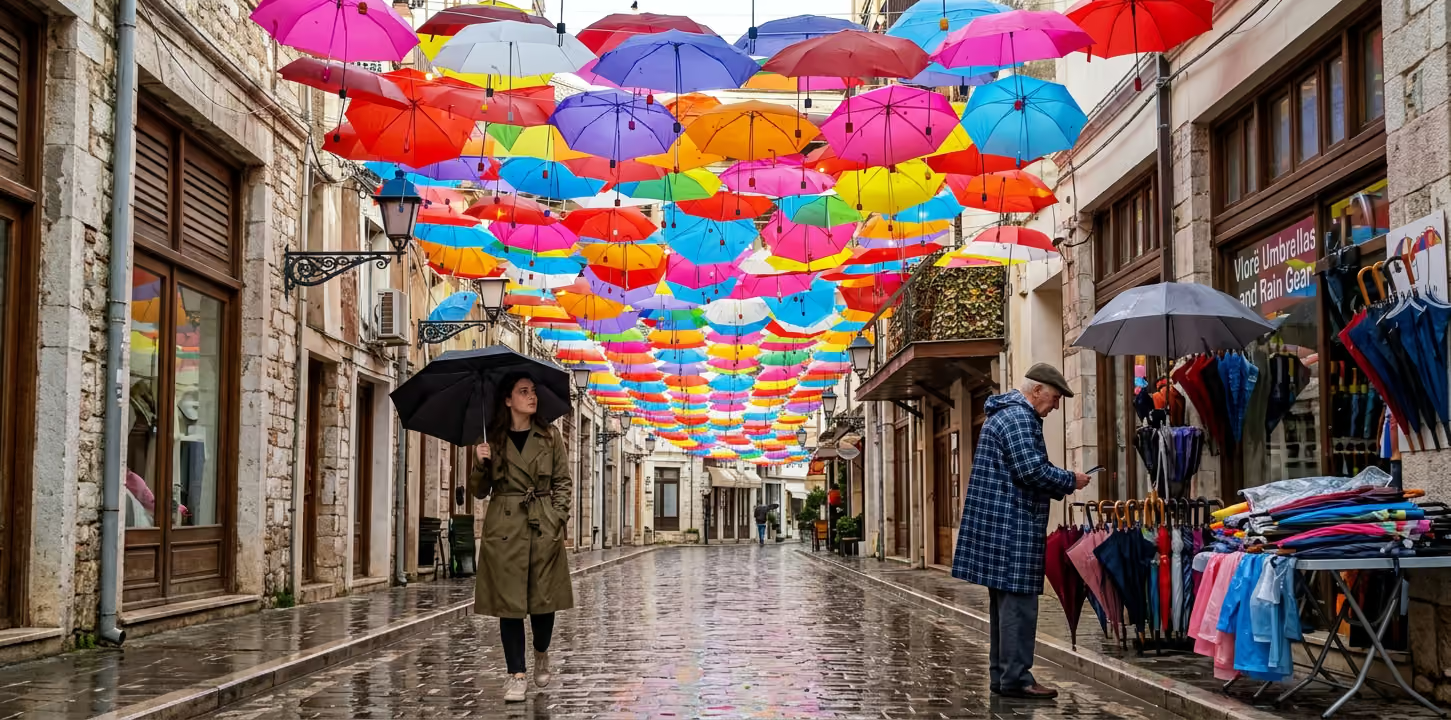
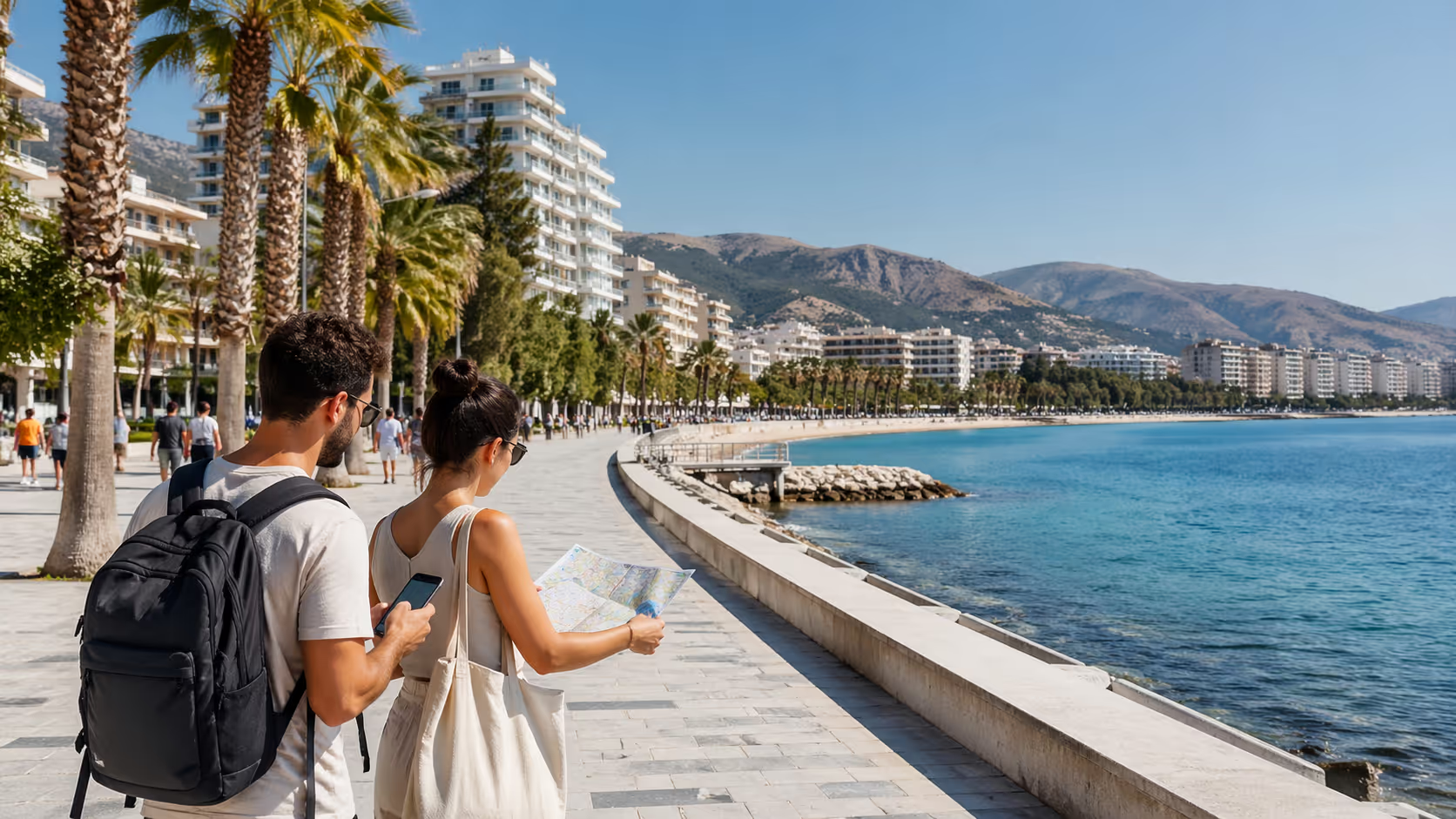
Walking past the busy beach promenades of Vlorë reveals a creative network of independent galleries, coastal street art, and emerging artist collectives.





Vlorë’s art scene is not a polished museum circuit with daily gallery hours, fixed studio maps, and glossy openings every week. It is a small, shifting creative network built around seasonal spaces, independent projects, street art, national collaborations, and personal introductions.
If you are looking for art in Vlorë, start with Galeria e Bregdetit, check AVAN for independent art contacts, use Street Art Cities for public works, and keep an eye on municipal cultural posts. The deeper scene often sits behind the obvious tourist path, in summer exhibitions, artist-led projects, informal studios, and meetups where one good conversation opens the next door.
The Vlorë art scene is a mix of formal and informal culture. It is not one single district, gallery row, or creative quarter. It works more like a loose network that connects Vlorë to Tirana, the coast, public art projects, and newer national platforms.
This matters if you have just moved to the city. In places like Berlin, London, or Milan, you can search one art calendar and plan a full weekend. In Vlorë, you need a different method. You follow the seasonal pulse, ask around in the right spaces, check online maps for street art, and learn who is active this month.
The city has a strong setting for art. The sea, port, hills, old streets, socialist-era buildings, new towers, and summer crowds all press against each other. That mix gives artists a lot to work with. It also creates tension around public space, memory, tourism, and who gets to shape the city.
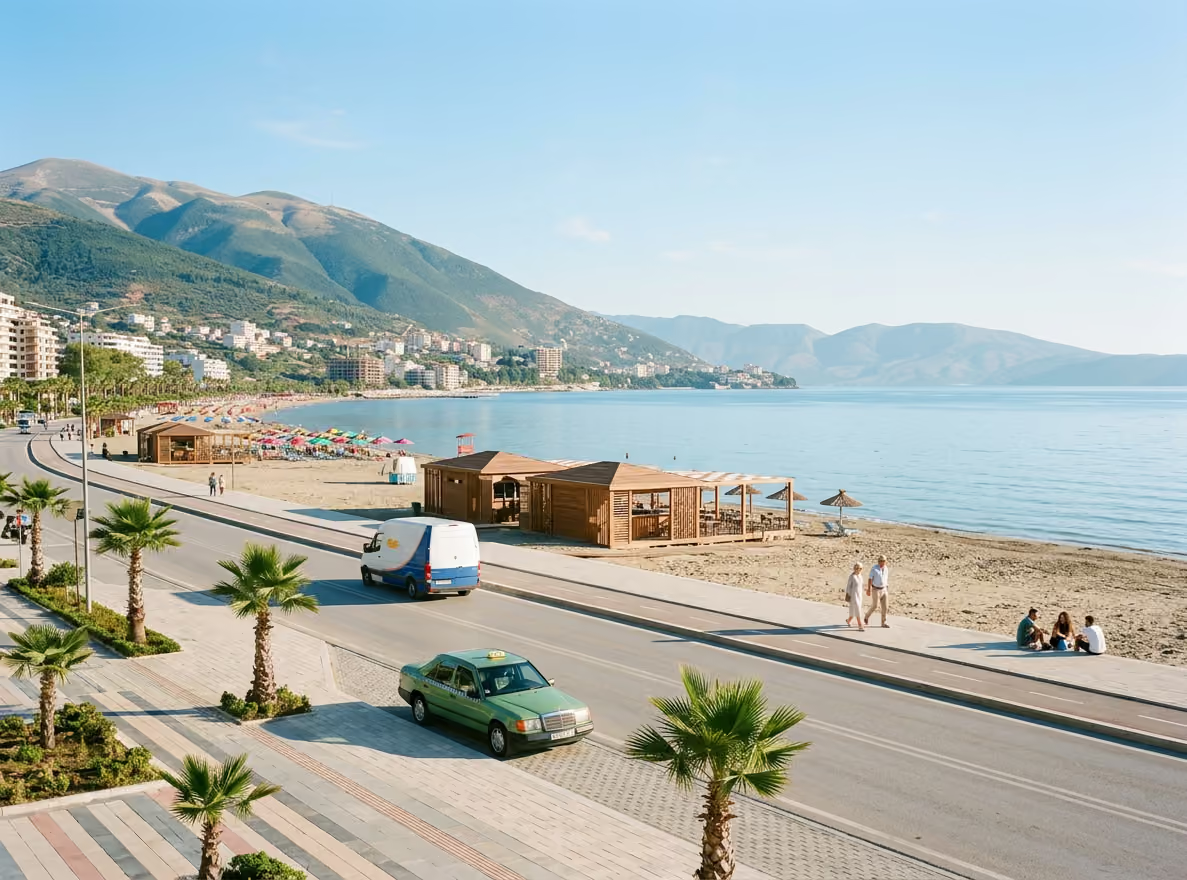
Vlorë is best known to many foreigners as a beach city. The Lungomare, Cold Water area, and Radhimë road pull attention in summer. Yet the founding of the Albanian Visual Arts Network during the Vlora Art Meeting in 2024 shows that the city has a role beyond tourism. According to AVAN, that meeting brought together key visual arts stakeholders in Albania and led to the network’s formal founding on May 25, 2024.
That detail matters. It means Vlorë is not only a place where art is displayed for visitors. It is part of a national effort to organize independent art spaces, link artists, and represent Albania’s contemporary art scene outside the country. For residents, this gives the city a cultural layer that is easy to miss if you only walk the beach promenade.
The best way to understand Vlorë art is to separate three parts. One part is the seasonal and gallery-based scene, with Galeria e Bregdetit as the main Vlorë name in the AVAN network. A second part is public art and street art, which appears through municipal projects and global street art databases. A third part is the artist-led network, which links Vlorë to Tirana-based spaces like Bazament, Tirana Art Lab, Gallery70, Satellite Zone, and Prag Space Collective.
For a newcomer, the main lesson is simple. Do not wait for the city to hand you a perfect cultural calendar. Build your own map. Start with public sources, visit exhibitions when they are live, ask artists where the next event is, and Join the community if you want social context rather than another lonely evening scrolling event pages.
Art gives new residents a way into the city that is not based only on beaches, restaurants, or apartment hunting. It helps you read Vlorë with more care. A mural, a small exhibition, or a conversation with an artist can tell you more about local pressure than a real estate listing ever will.
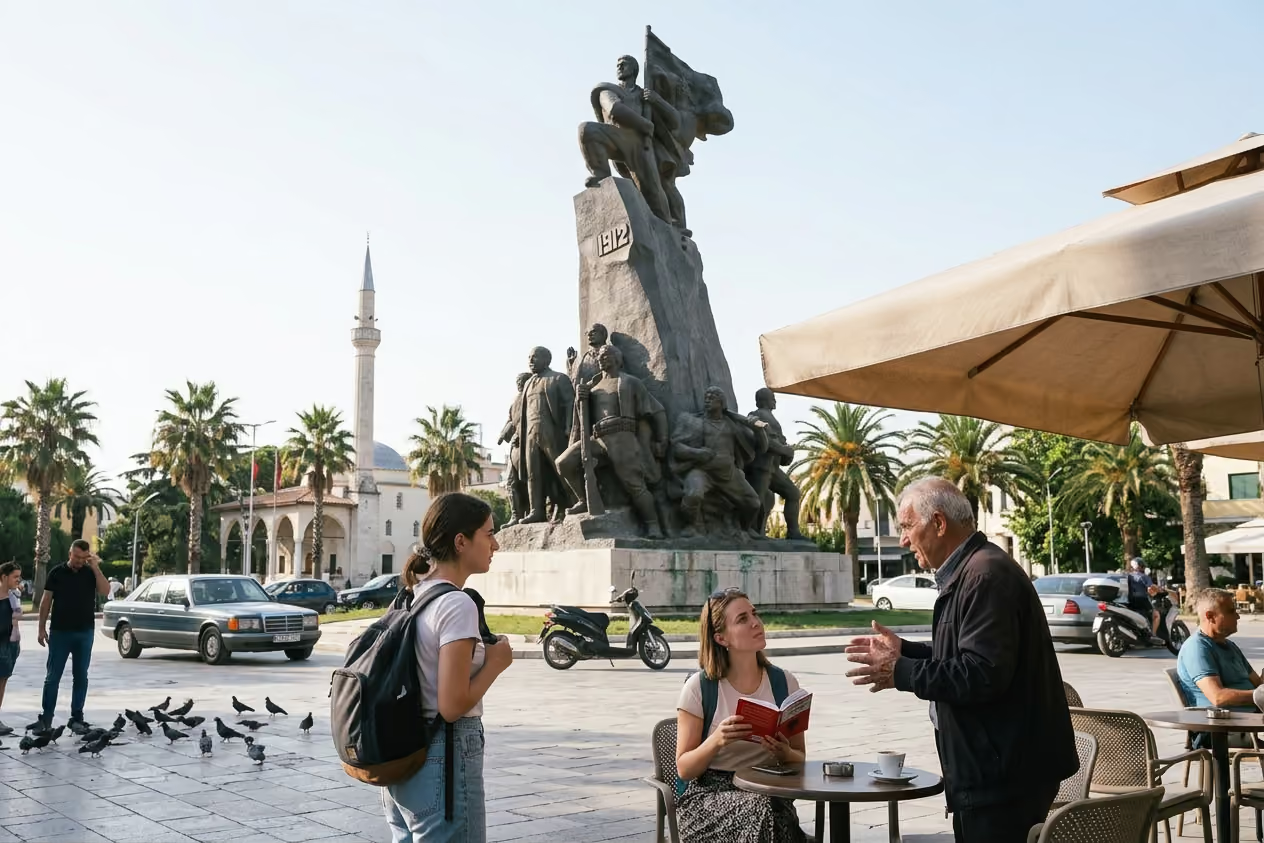
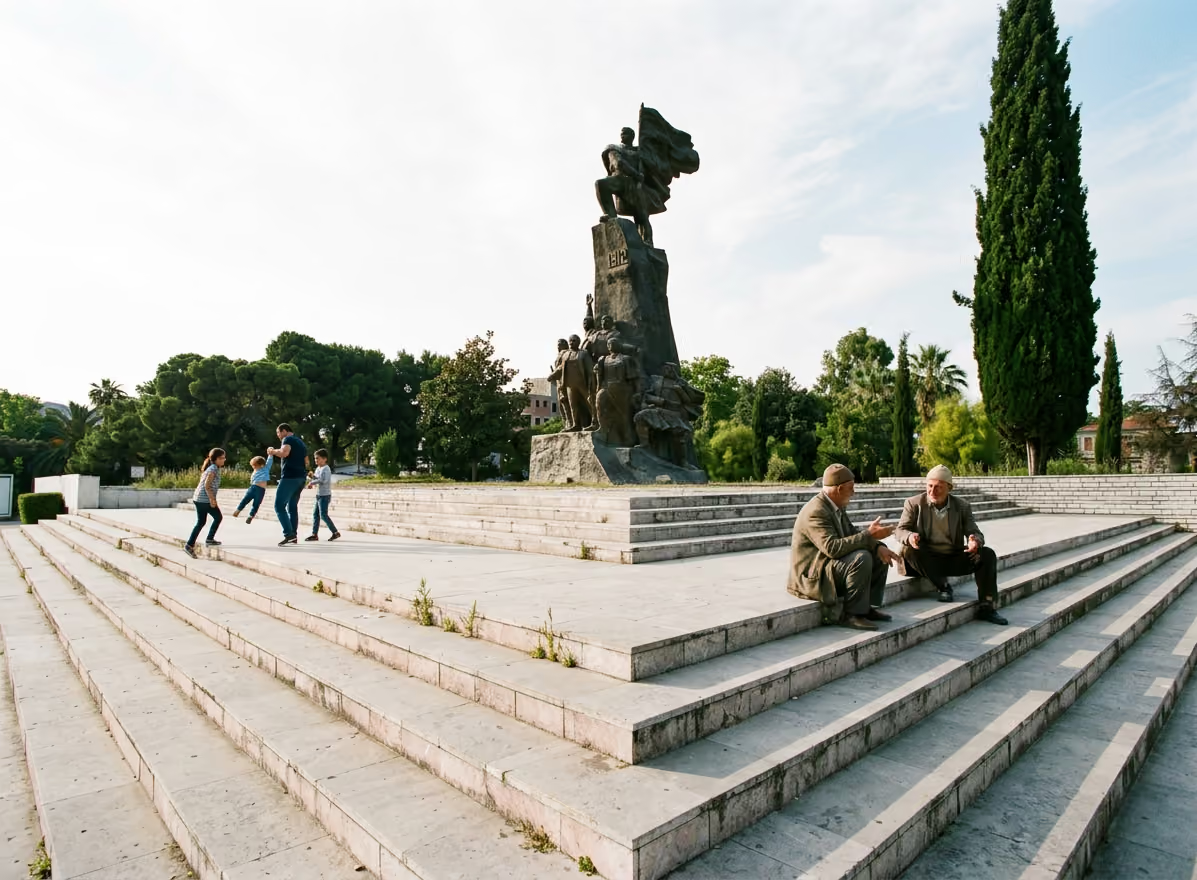
Vlorë has layers that shape its creative life. It is a port city, a Riviera city, a university city, and a place of national memory. The Independence Monument area carries one kind of identity. The Lungomare carries another. The Old Town streets near Muradie Mosque feel different from the high-rise strip along the coast.
For Albanians, Vlorë is tied to independence and national history. For tourists, it is often sold as sea and sunshine. For residents, daily life sits somewhere between those two images. The art scene helps make that middle ground visible.
Expats and remote workers often arrive with a clean mental image of Albania. Cheap rent, sea view, coffee culture, and a slower life. Those things exist, but they are not the full story. Public space changes fast here, rents rise in summer, and many cultural events are spread through personal networks rather than easy booking systems.
That is where art becomes practical. It gives you a reason to visit parts of the city beyond your usual café. It helps you meet locals who care about urban change, history, identity, and public life. It gives you a softer way to enter Albanian conversations that might feel too political or complex at first.
The independent art scene in Albania grew through self-organization. AVAN describes its role as gathering independent contemporary art organizations and representing the local art scene to regional and international audiences. That kind of network is not just cultural decoration. It is a response to fragmentation and limited infrastructure.
For Vlorë residents, this means you should not judge the scene only by the number of permanent galleries. A small city can have real creative weight through seasonal venues, temporary events, street projects, and national links. The visible surface may look quiet on a random Tuesday in February. The deeper network can still be active.
There is another practical reason this topic matters. Creative circles often become entry points for friendship. Many foreigners in Vlorë struggle less with food, rent, or transport than with loneliness. An artist talk, exhibition opening, or local workshop can be easier than walking into a bar alone.
Vlore Circle was built around that same problem. People need good information, but they also need real people. If art is one of your doors into the city, use it. Go to the event, ask one clear question, and follow up with the person who answers kindly.
The main Vlorë-based name in the current independent art network is Galeria e Bregdetit. AVAN describes it as a contemporary exhibition and research center in Vlorë that operates during the tourist season. That seasonal model fits the city well, since cultural foot traffic changes sharply between August and January.
A seasonal gallery is not the same as a tourist souvenir shop. It can host serious work during the months when audiences are larger and easier to gather. It can also use Vlorë’s summer flow to put local and national artists in front of Albanians from other cities, diaspora visitors, and foreign residents.
The challenge is timing. If you arrive in Vlorë in winter and expect a constant exhibition program, you may feel disappointed. The better approach is to plan around the warmer months, then use winter for private introductions, studio visits, and trips to Tirana for larger openings.
AVAN is the best starting point for mapping the wider network. Its member list includes established and newer spaces that shape contemporary art in Albania. Even when they are not based in Vlorë, their programs matter here since artists, curators, and events move between cities.
Bazament, founded in 2016, is one of the longer-running contemporary art spaces listed by AVAN. It has built a role as a dedicated space for contemporary practice. For Vlorë residents, Bazament matters since it shows the kind of independent institution that younger and seasonal spaces can learn from.
Tirana Art Lab, founded in 2010, has an even longer track record. AVAN describes it as a center for contemporary art with exhibitions, residencies, workshops, publications, and research. Its focus includes art in public space and women artists, with artists from Albania and Central, Eastern, and Southeastern Europe.
Gallery70 is another AVAN member and places strong focus on artist support and economic empowerment. That phrase is worth noticing. It points to one of the hardest parts of the Albanian art scene. Artists need visibility, but they also need income that lets them keep working.
Satellite Zone gives a different model. AVAN describes it as a nomadic platform founded in 2023 by Kristanja Çene, Inda Sela, and Resina Meçani. It has united 23 artists, organized 8 exhibitions, and built collaborations with Sweden, Germany, and Austria.
That is a strong output for a young platform without a fixed home. It shows that permanent walls are not the only way to build an art program. For Vlorë, that lesson matters since coastal rents, seasonal traffic, and limited spaces can make a classic year-round gallery hard to maintain.
Prag Space Collective, co-founded in 2024, represents a newer wave of artist-led organization. It appeared in the same wider moment as AVAN. That tells us spring 2024 was a strong period for independent art coordination in Albania.
What does this mean for a resident trying to see art this week? It means your search should not stop at “gallery near me.” Use AVAN to see which organizations are active, check their direct pages, then look for events in Vlorë or Tirana that connect back to the coast. A weekend bus trip to Tirana may be part of your Vlorë art life.
There are some local commercial listings too. TripAdvisor lists art-related attractions in Vlorë County, which can help with basic visitor information. Use those listings for practical orientation only. For serious contemporary programming, AVAN and the spaces themselves are better sources.
A useful pattern is to keep three bookmarks. Keep AVAN for the national map. Keep Street Art Cities for public works in Vlorë. Keep the Vlorë municipality site for public cultural projects like STAR, the street art project linked to the Europe for Citizens program.
If you are based near Skela, the Lungomare, or the Old Town, treat the city as a set of art routes rather than one art quarter. The coastal strip gives you public visibility. The center gives you history and civic memory. The side streets between them give you clues about daily Vlorë.
There is no single complete art calendar for Vlorë that you can rely on all year. The available public sources give institutional names, network links, and some project documentation, but they do not give a full running list of current exhibitions. This is one of the main gaps in the scene.
Start with AVAN. Its network page gives a clear list of independent contemporary art organizations in Albania. From there, click through to member spaces and check their own pages for exhibitions, open calls, residencies, and contact details.
Then check Galeria e Bregdetit before and during the tourist season. Since AVAN describes it as seasonal, you should look for activity in the months when Vlorë receives more visitors. If you live near the beach road, this is when cultural posters and word-of-mouth tend to move faster.
Use Street Art Cities for public art. The platform has a Vlorë city page and a listing of active artworks. It is not a full critical guide, but it is practical when you want a walkable map or a reason to leave your usual café route.
Check the Vlorë municipality website for public projects. The STAR street art page shows that municipal and European program-linked public art projects have taken place in the city. This helps you separate random wall markings from organized projects.
For studios, expect less public information. Many artists work from home, shared rooms, borrowed spaces, or temporary studios. You will often find them through exhibitions, workshops, and introductions rather than a public studio directory.
Here is a simple method that works well in Vlorë.
This may sound manual, but it fits how many small creative scenes work. People move through trust. If you show up, ask with respect, and avoid treating artists like free tour guides, you will get better access.
For events, check timing with care. Summer can bring more activity, but it can also bring crowded roads, higher prices, and distracted audiences. Winter can feel quiet, but it may be better for real conversation.
If you plan to invite friends to an exhibit, confirm it on the day. Opening hours can shift. Small spaces may close for installation, travel, private events, or simple staffing reasons.
For remote workers, one good habit is to pair art with your normal weekly rhythm. If you work from a café near the promenade, plan one evening walk toward the center. If you live in Cold Water, use a scooter or taxi to reach Skela and the Old Town for a different view of the city.
For retirees, ask about daytime events. Some talks, workshops, and cultural visits may suit you better than late openings. You may find more meaningful contact at a small afternoon program than at a packed summer launch.
For families, use street art walks as an easy entry. Children often respond well to murals, stencils, and public color. Keep the route short, use shaded streets in summer, and finish near a café or the promenade.
Street art in Albania is not only decoration. In the Albanian context, it has often carried political meaning, social critique, and public argument. The best documented case is Çeta, a collective discussed in Art Margins through an interview and critical analysis.
Çeta formed in spring 2016 from talks among students, activists, and artists. The group used collective identity rather than public individual names. Art Margins describes its practice through projects that addressed government policy, informal economies, urban displacement, and economic justice.
The group’s structure matters. Its members came from fields such as design, political science, architecture, art, and physics. That mix shows that street art can be a serious political and intellectual practice, not only quick visual expression.
Çeta had completed six documented projects at the time of the Art Margins piece. Its tools included wheat pastes and stencils in public streets of Tirana. The group rejected cooperation with dominant political parties and pushed against neutral art discourse.
For Vlorë, the direct lesson is not that every wall has the same politics. It is that public art in Albania deserves careful reading. A mural near a busy road, a stencil on a side wall, or a municipal street art project can sit inside wider debates about who owns public space.
Street Art Cities lists Vlorë as a city with documented street art. Its active artwork page can help you locate pieces. Since the database is participatory, treat it as a guide for walking and viewing, not a full archive of meaning.
The Vlorë municipality STAR street art page gives another angle. It connects street art to a public project supported through the European Union’s Europe for Citizens program. That shows a more official model, where public art is tied to civic programming.
These two sides can overlap, but they are not the same. A political stencil made by an anonymous collective has a different purpose from a city-backed mural project. One may challenge power. The other may activate public space through an approved program.
This is why you should not flatten all street art into one category. Ask three questions when you see a work in Vlorë.
Who seems to have authorized it? Is it polished and program-linked, or rough and interventionist?
Where is it placed? A wall near the promenade speaks to a different audience than a side street behind a market.
What is the visual language? Is it civic, poetic, critical, memorial, or playful?
For residents, street art walks can build local understanding. Start near a place you already know, such as the Lungomare, Skela, the Old Town, or the road toward the port. Use Street Art Cities to check documented works, then pay attention to the streets between the points.
Do not enter private courtyards for photos. Do not block traffic for a wall shot. If a work is on a residential building, act like a neighbor rather than a content creator.
If you want to photograph street art, take one wide shot that shows the street context. Then take a detail. This helps you remember not only the image, but the way it sits in Vlorë’s daily life.
Street art can change fast. A work may be painted over, damaged, cleaned, or covered by new building work. That fragility is part of the medium. It is not a failure of the scene.
The Albanian independent art scene is built around people who self-organize. AVAN is the clearest public sign of that. It was founded on May 25, 2024 during the Vlora Art Meeting, with the aim of representing Albania’s independent contemporary art scene at regional and international level.
This kind of network forms when single spaces are too small to carry the full burden. One gallery may have good curators but limited funds. One platform may have artists but no building. One collective may have strong ideas but little public reach.
A network helps them share visibility. It gives a common frame for local and foreign audiences. It can make it easier for curators, funders, and artists abroad to understand who is active in Albania.
The AVAN member mix is wide. It includes permanent galleries, research centers, nomadic platforms, seasonal spaces, and curatorial collectives. That range is useful, since it shows that contemporary art infrastructure does not need one standard shape.
A dedicated gallery gives continuity. People know where to go. The space can build an archive, a public identity, and long-term relations with artists.
A research center gives depth. It can host residencies, workshops, publications, and slower critical work. Tirana Art Lab fits this model through its focus on research and process.
A nomadic platform gives movement. Satellite Zone shows how artists can work across changing sites and international partnerships. Its 23 artists and 8 exhibitions show real output without a permanent venue.
A seasonal space gives timing. Galeria e Bregdetit fits Vlorë’s coastal rhythm. It can concentrate programming when the city has more bodies in the streets and more attention from outside.
A collective gives shared authorship. Prag Space Collective and other artist-led groups point to a mode where curation, discussion, and experimentation sit close together. Collective work can be messy, but it can create trust and speed.
For a foreign artist in Vlorë, this structure has clear lessons. Do not begin by asking for a solo show. Begin by learning the network, attending events, and asking where your work fits. Albanian art circles are small, and people remember how you enter.
If you are a collector, avoid the quick bargain mindset. Ask about artist payment, edition details, transport, and documentation. Gallery70’s focus on economic empowerment is a reminder that money matters in a scene where artists often need more stable income.
If you are a curator, be careful with easy Balkan labels. Albania is connected to Central, Eastern, and Southeastern European conversations, but each project has its own context. Read before you pitch.
If you are a resident who simply loves art, your role still matters. Showing up to openings, buying small works, sharing correct event information, and introducing people can all help a fragile scene.
The independent scene is not fully separate from funding, tourism, or institutions. Independence means artistic and organizational self-direction. It does not mean money appears from nowhere.
That is one of the honest limits here. International collaborations, seasonal programs, and public projects can give support, but they can also shape what gets shown. Artists and spaces have to balance autonomy with survival.
For Vlorë, this balance is sharp. The city gets attention in summer, but rent and noise rise too. A space may gain audience in July, then struggle to hold focus in November.
This is why personal networks count. In a city with seasonal pressure, people who live here all year can give continuity. They remember past events, connect new arrivals, and keep culture from becoming only a summer product.
Vlorë does not have one fixed art neighborhood. It has several zones where art, public space, and city identity meet. Each zone gives you a different reading of the city.
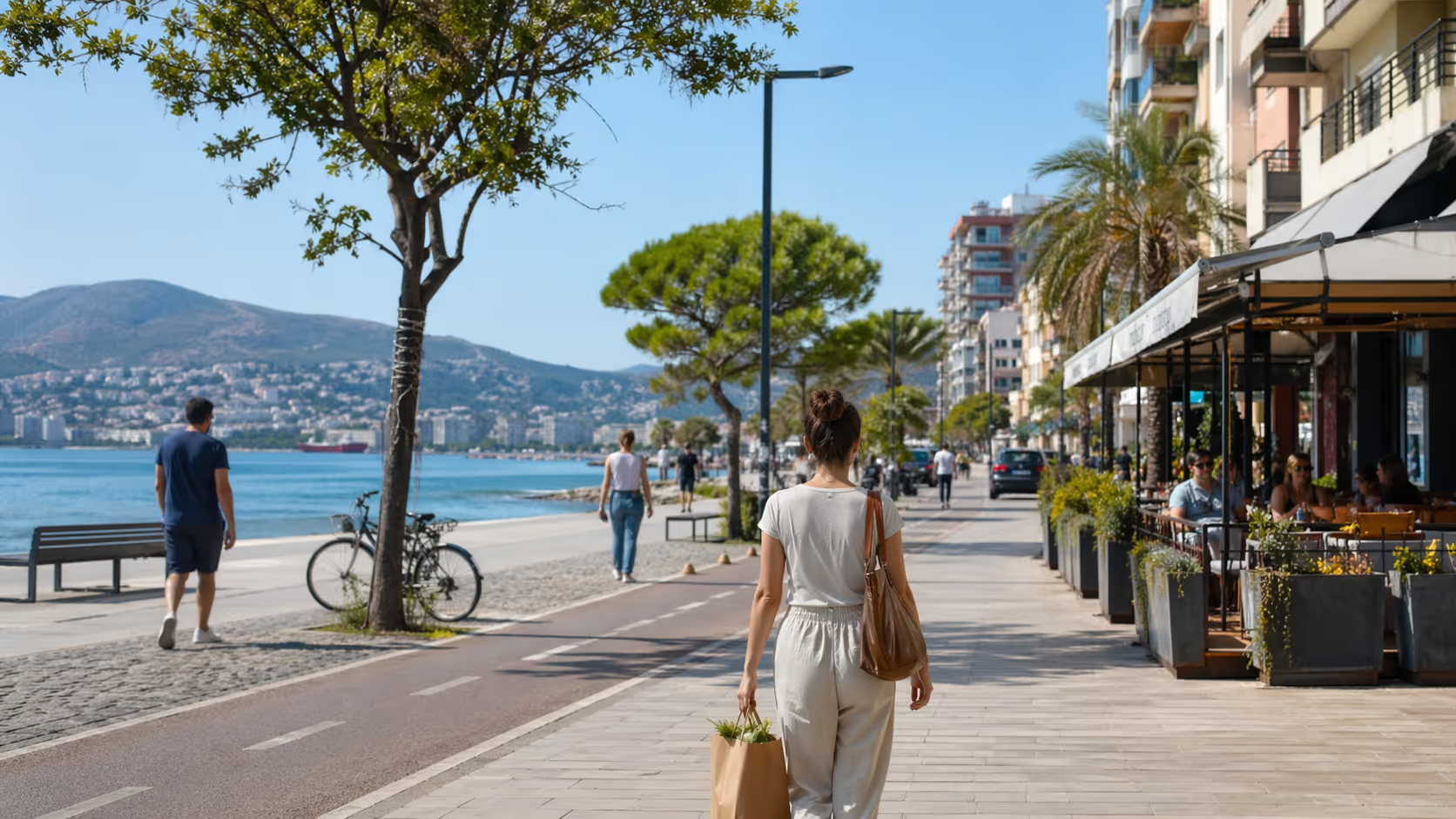
The Lungomare is the most visible route. It is where visitors walk, runners pass at sunset, and cafés fill in summer. Public art near this area has to compete with sea views, hotel fronts, and the constant pull of the promenade.
If you are new, start here since it is easy. Walk from the main promenade toward the newer coastal strip, then turn inland rather than staying only by the water. The side streets can show you the gap between tourist Vlorë and resident Vlorë.
Skela is practical and lived-in. It links transport, shops, housing, and daily errands. Art near Skela feels different from art made for the beach crowd, since the audience includes people who pass the same wall every day.
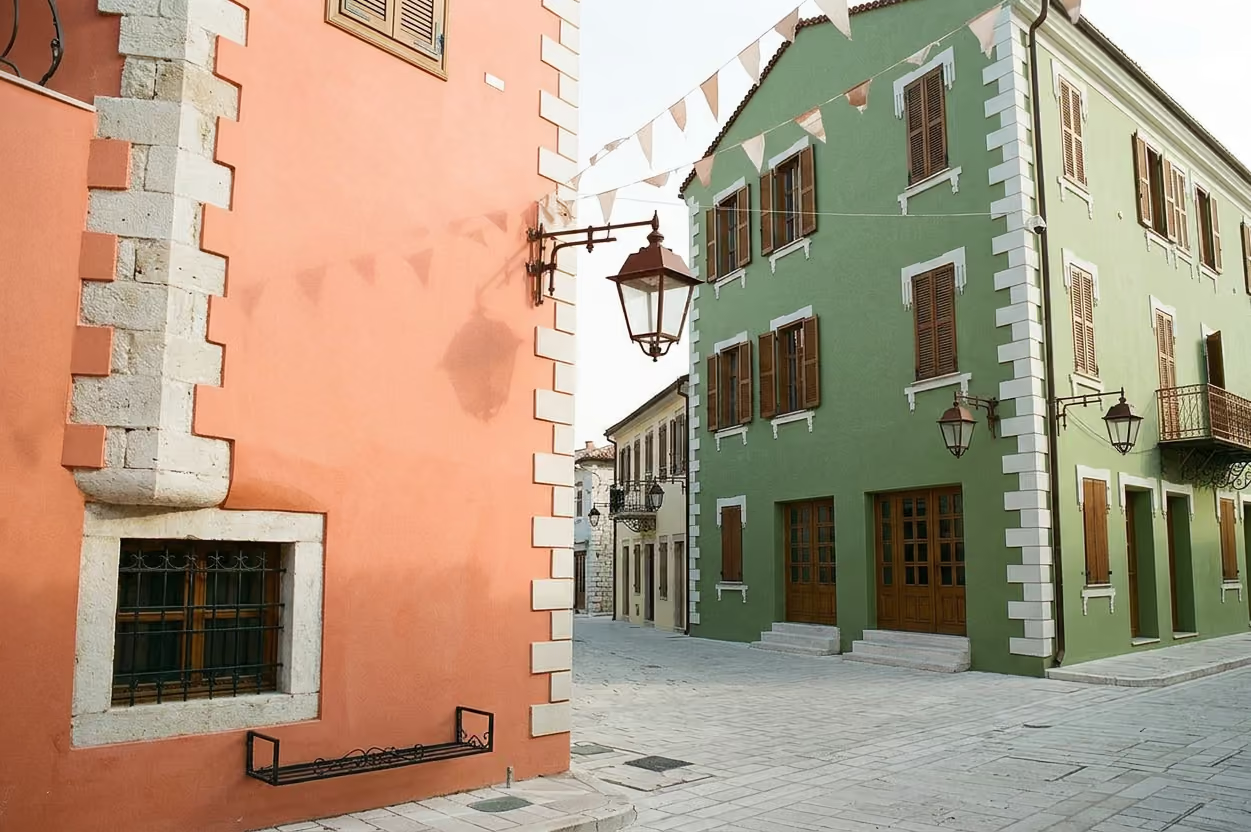
The Old Town area gives you texture. Streets near Muradie Mosque and the historic center carry older layers of Vlorë. This is a good area for slow looking, not just snapping photos.
Independence Square and the national memory zone bring another layer. Public symbols here carry weight. Any artistic work near civic monuments should be read with care, since the setting is tied to Albanian history.
The port side of town gives a more industrial mood. Vlorë is not only a beach resort, and the port reminds you of work, trade, and movement. Artists often respond to these edges, since they show the city’s harder frame.
Cold Water and the road south toward Radhimë carry the summer image of Vlorë. This area is full of sea views, apartments, restaurants, and seasonal life. Art here can easily become background decor, so look for work that says something more than “holiday.”
A simple street art route can start at the promenade, move inland through Skela, continue toward the Old Town, then end near a central café. Use Street Art Cities before you leave, but do not stare only at your phone. The unlisted walls, posters, and small visual details may be just as telling.
For a gallery route, timing matters more than distance. If Galeria e Bregdetit has a current program, make that your anchor. Then ask staff or artists what else is happening that week.
For a social route, pair art with coffee. In Vlorë, many real introductions happen after the event, not during the formal talk. Suggest a place near the venue rather than dragging people across town.
For a quiet route, go in the morning. The light is softer, streets are cooler, and you can see walls without parked cars blocking every view. In July and August, avoid the hottest part of the day.
For a serious photography route, take notes. Write down the street, nearby landmark, date, and condition of the work. Public art changes, and your notes may matter later.
The key is to walk like a resident. Do not treat Vlorë as a visual backdrop. Notice where people live, where they hang laundry, where children play, and where traffic makes the pavement hard to use.
Art in Vlorë is not always framed. Sometimes it is a formal exhibition. Sometimes it is a wall. Sometimes it is a poster half-torn near a bus stop. Sometimes it is an artist at a café explaining why the city feels different after summer ends.
The public research does not provide reliable price lists for exhibitions, workshops, studio visits, or artist talks in Vlorë. That means any fixed cost guide would be guesswork. The more honest answer is to plan for a mix of free entry, donation-based events, café spending, transport, and paid artworks or workshops when offered.
Many small exhibitions in Albania may be free to enter, but always check the event page or ask the organizer. Free entry does not mean the event has no cost. Artists still pay with time, materials, travel, and unpaid labor.
If you attend an opening, budget for a coffee, drink, or taxi. If the event is in central Vlorë and you live near the Lungomare, you may walk. If you live in Cold Water or outside the center, a taxi may be more realistic at night.
If you want to buy art, ask direct but polite questions. Is the work for sale? Is it framed? Is the price in lek or euros? Can the artist provide a receipt or written confirmation?
For small works, prints, or editions, ask about edition size and paper quality. For paintings, ask about size, medium, and how to transport it. For work by emerging artists, do not try to cut the price in half like you are at a flea market.
If you want a studio visit, offer context. Say who you are, why you are interested, and whether you are looking to buy, write, collaborate, or learn. If the artist agrees, do not arrive empty-handed. A small courtesy purchase, coffee, or taxi payment can be appropriate if they have given you time.
If you want to organize an event, your costs may include space, sound, chairs, translation, design, promotion, and artist fees. Ask local partners before booking anything. A beautiful idea can fail if the room is hard to find or scheduled during the wrong week.
For artists moving to Vlorë, studio cost is hard to estimate from public sources. Private arrangements are common. You may need to rent an extra room, share space, or work from home at first.
The biggest hidden cost is time. It takes time to learn who is serious, which pages post real updates, and which projects are active. It takes time to build trust.
There is a social cost too. If you only attend events where other foreigners go, you will stay in a small bubble. If you attend local events with patience, you may feel awkward at first, but your Albanian life will become richer.
At Vlore Circle, our host tip is simple. Go to the smallest event you can find, not only the biggest one. A small artist talk with ten people near the center can give you better connections than a packed summer event on the promenade.
The romantic idea is easy. You move to Vlorë, rent a sea-view apartment, paint in the morning, swim at lunch, and join an exciting Mediterranean art circle by sunset. Some days may look like that. Most days will not.
The real Vlorë has power cuts at times, noisy building work, summer traffic, and sudden schedule changes. Apartment blocks go up fast. The city can feel half resort, half construction site. That tension is part of the creative material, but it can be tiring.
The art scene is not handed to you. It is not always visible from the promenade. You need patience, and you need to accept that some information travels through people rather than perfect websites.
Language can be a barrier. Many younger artists and cultural workers speak English, but not every event will be designed for foreigners. Learn basic Albanian greetings. Ask if English is okay before taking over a conversation.
The season can distort your view. In summer, Vlorë feels full of life, noise, and movement. In winter, it can feel quiet, closed, and local in a way that surprises new arrivals. A serious resident needs to understand both versions.
The scene can feel Tirana-centered. Many institutions, openings, and critical conversations happen in the capital. Vlorë has its own role, but you may need regular trips to Tirana if contemporary art is a major part of your life.
Funding is another reality. Independent does not mean wealthy. Many artists and platforms work with limited budgets, short timelines, and project-based support. Respect that when you ask for time, access, or unpaid advice.
For collectors, the reality is that the market may be less formal than in larger art cities. Documentation and pricing can vary. That does not make the work less serious, but it means you need clear communication.
For artists, the reality is that Vlorë can inspire you, but it will not do your professional work for you. You still need a portfolio, clear project text, good images, and respectful contact with spaces. Romantic relocation is not a career plan.
For remote workers and retirees, the reality is that art will not solve loneliness on its own. You need to show up more than once. You need to remember names. You need to invite people for coffee without turning every meeting into networking.
At the same time, Vlorë rewards presence. If you live here year-round, people start to notice. You become more than a visitor with a camera. You become part of the city’s daily rhythm.
That is when the art scene opens in a different way. You hear about a small show before it is posted. Someone invites you to a studio. A street mural leads to a talk about politics, memory, or a building that used to be something else.
The reality is not less interesting than the dream. It is just less tidy.
Start by being clear about your role. Are you an artist, buyer, writer, designer, hobby painter, photographer, or curious resident? You do not need a grand title, but people should understand why you are there.
Attend openings without trying to dominate them. Look at the work first. Read the wall text if there is one. Ask one thoughtful question, then give the artist space to speak with others.
Use social media with care. Follow spaces and artists, but do not send vague messages like “Let’s collaborate” with no plan. A better message is short and clear. Say you live in Vlorë, mention the work you saw, and ask one practical question.
Offer something real. This could be photos of an event, translation help, a contact, a small purchase, or a room for a talk. Do not offer “exposure” to artists who already have too much unpaid exposure.
If you want to host a creative meetup, choose a simple format. A coffee near Skela, a street art walk from the promenade to the Old Town, or a small critique group at a quiet café can work better than a large event with no clear purpose.
Keep group size manageable. Six to twelve people is enough for real talk. Larger groups need structure, seating, sound, and a host who can guide the room.
Respect Albanian context. Do not arrive with a savior tone about “bringing culture” to Vlorë. Culture is already here. Your job is to take part with humility.
Learn the calendar rhythm. Summer may suit public events, but winter may suit deeper studio work. Spring and early autumn can be good for smaller gatherings before or after the tourist peak.
Connect Vlorë to Tirana without treating Vlorë as secondary. Tirana has more institutions, but Vlorë has a different pace and setting. A strong creative life here can use both cities.
If you are unsure where to begin, Join the community. Vlore Circle exists for residents who want practical local knowledge and real social connection. We can point you toward current signals, local people, and events that may not appear on tourist lists.
Our host tip from community members is this. Bring one person with you the second time. If you attend an art event and like it, invite a neighbor, a remote worker, or an Albanian friend next time. Small scenes grow through repeat presence, not one-off applause.
Keep AVAN bookmarked for the independent contemporary art network. It gives the strongest overview of the organizations shaping the scene. Use it to understand who is active, what models they use, and how Vlorë fits into the national picture.
Keep Galeria e Bregdetit on your radar during the tourist season. Since it is listed as a Vlorë contemporary exhibition and research center, it is the main local name to watch. Confirm programming before you go.
Keep Street Art Cities bookmarked for Vlorë. Use it when you want a self-guided public art walk. Check the active artwork page, then build a route through areas you can reach on foot.
Keep the Vlorë municipality site in your search habits. Public projects like STAR may not appear in art-world channels, but they shape what residents see in the streets. Municipal pages can help you trace official public art programs.
Keep Art Margins for deeper context on Albanian street art politics. The Çeta interview gives strong background on how street art can work as political practice. It is useful reading before you judge public art only by style.
Keep TripAdvisor for basic visitor details, not critical judgment. It can help you identify art-related attractions in Vlorë County. Pair it with direct gallery sources for better accuracy.
Make your own map too. Save places in Google Maps or your preferred map app. Add notes like “saw mural here,” “artist talk nearby,” or “ask about summer program.”
If you are staying long-term, create a simple monthly habit. One gallery check, one street art walk, one cultural event, and one coffee with someone creative. That is enough to build momentum without turning life into homework.
Vlorë will not always make it easy. Information may be scattered. Events may move. Some weeks will feel quiet. Keep going anyway.
A resident’s art scene is built over time. You collect names, routes, rooms, and conversations. After a few months, the city starts to look different.
Tirana has more year-round institutions and a larger contemporary art circuit. Vlorë has a smaller scene, stronger seasonal rhythm, and a coastal setting that shapes its cultural life. If art is central to your work, use both cities.
Do not assume studios are open to the public. Many artists work in private or temporary spaces. Meet artists through exhibitions, talks, and mutual contacts before asking for a studio visit.
Most public walls can be photographed from public space. Avoid private courtyards, military or sensitive sites, and close shots of residents without consent. Be respectful near homes, schools, and places of worship.
Yes, but fewer public listings may be visible, and the rhythm is quieter than summer. Winter is better for conversations, small gatherings, and trips to Tirana. Check AVAN member channels and local community groups for current activity.
Follow Vlore Circle for fresh guides, local updates, and community notes around life in Vlorë. It is the easiest way to stay close to what we are building.
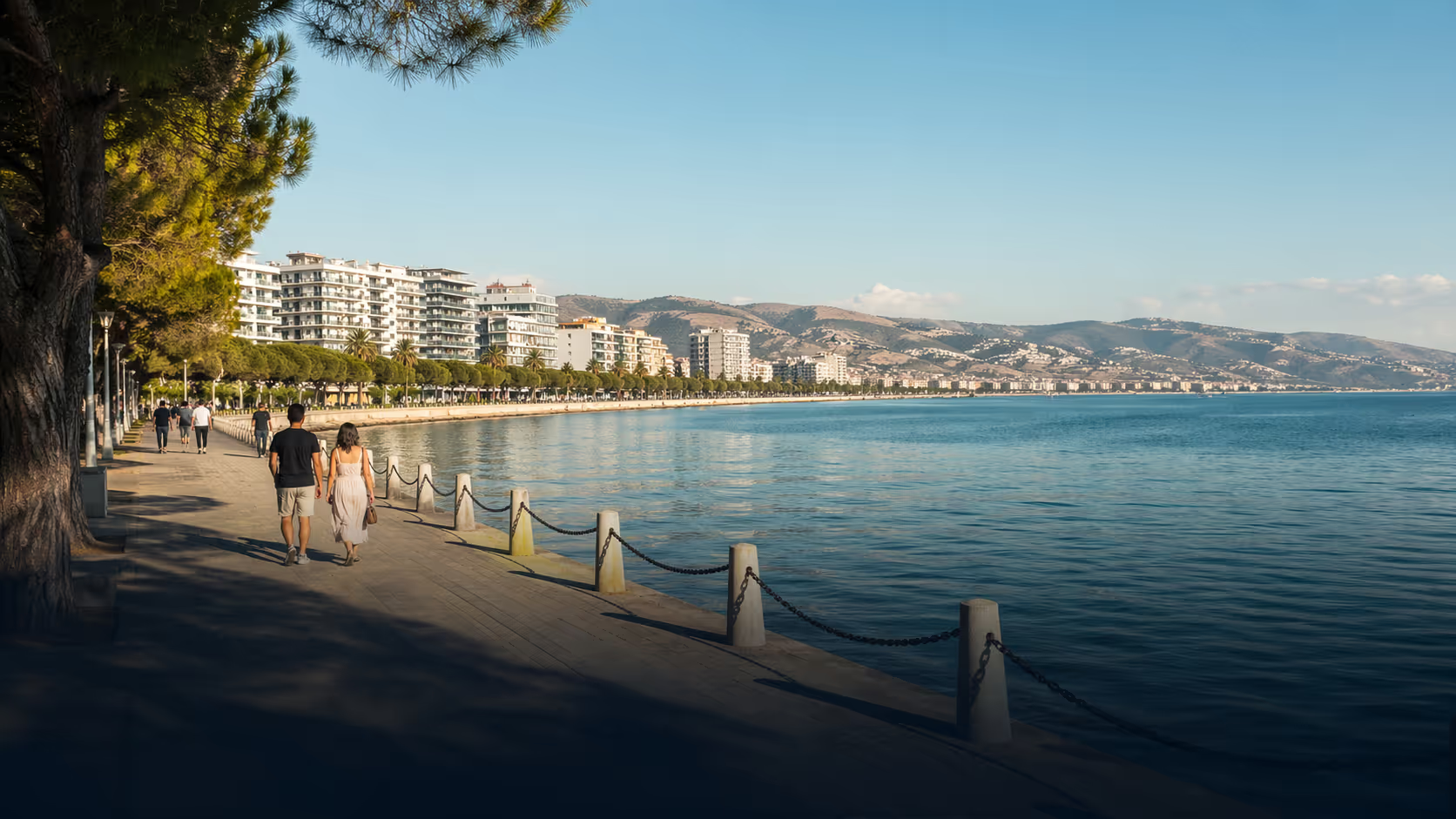
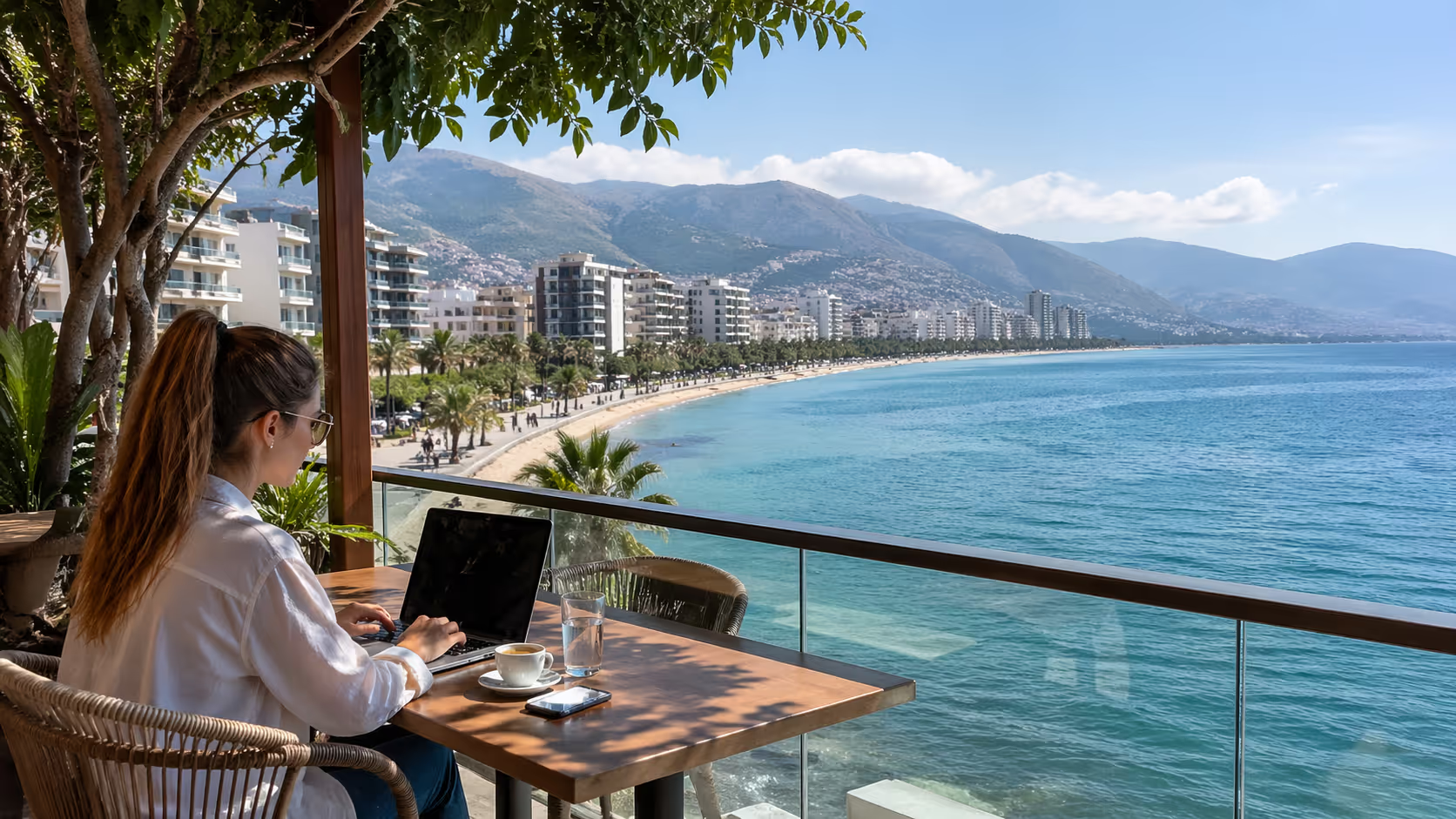

Be part of a growing community built around connection, local life, and a better experience of Vlorë.
join the circle