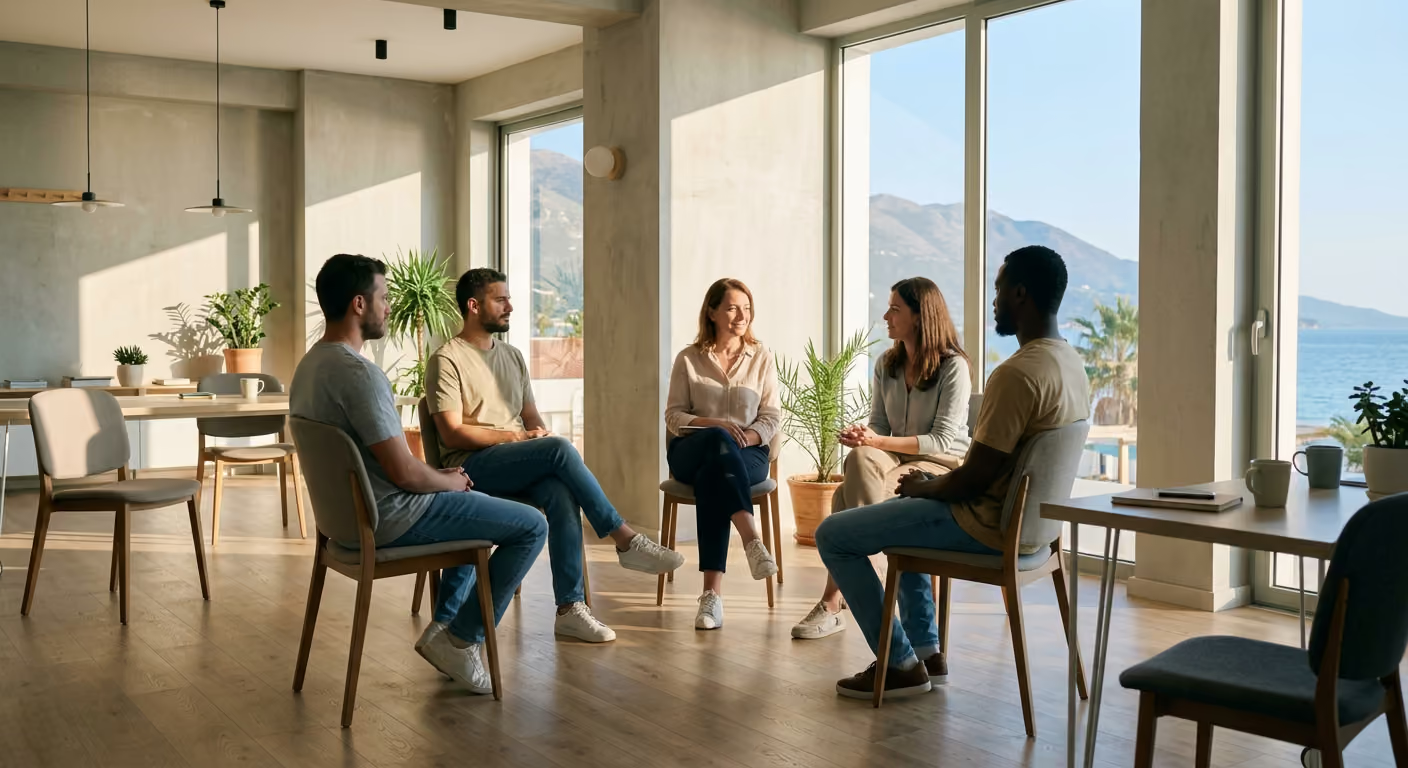
Representative image

Mental health care options in Vlorë include local medical clinics, remote therapy services, and community networks to help residents manage stress and emotional well-being.





You searched for mental health resources in Vlorë, and the hard truth is this: there is no clear public directory of English-speaking therapists based in the city. Your best path is a mixed plan, local medical support in Vlorë, remote therapy with an English-speaking professional, and steady social contact through resident groups and meetups.
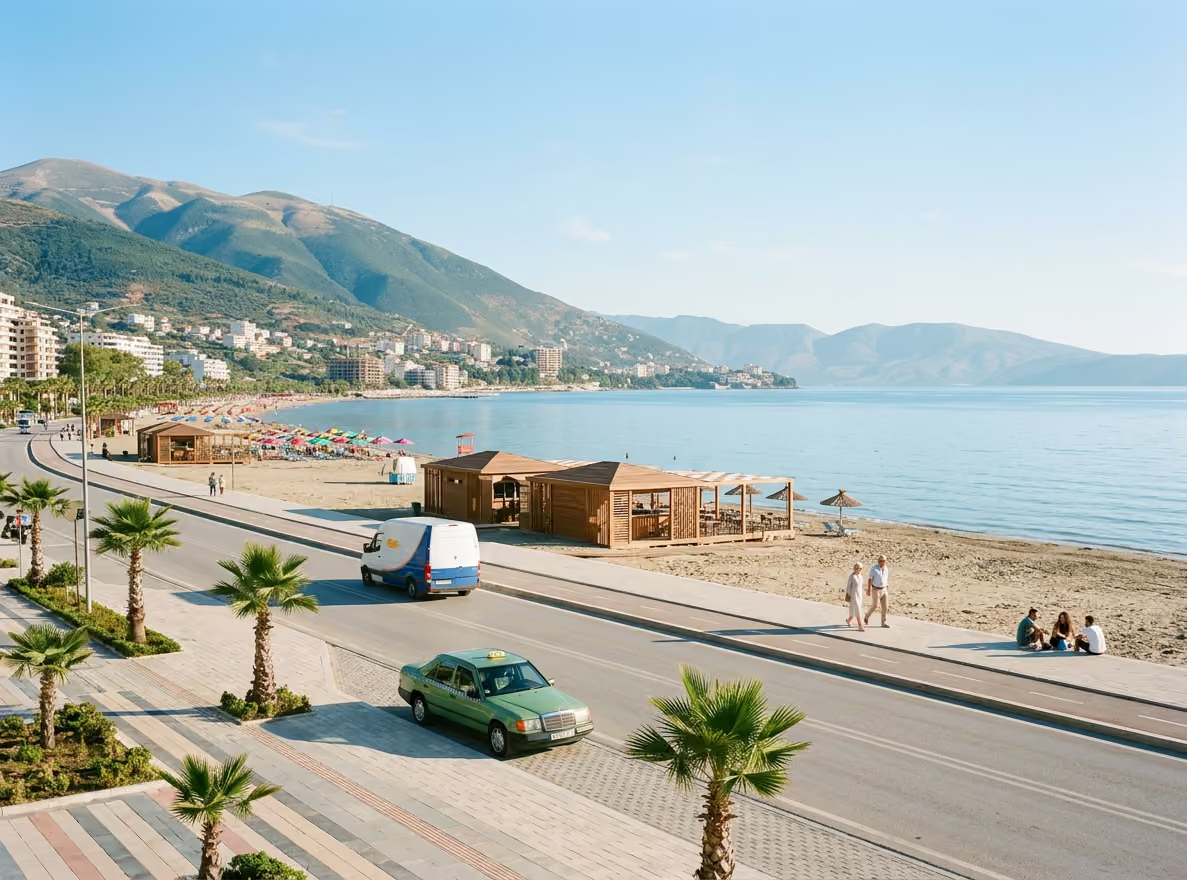
Vlorë can feel calm from the Lungomare at sunset, yet lonely inside a long rental near Uji i Ftohtë or Skelë. This guide gives you a practical plan for finding care, spotting red flags, setting up coping routines, and building support before things feel urgent.
Vlorë attracts people who want a slower life by the sea. Remote workers come for the view from the promenade. Retirees come for mild winters and lower daily costs. Albanians return from abroad and bring a mix of languages, habits, and expectations.
That mix is part of the charm. It can also make mental health care harder to find. A newcomer may need an English-speaking therapist, a doctor who understands panic symptoms, or a group where it feels safe to say, “I am not doing well.”
The city is not set up like London, Berlin, or New York. You will not find a therapist on every corner near Sheshi i Flamurit. You will not see large public lists of support groups for grief, addiction, anxiety, or depression. A lot of help still moves through personal referrals.
This matters in Vlorë since life here is more seasonal than many newcomers expect. July and August can feel full, hot, social, and loud. January can feel quiet, damp, and empty in the beach areas past the Lungomare.
Many expats arrive with a dream of sea air fixing stress. The sea helps. It does not replace care. If you had anxiety, depression, trauma, grief, ADHD, burnout, or alcohol issues before moving, the move may lower some stress and raise other stress.
Mental health stigma can be another layer. Some Albanian families still treat mental health as a private matter. People may use words like stress or nerves rather than depression or anxiety. This is not true for everyone, yet it is common enough to plan around.
A foreign resident may face the same stigma plus language friction. You may not know how to ask for a psychiatrist. You may not know which clinic is serious. You may feel awkward explaining panic attacks to a pharmacist on Rruga Transballkanike.
The World Health Organization has long pushed for mental health care that is closer to daily life and less cut off from the community. In Vlorë, that principle is very practical. Your care plan may include a family doctor, remote therapy, exercise near the sea, trusted friends, and a safe person to call.
Think of Vlorë as a place where support exists, but it is not always visible. You will need to ask direct questions. You will need to check credentials. You will need to build your own small care circle.
A mental health plan in Vlorë usually starts with three routes. The first is medical care inside Albania. The second is private or remote therapy. The third is social and peer support.
Local medical care is useful when symptoms affect sleep, appetite, work, or safety. A family doctor can be a first stop if you have one. A private clinic can be quicker if you need an appointment soon. A psychiatrist may be needed for diagnosis or medication.
Therapy is different from psychiatry. A therapist or counselor gives talk-based support. A psychiatrist is a medical doctor who can assess medication needs. Some people need both.
If you are new in Vlorë, ask direct questions before booking. Ask whether the provider works in English. Ask what their license or training is. Ask whether they have experience with expats, trauma, panic, addiction, grief, or couples work.
You can ask in simple language. “Do you offer sessions in English?” “What is your fee per session?” “Are sessions private?” “Do you provide receipts for insurance?” “Can you refer me to a psychiatrist if needed?”
Local hospitals and clinics may not list mental health services online in a clear way. You may need to call, visit, or ask a trusted Albanian speaker to help. If you live in Uji i Ftohtë, Skelë, or near the old town, ask which clinics are closest and easy to reach by taxi.
Pharmacies can help with basic practical direction. They are not a replacement for diagnosis. Still, a good pharmacist may know which doctors are nearby or which clinic has an English-speaking staff member.
For medication, bring the generic name, not only the brand name from your home country. Brand names vary. If you take antidepressants, ADHD medication, sleep medication, mood stabilizers, or anti-anxiety medication, carry your prescription and a short doctor letter when possible.
Do not wait until you have two pills left. Some medications may not be stocked in every pharmacy. Others may require a local prescription. Plan refills early, more so before public holidays or summer travel.
Remote therapy can fill the biggest gap for English speakers. International Therapist Directory lists therapists who work with clients abroad. TherapyRoute lists mental health professionals by country. Complicated.life lets users search for Albanian-speaking therapists, which may help bilingual residents or Albanian diaspora families.
These directories are starting points, not guarantees. Check license, location, session format, fee, time zone, and crisis policy. Ask what happens if you need urgent help.
Large teletherapy platforms can be another option. They may offer fast access and English-language sessions. They may not be ideal for complex trauma, severe depression, active addiction, psychosis, or high suicide risk.
If you already had a therapist before moving, ask if they can continue care across borders. Licensing rules vary. Some professionals can offer coaching or continuity sessions. Others cannot offer therapy once you live in Albania.
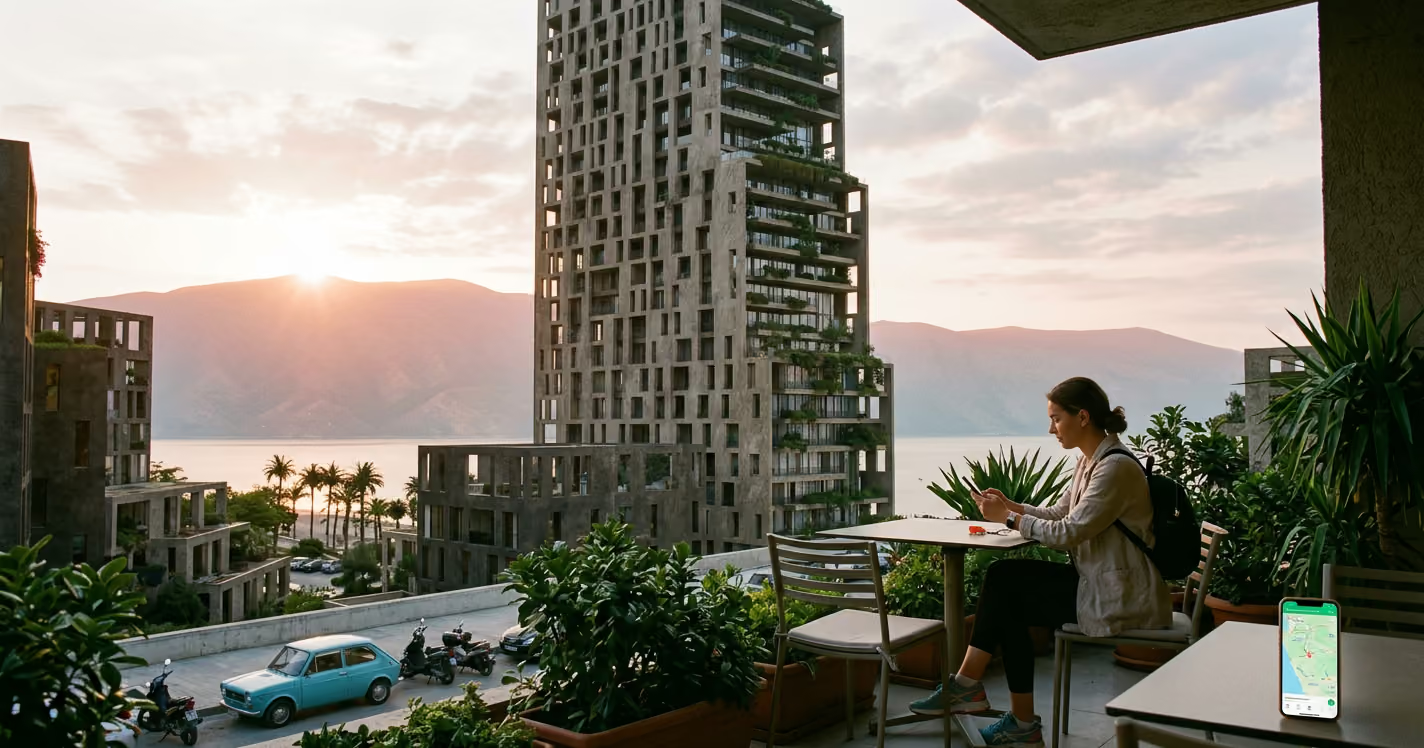
Your care map should be written down. Put names, numbers, clinic locations, medication details, and emergency contacts in one note on your phone. Share it with one trusted person in Vlorë or back home.
The most common question we hear is simple: “Where can I find an English-speaking therapist in Vlorë?” The honest answer is that you may not find one locally with a public profile. You may still find care through a wider search.
Start with English-speaking providers in Albania. Search Tirana first, then ask about video sessions. Tirana has more private clinics, more international schools, more embassies, and more English-speaking professionals. A therapist in Tirana may be easier to find than one in Vlorë.
Next, search international directories. Use filters for English, expatriate issues, anxiety, depression, trauma, couples therapy, or grief. Read profiles for concrete training details. Skip profiles that feel vague or full of slogans.
Then check whether the provider can legally work with you from Albania. A therapist licensed in the United States, United Kingdom, Canada, Australia, or the EU may have rules about cross-border work. Ethical therapists will explain their limits.
Ask about crisis coverage. A remote therapist cannot call a local ambulance as easily as a local doctor. They need to know your city, address, emergency contact, and local crisis plan if your risk is high.
Ask about session structure. A good first reply should explain session length, price, payment method, cancellation policy, privacy limits, and next steps. If the reply is confusing, that may be a sign to keep searching.
Ask about fit. You may need someone who understands migration stress, family pressure, mixed-culture relationships, or remote work burnout. You may need a therapist who can talk plainly about alcohol use, loneliness, and money stress.
For couples, ask whether the therapist has training in couples work. A friendly counselor is not always trained for conflict, betrayal, intimacy issues, or cross-cultural marriage stress. This matters when one partner loves Vlorë and the other feels trapped in the apartment.
For families, ask about children and teens. A teen who moved to Vlorë may miss friends, school routines, sports, and language comfort. They may not say “I am depressed.” They may say “I hate it here” or stop leaving their room.
If you need medication, do not rely on a talk therapist alone. Ask for a psychiatrist referral. If you are already on medication, keep contact with your prescribing doctor until you have a safe local plan.
If you have trauma history, ask about methods. Many therapists mention CBT, EMDR, psychodynamic therapy, somatic work, or mindfulness-based care. You do not need to know every model. You do need to ask whether they have worked with your issue before.
If you are LGBTQ+, ask directly about affirming care. Do not assume. Your mental health support should not make you feel judged or unsafe.
If religion matters to you, ask about that too. Some people want faith-sensitive care. Others need secular care. Both needs are valid.
If money is tight, ask for a reduced fee. Some therapists hold a few sliding-scale places. If they cannot help, ask for referrals.
Keep a simple tracking sheet. List the provider name, website, fee, language, reply date, and your gut feeling after the first contact. This stops the search from becoming a fog of tabs and messages.
A first session is not a lifetime contract. Use it to test fit. You can ask, “How would you help me with isolation in Vlorë?” A strong answer should include a clear plan, not only warm words.
Finding help feels easier when the process is broken into small actions. Use this path if you feel stuck, tired, or unsure where to begin.
Write down what is happening. Use simple phrases. “I cry most mornings.” “I cannot sleep.” “I panic before work calls.” “I drink every night.” “I feel cut off from people.” “I keep thinking about going home.”
Add the timeline. Did it start before Albania? Did it begin after moving to Vlorë? Did it get worse after winter started, after a breakup, or after a work change?
Add the impact. A provider needs to know whether you can work, eat, wash, leave the apartment, and speak with people. These details matter more than perfect clinical words.
If you feel low but safe, start with therapy search and social support. If you have panic, sleep problems, medication needs, or severe symptoms, contact a doctor or psychiatrist. If you may harm yourself or someone else, use emergency help now.
If you are not sure, choose the most direct safe route. A private clinic or doctor can help you sort the level of care. A therapist can assess whether weekly therapy is enough.
Use a short message that saves time. “Hello, I live in Vlorë and I am looking for English-speaking support for anxiety and adjustment stress. Do you offer online sessions? What is your fee? What is your soonest appointment?”
For a psychiatrist, add medication details. “I currently take sertraline 50 mg” is more useful than “I take a mood pill.” Add allergies and major diagnoses.
For couples, name the main issue. “We are having high conflict after moving abroad.” “We need help with trust.” “We need help deciding whether to stay in Albania.”
Ask where notes are stored. Ask whether sessions are confidential. Ask what the limits are if there is risk of harm. A serious provider will answer without making you feel difficult.
If you plan to claim insurance, ask for invoices in advance. Some foreign insurers need provider license details, diagnosis codes, or proof of payment. Do not assume a receipt from Albania will match your insurer rules.
The wait before a first session can feel long. Make a seven-day support plan. Pick one person to update. Choose one daily walk route, such as the Lungomare from Skelë toward Uji i Ftohtë. Set a sleep time. Limit alcohol.
Write down three warning signs. These might be “not leaving the flat,” “drinking before noon,” or “thinking everyone would be better without me.” Share those signs with a trusted person.
After one or two sessions, ask yourself three questions. Did I feel respected? Did the provider understand my context? Do I know what we are working on next?
Therapy can feel uncomfortable. It should not feel shaming or careless. If the fit is poor, search again. Starting over is frustrating, yet poor fit can slow recovery.
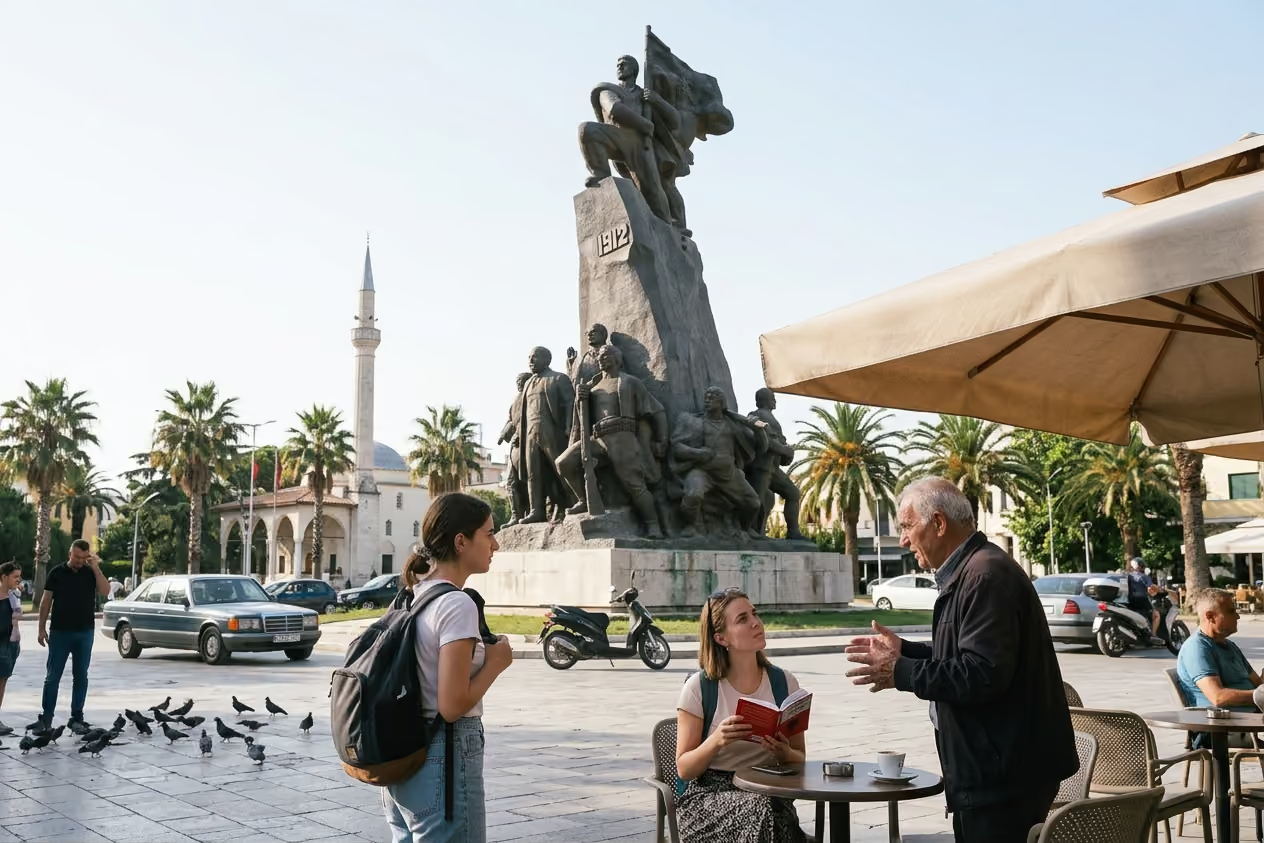
Support groups in Vlorë are not easy to find through official public channels. You may see social groups, language exchanges, fitness classes, church circles, and expat meetups. You may not find a formal anxiety group with a trained facilitator.
That gap matters. Many newcomers do not need only a therapist. They need regular contact with people who will notice when they vanish for two weeks.
A support group and a social meetup are not the same. A support group has a clear purpose, privacy norms, and often a trained leader. A social meetup is lighter. Both can help, but they serve different needs.
If you cannot find a formal group in Vlorë, build a small support circle. Aim for three layers. One person for daily check-ins. One person for practical help. One professional for clinical support.
Your daily check-in person can be a friend in Vlorë or abroad. The task is simple. Send a message each morning or evening. Use a scale from 1 to 10 if words are hard.
Your practical help person is local. This is the person who can come to your building near Skelë, call a taxi, or sit with you at a clinic. They do not need to solve your life. They need to be steady.
Your professional can be remote. For many expats in Vlorë, that is the most realistic choice. Weekly therapy by video can pair well with in-person social contact.
Look for low-pressure social spaces. A walking group is often easier than dinner with strangers. A language exchange near the center gives you a reason to show up. A small gym near your apartment can add routine.
Coffee culture can help too. Choose one regular café near your route. If you live near the Lungomare, go at the same time a few mornings each week. Familiar faces reduce the feeling that you are floating through the city.
Do not turn every friend into a therapist. Friends can listen, walk, share meals, and check in. They cannot carry all of your distress. Spread support across people and professionals.
If you want a more formal peer group, start small. Two or three people can meet for a weekly walk and honest check-in. Set ground rules at the start. No fixing. No gossip. No sharing other people’s stories.
Keep the tone practical. “What helped this week?” “What was hard?” “What is one thing you will do before next week?” A group does not need drama to be useful.
For addiction recovery, be careful with informal groups. Peer support can help, but medical risk can be high with alcohol withdrawal or drug withdrawal. If you drink heavily each day, speak with a doctor before stopping suddenly.
For grief, social contact is not a cure. Still, isolation can make grief sharper. A weekly ritual can help, such as a Sunday walk to the beach, a call with family, or lighting a candle at home.
For remote workers, work chats are not enough. Slack messages do not replace a human face. Put real-life contact on your calendar like a client meeting.
This is where Vlore Circle can help. Our meetups are not therapy, and we do not present them as therapy. They are a way to meet residents, ask practical questions, and feel less alone in the city. Join the community if you need a starting point this week.
Coping strategies are not a replacement for therapy or medical care. They are the daily base that makes care work better. In Vlorë, the best routines use the city rather than fighting it.
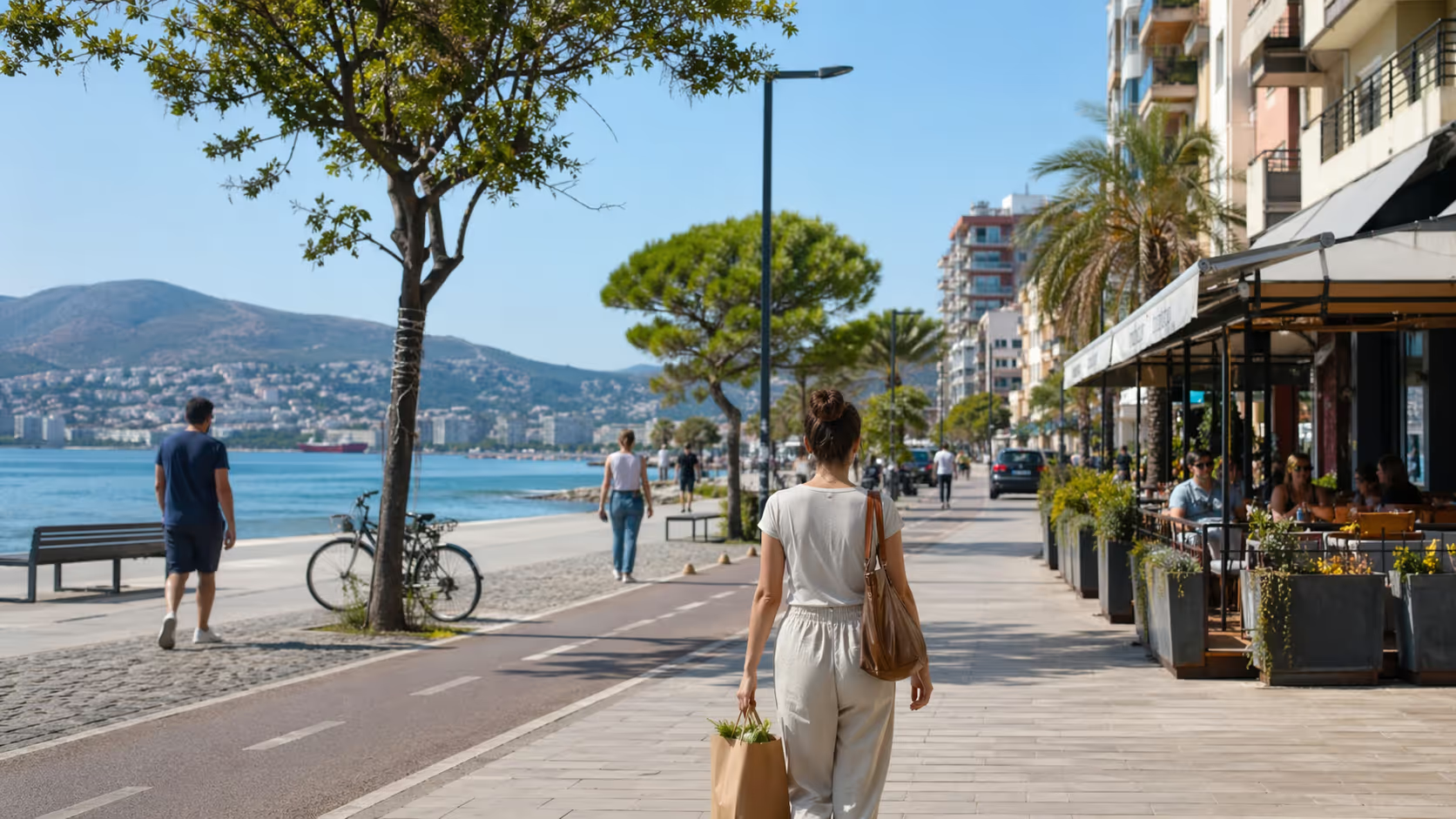
Start with morning light. The promenade is the easiest mental health tool in the city. A 20-minute walk from Skelë toward the Lungomare can reset your day before messages and work calls take over.
Keep the route simple. Do not wait for the perfect beach day. Wear normal shoes, take water in summer, and walk the same path. Repetition helps the brain feel safer.
Use the sea without making it magic. Sitting near the water can calm your body. It will not fix legal stress, family conflict, or clinical depression by itself. Pair it with care.
Build a food routine. Low mood often gets worse when meals become random. Pick three easy meals you can repeat. Eggs and bread, Greek yogurt and fruit, soup, grilled fish, or rice with vegetables can be enough.
Watch alcohol. Vlorë has a relaxed café and bar rhythm. Wine, raki, and late dinners can slide into self-medication. If your sleep is poor or anxiety is high, track alcohol for two weeks.
Protect sleep from summer noise. In July and August, beach areas and roads can stay loud late. Use earplugs, a fan, white noise, or a room away from the street if possible. Sleep loss can turn normal stress into a crisis.
Protect sleep from winter drift too. In quiet months, people can stay inside too much and lose structure. Set a wake time. Get daylight before noon. Plan contact with another person.
Make your apartment less isolating. If you live alone near Uji i Ftohtë or up a hill, make the space work for your mind. Keep one chair by natural light. Keep work away from bed. Open windows when the air is clean.
Use body-based tools for panic. Try slow breathing with longer exhales. Name five things you see, four things you feel, three things you hear, two things you smell, and one thing you taste. These are grounding tools, not cures.
Limit doom scrolling. Newcomers often read rental complaints, permit stories, and expat debates late at night. Set a cutoff time. Your nervous system does not need ten opinions before sleep.
Keep one local task per day. Buy fruit near the market. Pay a bill. Walk to the pharmacy. Learn one Albanian phrase. Small wins reduce helplessness.
Learn key Albanian phrases for care. “Kam ankth” means “I have anxiety.” “Kam nevojë për mjek” means “I need a doctor.” “Nuk fle dot” means “I cannot sleep.” Keep phrases in your phone.
Use work boundaries. Remote workers can live in a beautiful place and never leave the laptop. Set a work shutdown ritual. Close the computer, change shirt, and leave the building for ten minutes.
Plan for Sundays. Sundays can be hard for people who feel alone. Decide by Friday what Sunday will look like. A beach walk, lunch plan, video call, and evening movie can stop the day from turning heavy.
Plan for bad weather. Vlorë gets rainy days and windy days. Have indoor options. A gym, café, reading group, home workout, or call schedule helps when the sea is not inviting.
Use professional self-care guidance when needed. The NHS “five steps to mental wellbeing” model points to connection, activity, learning, giving, and present-moment attention. In Vlorë, those can be simple. Meet one person, walk the Lungomare, learn five Albanian words, help a neighbor, and sit by the water without your phone.
Mental health costs in Vlorë vary by provider, language, and setting. Public care may cost less, but access and language can be harder. Private care is often faster, yet prices and qualifications vary.
For planning, many residents should budget for several categories. A private therapy session in Albania may be quoted in Albanian lek or euros. A remote therapist abroad may charge rates from their home market, which can be much higher.
Ask every provider for the fee before booking. Ask whether the fee is per 45 minutes, 50 minutes, or 60 minutes. Ask whether payment is cash, bank transfer, card, PayPal, Wise, or another method.
A practical planning range for private therapy in Albania is often around 3,000 to 7,000 ALL per session. Some providers may charge less. English-language or specialist care can cost more.
A private psychiatrist appointment may cost more than talk therapy. A planning range of 4,000 to 10,000 ALL is sensible for many private settings. Medication costs are separate.
Remote therapy with an international provider can range widely. Some charge 35 to 90 euros per session. Highly trained specialists in Western Europe, North America, or private expat practices may charge more.
Group sessions, peer groups, and workshops should cost less than private therapy. Free groups can be useful, but check privacy and structure. A free WhatsApp chat is not the same as a support group.
Self-care has costs too. A gym membership in Vlorë may range from about 3,000 to 6,000 ALL per month. Yoga or fitness classes may be priced per class or package. A coffee on the promenade can be a low-cost way to get out of the house, often far less than a formal activity.
Transport matters. If your therapist or clinic is across town, taxi costs can add up. If you live past Uji i Ftohtë, factor in summer traffic. If you live near the center, more errands can be done on foot.
Insurance can be tricky. Some expat health plans cover therapy. Some only cover psychiatry. Some need a diagnosis or referral. Some exclude care from providers without a certain license.
Before you pay for several sessions, send your insurer a sample invoice request. Ask what details they need. Get the answer in writing. This can save money later.
If you use an Albanian provider, ask whether they can give a receipt with their professional details. If they cannot, your insurer may reject the claim. If insurance matters to you, check first.
If money is tight, build a stepped plan. Start with one paid assessment. Add free social support. Use daily routines. Ask about sliding-scale sessions. Book less frequent therapy if weekly care is not possible.
Do not choose only by price. A cheap provider who is not trained for your issue may waste time. A high price does not prove quality either. Fit, ethics, training, and clarity matter most.
If you feel at risk of harming yourself or someone else, treat it as urgent. Call emergency services or go to the nearest emergency department. In Albania, the general emergency number is 112. Ambulance service is commonly reached through 127.
If you are in immediate danger, do not wait for a therapy appointment. Call 112, call 127 for medical help, or ask a local person to take you to emergency care. If language is a problem, use simple words and share your location.
Keep your address written in Albanian format. Include building name, street, neighborhood, and a nearby landmark. “Near the Lungomare” is not enough in a crisis. “Skelë, close to [specific café or hotel]” is better.
If you live alone, choose a crisis contact. This person should know your address and building entry details. They should know what medication you take. They should know who to call back home.
Red flags need fast action. These include thoughts of suicide, plans to harm yourself, hearing voices, not sleeping for several nights, extreme agitation, heavy substance use, withdrawal symptoms, or feeling detached from reality.
Other red flags are quieter. Not eating for days, staying in bed all day, missing work, giving away belongings, saying goodbye in strange ways, or feeling like a burden can signal risk. Take these signs seriously.
Alcohol can raise risk. It can make depression darker and panic worse. It can lower impulse control. If you feel unsafe, avoid drinking and avoid being alone with large amounts of medication.
If someone else is in crisis, stay calm and direct. Ask, “Are you thinking about hurting yourself?” This question does not plant the idea. It gives the person permission to be honest.
Do not promise total secrecy. Say, “I care about you, and I cannot keep this private if your life is at risk.” Call emergency services or bring in another trusted person.
For domestic violence or unsafe housing, prioritize physical safety. Leave the apartment if you can do so safely. Go to a public place, hotel reception, police station, clinic, or trusted neighbor. Keep documents, phone, money, and medication easy to reach.
Foreign citizens should keep embassy contact details in their phone. Embassies do not replace local emergency services. They may help with family contact, lost documents, or lists of local services.
A crisis plan is best made before crisis. Write it when you feel steady. Include warning signs, coping steps, people to call, emergency numbers, medication, allergies, and your address.
Where you live in Vlorë can shape your mental health more than newcomers expect. A sea view is lovely, but daily life happens at street level. Noise, transport, hills, winter quiet, and access to people all matter.
Skelë works well for many new arrivals. It has access to the Lungomare, cafés, shops, and transport. You can walk without needing a car for every small task. That helps when motivation is low.
The Lungomare area gives you easy access to the sea. It is great for walking routines and casual social contact. In summer, it can be loud and crowded late. In winter, it can feel empty in stretches.
Uji i Ftohtë can be beautiful and quieter. It can also feel cut off if you do not drive. Some buildings sit up steep roads. If you struggle with isolation, check the exact location before signing a long lease.
The old town and center place you closer to daily services. You may get less sea view, but more normal life. Markets, pharmacies, buses, and cafés are easier to reach. That can be better for someone managing depression.
For remote workers, test the apartment like a mental health tool. Is there natural light? Can you walk to coffee in under ten minutes? Is there a desk away from the bed? Is the building noisy at night?
For retirees, check stairs and winter access. A high apartment with no lift can become a problem. A quiet area can feel peaceful in May and lonely in February. Visit at night before deciding.
For families, look at school routes and child activities. A child who cannot reach peers will struggle. A parent who spends every day driving across town may burn out.
For people with anxiety, choose predictable access. A place near a pharmacy, clinic, and main road can feel safer. A remote hillside apartment may be lovely, yet stressful during panic or illness.
For people healing from burnout, avoid turning the apartment into a bunker. Pick a place that invites gentle movement. A five-minute walk to the promenade can be more useful than a perfect balcony you never leave.
The romantic version of Vlorë is easy to sell. You wake up near the sea. You drink coffee outside. You work a few hours, swim, eat fish, and feel lighter.
The daily reality is more mixed. You may wait for paperwork. You may struggle to explain symptoms in Albanian. Your friends back home may stop checking in after the first month. Your apartment may feel cold in winter.
A move does not erase old patterns. If you isolated at home, you may isolate here with a better view. If you overworked before, you may overwork here from a café near the promenade. If you used alcohol to cope, cheaper social drinking can make it worse.
There is no shame in that. It means you are human, not that Albania failed you. A new city can offer a reset, but you still need structure and support.
The good news is that Vlorë gives you useful raw material. Walkable coastal routes. Affordable coffee culture. Regular faces if you show up in the same places. A growing mix of locals, returnees, and foreigners who understand transition.
The hard part is making the first move. Many people wait until they feel better before attending a meetup. That is backwards. You often need the meetup, walk, class, or coffee plan before your mood lifts.
Our host tip from Vlorë Circle is simple: do not build your life around your apartment. Pick three anchor points outside your home. One body anchor, such as a gym near Skelë or a daily Lungomare walk. One social anchor, such as a weekly meetup. One care anchor, such as a therapist, doctor, or trusted check-in person.
Keep those anchors close to where you live. If your coping plan needs a 40-minute taxi ride, you will skip it on bad days. A plan that starts at your front door is stronger.
Tell one person the truth early. You do not need to share every detail. Try, “I am finding the adjustment harder than expected, and I am setting up support.” The right people will not be scared by that sentence.
If you are new, Join the community and come to a low-pressure meetup. You do not have to perform happiness. You can ask practical questions, meet residents, and start building the kind of contact that makes life here feel safer.
Write one honest sentence about your current mental health. Use plain words. Save it in your phone.
Choose your first care route. Pick local doctor, remote therapist, psychiatrist, or trusted check-in person. Send one message today.
Make a short provider list. Include International Therapist Directory, TherapyRoute, Complicated.life, and any Tirana-based clinics you find through trusted referrals.
Save emergency numbers. Add 112 and 127 to your phone. Add your address in Albanian format.
Set one outside anchor. Walk the Lungomare, visit the same café near your neighborhood, or attend one meetup. Put it on your calendar.
Tell one trusted person. Say that you are building support in Vlorë. Ask if they can check in once this week.
Review your apartment routine. Move work away from your bed, get daylight before noon, and plan your next refill if you take medication.
Join the community if you want local connection without tourist fluff. Vlorë is easier when you do not try to figure out every hard thing alone.
Follow Vlore Circle for fresh guides, local updates, and community notes around life in Vlorë. It is the easiest way to stay close to what we are building.

Be part of a growing community built around connection, local life, and a better experience of Vlorë.
join the circle