Representative image

You will learn how to respectfully explore Vlorë's diverse religious sites, including mosques, churches, and Bektashi tekkes, and understand their cultural significance.





The best way to understand Vlorë’s religious sites is not to treat them as old monuments. Many are still working places of prayer, family memory, local pride, and quiet daily routine.
Vlorë is one of Albania’s best places to see how Sunni Islam, Bektashi Sufism, Orthodox Christianity, and Catholic tradition have lived side by side. Start with Muradie Mosque in the Old Town area, then visit the Bektashi sites at Kuz Baba and the urban Bektashi temple, with a calm attitude and basic respect.
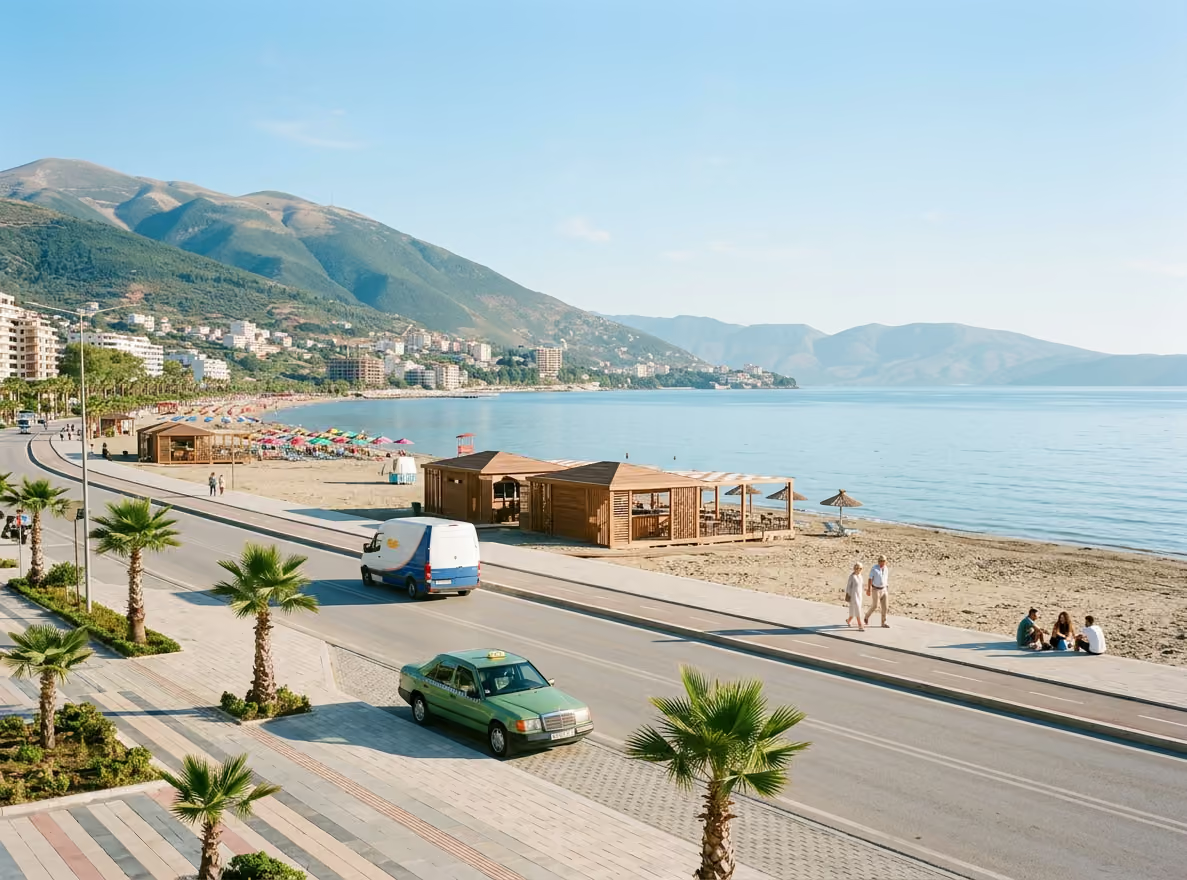
Vlorë is often sold through beaches, seafood, and the Lungomare. That is only one layer of the city. Walk a few streets inland from the promenade, or climb toward Kuz Baba, and you meet a different Vlorë.
This is a city where religion is present, but not always loud. You may hear the call to prayer near Muradie Mosque, then pass families who mark Christian feast days, then meet a Bektashi believer who speaks of saints, mountains, and hospitality. The city does not fit a simple religious label.
Albania Visit describes Albania as a country known for interfaith harmony. The country includes Muslim, Orthodox, Catholic, and Bektashi communities. Vlorë reflects this mix in a coastal setting where trade, migration, empire, and family ties shaped local life.
The key word here is coexistence. That does not mean every person is religious. It means many families have learned to live near different rites, holidays, and customs without turning daily life into a culture war.
For newcomers, this matters in practical ways. Your landlord may close the shop early for Bajram. A neighbor may invite you for coffee after a mosque visit. A taxi driver may point to Kuz Baba and call it a sacred place, not only a viewpoint.
Vlorë’s religious map has three main parts.
The first part is Sunni Islam. Mosques, called xhamia in Albanian, are prayer houses. Muradie Mosque is the best known example in central Vlorë.
The second part is Bektashi Sufism. Bektashi sites are called teqe or tekke. They often include a shrine, called a tyrbe, linked to a saint or spiritual teacher.
The third part is Christianity. Orthodox and Catholic practice exist in Albania, with major pilgrimage sites across the country. In Vlorë’s public heritage route, churches are less visible than mosques and Bektashi sites, which is itself part of the local story.
Do not read that as absence. Christian life is often tied to family, feast days, cemeteries, and regional roots. Some Christian sites linked to Albania’s wider interfaith life draw people from more than one faith group.
Albania Visit gives the example of the Catholic pilgrimage site at Laç, where many visitors are not Catholic. The same source points to shared patterns at sacred places across Albania. This is useful context for Vlorë, where Bektashi tekkes can welcome people who do not identify as Bektashi.
Sacred Sites of Albania places Bektashi practice within a long story of sacred mountains, saints, and pilgrimage. It links Albania’s older sacred geography with later Christian and Islamic forms. This is why a hill shrine or mountain ritual may carry more than one layer of meaning.
When you visit, avoid treating each place like a museum stop. A mosque may be between prayers. A tekke may have a family visit at the tyrbe. A church may be quiet except on a feast day.
Access is usually easiest when you arrive during daylight, dress modestly, and ask before entering inner spaces. At active worship sites, the person in charge has the final say. That may be an imam, a baba, a caretaker, or a local elder with the key.
A good rule in Vlorë is simple. If you would not do it in a family home during a serious moment, do not do it inside a religious site.
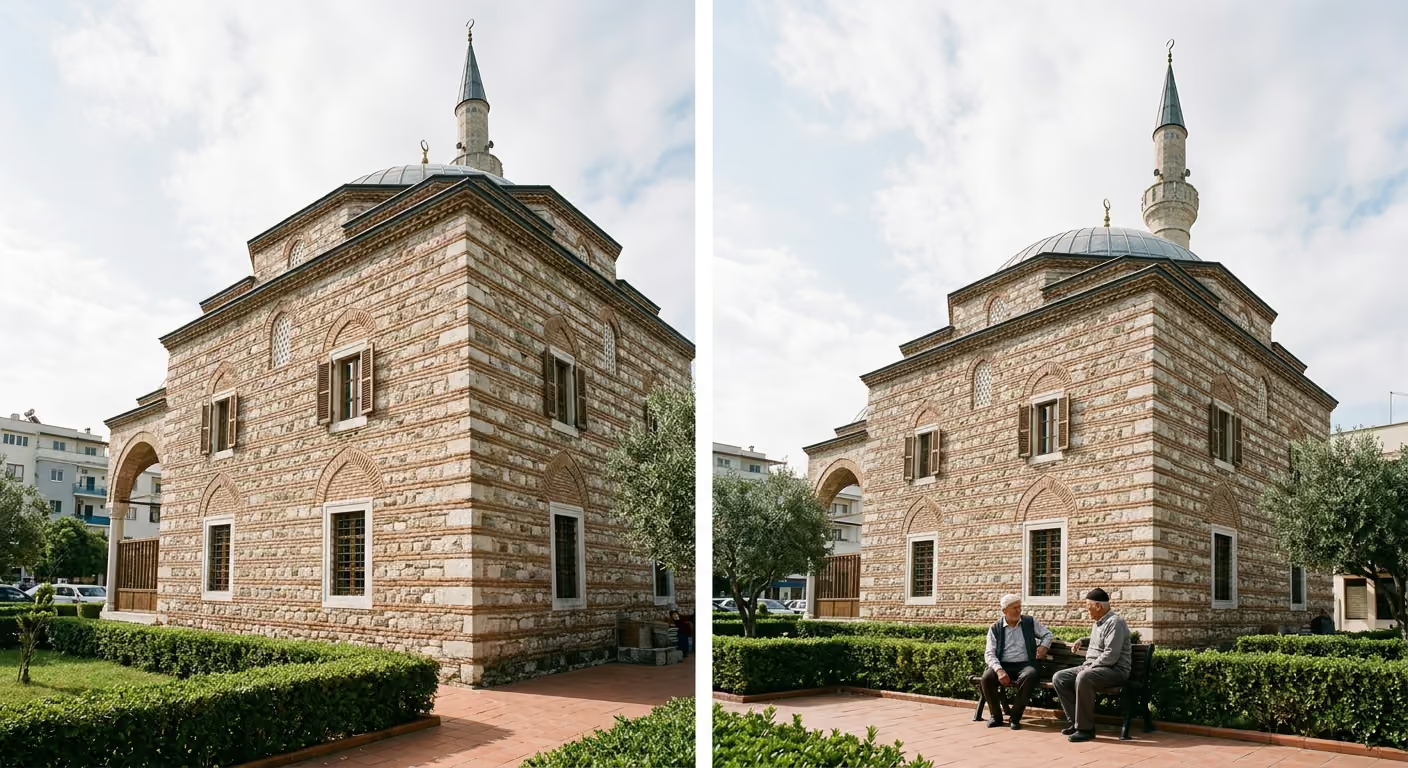
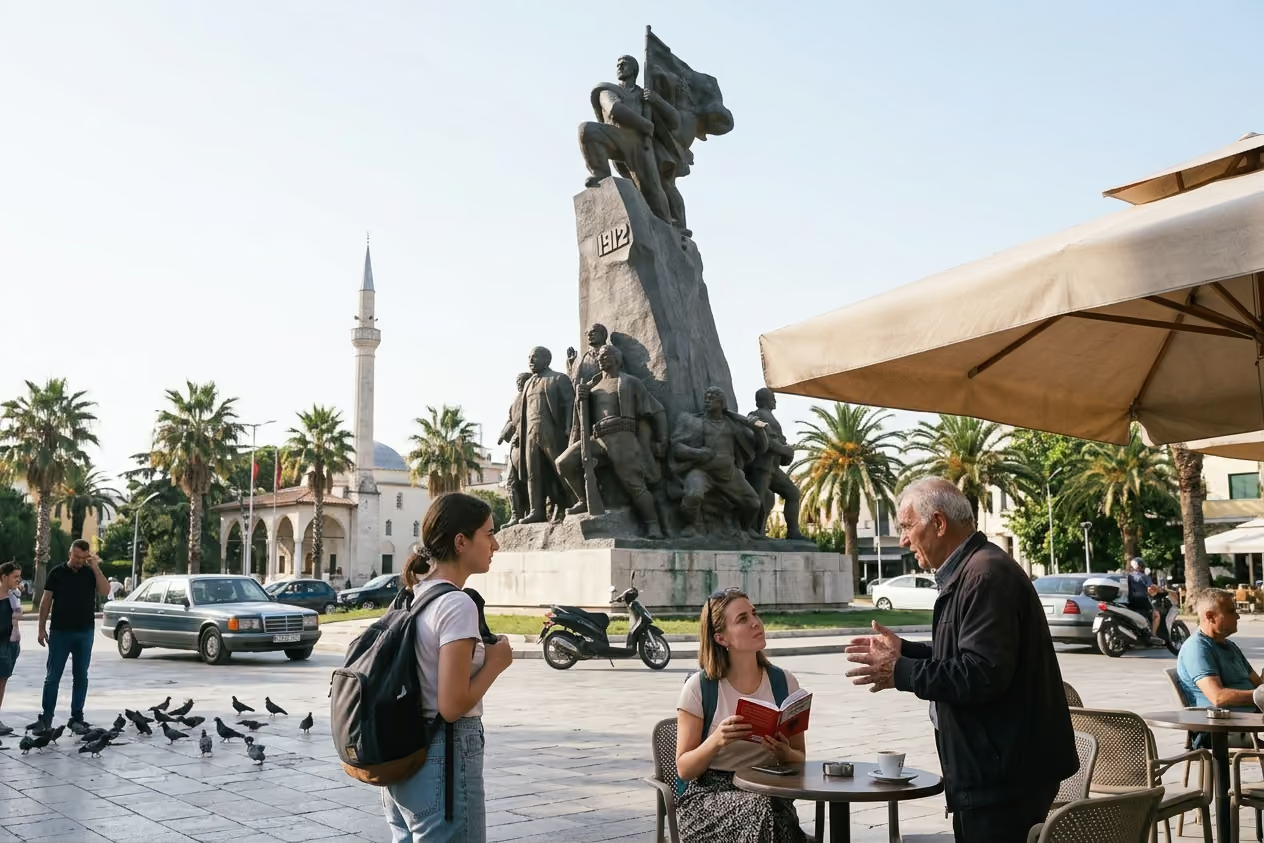
Muradie Mosque is the main religious site most newcomers should see first. It sits near Vlorë’s Old Town area, close enough to combine with a walk through the historic center. Albania Turism describes it as one of the key heritage stops in Old Town Vlorë.
The mosque is often linked to the Ottoman architect Mimar Sinan. Sources such as Albania Visit and Albania Turism date it to 1542, during the rule of Suleiman the Magnificent. That makes it one of the most important Ottoman period buildings in the city.
Muradie Mosque is sometimes called Xhamia e Plumbit, meaning the Lead Mosque. The name points to its traditional roof material. Its profile is simple, strong, and balanced.
This is not a huge imperial mosque. Its power is in proportion. The minaret rises cleanly above the stone body, and the courtyard gives the site breathing room near the city streets.
For residents, Muradie is more than a photo stop. It is an active Sunni mosque. That means prayer times shape access, movement, and behavior.
If you arrive close to Friday prayer, called jumu'ah, expect more people. Men may be entering quickly, greeting each other, and taking places for prayer. This is not the best time for a first visit if you plan to look around.
Go outside peak prayer times if you are new. Mid-morning or mid-afternoon is often calmer. Stay in the courtyard first, then see if entry is welcome.
The basic mosque protocol is clear.
Women visitors may feel more comfortable carrying a light scarf. Some mosques ask women to cover hair. Others may be relaxed with respectful dress, but it is better to be ready.
Men should avoid sleeveless tops and beachwear. Coming straight from the beach area in swim shorts is poor form. Vlorë is a seaside city, yet religious spaces are not beach spaces.
Use a soft greeting if someone welcomes you. “Selam alejkum” is understood in Muslim settings. A smile and a quiet nod are fine if you are not confident with the phrase.
Inside, look for the mihrab, the prayer niche that points toward Mecca. You may see a minbar, where the Friday sermon is given. These features help you understand how the space works.
Muradie’s value is partly its survival. Albania went through a harsh anti-religious period under communism, with religion banned from public life from 1967 until the early 1990s. Many sites were closed, damaged, or repurposed.
When you stand in the courtyard today, you are not only seeing Ottoman stone. You are seeing post-1991 religious return. That return is one of the most significant modern chapters in Albanian cultural life.
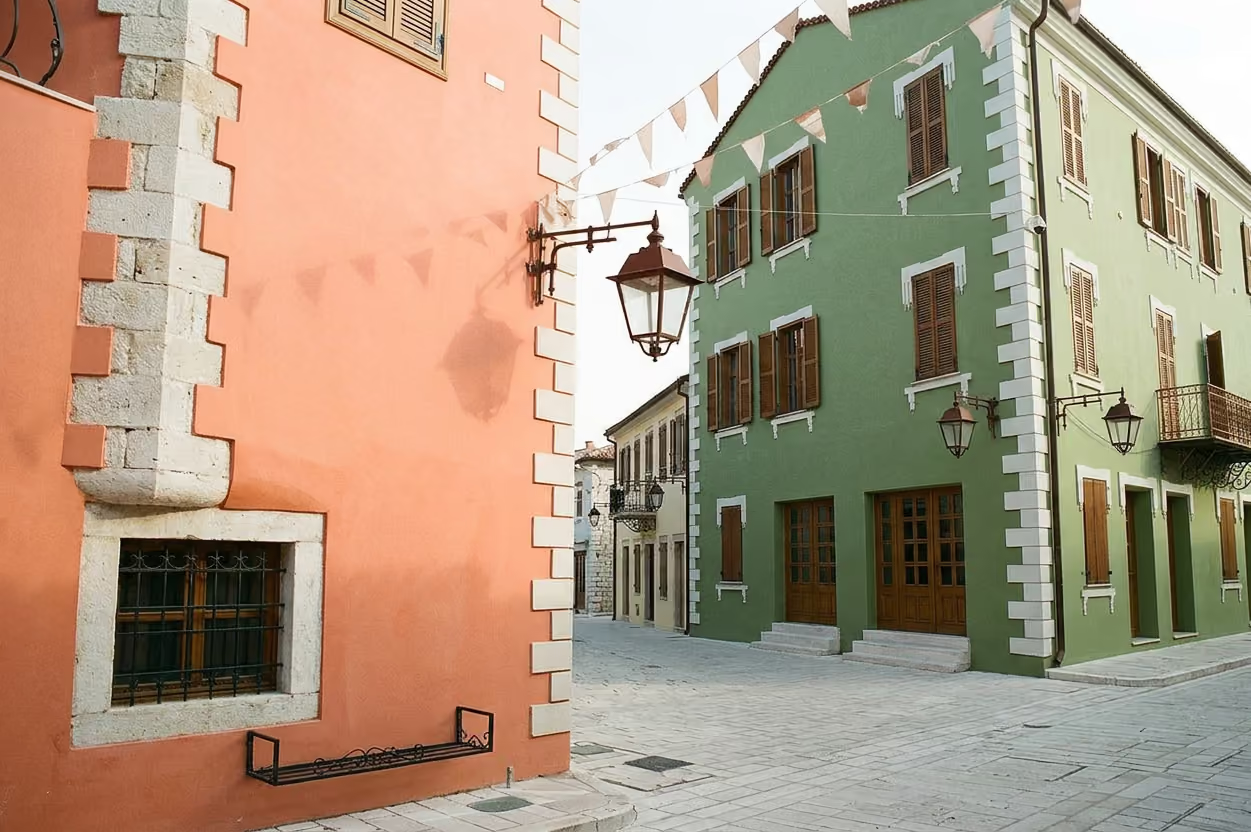
Muradie can fit into a simple Old Town route. Start near the mosque, walk the historic streets, then take coffee nearby. From there, you can continue toward the center or head later to Kuz Baba for the hilltop view.
If you live in Vlorë, do not rush this visit. Go once to see the building. Return another day to sit near the courtyard and notice how people move through it.
The site teaches slow observation. The sound of footsteps before prayer, the closing of shop doors nearby, and the calm after prayer all tell you how faith fits into city rhythm.
Many visitors confuse Bektashi tekkes with mosques. That is understandable from the outside. Some have domes, sacred rooms, courtyards, and Islamic language.
The meaning is different. Bektashism is a Sufi order with Shia influence, strong saint veneration, and a reputation for tolerance in Albanian life. Sacred Sites of Albania links Bektashi practice with pilgrimage, mountain shrines, and a wide sacred geography.
A tekke, or teqe in Albanian, is a lodge or spiritual center. It may be led by a baba, a spiritual father. It may include a tyrbe, a tomb shrine tied to a saint or respected figure.
That tyrbe is often the heart of the visit. People may enter quietly, pray, touch the area with respect, light a candle where permitted, or leave a small offering. Some come for healing, gratitude, family memory, or blessing.
Bektashi ritual may include dhikr, which means remembrance. This can involve repeated sacred phrases, chant, or shared prayer. If you are invited to sit in, stay quiet and follow the room.
Bektashi sites can feel more open to mixed groups than some visitors expect. Men and women may attend together. The tone can be hospitable, poetic, and informal compared with a Sunni mosque.
Do not mistake openness for casual tourism. A tekke is still a sacred place. The baba or caretaker sets the rules.
In Vlorë, two Bektashi sites stand out for many residents and visitors. The urban Bektashi temple in the city serves community life. Kuz Baba is the hilltop shrine that links faith, memory, and one of the best views over Vlorë.
Lovin Albania lists religious sites in Vlorë County, including Bektashi places. Sacred Sites of Albania names Vlorë among areas tied to Bektashi sacred geography. Wikipedia’s list of Bektashi tekkes gives a useful index for locating lesser known sites, including one in Golimbas in Vlorë.
Here is how to tell you are likely at a tekke rather than a mosque.
Respect rules are close to mosque rules, but not identical.
Remove shoes if asked. Keep clothing modest. Ask before photos. Do not lean on or sit on shrine structures. Do not treat offerings like decoration.
If tea is offered, accept if you can. Hospitality is part of the culture. If you cannot stay, thank the host warmly.
Do not ask aggressive questions about doctrine. Better questions are simple and human. “When do people usually visit?” or “Is there a feast day here?” will open a better conversation.
Bektashi sites are key to understanding Vlorë’s interfaith tone. They often act as bridges. People may visit for blessing without strict concern over formal religious labels.
This is why you may meet someone who says, “My family is Muslim,” then speaks warmly of a Christian feast. You may meet another person who rarely attends services, but still climbs to a shrine before a major life event.
The lesson for expats is practical. Do not force Albanian religion into neat boxes from your home country. Family history, village roots, saints, feast days, and respect for place can matter as much as formal identity.
Kuz Baba is one of the most meaningful places in Vlorë. It is also one of the most visited viewpoints. That mix can create tension.
The hill gives wide views over the city, the bay, the port, and the line of the coast. It is a natural place for photos. It is also linked to Bektashi reverence for Kuz Baba, remembered as a saintly figure.
Sacred Sites of Albania identifies Kuz Baba as part of Albania’s sacred site network. Lovin Albania lists it among Vlorë County religious attractions. For locals, the hill is not just a lookout.
Plan the visit as a respectful walk, not only a sunset stop. Wear shoes that can handle the climb. Bring water in warm months. Avoid arriving in loud beach mode after the Lungomare.
At the top, pause before taking photos. Notice where people are praying or visiting the shrine. Keep your camera away from faces.
Do not use drones near the shrine. Drone use can feel invasive at sacred sites. It can disturb visitors and may create conflict with caretakers.
If there is a tyrbe area, enter only if it is open and welcome. Keep your voice low. If others are praying, wait outside.
Some visitors treat hill shrines like picnic zones. Kuz Baba does have a social side, and people may sit nearby after visiting. The mistake is carrying food, music, and loud group energy into the sacred area.
A better rhythm is this. Walk up quietly. Visit the shrine area with care. Take in the view from a respectful distance. Then sit away from prayer spaces if you want to rest.
Kuz Baba is a good place to understand how geography and faith meet in Albania. Sacred mountains and high places are part of old Balkan religious memory. Later traditions often kept those places meaningful under new names.
This does not mean every local will explain Kuz Baba the same way. Some speak through Bektashi history. Some focus on local identity. Some only know it as the hill above the city.
All of those meanings can exist together. That is part of Vlorë’s local style. Sacred sites are not always controlled by one official story.
For residents, Kuz Baba can become a regular reset point. Many people climb when they need air, space, or perspective. If you live near the center, it can be part of your weekly routine.
The host tip from Vlore Circle is this. Visit Kuz Baba once alone before you take guests there. Learn the path, the quiet corners, and the line between viewpoint and shrine. Then you can guide friends without turning the place into a rushed photo stop.
If you join local meetups, you may hear different memories of Kuz Baba. One person may speak about family visits. Another may talk about post-communist revival. Another may care most about the view over the bay.
All are valid starting points. The respectful visitor listens first.
Vlorë County has religious sites beyond the central streets. Some are easy to reach. Others require a car, local help, or patience.
Lovin Albania’s Vlorë County listings show that the area is rich in religious heritage. Wikipedia’s index of Bektashi tekkes names the Tekke of Haxhi Baba Mehmet Aliu in Golimbas, Vlorë. It gives coordinates near 40°23′N 19°44′E.
Golimbas is not a casual beach walk from the Lungomare. Treat it as a rural visit. Roads, opening times, and caretaker access may vary.
For rural tekkes, the first task is not transport. It is verification. Ask a local contact, driver, or community member whether the site is open and who holds the key.
A simple rural tekke plan looks like this.
Rural sacred places may not have signs in English. They may not have staff present all day. The caretaker may live nearby and open the site when asked.
This can feel strange for newcomers used to ticket desks. In Albania, access often moves through human trust. A polite call, a neighbor’s introduction, or a driver’s help can matter more than a website.
Do not pressure anyone to open a site. If the answer is no, accept it. A closed shrine is still a sacred place, not a failed itinerary.
You can pair rural religious visits with other slow travel in the county. A day outside Vlorë can include a village coffee, a short walk, and one sacred site. Keep the schedule light.
Gjin Aleksi Mosque, in Rusan near Delvinë, is outside the immediate city but within the wider southern religious map. Albania Visit describes it as a 15th century Ottoman style mosque with notable acoustics. Some accounts note possible Bektashi use in its past.
This mosque is known for sound. Visitors often notice how voice carries inside the structure. That acoustic quality matters in a building tied to the call to prayer and spoken worship.
A trip to Gjin Aleksi can teach a useful lesson. Religious buildings were designed for bodies, voices, and ritual. They were not built only to be photographed.
If you go, keep the same respect rules used at Muradie. Ask before entering. Avoid testing the acoustics if anyone is praying. Do not shout for fun inside the mosque.
Pairing a mosque visit with a nearby Christian site in the Delvinë area can create an interfaith day route, if local access is confirmed. The point is not to collect buildings. The point is to see how villages and small towns carried layered histories.
Mount Tomorr is farther from Vlorë, yet it matters for understanding Bektashi pilgrimage in Albania. Sacred Sites of Albania describes Tomorr as a major sacred mountain tied to Abaz Aliu. Albania Visit notes that the August pilgrimage draws mixed crowds.
Tomorr shows how Bektashi devotion can overlap with older mountain reverence and wider Albanian identity. Many people who are not strict Bektashi still respect the mountain. This helps explain why hill and shrine visits near Vlorë can feel open to many people.
Do not try to compress all of this into one weekend. Start with Vlorë city. Then add Kuz Baba. Then plan one rural site after you have local advice.
If you are new in town, Join the community before planning more remote shrine visits. Local residents can tell you which sites are active, which roads are poor, and which customs matter on feast days.
A guide to religious sites in Vlorë needs to be honest. The best documented visitor sites in the city and county are more mosque and tekke focused than church focused. That does not make Christian life minor in Albania.
It means Vlorë’s public religious heritage route has a particular shape. Ottoman history, Bektashi presence, hill shrines, and Islamic architecture are easy to see. Churches may be more tied to parish life, village roots, or nearby regional routes than to the central tourist map.
Albania’s Christian story is deep. Byzantine Christianity shaped much of the region before Ottoman rule. Orthodox and Catholic communities remain part of Albanian identity.
The country’s interfaith model is not only about separate groups living near each other. It includes shared visits to holy places. Albania Visit highlights Laç, where St. Anthony’s Church receives very large pilgrimage crowds, with many non-Catholic visitors.
Laç is not in Vlorë, but it is a useful model. It shows that a Catholic site in Albania can function as a national place of prayer. People may walk barefoot, light candles, ask for healing, or fulfill vows.
For Vlorë residents, that pattern helps explain local attitudes. A person may not find it strange to visit a site outside their formal tradition. Respect, family need, and faith in blessing can carry more weight than labels.
Mount Tomorr gives another model. Albania Visit and Sacred Sites of Albania connect the mountain with Bektashi pilgrimage and wider sacred memory. Christian and Bektashi meanings can overlap in popular practice.
If you come from a country where religious lines are firm, Albania can surprise you. You may ask, “Is this Muslim or Christian?” A local may answer with a story rather than a category.
That answer is not avoidance. It is how many sacred places work here. History layered new names over old sites, and families kept practices alive through change.
In Vlorë, ask about church services through local contacts if you plan to attend. Do not assume all churches keep tourist hours. Worship times may change by season, clergy availability, or feast calendar.
Protocol in churches is simple.
Orthodox churches often have icons that are treated with deep respect. Some worshippers kiss icons or light candles before them. Watch quietly, and do not copy acts you do not understand in a playful way.
Catholic churches may feel more familiar to Western visitors. Still, local practice matters. A small Albanian church is not a tourist hall.
If a service is taking place, stay near the back. Do not talk through readings or prayers. Leave quietly if you feel unsure.
For expats, the bigger lesson is social. Religious identity may enter conversation through food, holidays, names, family villages, or burial customs. Do not ask blunt questions at the first coffee.
Better questions are softer. “Does your family celebrate this holiday?” or “Is this a family tradition here?” These invite personal answers without pressure.
Christian sites in Albania help complete the picture of Vlorë’s religious life, even when they sit outside the main city route. They remind us that Vlorë is part of a national story, not a closed local island.
Access in Vlorë is rarely complicated if you use common sense. Problems start when visitors act like every door is public and every ritual is content.
Religious sites are living spaces. Some are open daily. Some open around prayer, feast days, or when a caretaker is present.
For Muradie Mosque, access is easiest outside prayer times. For Kuz Baba, the hill may be open as a public place, but shrine spaces still require care. For rural tekkes, confirm before travel.
Use this practical flow before entering any site.
Modest dress is the safest choice at all sites. For men, this means a shirt with sleeves and shorts that reach near the knee, or trousers. For women, this means covered shoulders, a longer skirt or trousers, and a scarf in the bag.
Beachwear is not acceptable inside mosques, tekkes, or churches. Vlorë’s beach culture can make people forget this. The walk from the promenade to a sacred site is short, but the social code changes fast.
Footwear rules vary. In mosques, shoes come off before prayer areas. In tekkes, shoes may come off before shrine rooms. In churches, shoes stay on, but hats may need to come off.
Photography needs care. Ask before taking interior shots. Never photograph people in prayer without clear permission.
If you are a content creator, be extra careful. Do not film rituals for social media unless a leader clearly agrees. Do not turn grief, prayer, or vows into background footage.
Tripadvisor visitor listings for Vlorë County show that travelers do seek out religious sites in the area. That interest can help preservation when done well. It can harm trust when visitors act without restraint.
Group size matters. A quiet couple is easier to welcome than a loud group of ten. If you are guiding friends, set rules before arrival.
Tell your group where they are going. Explain dress, shoes, and photos before you reach the door. Do not make the caretaker do all the teaching.
Children can visit, but prepare them. Tell them not to run, shout, or touch objects. Bring water and snacks for after the visit, not inside the sacred area.
Donations are simple. Many sites do not have fixed entry fees. If you see a donation box, a small amount in Albanian lek is a kind gesture.
Do not wave money around or push it into someone’s hand. If you are unsure, ask where donations go. If no donation is requested, a warm thank you is enough.
Language can help. Learn a few phrases.
You do not need perfect Albanian. Effort counts. A calm tone counts more.
Festival days need extra care. Bektashi pilgrimages can draw many visitors. The atmosphere may include food, family groups, and ritual visits.
Do not block shrine entrances for photos. Do not cut in front of older visitors. Do not treat offerings, candles, or cloths as props.
Winter can change access. Rural sites may be harder to reach. Caretakers may not be present all day.
Summer creates a different issue. Vlorë fills with beach visitors. Sacred sites near the city may see people arrive underdressed or rushed.
If you live here, you can model better behavior. Bring visiting friends at a calm hour. Carry a scarf. Ask permission in Albanian. Thank people when you leave.
That small effort builds trust between residents, expats, and local communities.
The romantic version of religious Vlorë is easy to sell. A 16th century mosque, a hilltop shrine, sea views, and stories of harmony make a beautiful image.
Daily reality is more ordinary, and more interesting. Some sites are active. Some are quiet. Some are locked when you arrive.
You may find a caretaker who has time for tea. You may find no one there. You may find construction noise nearby, traffic, or a group taking wedding photos.
Interfaith harmony is real, but it is not a performance staged for visitors. It lives in habits. It appears in mixed holiday greetings, shared respect, and the lack of drama around difference.
Albania’s communist period shaped this reality. Religion was banned from public life from 1967 to 1991. Many families kept memory privately, then rebuilt practice later.
Post-1991 revival did not make every site polished. Some places were restored. Others still need care. Rural access can feel informal.
Do not confuse informality with neglect. A site may not have a ticket office, but it may be deeply valued. A shrine may look simple, yet carry generations of memory.
Newcomers often expect clear signs, official hours, and English panels. Vlorë does not always provide that. You learn through asking, returning, and listening.
This can be frustrating if you are planning guests’ visits. It can be rewarding if you accept slow access. A ten minute talk with a caretaker may teach more than a signboard.
Another reality is that not all locals are religious. Some will speak with warmth about sacred sites, yet rarely attend prayer. Others are devout. Many are private.
Do not make one person represent all Albanians. The taxi driver, the baba, the imam, the café owner, and your neighbor may each give a different view.
Tourism can bring both care and pressure. Visitors can support heritage by showing interest. They can damage trust by ignoring protocols.
The best visitor is not silent and afraid. The best visitor is curious, calm, and aware that the place belongs to a living community.
There is a common misconception that Bektashi means the same thing as Sunni Islam. It does not. Bektashi practice has its own leadership, shrines, saints, and rituals.
There is another misconception that communist atheism erased faith. It did not. It broke institutions and public practice, but memory survived in families, places, and revived communities.
A third misconception is that Vlorë should be church-heavy to be balanced. The city’s visible heritage leans toward mosques and Bektashi sites. Albania’s wider Christian story still matters.
A fourth misconception is that photos are harmless. At a beach, maybe. At a shrine, a mosque, or a church, photos can be intrusive.
Daily life in Vlorë asks for a balanced attitude. Enjoy the view from Kuz Baba. Admire the stonework at Muradie. Then remember that someone may be there for prayer, grief, thanks, or a family vow.
If you are new to Vlorë, do not try to see every religious site in one rush. Build a two day route with space between visits. This gives you time to absorb the difference between mosque, tekke, shrine, and church practice.
Start the first day in the Old Town area. Visit Muradie Mosque in the morning, outside main prayer times. Walk the surrounding streets after, then stop for coffee nearby.
Use that first stop to learn your own pace. Did you dress right? Did you feel unsure at the door? Did you remember to ask before taking photos?
In the afternoon, visit the urban Bektashi temple if access is open and welcome. Ask quietly before entering. If someone offers a short explanation, listen more than you speak.
Do not compare the tekke to the mosque in a judgmental way. Notice the differences in layout, tone, and ritual focus. The mosque centers formal prayer. The tekke may center saint memory, teaching, and pilgrimage.
End day one with notes. Write down what you saw, what confused you, and what you want to ask a local later. This is a good way to learn without making people answer every question on the spot.
On day two, climb to Kuz Baba. Go early or near golden hour, but avoid crowding ritual spaces at sunset. The view is beautiful, but your behavior still matters.
After the hill, take a slow route back toward the center. If you are with friends, discuss what each place felt like. Keep the tone respectful, not like rating restaurants.
If you have a car and local advice, plan a separate rural day later. Golimbas or other county sites need more care. Do not add them as a last minute detour after swimming.
A simple city route can look like this.
For church context, ask residents about current service times or nearby parish life. Do not rely only on old travel listings. Local schedules change.
If your goal is interfaith understanding, add one national context stop to your reading list. Read about Laç and Mount Tomorr through Albania Visit or Sacred Sites of Albania. These examples help you see Vlorë in the wider Albanian pattern.
This route works well for remote workers and retirees who live in the city. It does not require a car for the central sites. It gives you time to return to places, which is better than racing through them.
If you host guests, give them a short respect briefing before you leave home. Mention shoes, clothing, photos, and quiet voices. A two minute talk can prevent awkward moments.
If you feel unsure, Join the community and ask other residents how they visited. Practical local advice is often the difference between a meaningful visit and a closed door.
The best way to visit religious sites in Vlorë is to act less like a tourist and more like a guest. A guest notices the room before speaking. A guest asks before touching things.
Vlore Circle was built for residents, not short term checklists. That matters here. Religious sites are part of settling into the city with care.
When you know the difference between Muradie Mosque and Kuz Baba, you understand more than architecture. You understand how people use space, memory, and ritual in daily life.
When you learn why a Bektashi tekke is not just a mosque, you avoid a common mistake. You show respect for a tradition that has shaped Albanian identity in its own way.
When you accept that church life may be less visible on the central route, you avoid forcing the city into a false balance. You start to see Vlorë as it is.
Our host advice is simple. Visit fewer sites, but visit them better. Go at calm hours, ask permission, dress well, and leave space for local people.
If someone invites you for tea, stay if you can. If someone says the site is closed, thank them and return another day. If you make a mistake, apologize without making excuses.
Religious understanding in Vlorë is built through small acts. A scarf in your bag. Shoes left neatly at the door. A photo not taken. A greeting said with care.
For expats, these habits carry into the rest of city life. The same respect helps at apartment viewings, neighborhood cafés, village visits, and family gatherings.
Vlorë will not explain itself all at once. It reveals itself through repeat visits, familiar faces, and quiet corrections. That is part of the reward of living here.
Visit slowly, ask kindly, and let Vlorë’s sacred places teach you how to be a better neighbor.
Follow Vlore Circle for fresh guides, local updates, and community notes around life in Vlorë. It is the easiest way to stay close to what we are building.

Be part of a growing community built around connection, local life, and a better experience of Vlorë.
join the circle